

Restaurant SEO servicesa page for every search
We build a search page for every room, occasion and neighborhood you serve, write your menu as text and keep it all current. Built by people who own a restaurant.
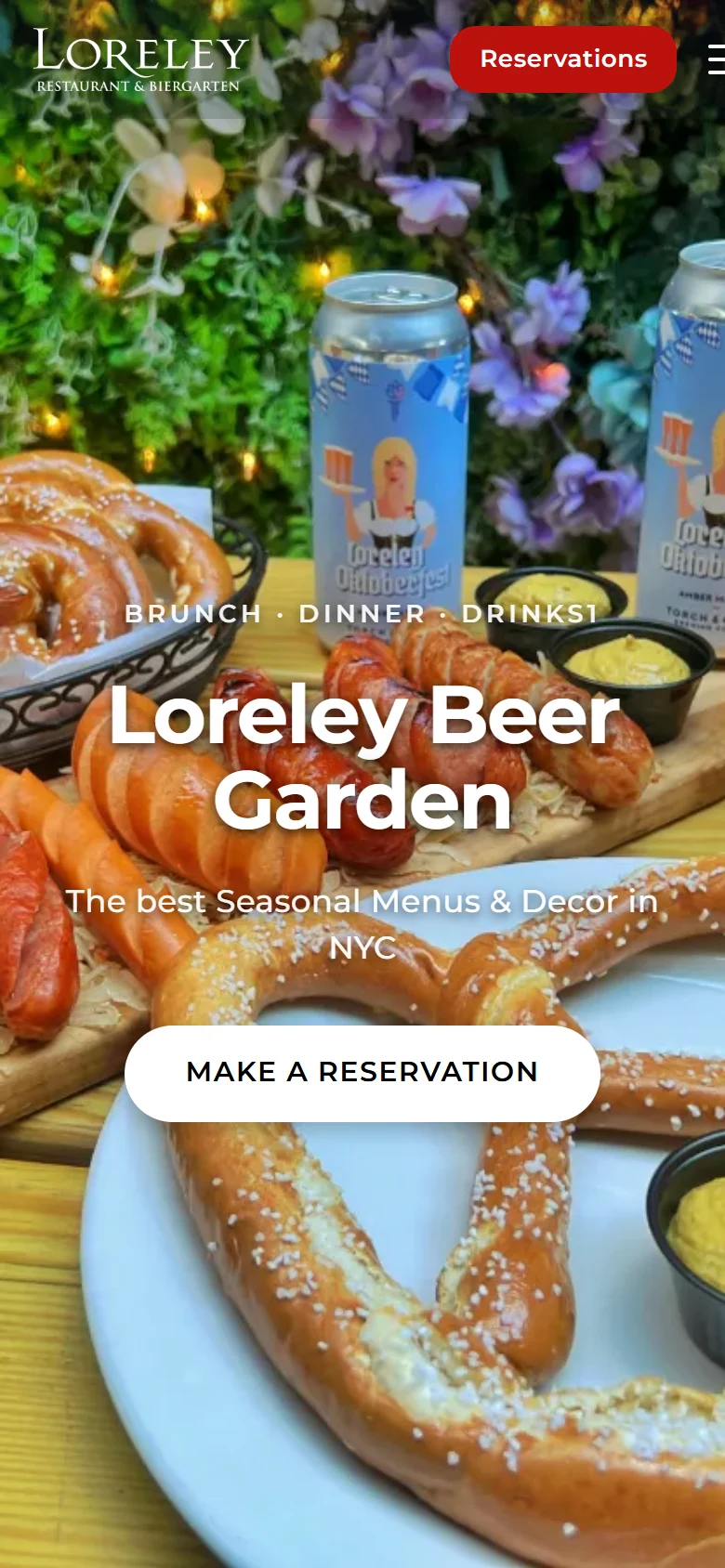
Restaurant SEO services, done our way, mean a page for every room, occasion and neighborhood your guests search for, a menu written as text, and every page kept current as menus, hours and events change. Our own beer garden's site carries 122 of those search pages, 80 of them written for private events and groups.
- A page per room, with capacity, photos and a way to ask.
- A page per occasion and neighborhood, each with something specific to say.
- Kept current every month, judged by inquiries and bookings.
One events page cannot answer forty searches.
Planners type the occasion, the headcount and the area. A single page about everything gives none of those searches a clear answer.
Every request on one page
Three rooms, eight occasions and the catering menu squeezed onto one events page that answers no particular search well.
A menu locked in a picture
Dishes trapped in a scanned image that search engines and assistants struggle to read, and guests have to pinch and zoom.
Pages left to go stale
Summer hours in November and a holiday menu still up in March, so search finds two stories and trusts neither.
Planners ask for the room, not the name.
When a planner asks an assistant for a room, it repeats pages that state the facts plainly. A vague events page gives it nothing to quote.
- 1.The wine bar on the squarePrivate room for 45, set menus.
- 2.The steakhouse by the courthouseSeats 60, full bar, a screen for toasts.
- 3.The rooftop restaurant downtownSemi-private terrace, seasonal menu.
A page for every search.
We write the pages, publish them on your site and keep every one of them current.
A page per room
Capacity, real photos of that room, what is included and a way to ask about a date.
A page per occasion
Birthdays, showers, work dinners and rehearsal dinners, each answered on its own page.
A page per neighborhood
The areas your guests come from, with the streets and landmarks they know.
Pages for each season
Festivals and holidays on pages that come back every year, ready before the date.
Menus as text
Every dish written out, so search engines, assistants and phones can all read it.
Kept current every month
Change a menu, hours or a room once, and every page that shows it follows.
Our beer garden's site carries 122 search pages, 80 of them written for private events and groups.
Pages on our own restaurant's site, by kind.
See the numbers
| Kind of page | Pages |
|---|---|
| Search pages for rooms, occasions and neighborhoods | 122 |
| Of those, for private events and groups | 80 |
| Seasonal festival pages live | 11 |
| Private-room pages | 3 |
The search is the need, not your name
People who already know your restaurant find it easily. The searches that bring new money are the ones where your name never appears: "private room for 40 on the Lower East Side", "birthday dinner with a bar near me", "baby shower brunch for 25", "rehearsal dinner downtown". Each of those is a person with a plan and a date, choosing among whichever places answered the question best.
A restaurant website usually answers one question well, "what is this place", and leaves the rest to chance. Our work is answering the other questions on purpose, one page at a time: a page for each room, each occasion, each neighborhood and each season your guests plan around. Our private events guide shows how planners search before they ever send an inquiry.
The room page: one space, every fact a planner needs
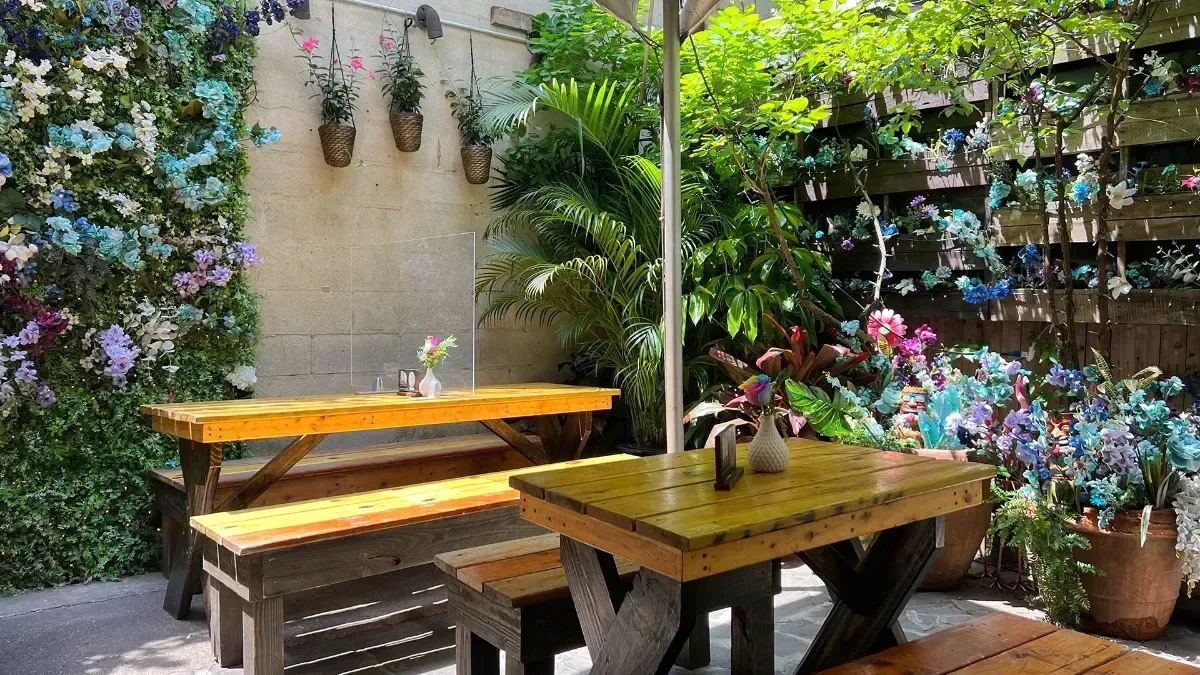
Our own beer garden has three private-room pages, and they are the best way to show what a room page is. The Garden Room page says on its first screen that the room is semi-private and seats up to 22, shows the room itself, and puts Book Online and Inquire Now buttons right there. The Party Room and Lounge page shows a space for up to 65 guests with its own bar and bartender. The Garden Party page shows the picnic tables in the garden and a seasonal cocktail for each time of year.
Every room page we build answers the same short list: how many people it holds, seated and standing; photos of that room, not the bar next door; what is included; any minimum spend; which occasions it suits; and a way to ask about a date without picking up the phone. A planner who finds all of that on one page can make a shortlist in a minute. One who has to call to learn the capacity has already opened the next tab.
Occasion pages for birthdays, showers and work dinners
A room page answers "where". An occasion page answers "what will my event be like here". A baby shower page talks about daytime hours, a brunch menu and room for a gift table. A rehearsal dinner page talks about a seated dinner, toasts and a room that can be closed off. A work dinner page talks about set menus, a fixed headcount and a time that works after the office. Each one names the rooms that suit it, in plain words.
Of our beer garden's 122 search pages, 80 were written for private events and groups. Each answers one kind of request a planner actually makes, instead of leaving it to a general events page. More pages are not automatically better, though. Every page we publish has something specific to say: a capacity, a menu, a photo of the actual room. A page with nothing new on it helps nobody and can drag the rest of the site down.
Neighborhood pages that are more than a swapped name
Guests search with places in mind: the neighborhood, a landmark, near the station, walking distance from the office. So we write a page for each area you actually draw guests from, naming the streets and landmarks people there know, how far away you are, and what brings them in. For a restaurant on the Lower East Side, like ours, that means the streets and corners a guest from nearby would recognize.
Google's own spam policies warn against doorway pages: many near-identical pages for different places that all funnel visitors to one destination. A neighborhood page has to earn its place with facts that are true only there. We write each one from what is actually nearby, and we hold every page to one test before it goes up: does it say something no other page on the site says?
See how you come up on Google and in AI search, next to the places near you. Free, ready in minutes.
Seasonal pages that come back every year
Restaurants run on a calendar, and so do searches. Oktoberfest, the winter holidays, Valentine's Day, graduation, the first warm weekend: each brings searches that did not exist a month earlier. A page built for a season and kept from year to year starts each season with the history it earned the last time, instead of from nothing.
Our beer garden has 11 seasonal festival pages live, each built around a festival it celebrates. The garden itself is decorated for each season, which gives every one of those pages its own photos to show. For your restaurant it might be a holiday party page, a New Year's Eve page or a patio season page. Our holiday marketing guide has the timeline for when each should be ready.
Menus written as text, not pictures
A menu uploaded as a photo or a scanned file looks fine on a laptop and causes trouble everywhere else. On a phone, guests pinch and zoom. Search engines and assistants have a much harder time reading it, so a search for a dish you serve may never lead to you. We write every menu out as text on the page: the dish name, a plain description, dietary notes like vegan or gluten-free where they apply, and the section it belongs to.
The same text is marked up so search engines know it is a menu and which restaurant it belongs to. Seasonal and event menus can get pages of their own, which is where many searches for a dish "near me" end up. Our content team photographs the dishes, so a menu page can show the plate next to its name.
Kept current: change it once, every page follows
Pages go stale faster than most owners expect: summer hours still showing in November, a holiday menu still up in March, a room that was redone last year shown the way it used to look. Our pages keep menus, hours and events current every month. Change the menu, the hours or a room once, and every page that shows it changes with it, so a planner never reads one capacity on the room page and another on the occasion page.
Consistency matters to assistants as much as to guests. An assistant that finds two different sets of hours has no reason to trust either, and one that finds "the Party Room and Lounge holds up to 65 guests, with its own bar and bartender" has a fact it can repeat. Your free report shows what an assistant can find about you today, and the growth call goes through what your Google listing is missing.
What we report, and what we never promise
Nobody can honestly promise page one by a date, or a spot in an assistant's answer, and we do not. New pages take weeks to be picked up and months to settle. We judge the work by what owners can bank: inquiries, reservations and orders arriving through the site, month by month, with the pages as one part of what brings them, next to the ads, the social posts and how fast someone replies.
A bar and grill owner we work with put it this way in a Google review: "From SEO to social strategy, they've helped us grow our online presence, boost visibility, and bring real traffic through the door." That is the point of one team doing it all. The pages live on the restaurant websites we build, the same team runs your social media and ads, and the Loreley case study shows everything we built at our own place.
Room pages, the rooms, and a season.
A room page from our own beer garden's site, the rooms its pages describe, and a seasonal look.
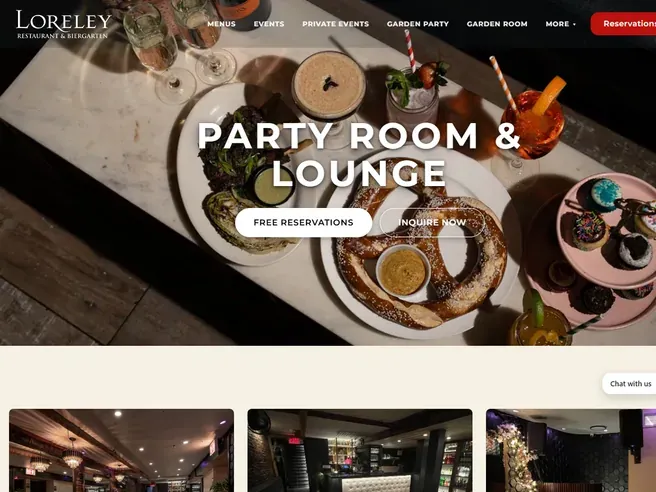
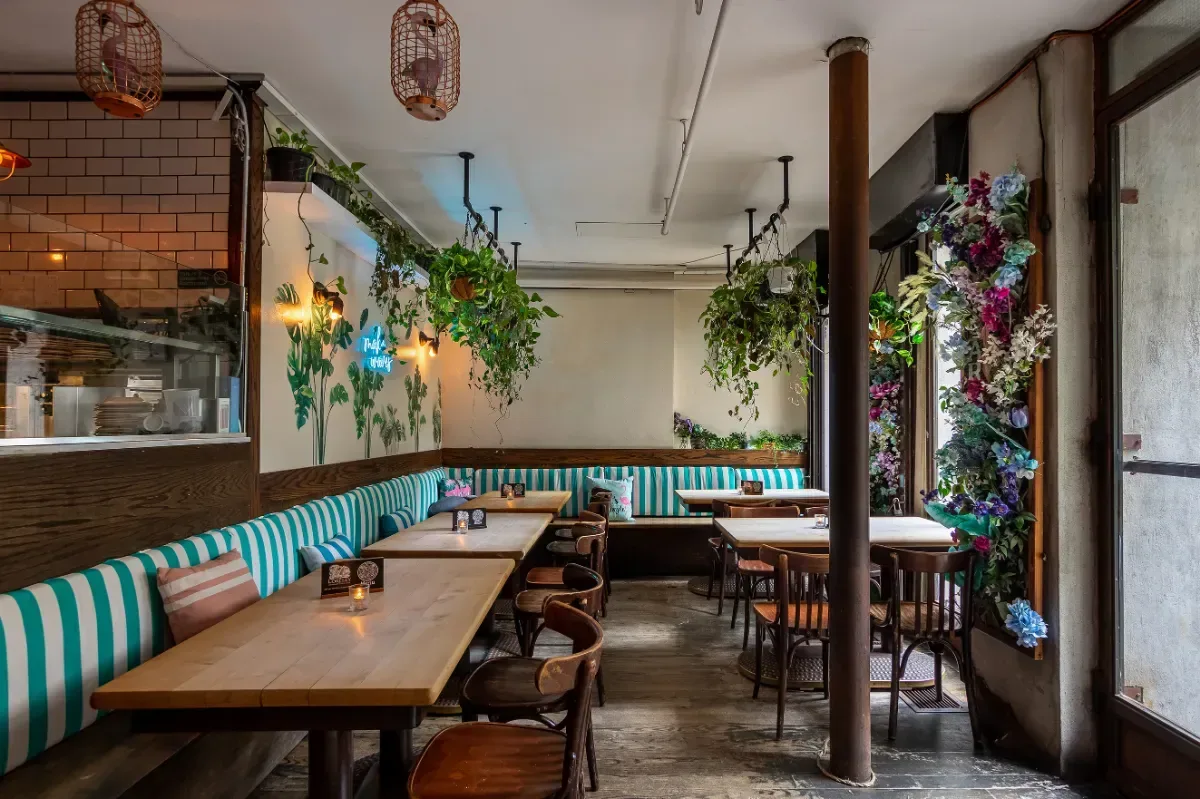
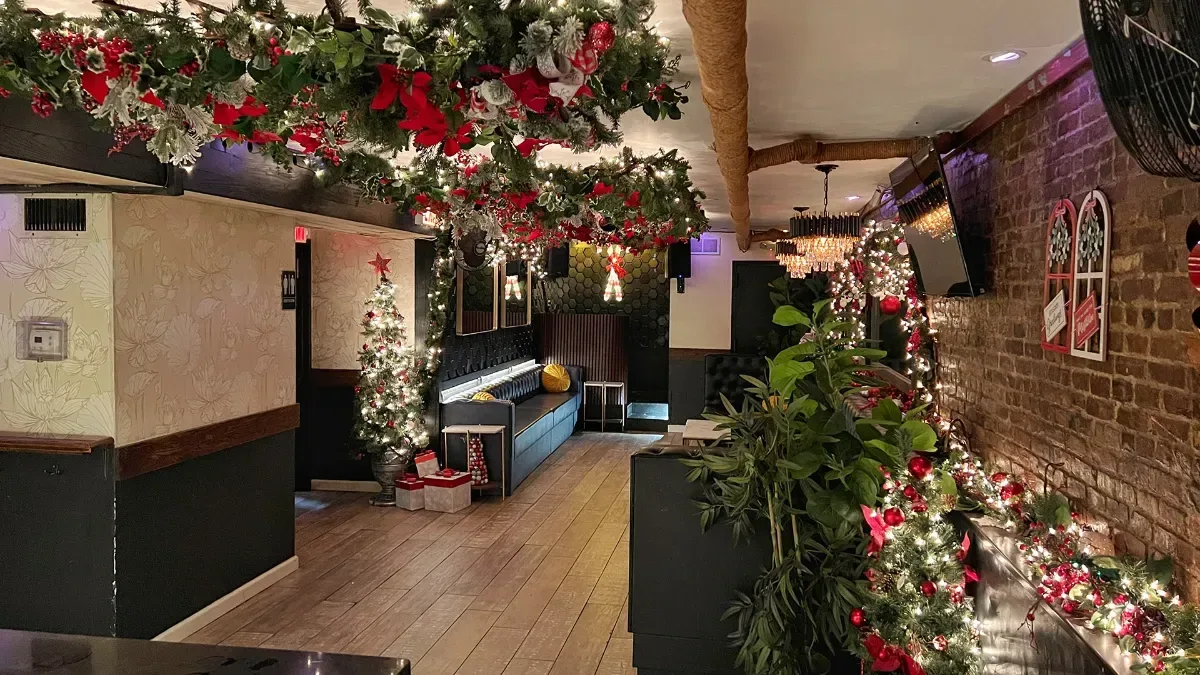
Questions about restaurant SEO services.
What owners ask us about search before they start.
What do restaurant SEO services include?
With us: a search page for every room, occasion and neighborhood you serve, seasonal pages that come back each year, your menu as text, and facts written plainly enough for assistants to quote. We keep it all current every month. Your free report shows what your Google listing is missing, and our monthly report counts inquiries, reservations and orders, not just visits.
How many search pages does a restaurant need?
One for each thing guests search for that you can answer well. Our own beer garden's site has 122, with 80 for private events and groups, and a smaller restaurant needs far fewer. A page with nothing specific to say helps no one. Start with your rooms and your biggest occasions.
What should a private room page include?
How many guests the room holds, seated and standing, and photos of that room. Then what is included, any minimum spend, the occasions it suits, and a way to ask about a date without calling. Our Garden Room page puts the capacity, a photo and two buttons on its first screen.
Are neighborhood pages for a restaurant considered spam?
They can be, when they are the same page with the place name swapped. Google's spam policies call that a doorway page. A neighborhood page is worth having when it says things true only there: the streets, the landmarks, how far you are and what brings people from that area.
How long does restaurant SEO take to work?
Fixes to your Google listing can show up quickly. New pages take weeks to be picked up and months to settle, and nobody can honestly promise a spot on page one. Judge it by inquiries and bookings each month, and give a new set of pages a full season before deciding.
Is SEO still worth it now that people ask AI assistants?
Yes, it has changed shape rather than gone away. Assistants build their answers from pages they can find and read, so clear pages with plain facts matter more, not less. What fades is thin copy stuffed with keywords.
How much do restaurant SEO services cost?
Agencies charge in very different ways: a monthly retainer, a fee per page or a one-off project. Be wary of anything priced as a percentage of your sales. Our search pages come with the websites we build, for one flat monthly fee, and the growth call ends with the real number for your restaurant.
Do I need a new website for SEO?
Not always, since the Google listing and the menu can be fixed first. Room, occasion and neighborhood pages need a site that can hold them and take the booking. Our website development page shows the sites we build, and our fit checklist helps you decide whether you need us at all.
Pages that stay yours.
- Search pages written, published and kept current every month.
- Your domain, your pages and your content, even if you leave.
- No percentage of the bookings your pages bring in.
What does search find now?
Your free report shows what Google and AI assistants find when guests search for what you offer, and who they find instead.
Or book a growth callWhich restaurant should we look at?
A free growth call with people who own a restaurant too. We map your first offer on the call.