Guide · 10 min read
How much do Facebook adscost a restaurant?
One Colorado restaurant spent $1,180 in a week and added $13,692 in sales. Here is how to read a week like that, and plan your own.
The short answer
Facebook ads cost whatever budget you set, daily or in total, and you can pause any time. The useful number is what that spend brings back. In one published week, a Colorado restaurant spent $1,180 and added $13,692 in sales, an 11.6x return. Judge your own ads on sales, over weeks, not days.
- You set the budget; the platform never bills past it.
- Measure added sales against the same week before.
- Give a campaign weeks, not days, before judging it.
At a glance
- Who sets the budget
- You do, per day or in total
- One published week
- $1,180 of ads, Colorado
- Sales it added
- $13,692 in that week
- Return on ad spend
- 11.6x
- Measure against
- The same week a year before
- Judge it after
- Several weeks, not the first days
Free AI visibility report
Ready for the ad clicks?
An ad sends people to look you up. See how your restaurant shows up on Google and in AI answers before you spend.
Asked an AI assistant
“Is the taco place from that ad any good?”
- 1.The taqueria on Elm Street
- 2.The cantina by the train station
- 3.The taco truck at the brewery
Your restaurant?
Your report checks: where ad clicks land
FreeAbout a minuteNo card
Decide what the week must bring back
Before a dollar goes to Facebook, write down two numbers: the most you will spend this week, and the extra sales that would make it worth it. The platform never bills past the budget you set, so the first number is fully yours.
The second number is the one owners skip, and it is the one that decides whether ads are expensive.
Do this todayWrite this week's ad limit and the sales you need back on one sticky note.
Spend on the food you film
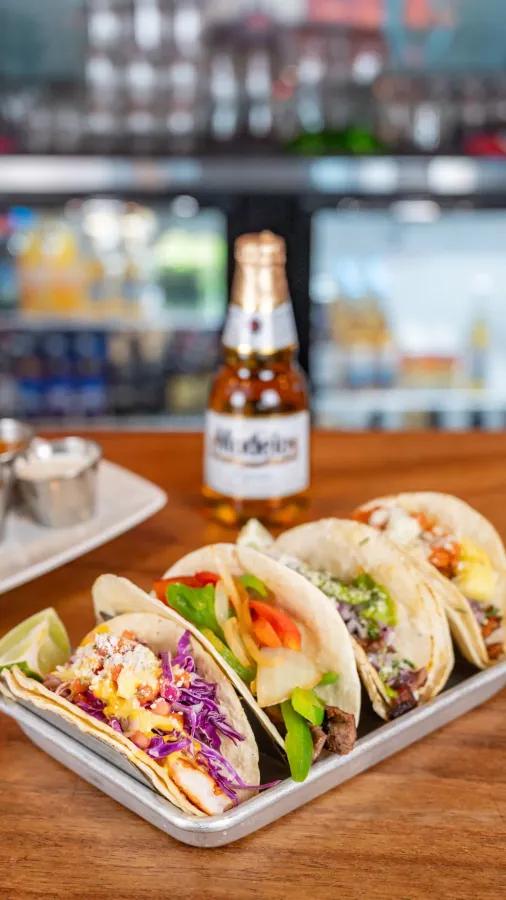
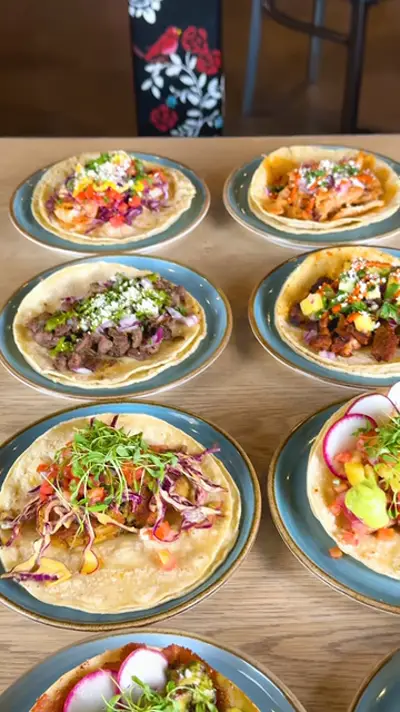
The ad bill pays for people seeing your ad. What they see decides whether they come. A few seconds of real food on a real table does more for each dollar than a flyer with a coupon on it.
Count the footage as part of the cost. One good shoot can feed weeks of ads, so its price spreads across every campaign it supplies. Our content team shoots restaurants nationwide.
Do this todayFilm your best-selling dish three times this week, in daylight, on a phone.
Read the week against last year
A Colorado restaurant spent $1,180 on one week of ads on our 3X Advertising System. Its weekly sales report showed $13,692 more than the same week a year earlier. That is an 11.6x return: every dollar of ads sat beside about $11.60 of added sales.
Comparing with the same week last year keeps season and holidays out of the answer.
Chart · one real result
A Colorado restaurant added $13,692 in sales in one week on $1,180 of ads.
One week on our 3X Advertising System: the ad bill next to the sales it added, an 11.6x return.
See the numbers
The numbers
| One week | |
|---|---|
| Spent on ads | $1,180 |
| Added sales | $13,692 |
| Return on ad spend | 11.6x |
Do this todayPrint last year's sales for the same week before your ads go live.
Want your ad spend checked?
A free growth call with people who own a restaurant too. We look at what you spend and what it brings back.
Book a growth call By video · free · nothing to prepare
Wait two weeks before you judge
The first days of a campaign are the least reliable: the system is still learning who responds, and the neighborhood has barely seen the offer. One owner put it plainly in a Google review: “First month, it did not show at the beginning two weeks. But it did surprise us after. ION did make a good job and worth it!”
Decide the test length before you start, and hold to it.
Do this todayPut the date you will judge the campaign in your calendar now.
Turn the return into next month's budget
A return is a decision, not a trophy. If a week of ads clearly brought back more than it cost, the next question is whether more spend brings more guests, or the same guests more often. Raise it in steps and watch the return at each one.
If the return slips while the budget holds, change the video or the offer before you change the money.
Do this todayRaise the budget by one step only after two weeks of steady returns.
Where the money goes
The same dollar, spent three ways
Every one of these is paid for in the same ad auction. What you get back depends on what the dollar is aimed at.
| What you are paying for | A local campaign built to sell | A boosted post | A wide-area awareness ad |
|---|---|---|---|
| Who sees it | Yes:People within a few miles | Varies:Mostly followers and their friends | No:A whole region, most too far |
| What the dollar is asked to find | Yes:Orders, bookings or messages | Varies:Likes, comments and reach | Varies:Views, from anyone |
| Versions of the video | Yes:Several, the best keeps running | No:One post, as it is | Varies:Sometimes two or three |
| Where a tap lands | Yes:A page that books or orders | Varies:The post or your profile | Varies:Often the homepage |
| Sales traced back to it | Yes:Orders and bookings reported back | No:Rarely | Varies:Only if tracking is set up |
| A week to compare it with | Yes:Same week last year, written down | No:Usually none | No:Usually none |
| A stop rule | Yes:Agreed before the first dollar | No:Runs until the boost ends | Varies:Depends who runs it |
None of these is priced differently by the platform. The difference is where the money is pointed and what you count afterward.
The money, in more detail
How Facebook actually charges a restaurant
Facebook and Instagram ads are sold through one auction run by Meta. You choose what you want, such as people ordering online or messaging you, who should see it and how much you will spend, per day or as a total for the campaign. Each time there is room for an ad in someone's feed, every advertiser who wants that person competes, and the system picks which ad to show.
Most restaurant ads are paid for as they are shown, though some goals let you pay per click instead. Daily spending moves around, but over the campaign it stays within your budget. You can pause at any time and you are billed only for what ran. There is no contract and no minimum term with the platform.
What one Colorado week can and cannot tell you
The Colorado result is one week, published with its receipt: $1,180 of ads and $13,692 more in sales than the same week a year before. It tells you that a restaurant can add sales many times its ad bill in a single week when the audience is local, the footage shows the food and the result is counted against a fair baseline.
It does not tell you what your week will do. A different street, a different menu or a different season gives a different answer. That is exactly why the method matters more than the number. Write your target down, keep the comparison week honest and judge after weeks, not days. Every published result we have, with its receipt, is on our case studies page.
Return on ad spend, worked out on a napkin
Return on ad spend is the sales the ads added divided by what the ads cost. For the Colorado week that is $13,692 divided by $1,180, which comes to 11.6. Owners write it as 11.6x. The math is simple; the hard part is the top number, because you have to decide which sales the ads added and which would have come anyway.
Remember that it is sales, not profit. Food, labor and the offer itself come out of every added dollar. So a return that only just covers the ad bill is losing money, and a return well above it leaves room for the kitchen, the team and the video. Decide in advance what return is worth keeping for your margins.
Why the price per click is the wrong number
Owners often judge ads by the price of a click, because it is the number the platform shows first. But a cheap click from someone two towns away is worth nothing to a neighborhood restaurant, and a pricier click from someone who orders dinner for six tonight is a bargain.
The number that matters is what you spent for each thing you wanted: each extra cover on the target night, each catering order, each booked party. Divide the ad spend by the results, then compare that with what one result is worth to you. That is the only way a cost per click, per view or per anything becomes meaningful.
Free AI visibility report
Where does your restaurant show up?
See how you come up on Google and in AI search, next to the places near you. Free, ready in minutes.
Your report checks: where ad clicks land
FreeAbout a minuteNo card
What makes the same budget go further
Two restaurants spending the same amount can get very different results. The price of each view moves with the auction, and these are the things that move it most:
- The audience: a tight circle of people nearby costs less to reach often than a region you cannot serve.
- The season: the weeks before big holidays are crowded, because every business wants the same people.
- The ad itself: ads people watch and react to tend to be shown more cheaply than ones they scroll past.
- The goal you pick: asking for orders, messages or bookings tells the system which people to look for.
- Where it shows: stories, reels and the feed each behave differently for the same video.
Knowing which sales the ads brought in
Online orders, reservations and party inquiries can be traced to the ad that sent the guest, as long as the pages that take them report back to your ad account. That is why we send ads to a website that takes the booking or the order itself, rather than to a link that leaves your site.
Walk-ins leave no trail, so measure them the way the Colorado week was measured: against a fair comparison. Look at sales on the nights an offer targets next to the same nights last year, and ask the team to note how many guests mention the ad. It is less precise than a tracked order, and far better than counting likes. Our walk-ins guide covers offers for slow nights.
The costs that never show up on the ad bill
The platform invoice is only part of what ads cost. Someone has to film the food, edit the video, write the offer, build the campaign, check it every few days and report what came in. The offer may cost something too, like a dessert on the house. If you do all of that yourself, your hours are the cost.
If you hire help, ask what the fee covers and keep the ad spend separate, in an account in your name. We charge one monthly fee agreed before we start, the ad spend goes straight to the platform and we take no cut of your bookings. Our budget guide lays out every line of a marketing budget.
Raise the budget, or change the ad?
Raise the budget when the return has held for a few weeks and the target nights still have empty seats. Raise it in steps, because the people most likely to come are reached first, and each extra dollar reaches people a little less likely to come.
Change the ad instead when the same people see it over and over, reactions fall week after week and results slip while the budget stays the same. A fresh video or a new offer usually does more than more money. The busiest weeks of the year deserve their own plan; our holiday guide covers when to spend more, and our Facebook ads service runs all of this for you.
FAQ
Questions about what Facebook ads cost
What owners ask us before they spend on Facebook and Instagram.
How much do Facebook ads cost for a restaurant?
As much as you choose to spend, because you set the budget per day or per campaign and can pause at any time. What matters is what the spend brings back. In one published week, a Colorado restaurant spent $1,180 and added $13,692 in sales. Start with an amount you can afford to test for several weeks, and raise it only when sales follow.
How much do Facebook ads cost per 1,000 views?
There is no fixed rate. The price of a thousand views is set by an auction and moves with your audience, the season and how people react to your ad. It differs from one restaurant to the next and from week to week. Your own ads account shows what you are actually paying once ads run. Judge it by what each order or booking cost, not by the price of views.
What is a good return on ad spend for a restaurant?
One that clearly beats your costs once food, labor and the offer come out of each added dollar. Sales are not profit, so a return that only just covers the ad bill is losing money. The Colorado week returned 11.6x, which is a published result, not a promise. Decide the return worth keeping for your own margins before the first ad runs.
How long should I run Facebook ads before deciding if they work?
Several weeks, decided in advance. The first days are when the system is still learning who responds and the neighborhood has barely seen the offer. Owners often see little in the first two weeks and more after that. Pick a judging date before you start and compare the weeks against the same weeks last year.
How do I know the sales came from the ads?
Online orders, reservations and inquiries can be traced to the ad when the pages that take them report back to your ad account. For walk-ins, compare the target nights with the same nights a year before and ask the team to note who mentions the ad. Neither method is perfect, and both beat counting likes. Our social media advertising page shows how we track it.
Why did my boosted posts not bring anyone in?
Usually the audience was too wide or the post had no clear next step. A boost often reaches people who already follow you or people too far away to visit. Aim at people within a few miles, show one offer and send them to a page that books or orders. Then measure against a comparison week.
Is it better to advertise a restaurant on Facebook or Instagram?
You rarely have to choose, because both are bought in the same place and one campaign can run on both. Instagram's reels and stories suit short food video, and Facebook still reaches plenty of local people who rarely open Instagram. Run both, then look at where the orders and bookings actually came from. Our Instagram ads page covers the reels side.
Do I pay an agency on top of the ad spend?
If you hire one, yes: the fee pays for the video, the campaigns and the tracking, and the ad spend goes to the platform. With us the fee is one monthly amount agreed before we start, with no cut of your bookings. Keep the ad account in your own name either way. Our fit checklist helps you decide whether to run ads yourself.
Free AI visibility report
Make every ad click count.
See what people find when an ad sends them to look you up on Google or in AI answers. Free, ready in minutes.
Or book a growth callFree
Which restaurant should we look at?
Free, ready in minutes. No card, no call required.
Before you go
281 parties. Five months. One restaurant.
1,163party inquiries
281parties booked
$326,963event value
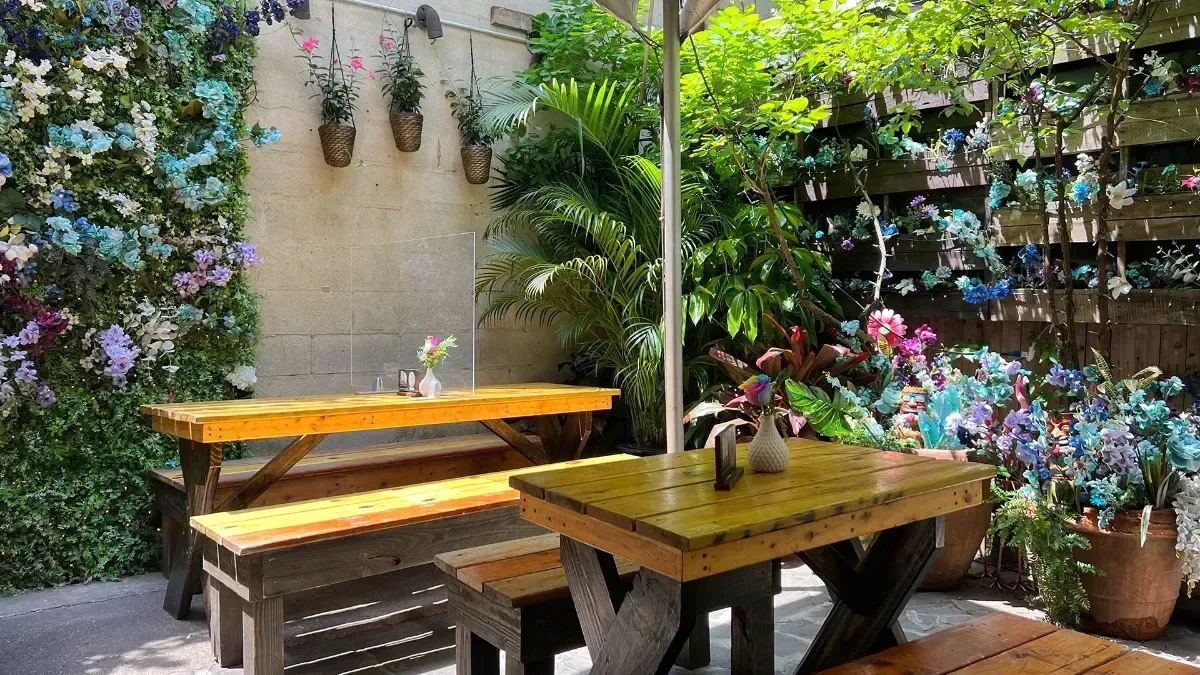
The case study from our own beer garden: what we built and every number traced to its source.