Restaurant marketing agencyin New York City
We have owned Loreley Beer Garden at 7 Rivington Street since 2003. Every New York plan we write splits the visitor calendar from the regulars who keep you open.
Two restaurants at one New York address
We have run Loreley Beer Garden at 7 Rivington Street on the Lower East Side since 2003, and our agency works from the same address. More than twenty years behind one bar teaches a simple lesson: a New York restaurant is really two businesses sharing one kitchen. One serves the people who live and work within a few blocks and come back week after week. The other serves visitors who will eat with you once, maybe twice, and then go home. Each needs its own calendar, its own offer and its own ads.
Most restaurant marketing treats them as one crowd. The same post goes to everyone, the ad is aimed at the whole city, and the slow weeks arrive as a surprise. This page lays out how we plan the two calendars separately for a New York room, with the city's real dates, neighborhoods and office patterns, and the same thinking we use for our own garden on Rivington Street.
The visitor calendar, wave by wave
The city welcomed about 65 million visitors in 2025, and its tourism office forecast 66.3 million for 2026. They do not arrive evenly. They come in waves around dates that are published months ahead, which gives a restaurant one real advantage: the offer, the photos and the ads can be ready before a visitor has picked where to eat. These are the waves we plan most rooms around.
A visitor plans differently from a neighbor. They search on a phone from a hotel room or a sidewalk, they want to know what makes a place worth one of their few dinners in town, and they book in a tap or walk straight in. So visitor ads lead with the signature dish and the room, run only while the crowd is here, and aim at the streets and hotels near you, never at all 300 square miles.
- Mid-March: the St Patrick's Day Parade runs up Fifth Avenue from 44th to 79th Street. In 2026 it fell on Tuesday, March 17.
- Late June: the Pride March, Sunday June 28 in 2026, brings one of the year's biggest crowds downtown.
- Late summer: the US Open in Flushing Meadows, August 23 to September 13 in 2026, with fans staying all over the city.
- September: the Feast of San Gennaro on Mulberry Street, September 17 to 27 in 2026, its 100th year.
- November and December: Marathon Sunday on November 1, then the holiday season, when out-of-town groups plan their dinners weeks ahead.
The regulars' calendar runs on the office week
The neighbors and office crowds who keep a room open all year follow a different clock. A March 2025 survey of large employers found 57% of Manhattan office workers in on an average weekday, about three quarters of the pre-pandemic level, and phone-location counts from 2023 put Thursday as the Financial District's busiest day on foot. Midtown and downtown rooms feel that rhythm in their lunch covers and their after-work bar.
The year has its own shape too. January and February are usually the slowest months for restaurants, with January dining running about 11% below the rest of the year, just as the visitor waves thin out. NYC Restaurant Week ran January 20 to February 12 in 2026, with a second round July 20 to August 16. Roadway dining is allowed April 1 to November 29, and sidewalk cafes may stay open year-round.
So the regulars get the opposite of the visitor plan. Near offices, more of the budget sits behind the days people are actually in, with an after-work offer that names the hour. In residential blocks, Monday and Tuesday are when people who work from home look for a reason to leave the apartment. Our guide to winning walk-ins on slow nights shows how one weekly offer is chosen and tested.
See how you come up on Google and in AI search, next to the places near you. Free, ready in minutes.
Which neighborhoods lean visitor, which lean regular
The split changes a few avenues apart, and it decides how a restaurant's money should be spent. Before we write an ad, we place the restaurant on this map. Your own sales report always has the last word; these are the patterns we start from.
Most rooms sit somewhere in the middle, so the question is never visitor or regular but how much of each, and in which weeks. A Hell's Kitchen room may put most of its spring budget behind the theater crowd and switch to neighbors in January. A Jackson Heights kitchen may never chase a visitor at all. The plan follows the mix, not the borough.
- Hell's Kitchen: Restaurant Row on West 46th feeds the pre-theater crowd before 7 or 8pm curtains. Ninth Avenue's small rooms of ten or twelve tables lean on neighbors.
- Lower East Side: Ludlow Street's bars and music rooms draw weekend visitors; the blocks around Rivington and Delancey keep a steady neighborhood crowd.
- Koreatown: West 32nd Street, co-named "Korea Way", has rooms open around the clock, serving office workers, visitors and Midtown regulars in turn.
- Financial District: Stone Street's cobblestones and communal tables fill after work, busiest on Wednesday and Thursday evenings. An office-week neighborhood.
- Chinatown: Mott, Pell and Doyers Streets serve residents every day and visitors on weekends, often at the same tables.
- Flushing and Jackson Heights: the food court by the 7 train's last stop at Flushing-Main Street, and the kitchens around 74th Street. Regulars first.
- Brooklyn and the Bronx: Smorgasburg Saturdays on Kent Avenue, April to October, draw visitors; Arthur Avenue's market, open since 1940, and Bay Ridge's Third Avenue run on locals.
- Astoria and Long Island City: Greek tavernas along Ditmars Boulevard, waterfront rooms on Vernon Boulevard by Gantry Plaza. Neighborhood weeknights, destination weekends.
Two ads, two audiences, one restaurant
Once the mix is clear, we build two sets of ads instead of one. The visitor set goes to people physically near you and near the hotels around you, with the signature dish, the room and a booking button up front. The neighbor set goes to people who live and work within a few blocks or a few subway stops, with this week's reason to come back. The budget moves between them with the calendar: more to visitors in their waves, more to regulars in the quiet stretches.
An American restaurant in Manhattan on our ad system saw more weekend sales and more tourists at its tables in its first month. We publish it exactly as the owner reported it, with no budget or menu added, and the receipt is on our case studies page with every other published result. Our advertising system explains how the weekly ads are built.
Testing it on our own room first
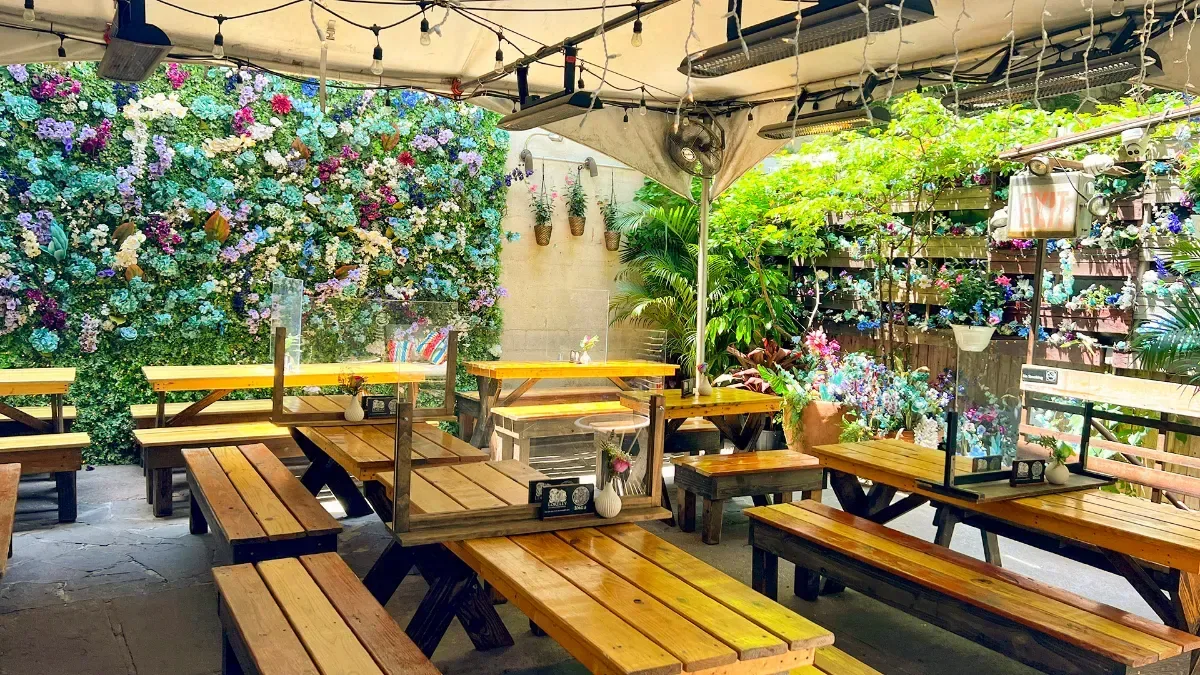
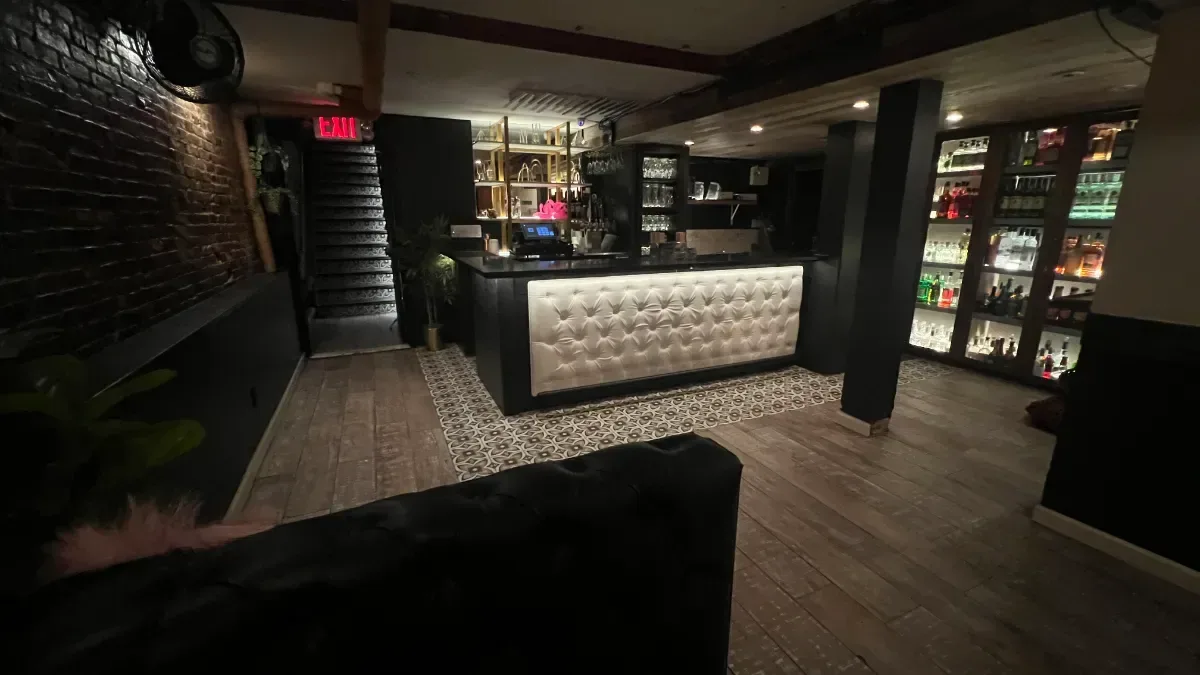
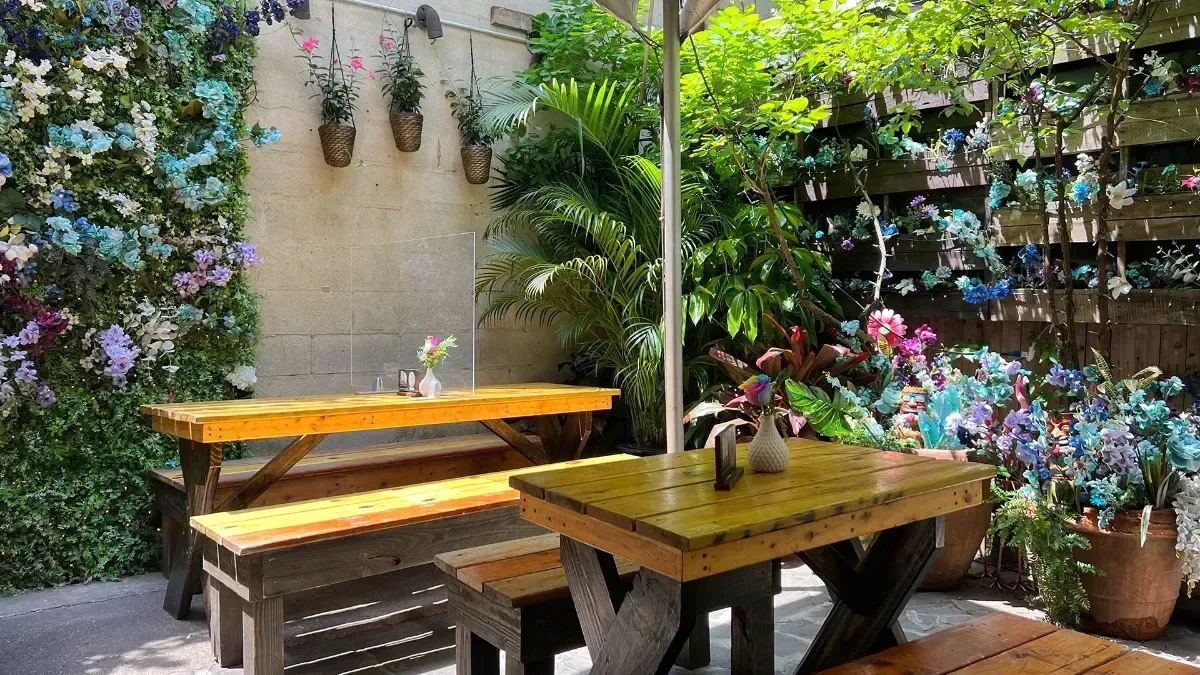
Everything we suggest to a New York client, we have tried on Rivington Street first. Our photo-first approach to shoots was developed at Loreley, and the garden is our test kitchen for offers, seasonal decor and party pages. It has three private spaces: the Party Room and Lounge for up to 65 with its own bar, the garden for up to 24 seated at long picnic tables, and the indoor Garden Room for up to 22 seated, all under a 20-foot flower wall and a menu that changes with the season.
Owning the room keeps the advice honest. We feel a quiet January the same week our clients do, and we see which weekly offers bring neighbors back and which only look good on a feed. Our beer garden case study shows the whole system at work, each number traced to its source, and our private events system is what fills those three rooms.
A shoot in a small New York dining room
New York rooms are tight, lunch starts early and nobody wants a crew in the way of service. We plan the shoot around your hours with a short list agreed on the call: the dishes your offers are built on, the room set the way guests see it, the bar, and any private room set for a party. One shoot day gives weeks of photos and short videos, shot vertical for phones and wide for your own booking site.
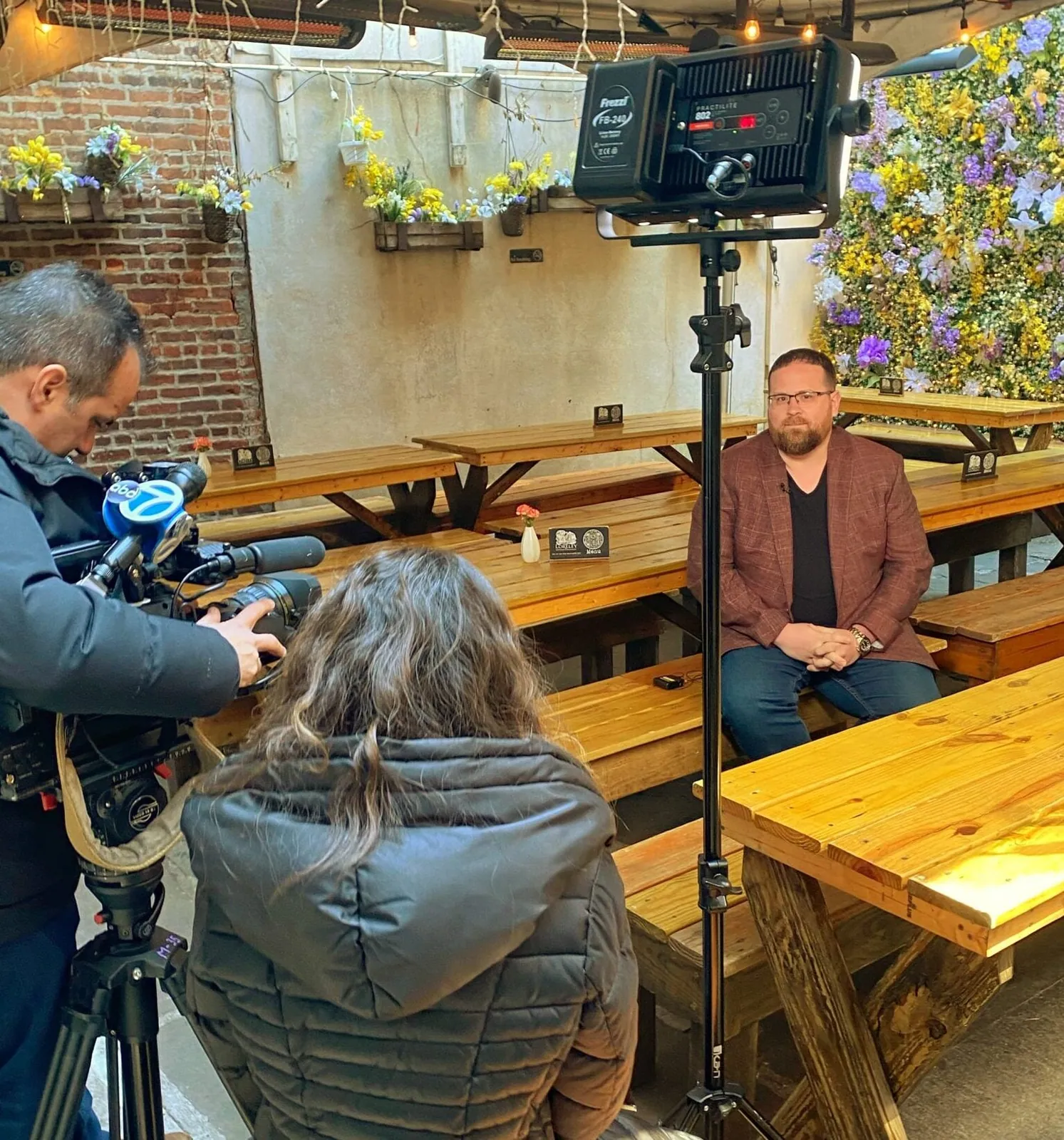
Our home base is here, so a shoot anywhere in the five boroughs is a trip across town, and coming back for the holiday menu or a new room is easy. Local TV news has filmed in our own garden too, and the crew is in the pictures below. Our content creation page shows how the footage becomes posts, reels and ads for each of the two crowds.
One feed. Two crowds.
Most New York restaurants send one message to everyone, and the visitor and the regular both scroll past it.
Visitors gone by Sunday
A visitor chooses this week's dinners on a phone. An ad that runs after they fly home is money spent on nobody.
Regulars told nothing new
The neighbor who comes in every Tuesday sees the same post a tourist sees, with no reason to come this week.
January caught unready
The visitor waves end, the office week thins, and the slowest stretch arrives with no offer planned. See our holiday marketing guide.
Visitors ask an assistant first.
A group downtown asks a phone where to go tonight and gets three names. If your pages never mention your neighborhood, it has nothing to go on. Our restaurant SEO service builds those pages.
- 1.The beer hall on the cornerLong tables, good for groups.
- 2.The wine bar two blocks northSmall plates, quieter.
- 3.The taqueria by the parkFast, open late.
Our own garden, and the camera in it
Pictures from the room we own on Rivington Street and from our shoots. Captions say what each one shows.
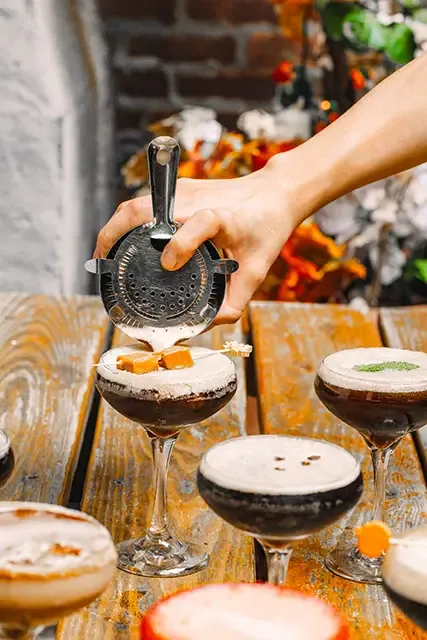
A Manhattan room, month one.
Every result we publish carries the owner's own receipt. This one is an American restaurant in Manhattan, reported after its first month on our ads.
An American restaurant in Manhattan, in its first month on our ads.
The same restaurant and the same month, as the owner reported it.
Loreley Beer Garden on Rivington Street, which we own and market ourselves.
A plan for each crowd.
Run from Rivington Street by people who keep a New York room busy too.
A visitor calendar
The parade, Pride, the US Open, San Gennaro, Marathon Sunday and the holidays, each with an offer ready early.
A regulars' plan
A weekly reason for neighbors and office crowds to come back, set to the days they are near you.
Ads by the block
Visitor ads near you and your hotels; neighbor ads within a few blocks or a few subway stops.
Shoots in your room
Photo and video planned around service, from your signature dish to the private room set for a party.
A site that books
Reservations, party inquiries and ordering on your own domain. See website development.
A report per crowd
Inquiries, bookings and orders each month, so you can see which calendar is paying.
New York owners ask us these.
Visitors, regulars and the city's calendar, answered by people who run a room here too.
Do you really own a restaurant in New York?
Yes. We own Loreley Beer Garden at 7 Rivington Street on the Lower East Side, open since 2003, and our agency works from the same address. The ad system and the photo-first shoots we sell were developed there before any client had them. Our case study shows the system at work in our own rooms.
Should a New York restaurant market to tourists or to locals?
Both, but never with the same ad. Visitors need the signature dish and a booking button while they are in town; regulars need a reason to come back this week. We work out your mix from your neighborhood and your sales, then split the budget by the calendar. A Hell's Kitchen room and a Jackson Heights kitchen end up with very different plans.
Which visitor weeks are worth planning for?
The ones that put crowds near your door: the St Patrick's Day Parade on Fifth Avenue, Pride in late June, the US Open in Flushing Meadows, San Gennaro on Mulberry Street, Marathon Sunday and the holiday season. Each gets its offer and photos weeks ahead, and ads aimed only at the streets the crowd will pass. Our holiday marketing guide shows how a big date is planned.
What happened at the Manhattan restaurant you mention?
An American restaurant in Manhattan saw more weekend sales and more tourists at its tables in its first month on our ads. We publish it as the owner reported it, without adding a budget or a menu. The receipt is on our case studies page, next to every other published result.
Is NYC Restaurant Week worth joining?
It can be, because it lands in January and February, the slowest months of the year for most rooms. It brings price-minded diners in when the room would otherwise be quiet. The work is turning them into regulars at full price. If you join, we aim the ads at your neighborhood and follow up with a reason to return; if you sit it out, your regulars get their own offer in the same weeks.
Do you shoot in all five boroughs?
Yes. Our home base is in the city, so a shoot from Arthur Avenue to Bay Ridge is a trip across town. We plan it around your service hours with a short list agreed on the call. One shoot day gives weeks of photos and short videos, and social media management turns them into a posting calendar.
How do we keep regulars coming back between the big weekends?
Give them one clear reason each week, aimed at the blocks where they live and work, on the days they are actually nearby. A weekly offer that names the day and the hour beats a pretty post with no ask. Then make the next step easy: a booking button, an inquiry form, an order link. Our restaurant marketing checklist covers the basics in order.
Which crowd finds you now?
See how your restaurant shows up when a visitor or a neighbor near you searches for dinner tonight. Free, ready in minutes.
Or book a growth callWhich restaurant should we look at?
A free growth call with people who own a restaurant too. We map your first offer on the call.