

TL;DR:
- Promotional restaurant content includes time-sensitive offers and event announcements designed to encourage immediate customer action.
- It should comprise 10% to 33% of your overall content to prevent audience fatigue and maintain engagement.
Promotional restaurant content is defined as time-sensitive digital marketing material designed to drive immediate sales, bookings, and reservations. Think special offers, event announcements, flash deals, and booking reminders. Industry experts recommend keeping this type of content between 10% and 33% of your total content mix to keep your audience engaged without burning them out. Get the balance right, and your restaurant marketing content works harder for you. Get it wrong, and you lose followers fast.
What is promotional restaurant content, and what types work best?
Promotional restaurant content is the category of restaurant marketing content built around one goal: getting people to act right now. It is not educational content about your sourcing story. It is not an inspirational shot of your dining room at golden hour. It is a direct call to book, order, or show up. Common formats include:
- ️ Special offers and discount announcements (e.g., “20% off all entrées this Sunday”)
- Event announcements for ticketed dinners, live music nights, or holiday seatings
- ⏰ Booking reminders with a clear deadline or limited-seat warning
- Limited-time deals tied to a specific date or inventory
- Flash promotions sent via SMS or pushed through social stories
The channel matters as much as the format. Email, social media, and SMS each play a distinct role in delivering these messages. Social media gives you broad reach and discoverability. Email reaches people who already know you. SMS hits them when urgency is highest.
Video is the format restaurant owners consistently underestimate. Raw, authentic video of a chef plating a dish or a bartender pouring an over-the-top cocktail outperforms polished studio ads in engagement. Diners want to feel the experience before they book. A 15-second reel of your kitchen at peak service does that better than any graphic. Explore more scroll-stopping video formats that work specifically for restaurants.
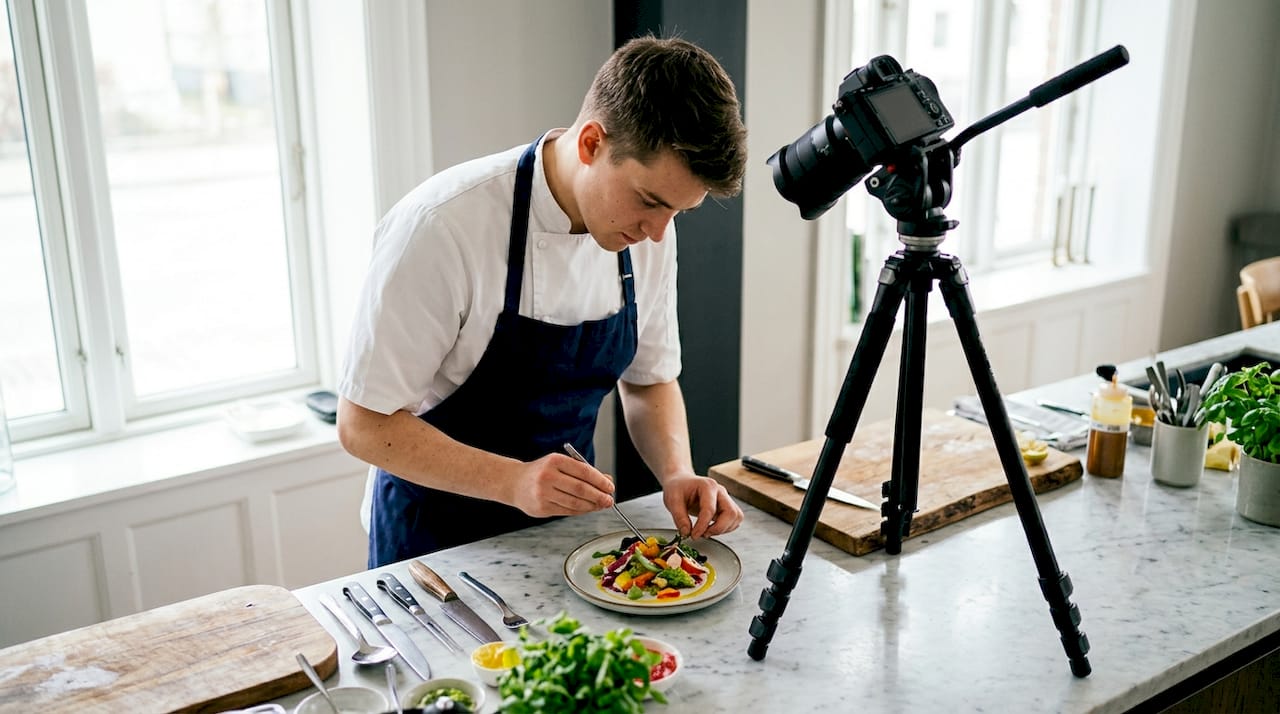
Pro Tip: Film your most visually dramatic dish being plated, with no music or voiceover. Post it raw. The sound of the sizzle and the steam sells the table better than any caption.
How much promotional content should restaurants share?
The right proportion of promotional content is not a matter of opinion. It is a documented risk management decision. Post too much promotional material and your audience tunes out. Post too little and you leave revenue on the table.
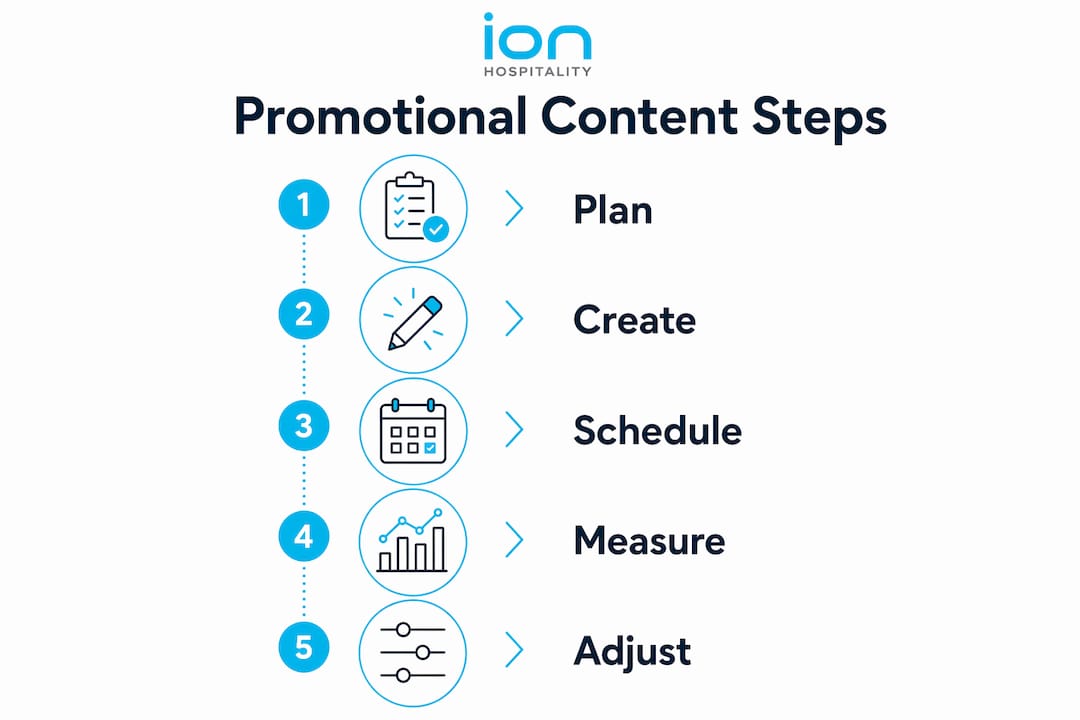
The 30/30/30 content framework divides your content into three equal buckets: educational, inspirational, and promotional. Educational content covers things like ingredient sourcing, chef profiles, and cooking techniques. Inspirational content includes atmosphere shots, customer stories, and seasonal imagery. Promotional content is your offers, events, and deals. The remaining 10% can be community or user-generated content.
Here is how a balanced weekly content schedule might look across channels:
| Content type | Share of mix | Examples |
|---|---|---|
| Educational | 30% | Chef Q&A, sourcing story, recipe tip |
| Inspirational | 30% | Atmosphere reel, seasonal dish photo |
| Promotional | 10%–33% | Flash deal, event booking, limited-time offer |
| Community | Up to 10% | Guest repost, local event mention |
Overloading your feed with promotional posts conditions your audience to scroll past you. Worse, it trains your most loyal customers to wait for a discount before they visit. That erodes your margins over time.
Pro Tip: Schedule your promotional posts for Tuesday through Thursday. Engagement on restaurant offers peaks mid-week when people are actively planning their weekend.
Which channels deliver the best ROI for restaurant promotions?
Not all channels are equal when it comes to effective restaurant promotions. The data is clear. Email marketing returns $36–$42 for every $1 spent. Paid social media returns approximately $1.75 per $1 spent. That gap is not a rounding error. It is a strategic signal.
Email works because you own the list. No algorithm decides who sees your offer. No platform can cut your reach overnight. A well-built email list is the most valuable owned asset in your restaurant advertising strategy. Restaurant email campaigns built around specific offers, like a Valentine’s Day prix fixe or a Sunday brunch deal, consistently outperform generic newsletters.
SMS is the channel most restaurants ignore, and that is a mistake. SMS open rates beat email for urgent, time-sensitive promotions. A happy hour alert sent at 3:00 PM on a Friday gets read within minutes. That immediacy is something email cannot match. Use SMS for flash deals and last-minute seat availability.
Paid social media still earns its place in the mix, but for a different reason. Social ads drive discovery. They put your restaurant in front of people who have never heard of you. The ROI looks lower because you are paying for reach, not just conversion. Think of paid social as the top of your funnel and email as the bottom. Understanding how digital advertising drives bookings helps you deploy each channel at the right stage.
Short-form video on platforms like Instagram Reels and TikTok now functions as organic discovery for restaurants. A single viral clip of a signature dish can generate more reservations than a month of paid ads. The cost is your time, not your budget.
What practical strategies make restaurant promotions actually work?
The biggest mistake restaurant owners make with promotional content is running blanket discounts. A 20% off coupon sent to your entire list trains every customer to expect a discount. It kills your margins on customers who would have paid full price anyway.
The fix is segmentation and specificity. Here is a practical framework for promotions that protect your profitability:
-
Target slow days, not peak periods. Restaurants that fill slow days with targeted offers see increased visits without sacrificing revenue on busy nights. A Monday night deal does not cannibalize your Saturday.
-
Set a hard end date on every offer. Promotions with defined end dates prevent customers from conditioning themselves to wait for the next deal. “Available through Sunday” creates urgency. “Ongoing discount” creates dependency.
-
Use spend thresholds instead of flat discounts. “Spend $60, get a complimentary dessert” increases your average check size. A flat 20% off does the opposite.
-
Bundle experiences, not just food. A “Date Night Package” with a set menu, a cocktail pairing, and a reserved table sells at a premium. It also reduces decision fatigue for the customer.
-
Track every promotion. Measure views, click-throughs, redemptions, and revenue per campaign. Without this data, you are guessing. With it, you can double down on what works and cut what does not.
Integrate your promotional calendar with your menu changes, seasonal sourcing stories, and events. A new spring menu launch is a natural promotional moment. A local farm partnership is both an educational story and a promotional hook. The best restaurant content strategies weave these together so your promotions feel like news, not noise.
Pro Tip: Build a 90-day promotional calendar at the start of each quarter. Map every offer to a specific business goal: fill a slow day, launch a new item, or sell out a private event. Random promotions get random results.
Key Takeaways
Promotional restaurant content works best when it is specific, time-bound, and balanced within a broader content mix that includes educational and inspirational material.
| Point | Details |
|---|---|
| Define your promotional content | Promotional content is time-sensitive material designed to drive immediate bookings, orders, or visits. |
| Keep promotions at 10%–33% of your mix | Exceeding this range causes audience fatigue and conditions customers to wait for discounts. |
| Email delivers the highest ROI | At $36–$42 per $1 spent, email outperforms paid social by a wide margin for restaurant promotions. |
| Target slow periods, not peak ones | Promotions aimed at slow days increase revenue without eroding margins on your busiest nights. |
| Track every campaign | Measure views, redemptions, and revenue per promotion to refine your strategy over time. |
What I’ve learned about promotional content after years in restaurant marketing
Most restaurant owners I work with make the same mistake when they first think about how to promote a restaurant: they treat every post as a promotion. They post a deal, then another deal, then a discount, then a flash sale. Within a few weeks, their followers stop paying attention. The feed starts to feel like a coupon mailer, and nobody wants that in their social feed.
The shift that changes everything is treating promotional content as a reward for attention, not the default mode of communication. When you spend most of your content budget on stories, behind-the-scenes clips, and chef moments, your audience builds a genuine connection with your restaurant. When you drop a promotion into that mix, it lands differently. It feels like an insider tip, not an ad.
Raw video is the single biggest opportunity most restaurants are not taking seriously enough. I have seen a 20-second clip of a pasta being tossed in a pan outperform a $500 paid ad campaign. The authenticity is the product. Diners are not buying a meal. They are buying an experience they can feel before they arrive. A content strategy built around authentic moments, with promotions woven in at the right frequency, is what separates restaurants that grow from restaurants that grind.
Owned channels are also underbuilt at almost every restaurant I encounter. Your email list and your direct booking page are assets you control completely. No algorithm can take them away. Build those first, then use social media to feed them. The restaurants winning in 2026 are not the ones with the biggest ad budgets. They are the ones with the most engaged owned audiences.
— Doug
Ionhospitality can build your promotional content strategy
Running a restaurant is a full-time job. Building a content calendar, filming reels, writing email campaigns, and tracking ROI on top of that is a second job most owners do not have time for.
Ionhospitality specializes in social media advertising and full-service content strategy for restaurants. The team handles everything from promotional campaign planning to video content creation, all without taking a commission on your bookings or orders. If you want more customers in seats, more online orders, and a packed private events calendar, the next step is a discovery call to map out what your restaurant needs.
FAQ
What is promotional restaurant content?
Promotional restaurant content is time-sensitive digital material, such as special offers, event announcements, and booking reminders, designed to drive immediate customer action. It differs from educational or inspirational content in that its primary goal is a direct sale or reservation.
How often should restaurants post promotional content?
Industry guidance recommends keeping promotional posts between 10% and 33% of your total content mix. Posting more than that risks audience fatigue and trains customers to wait for discounts before visiting.
Which channel has the best ROI for restaurant promotions?
Email marketing delivers $36–$42 for every $1 spent, making it the highest-ROI channel for restaurant promotions. SMS is the best option for urgent, time-sensitive offers like happy hour alerts or flash deals.
Does raw video really outperform polished ads for restaurants?
Authentic behind-the-scenes video, such as a chef plating a dish in real time, consistently generates higher engagement than studio-produced promotional ads. The sensory immediacy of raw footage connects with diners in a way that polished content cannot replicate.
How do restaurants avoid losing money on promotions?
Target promotions at slow days rather than peak periods, set hard end dates on every offer, and use spend thresholds instead of flat discounts. These tactics protect your margins while still driving incremental visits and revenue.

Add a Comment