
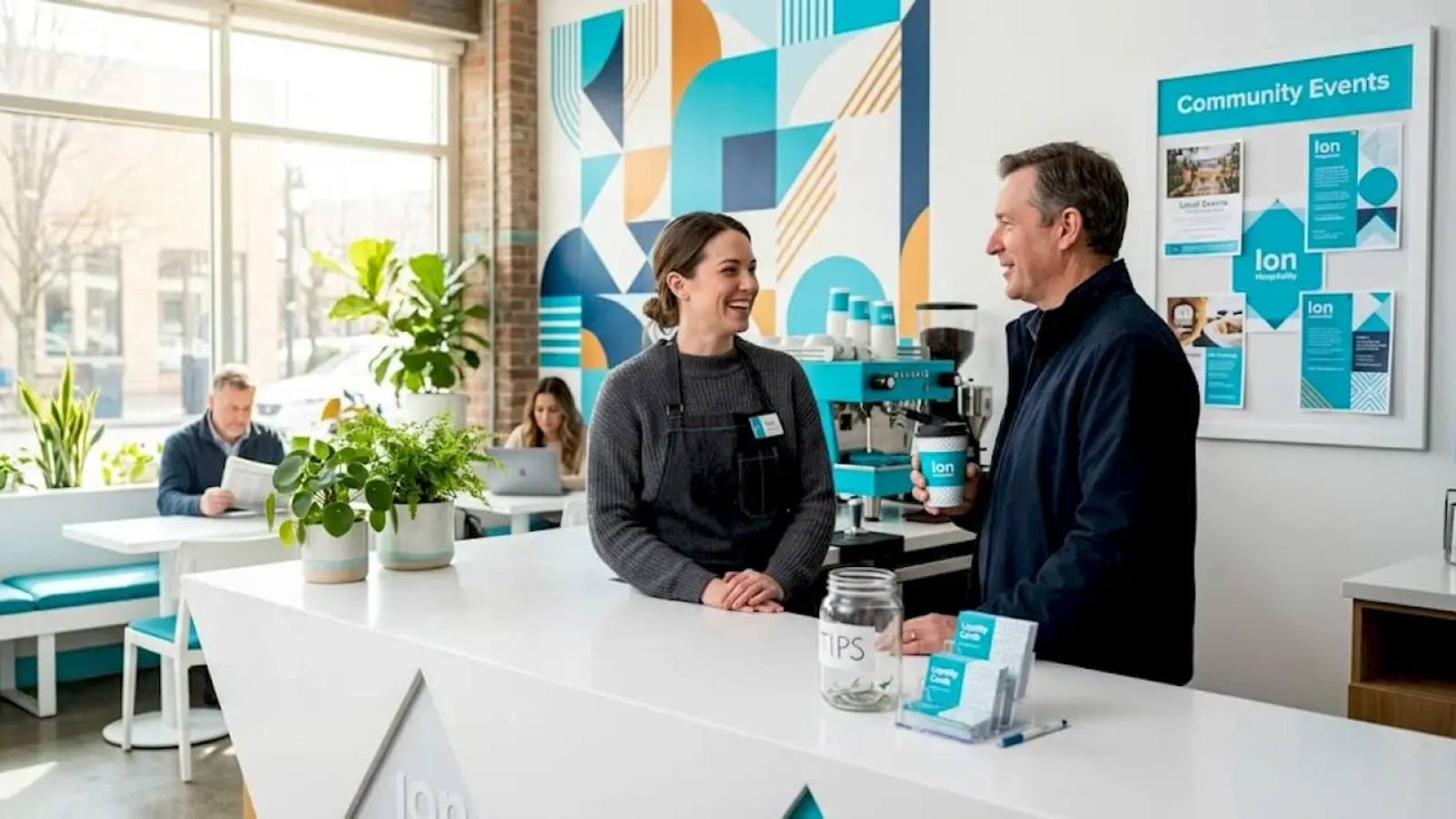
TL;DR:
- Connecting deeply with the community and providing consistent, personalized engagement builds trust and drives local customer loyalty. Gathering customer data, partnering with nearby businesses, and optimizing local SEO enhance visibility and repeat visits. Measuring key metrics over time helps refine strategies for lasting success, emphasizing relationship-building over quick marketing fixes.
You’re putting in the work, but foot traffic stays flat. 30% of consumers cite lack of awareness about local business offerings as a key barrier to visiting, even when they’d genuinely enjoy what you offer. Knowing how to engage local customers isn’t about running more ads or posting more often. It’s about building real connections inside your community, showing up consistently, and giving people a reason to choose you over the national chain down the street. This guide breaks down exactly how to do that, from understanding who your customers actually are to measuring whether your efforts are working.
Table of Contents
- Key takeaways
- How to engage local customers starting with real insight
- Building an authentic local presence
- Personalized, multi-channel communication that actually works
- Local SEO and digital tools that drive discovery
- Measuring what’s actually working
- My honest take on community-driven engagement
- Ready to turn local engagement into real revenue?
- FAQ
Key takeaways
| Point | Details |
|---|---|
| Know your community first | Gather customer data and map local demographics before launching any engagement campaign. |
| Show up in your community | Sponsor events, partner with nearby businesses, and host experiences that build genuine local trust. |
| Personalize every touchpoint | Use email, SMS, and social media with tailored messaging to increase repeat visits and loyalty. |
| Optimize for local search | A complete Google Business Profile and localized keywords drive high-intent customers straight to your door. |
| Track and adjust constantly | Monitor repeat visits, event attendance, and social interactions to refine what works. |
How to engage local customers starting with real insight
Before you send a single text or post a single reel, you need to understand who your local customers actually are. This is where most businesses skip a step and wonder later why their marketing isn’t landing.
Start by collecting the right data. Ask customers how they found you, what they love about the area, and what keeps them coming back. A short paper survey at checkout or a one-question pop-up on your website goes a long way. Social media listening is another underused tool. Search your business name and your neighborhood name on Instagram and TikTok to see what locals are already saying.
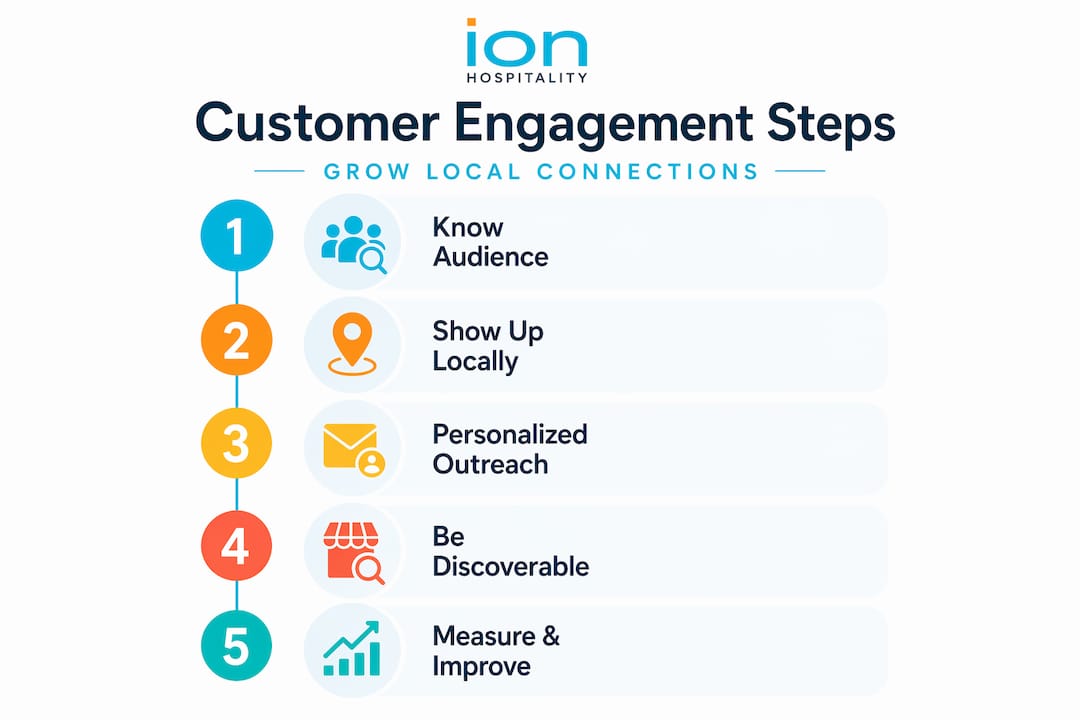
Your point-of-sale data tells a story too. Look at your peak hours, your top-selling items, and which promotions drove the biggest lift. These numbers reveal patterns about your customers’ behavior that no focus group can replicate.
Here’s the kind of data worth collecting on a regular basis:
| Insight Category | What to Track | Why It Matters |
|---|---|---|
| Purchase behavior | Top items, average spend, visit frequency | Identifies your most loyal customers |
| Discovery source | How customers heard about you | Shows which channels actually work |
| Demographics | Age range, neighborhood, family size | Helps tailor messaging and events |
| Community sentiment | Online reviews, social mentions | Reveals perception and trust gaps |
| Event participation | Attendance rates, post-event sales lift | Measures community engagement ROI |
Once you know who your customer is, you can speak directly to them. Businesses that connect deeply with their community and show up with ease and expertise hold a measurable competitive advantage. That starts with knowledge, not guesswork.
Building an authentic local presence
Community involvement is one of the most powerful ways to attract local clients, and it’s wildly underused. People trust businesses that show up beyond their four walls. Sponsoring a little league team, setting up a table at a neighborhood street fair, or donating to a school fundraiser puts your name in front of hundreds of locals with zero ad spend.
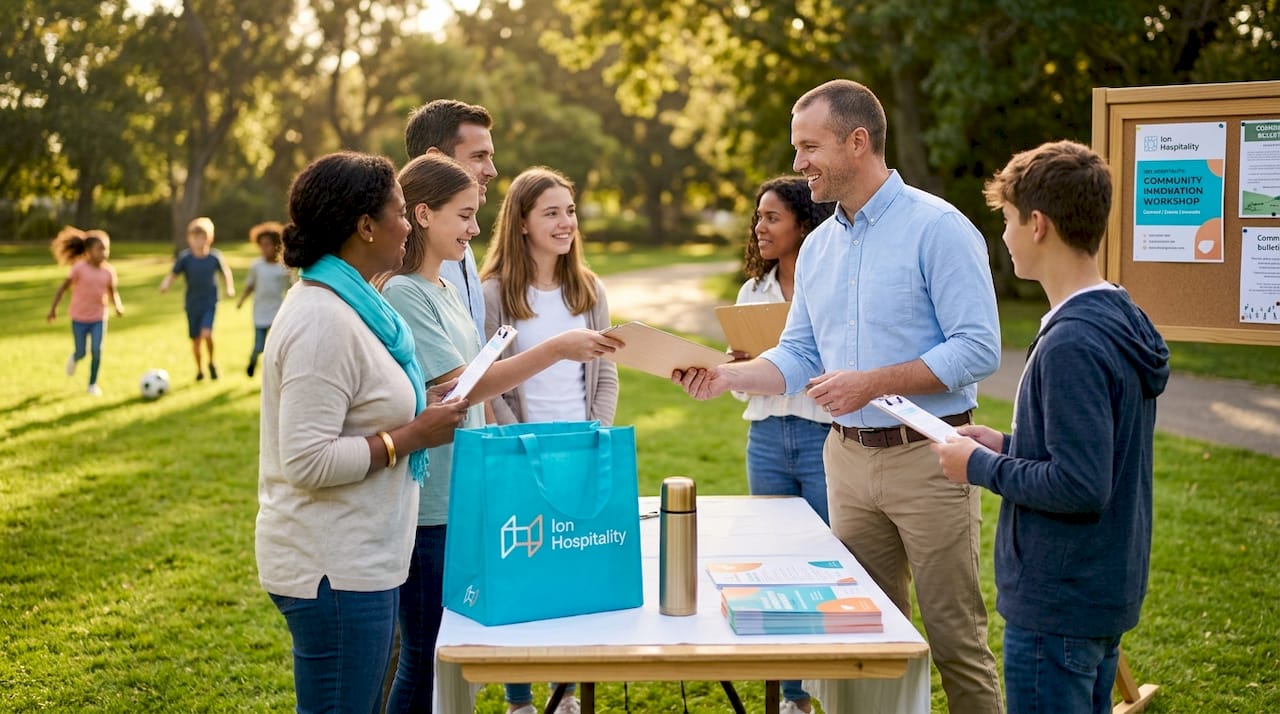
Partnerships with nearby businesses are especially effective. Co-marketing with neighboring businesses boosts sales for the entire block. Think about which businesses your customers visit before or after they visit you. A coffee shop, a yoga studio, a boutique. Offer each other exclusive deals or co-host a pop-up event. Everyone wins.
Pro Tip: When choosing a partner business, look for complementary audiences rather than identical ones. A wine bar and a florist share customers without competing for the same dollar.
Here are ways to build community presence starting this week:
- Sponsor a local event, even a small neighborhood block party
- Partner with 2 to 3 nearby businesses for a joint promotion
- Host a micro-event like a tasting, demo, or live music night
- Share behind-the-scenes stories that highlight your neighborhood ties
- Donate to a local cause and post authentically about why it matters
Micro-events and small in-store experiences like tastings, workshops, and demos can drive habit formation more effectively than traditional loyalty point programs. People remember experiences. They forget points.
Businesses that address local issues and showcase expertise build the kind of trust that leads to word-of-mouth referrals. That trust compounds over time when you stay consistent.
Personalized, multi-channel communication that actually works
Showing up in the community is one side of the coin. The other is how you communicate with customers between visits. This is where local customer engagement strategies either click or fall flat.
78% of consumers expect consistency across all communication channels, but only 45% actually experience it. That gap is your opportunity. When your email, text messages, and social media posts all tell the same story and feel like they come from the same human being, customers notice.
Here’s how the main channels stack up for local engagement:
| Channel | Best Use | Key Tip |
|---|---|---|
| SMS / Text Marketing | Flash deals, event reminders, loyalty rewards | Keep messages under 160 characters and always include a clear offer |
| Email Newsletter | Community stories, seasonal menus, staff spotlights | Personalize the subject line with the customer’s first name |
| Social Media | Community storytelling, real-time engagement, UGC | Respond to every comment and DM within 24 hours |
| In-Store Interactions | Relationship building, upselling, feedback collection | Train staff to remember regulars and use names |
Text message marketing grew 8% nationally in 2025, and 83% of consumers are open to receiving relevant direct messages from local businesses. That’s a massive, underused channel for restaurants and local shops. Use it for time-sensitive offers and event invites, not spam.
Pro Tip: Set up three automated but personalized sequences: a welcome message for new customers, a loyalty reward trigger after the third visit, and a re-engagement offer for anyone who hasn’t visited in 60 days. Automation is fine. Robotic messaging is not.
Personalized, human-centered engagement consistently outperforms automated communications. Customers recognize a copy-paste message instantly. Even one personal detail, like referencing their favorite order or the event they attended, changes the entire tone. Check out these tips for connecting with locals through social to see how restaurant-specific engagement on social media translates directly into more bookings.
Local SEO and digital tools that drive discovery
You can have the best community relationships in the city and still lose customers to a competitor who simply shows up higher in Google search. Tips for connecting with locals through digital channels start with one thing: being findable when intent is highest.
Over 90% of online experiences begin with a search engine, and more than 75% of users never scroll past the first results page. If you’re not on page one locally, you’re invisible to most of your potential customers.
Here’s what to prioritize for local SEO right now:
- ✅ Google Business Profile: Fill out every field. Add photos weekly. Respond to every review, positive or negative.
- ✅ Localized keywords: Use neighborhood names and city-specific phrases in your website copy, blog posts, and captions.
- ✅ NAP consistency: Your Name, Address, and Phone number must match exactly across every directory including Yelp, TripAdvisor, and your own website.
- ✅ Local landing pages: If you serve multiple neighborhoods, create a dedicated page for each one.
- ✅ Online reviews: Ask satisfied customers to leave a Google review while they’re still in your space. This is the single highest-impact habit you can build.
Pro Tip: Combine local SEO with your event promotions. Create a blog post or event listing for every micro-event you host. Use the neighborhood name in the title. It boosts your search visibility and gives you organic content at the same time.
Building a powerful restaurant online presence isn’t just about aesthetics. It’s about making sure the right people in your zip code find you at exactly the right moment. Digital visibility and community presence reinforce each other. The stronger both are, the harder it becomes for any competitor to take your customers.
Measuring what’s actually working
Running campaigns without tracking them is like cooking without tasting. You need real feedback to know if your local customer engagement strategies are producing results.
Start with the metrics that matter most to a local business:
- Repeat visit rate: Are the same faces coming back more often post-campaign?
- Event attendance: How many people showed up? How many were first-time visitors?
- Social engagement: Are your posts generating saves, shares, and real comments?
- Sales lift: Did revenue increase in the two weeks after a promotion or event?
- Review volume: Are you getting more reviews than last month?
Set a 30-day review cadence. Look at the numbers, identify what moved, and double down on it. If a tasting event brought in 40 new faces and your Instagram post about a daily special got 12 likes, you know where to put your energy.
The best practices for local marketing always include a feedback loop. Send a short three-question survey after an event. Read your reviews for recurring themes. Pay attention to what people mention when they walk in. That qualitative data is just as valuable as any spreadsheet.
Avoid these common pitfalls that disengage your audience:
- Posting only promotional content with no personality or community connection
- Going silent between campaigns with no regular touchpoints
- Ignoring negative reviews or responding defensively
- Treating all customers the same without any personalization
Strategies for how to increase repeat customers go hand-in-hand with measurement. When you know which engagement tactics drive return visits, you can build a repeatable system rather than guessing month to month.
My honest take on community-driven engagement
I’ve worked with enough local businesses to say this plainly: the ones that treat marketing as a relationship win. The ones that treat it as a broadcast lose, often slowly, but they lose.
In my experience, the biggest mistake I see is skipping the community investment phase and jumping straight to digital ads. Ads accelerate reach. They don’t create trust. Trust comes from showing up at the school fundraiser, from your staff knowing regulars by name, from responding to a negative Google review like a human being. Staff morale is critical to this entire equation. When your team genuinely loves the neighborhood and the customers feel it, retention goes up without a single paid campaign.
I’ve also seen business owners burn out chasing every channel at once. My take: pick two or three communication channels and go deep rather than spreading thin across six. Do SMS and Instagram well before you add email. Do email well before you add a loyalty app.
The businesses I’ve seen thrive long-term are the ones that identify and collaborate with neighboring businesses intentionally, not just for a one-off deal but as an ongoing strategy. Your block is your ecosystem. Treat it that way.
Realistic expectation: consistent community engagement typically shows meaningful results in 60 to 90 days. It’s not a quick fix. It’s a compounding asset.
— Doug
Ready to turn local engagement into real revenue?
If you’ve read this far, you already know that knowing how to reach nearby customers is only half the equation. Executing it consistently, across social media, events, and advertising, is where most local businesses need support.
At Ionhospitality, we specialize in social media marketing and advertising built specifically for restaurants and local food businesses. We create scroll-stopping content, run targeted ad campaigns, and help you sell more private events and catering packages, all with zero commissions. Whether you need to pack your dining room or sell out your next ticketed event, we handle the marketing so you can focus on the food. Explore our restaurant social media advertising services or book a discovery call to talk strategy with our team today.
FAQ
How do I start engaging local customers with no budget?
Start with what you already have. Ask satisfied customers to leave a Google review, respond to every comment on social media, and partner with one or two neighboring businesses for a free cross-promotion. Community presence costs time, not always money.
What is the most effective local customer engagement strategy?
Combining consistent community involvement with personalized multi-channel communication works best. Hosting micro-events and following up with attendees via SMS or email is particularly effective for driving repeat customer behavior.
How often should I post on social media to engage nearby customers?
Aim for at least four to five posts per week on your primary platform. Consistency matters more than volume. Focus on community storytelling, behind-the-scenes content, and quick responses to keep locals engaged between visits.
How does local SEO help me engage and attract local clients?
Local SEO puts your business in front of people actively searching for what you offer in your area. A fully optimized Google Business Profile with current photos, accurate hours, and recent reviews can drive more foot traffic than most paid ads at a fraction of the cost.
How long before local marketing efforts show results?
Most businesses see measurable engagement improvements within 30 to 60 days when combining community events, consistent social media activity, and local SEO updates. Sustained results compound over three to six months as trust and visibility build together.

Add a Comment