

TL;DR:
- Restaurant co-branding partnerships operate multiple brands in one location to boost visibility and revenue. Successful examples show that strategic alignment, operational simplicity, and demographic data are key to profitability. Co-branding also enhances real estate access and market leverage, benefiting both brand growth and customer experience.
Restaurant co-branding partnerships are defined as strategic alliances where two or more brands operate jointly under one roof to boost visibility, attract diverse customers, and increase revenue. The industry is moving fast on this model. Operators from Dine Brands to WOWorks are proving that the right restaurant co-branding partnership examples deliver results that a single brand simply cannot match. If you are a restaurant owner looking to grow without doubling your overhead, this is the playbook worth studying.
What makes a restaurant co-branding partnership successful?
The strongest co-branded restaurants share three things: complementary customer bases, aligned brand values, and operational simplicity. When those three factors line up, the partnership runs itself. When they do not, you get confusion at the counter and friction in the kitchen.
Here is what separates the winners from the ones that quietly close:
- Complementary dayparts Two brands that serve different meal occasions, such as breakfast and dinner, fill the location’s revenue potential across the full day.
- Shared operational infrastructure Kitchens, staff, and POS systems that can support both brands without doubling costs are the backbone of a profitable unit.
- Behavioral alignment Successful partnerships align with what customers already do, rather than asking them to change habits. This is the single most overlooked factor.
- Distinct brand zones Design discipline matters. Each brand needs its own thematic space within the dining room to protect its identity and customer experience.
- Data-backed partner selection Operators who use demographic and performance data to vet partners report better financial outcomes than those who rely on gut instinct.
Pro Tip: Before signing any co-branding agreement, map out a full day of operations hour by hour. If the two brands create scheduling conflicts or require incompatible prep workflows, the partnership will cost more than it earns.
The brand positioning of each partner must also hold up independently. A co-brand that dilutes one partner’s identity will erode customer trust over time, even if the short-term sales numbers look good.
Top restaurant co-branding partnership examples driving revenue growth
These are the collaborations producing real, measurable results. Study each one for the specific mechanic that made it work.
1. Applebee’s and IHOP dual-brand model
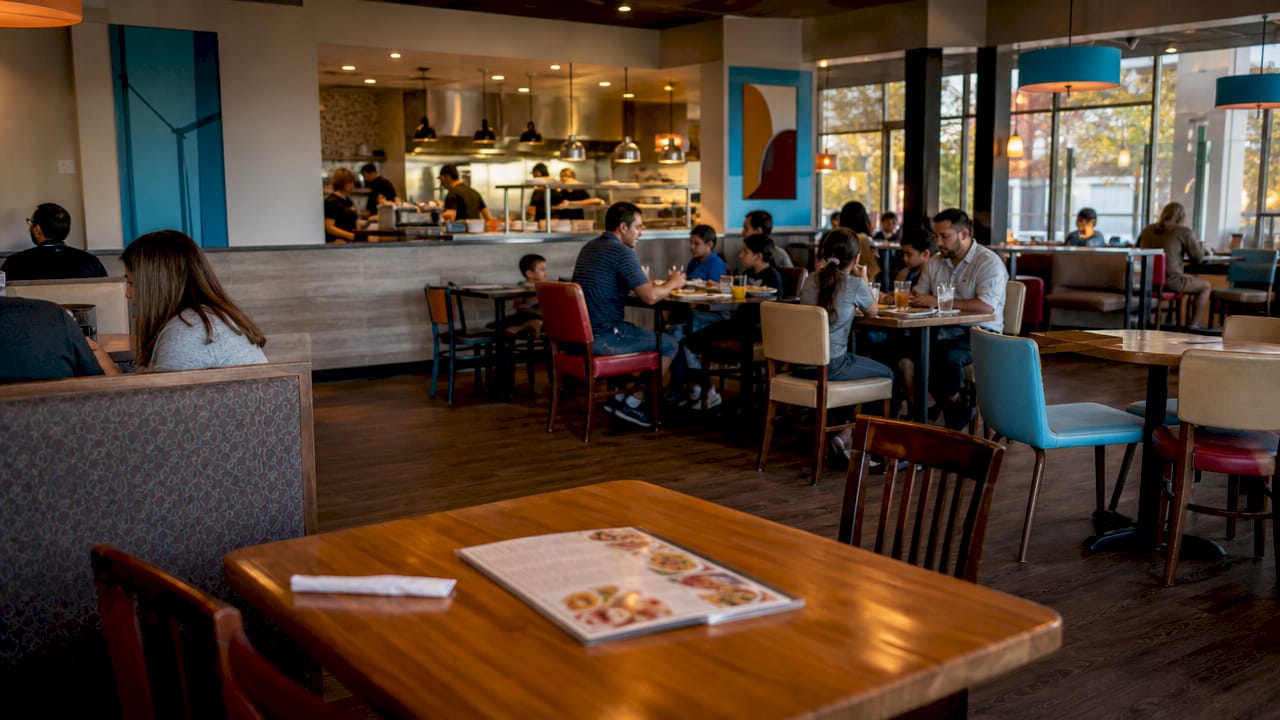
Dine Brands combined its two flagship chains into one physical location, sharing a kitchen and staff while maintaining separate menus and distinct dining identities. The results are hard to argue with. Dual-branded Applebee’s and IHOP test locations generated triple the sales of single-brand restaurants. Dine Brands now plans to open 900 dual-brand locations over the next decade, targeting roughly 28% of their combined domestic footprint. That is not a pilot program. That is a full strategic pivot.
2. Cold Stone Creamery and Wetzel’s Pretzels
This pairing works because the two brands serve the same occasion: a mall visit or an afternoon snack run. Nearly 20% of new Cold Stone franchisees choose co-branded units, which typically require 1,600 or more square feet. That larger footprint gives franchisees stronger negotiating power with landlords and access to locations that a single brand could not justify on its own.
3. WOWorks’ healthy fast-casual portfolio
WOWorks built a co-branding model around health-focused brands including Saladworks, Frutta Bowls, and Barberitos. The company opened 13 co-branded units and reported a 17.2% boost in total store sales. The model also attracted a younger audience and extended operating dayparts, which means more revenue windows per location. Lower capital requirements compared to standalone units made the math even more attractive for franchisees.
4. Taco Bell and Doritos Locos Taco
This is the co-branding case study every operator should read. The Doritos Locos Taco succeeded because it was a flavor upgrade, not a supply chain overhaul. The product required no new infrastructure and fit perfectly within customers’ existing ordering behavior. The result was over a billion units sold since launch. The lesson: the best co-branded products feel inevitable to the customer, not forced.
5. Zuma and Mercedes-AMG PETRONAS F1 Team
Not every co-branding example lives in the fast-casual space. Zuma, the upscale Japanese restaurant group, partnered with the Mercedes-AMG PETRONAS Formula 1 team to create a cultural brand alliance that elevated both brands through shared prestige. This example shows that co-branding can build perception and cultural cachet, not just drive foot traffic. For fine dining operators, the right partnership signals who your restaurant is for.
6. Collaborative menu development as a co-branding tool
Some of the most effective examples of restaurant collaborations never involve two brands sharing a physical space. Guest chef dinners, limited-edition menu items, and seasonal ingredient partnerships all qualify as co-branding strategies for eateries. A local brewery partnering with a farm-to-table restaurant on a beer-paired tasting menu is joint marketing in the food industry at its most organic. These collaborations cost less to execute and carry lower operational risk than full dual-brand buildouts.
Common operational challenges and how co-branded restaurants overcome them
Running two brands under one roof is genuinely hard. Operators who go in expecting it to be simple usually hit the same wall: inventory chaos, staff confusion, and inconsistent customer experience. Here is where the problems cluster and how the best operators solve them.
- Inventory management Each brand needs its own inventory tracking system. Mixing stock creates waste, inaccurate food costs, and brand inconsistency.
- Staffing and scheduling Staff must be trained on both brands but scheduled to serve one at a time. Cross-training is an asset. Blurring brand roles is a liability.
- Daypart handoffs ⏱ The transition between breakfast and lunch service, or lunch and dinner, is where quality slips. Build a written handoff protocol and rehearse it.
- Revenue sharing and cost allocation Define upfront which costs belong to which brand. Ambiguity here creates conflict between partners and distorts your P&L.
- Customer experience consistency ⭐ Each brand must deliver its own standard. A customer who orders from Brand A should not feel like they are eating Brand B’s food.
Pro Tip: Treat co-branded units as two separate businesses operationally, including separate inventory counts and scheduling blocks. This single discipline prevents most of the friction that kills co-branded partnerships.
The operators who succeed long-term are the ones who build systems before they open, not after problems surface. Use your restaurant engagement metrics to track each brand’s performance independently from day one.
How co-branding reshapes your real estate strategy
Co-branded units change the conversation you have with landlords. A single brand asking for 1,200 square feet is one thing. Two established brands asking for 1,800 square feet together is a different negotiation entirely.
Co-branded units expand access to non-traditional locations including malls, airports, and street-side venues that a single concept could not support on its own. Landlords favor dual-brand tenants because the combined traffic projection is stronger and the lease risk is lower. That dynamic gives you real negotiating leverage on rent, tenant improvement allowances, and lease length.
| Location type | Single-brand advantage | Co-brand advantage |
|---|---|---|
| Mall food court | Familiar brand draw | Dual traffic from two audiences |
| Airport terminal | Brand recognition | Extended daypart coverage |
| Street-side retail | Lower buildout cost | Stronger lease negotiation position |
| Suburban strip center | Established neighborhood fit | Larger footprint justifies anchor status |
Capital efficiency is the other side of this equation. WOWorks reported lower capital requirements per co-branded unit compared to standalone builds. Two brands sharing construction costs, equipment, and utilities changes the unit economics in your favor from day one.
How to choose the right co-branding partner for your restaurant
The wrong partner costs you more than a missed opportunity. It costs you customers, staff morale, and brand equity. Use these criteria before you commit:
- Audience overlap without cannibalization Your partner should attract a similar demographic without competing for the exact same order. Breakfast and dinner brands are a classic example.
- Menu synergy The two menus should feel like they belong in the same building. A pretzel shop and an ice cream brand work. A sushi bar and a BBQ joint probably do not.
- Operational compatibility ⚙ Assess kitchen requirements, equipment needs, and prep timelines before signing anything. Incompatible operations create daily friction.
- Brand value alignment A health-focused brand paired with a deep-fried comfort food concept sends a mixed message to customers. Aligned values protect both brands.
- Performance data Data-backed partner selection focused on market and demographic fit consistently produces better revenue outcomes than partnerships built on personal relationships alone.
Use local partnership marketing research to identify which brands already resonate with your existing customer base. The answer is often closer than you think. Understanding brand recognition principles also helps you evaluate whether a potential partner’s equity will transfer positively to your location.
Key takeaways
The most effective restaurant co-branding partnerships combine behavioral alignment, operational discipline, and complementary daypart coverage to generate revenue that neither brand could achieve alone.
| Point | Details |
|---|---|
| Behavioral alignment drives success | Partner with brands that fit customers’ existing habits, not ones that require new behaviors. |
| Operational separation is non-negotiable | Track inventory, staffing, and P&L separately for each brand from opening day. |
| Real estate leverage is a real benefit | Co-branded units unlock locations and lease terms that single brands cannot access. |
| Data beats instinct in partner selection | Use demographic and performance data to vet partners before committing to a deal. |
| Daypart coverage multiplies revenue | Two brands covering different meal occasions generate more revenue per square foot than one. |
Doug’s take on co-branding: what the numbers don’t tell you
I have watched restaurant owners get excited about co-branding for the wrong reasons. They see the Applebee’s and IHOP numbers, triple the sales in test locations, and immediately start calling potential partners. That excitement is understandable. But the operators who actually make co-branding work spend more time on the “how” than the “who.”
The Taco Bell and Doritos Locos Taco example is the one I keep coming back to. It worked because nobody had to change anything. The customer ordered the same way. The kitchen ran the same way. The only thing that changed was the flavor of the shell. That is the standard you should hold every co-branding idea to: does this make the operation simpler or more complex? If the answer is more complex, you need a very compelling revenue case to justify it.
The real estate angle also gets underestimated. Operators focus on the menu and the marketing, but the ability to negotiate a better lease because you bring two brands to the table is a genuine financial advantage. WOWorks proved that lower capital requirements per unit are achievable when the brands are chosen carefully. That changes your break-even timeline and your return on investment in ways that matter to your bottom line.
Co-branding is not a shortcut. It is a multiplier. And multipliers only work when the base is solid.
— Doug
How Ionhospitality helps co-branded restaurants get more customers
Running two brands under one roof is only half the work. Getting customers through the door for both of them is where most co-branded restaurants leave money on the table.
Ionhospitality specializes in social media advertising for restaurants, creating the kind of scroll-stopping content that puts your co-branded concept in front of the right audience at the right time. We handle the marketing so you can focus on the operation. From viral reels that showcase your dual-brand experience to targeted ad campaigns that fill seats and drive private event bookings, we do it all with zero commissions. If you are ready to make your co-branding investment pay off, book a discovery call and let’s build the strategy together.
FAQ
What is a restaurant co-branding partnership?
A restaurant co-branding partnership is a formal alliance where two brands operate together in one location, sharing space, staff, or infrastructure to serve customers and increase combined revenue.
What are the best restaurant co-branding partnership examples?
The strongest examples include Applebee’s and IHOP, which generated triple the sales of single-brand locations, and WOWorks’ combination of Saladworks and Frutta Bowls, which boosted total store sales by 17.2%.
Why do some restaurant co-branding partnerships fail?
Partnerships fail when brands lack behavioral alignment with customers’ existing habits or when operational complexity outweighs the revenue benefit. The McDonald’s and Krispy Kreme partnership is a widely cited example of misaligned customer behavior expectations.
How do co-branded restaurants handle operations?
The most effective operators treat each brand as a separate business, maintaining distinct inventory systems, scheduling blocks, and performance tracking to avoid confusion and protect each brand’s quality standards.
How does co-branding affect restaurant real estate strategy?
Co-branded units typically require larger spaces of 1,600 or more square feet, but that size gives operators stronger negotiating leverage with landlords and access to high-traffic venues like malls and airports that single brands cannot justify on their own.

Add a Comment