

TL;DR:
- Restaurant influencer partnerships involve restaurants collaborating with social media creators to promote their establishments through authentic content that drives customer visits. Smaller influencers with local audiences typically deliver higher engagement and cost-effective results compared to larger accounts. Building long-term relationships, clear agreements, and tracking results improve campaign success and growth.
Restaurant influencer partnerships are defined as formal collaborations between restaurants and social media creators who promote the establishment to their followers through authentic content. This is one of the most direct customer acquisition channels available to restaurant owners today. 72% of diners visit a restaurant after seeing social media content featuring it. That single stat reframes what is restaurant influencer partnerships from a “nice to have” into a core part of your restaurant marketing strategies. The industry term for this practice is influencer marketing, and when structured correctly, it delivers measurable foot traffic, online orders, and private event bookings.
What are restaurant influencer partnerships and how do they work?
Restaurant influencer partnerships are agreements where a restaurant exchanges value, either a complimentary meal, a paid fee, or both, for social media content that reaches the influencer’s audience. The creator visits, eats, films, and posts. Their followers see scroll-stopping food content and decide to visit. The restaurant gains exposure without running a traditional ad.
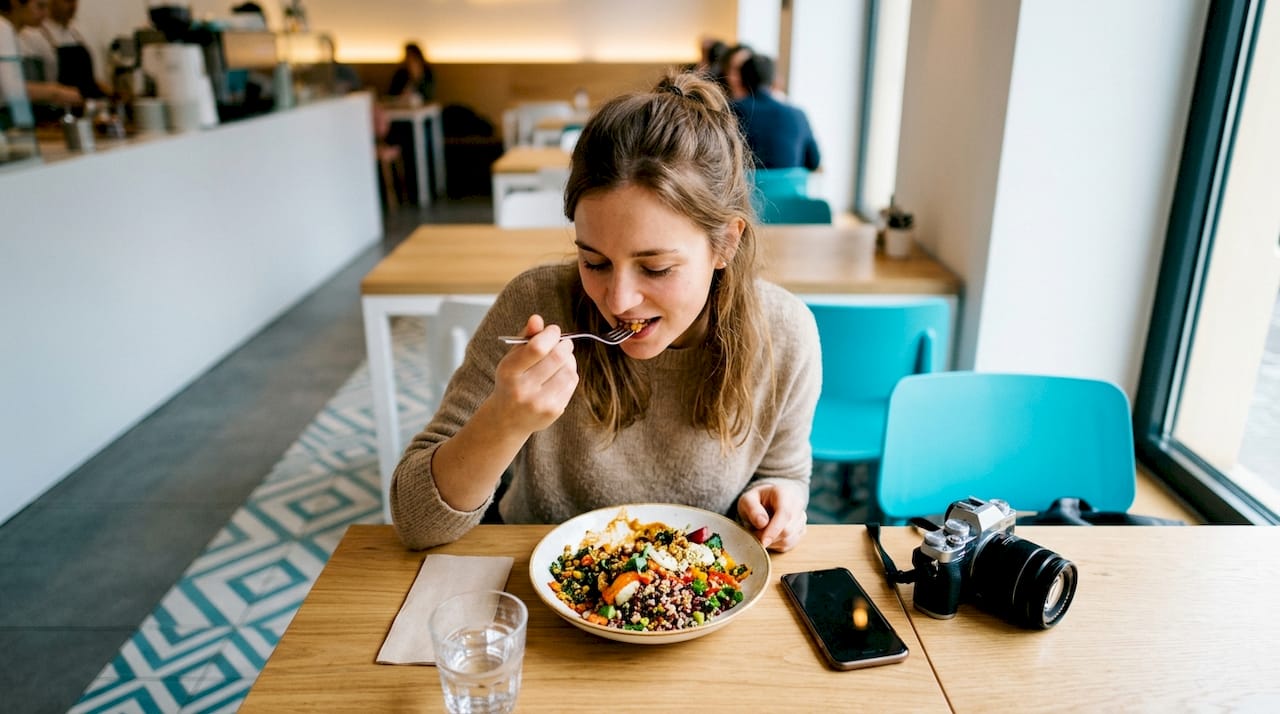
The key word is “authentic.” Influencer content works because it feels like a recommendation from a friend, not a billboard. That trust is the product you are buying when you partner with a creator. Consistency between influencer content and your digital brand identity directly affects whether that awareness converts into actual visits or orders.
These partnerships sit inside a broader set of restaurant social media partnerships that include paid ads, organic posts, and user-generated content. Influencer collaborations are the most personal and often the most persuasive format in that mix.
What types of influencers should restaurants partner with?
Not all influencers deliver the same results. The tier you choose determines your cost, your reach, and your conversion rate.
Here is how the tiers break down:
- Nano influencers: 1,000–10,000 followers. Hyper-local audiences, high trust, low cost.
- Micro-influencers: 10,000–100,000 followers. Broader reach, still strong engagement, moderate cost.
- Mid-tier and macro influencers: 100,000+ followers. Wide reach, lower engagement rates, higher fees.
For most locally owned U.S. restaurants, nano and micro-influencers are the right call. Smaller local influencers deliver engagement rates of 3–5% compared to 1–2% for large accounts. Higher engagement means more of their audience actually sees and responds to your content.
The cost difference is significant too. Inviting a nano or micro-influencer for a complimentary meal typically costs $20–$50 per person. That is a fraction of what you would spend on a paid social ad campaign with comparable local reach.
| Influencer tier | Follower range | Avg. engagement rate | Typical cost |
|---|---|---|---|
| Nano | 1K–10K | 3–5% | $20–$50 (comp meal) |
| Micro | 10K–100K | 3–5% | $100–$500 per post |
| Mid-tier | 100K–500K | 1–2% | $500–$2,000+ per post |
Pro Tip: Search your restaurant’s own Instagram tags and location. The people already posting about you are your warmest leads for a partnership.
Authenticity matters more than follower count. A nano influencer who genuinely loves your tacos and posts about them regularly will outperform a macro influencer who visited once for a fee. The best influencer partnerships focus on shared storytelling values and long-term brand alignment, not just viral moments.
How to structure and run effective influencer partnerships
Structure is what separates a productive partnership from a wasted meal. Here is a step-by-step approach that works for most restaurant owners.
-
Define your goal first. Are you driving foot traffic, promoting a new menu item, or filling private event bookings? Your goal shapes every other decision.
-
Choose your compensation model. Complimentary meals work well for nano influencers. Paid partnerships are standard for micro-influencers and above. Paid partnerships with micro-influencers range from $100–$500 per Instagram post and $200–$1,000 per Instagram Reel. Budget accordingly before you reach out.
-
Put it in writing. A written agreement protects both sides. Contracts for influencer partnerships should include clear deliverables, usage rights, timelines, and confidentiality clauses to protect your brand. Specify the number of posts, required tags, posting deadlines, and whether you can reuse their content in your own ads.
-
Brief them, but do not script them. Share your brand story, your best dishes, and your atmosphere. Let the creator find their own angle. Scripted content reads as an ad. Genuine content reads as a recommendation.
-
Set up tracking before they post. Exclusive promo codes are a low-cost way to track exactly how many orders or reservations each influencer drives. Pair a promo code with a dedicated landing page for even cleaner data.
-
Review and repurpose. Once the content goes live, save it. With usage rights in your contract, you can run their best clips as paid ads on Instagram and Facebook.
Pro Tip: Ask for content in both Reel and static photo formats. Reels drive discovery; photos drive saves and shares. Both serve different parts of your funnel.
What are the benefits and pitfalls of influencer partnerships?
The real benefits
The primary benefit is direct customer acquisition. 72% of diners have visited a restaurant after seeing social media content about it. That is not brand awareness. That is conversion. Influencer marketing also builds social proof, which is the trust signal that turns a curious scroller into a paying guest.
Long-term ambassador programs deliver even more value. Monthly influencer ambassador programs generate significantly more value than one-time posts by building ongoing customer familiarity. When a local creator posts about your restaurant every month, their audience starts to think of your place as their go-to recommendation.
The benefits of influencer marketing stack up quickly:
- Direct foot traffic from local audiences
- Authentic content you can repurpose across your own channels
- Measurable ROI through promo codes and landing pages
- Long-term brand ambassadors who grow with your business
- Professional-quality content at a fraction of production costs
The pitfalls to avoid
The biggest risk is brand inconsistency. Authentic hospitality, including warmth, service, and atmosphere, is the core product. If an influencer’s content does not reflect your actual dining experience, you attract guests who feel misled and do not return.
“Aligning your physical dining experience with your digital content quality is not optional. Influencer traffic only converts into loyal guests when what they see online matches what they find at the table. Inconsistent branding can undermine even the best-executed partnership.”
Other common pitfalls include:
- ❌ No written contract, leading to missed posts or disputes over usage rights
- ❌ Choosing influencers based on follower count alone, ignoring audience fit
- ❌ One-off posts with no follow-up strategy
- ❌ Failing to track results, so you cannot tell what worked
How to find, vet, and engage the right influencers
Finding the right creator takes about 30 minutes of focused research. Here is where to look and what to check.
Where to find local influencers:
- Search your restaurant’s location tag on Instagram and TikTok
- Check the hashtags your ideal guests use (#NYCfoodie, #ChicagoEats, #LARestaurants)
- Browse local food blogs and YouTube channels
- Use your own guest list. Your most loyal regulars may already have engaged followings.
What to evaluate before you reach out:
- ✅ Engagement rate above 3% (likes, comments, saves relative to followers)
- ✅ Audience location matches your city or neighborhood
- ✅ Content style fits your restaurant’s atmosphere and values
- ✅ Comment quality. Real comments from real people, not generic emoji spam.
- ✅ Posting frequency. Active creators keep their audiences engaged.
How to approach influencer outreach:
Send a short, personal message. Reference a specific post they made. Explain what you are offering and what you are hoping for in return. Avoid copy-paste templates. Creators receive dozens of pitches and respond to the ones that feel genuine.
You can also bring influencers in through events. A tasting night, a menu launch, or a social media contest gives creators a natural reason to post and gives you multiple pieces of content from a single event. This approach works especially well for building relationships with several nano influencers at once.
Pro Tip: Follow your target influencers for two to three weeks before reaching out. Like and comment on their posts. When you send your pitch, you are not a stranger.
The influencer partnerships guide from Altiamcx makes a strong point about the food and beverage sector specifically: the best partnerships feel like a natural extension of the creator’s content, not an interruption of it. Vet for fit, not just reach.
Key Takeaways
Restaurant influencer partnerships work best when you treat them as a structured, trackable acquisition channel rather than a one-off promotional favor.
| Point | Details |
|---|---|
| Nano and micro-influencers win locally | Creators with 1K–100K followers deliver 3–5% engagement rates, outperforming larger accounts for local reach. |
| Always use a written contract | Define deliverables, timelines, usage rights, and confidentiality before any content goes live. |
| Track every campaign | Use exclusive promo codes and dedicated landing pages to measure exactly what each partnership drives. |
| Build ambassador programs | Monthly partnerships generate far more value than single posts by keeping your brand top of mind. |
| Align content with your real experience | Influencer content that misrepresents your atmosphere attracts guests who do not return. |
Why most restaurants get influencer marketing wrong
Here is what I have seen after working with dozens of restaurant owners: most treat influencer partnerships like a one-time ad buy. They invite a creator, get a post, and move on. Then they wonder why nothing changed.
The restaurants that actually grow from influencer marketing do something different. They treat creators like partner brands. They invest in the relationship, not just the post. They bring the same influencer back for a seasonal menu launch, a private event, a holiday special. That repetition is what builds real audience trust.
The other mistake I see constantly is chasing follower counts. A creator with 80,000 followers in Los Angeles does nothing for a neighborhood Italian spot in Brooklyn. Audience location and lifestyle fit matter far more than raw numbers.
Measuring success is also where most owners fall short. Vanity metrics like likes and views feel good but do not pay the rent. Set up promo codes. Build a landing page. Track reservations. Know your cost per acquired guest. When you can show that a $150 influencer partnership drove 40 new covers, you have a repeatable system, not a gamble.
My honest advice: start with two or three nano influencers in your neighborhood. Give them a great experience. Let them tell your story in their own voice. Review the results after 60 days. Then scale what works. The role of social trends in restaurants is only growing, and the restaurants building these relationships now will have a real advantage.
— Doug
How Ionhospitality helps restaurants build influencer campaigns that convert
Ionhospitality is a social media marketing and advertising agency built specifically for restaurants. We handle influencer campaign strategy, content creation, and ROI tracking so you can focus on running your restaurant.
Whether you want to fill seats on slow nights, sell more private events, or drive online orders, we build the full system for you with zero commissions. Our team identifies the right local creators, structures the agreements, and makes sure every partnership ties back to measurable results. Check out our restaurant social media advertising services to see exactly how we do it. Ready to talk specifics? Book a discovery call and we will map out a plan for your restaurant in 30 minutes.
FAQ
What is a restaurant influencer partnership?
A restaurant influencer partnership is a formal agreement where a restaurant provides value, such as a complimentary meal or a paid fee, in exchange for social media content that promotes the restaurant to the creator’s audience.
How much does it cost to partner with a food influencer?
Costs range from $20–$50 for a complimentary meal with a nano influencer to $100–$500 per Instagram post and $200–$1,000 per Reel for micro-influencers, depending on their following and engagement rate.
How do I track ROI from influencer partnerships?
Use exclusive promo codes tied to each influencer and pair them with a dedicated landing page. This lets you measure exactly how many orders or reservations each partnership generates.
Are micro-influencers better than large influencers for restaurants?
Yes, for most local restaurants. Micro and nano influencers deliver engagement rates of 3–5% compared to 1–2% for large accounts, and their audiences are more likely to be local and ready to visit.
Do I need a contract for influencer partnerships?
A written contract is required for any paid or formal partnership. It should define deliverables, posting timelines, usage rights, and confidentiality terms to protect your restaurant’s brand and ensure both sides are clear on expectations.

Add a Comment