
TL;DR:
- Creative visuals are essential for restaurant ads to stop scrolling and drive customer actions. High-quality images and videos boost engagement, click-through rates, and conversions by capturing attention quickly. Regularly refreshing ad creatives every 2 to 3 weeks prevents fatigue and maintains campaign performance.
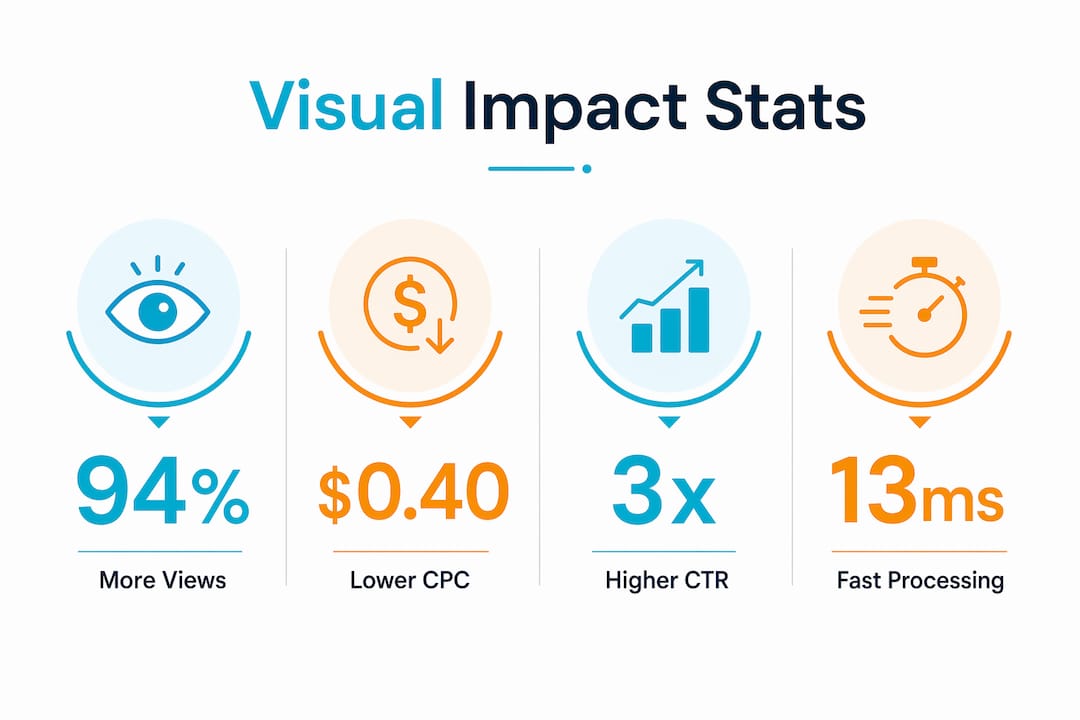
Creative visuals in restaurant advertising are the single factor that stops the scroll and triggers customer action. Without them, your ad budget burns fast and your tables stay empty. The reason why restaurant ads require creative visuals goes beyond aesthetics. Professional food photography delivers 2–3x higher click-through rates than amateur photos, and the cost difference is stark: roughly $0.40 per click with quality visuals versus $1.50 or more with poor ones. That gap compounds across every campaign you run.
How do creative visuals increase restaurant ad engagement and conversions?
The human brain processes images in 13 milliseconds, far faster than any text-based message can register. That speed is not a curiosity. It means your food photo either earns attention or loses it before a diner consciously decides to look. There is no middle ground on a crowded social feed.
Image-rich content generates 94% more views than text-only content. That number reflects a simple truth: people are wired to respond to what they see before they read. For restaurant marketers, this means a close-up shot of a seared scallop or a glossy burger cross-section does more persuasive work in one second than a paragraph of copy ever could.
Sensory appeal is the mechanism behind this. Authentic food visuals trigger hunger responses that shift a viewer from passive scrolling to active craving. That craving is the bridge between an impression and a booking or an online order. Creativity rooted in emotional resonance is what makes ads memorable, not just visible.
Video and static images serve different purposes in your ad mix:
- Video formats outperform static images for brand awareness. Short-form clips of kitchen action, plating moments, or satisfied diners create emotional triggers that photos alone cannot match.
- Static images excel for quick-action offers. A clean hero shot with a clear price or limited-time deal drives faster decisions.
- Refresh cadence matters. Creatives should rotate every 2–3 weeks to maintain performance before fatigue sets in.
Pro Tip: Test one video and one static image for every campaign. Let the data tell you which format your specific audience responds to, then double down on the winner.
What makes restaurant ad visuals effective?
The most effective restaurant ads follow a clear formula. A single-dish hero image with an 80/20 image-to-text ratio consistently outperforms cluttered multi-dish layouts or interior-only shots. The food is the star. Everything else supports it.
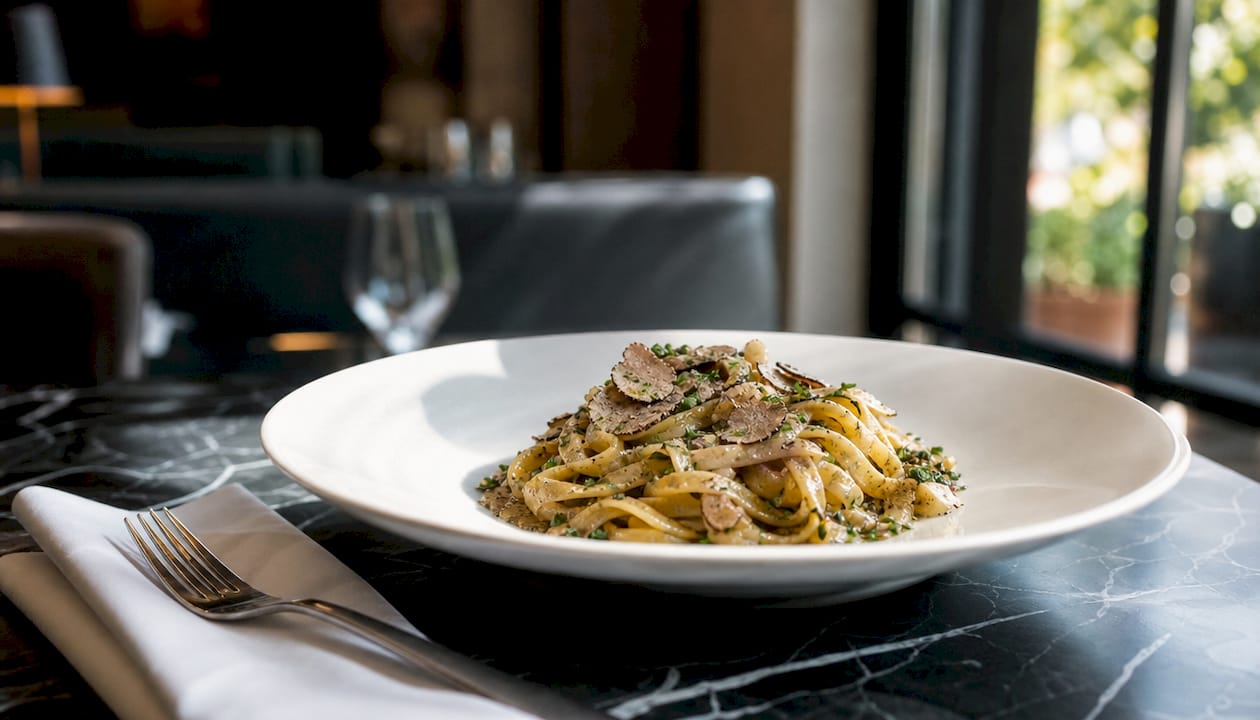
The four elements of a high-converting visual
1. One dominant subject. Pick your best dish and shoot it tight. A plate of truffle pasta filling the frame beats a wide table shot every time. The viewer’s eye needs a clear focal point, or it wanders off your ad entirely.
2. Minimal, purposeful text. The 80/20 rule is not arbitrary. Text-heavy ads feel like flyers. Image-heavy ads feel like desire. Keep your copy to a price, an offer, or a single line that amplifies what the photo already communicates.
3. A narrow value statement. Highlight one thing: a price point, a time-limited deal, or a specific occasion like “Valentine’s Day dinner for two.” Broad claims like “great food, great prices” convert poorly because they give the viewer nothing to act on.
4. A low-friction call to action. One-tap ordering links or direct booking buttons remove the steps between craving and commitment. Every extra click you require costs you conversions.
Avoid these common visual mistakes:
- ❌ Cluttered multi-dish collages that dilute focus
- ❌ Interior-only photos for conversion campaigns (save those for brand awareness)
- ❌ Dark or blurry images that undercut food appeal
- ❌ Logos or watermarks that cover the food itself
Mixing atmosphere shots with hero-dish photos works best when you keep the ratio at roughly 80% dish and 20% brand or ambiance. That balance drives both immediate conversions and longer-term brand recall.
Pro Tip: Shoot your hero dish in natural light near a window. Natural light makes food look fresh and appetizing without the harsh shadows that studio flash can create.
Why does creative fatigue hurt restaurant ads?
Creative fatigue is the performance drop that happens when your audience sees the same ad too many times. Ad performance declines after 7–14 days of continuous exposure to the same creative. Cost per click rises. Click-through rates fall. The algorithm reads the drop in engagement as a signal to reduce your reach.
The fix is not spending more. It is refreshing faster. The most effective approach uses a modular creative system.
- Build a hook library. Record or photograph 5–6 different opening frames: a cheese pull, a cocktail pour, a chef plating a dish. Each hook grabs attention in a different way.
- Create interchangeable bodies. The middle of your ad can show the dining room, a satisfied table, or a close-up of a second dish. Swap these without rebuilding the whole ad.
- Rotate your CTAs. Alternate between “Order now,” “Book your table,” and “Claim this offer” to keep the message feeling fresh.
- Test weekly. Launch two or three creative variants at the start of each week. Pull the underperformer by day five and scale the winner.
AI-generated food images now perform on par with professional studio photos but cost roughly 1% of the price. That cost structure makes weekly creative refresh financially realistic for any restaurant budget. You no longer need a full photo shoot every time you want a new ad.
Short-form video storytelling capturing kitchen action and satisfied diners creates emotional triggers that static images alone cannot deliver. Pair that with a modular system and you have a content engine that stays fresh without constant production overhead.
Pro Tip: Use your phone to capture 60-second behind-the-scenes clips every week. Raw, authentic kitchen footage consistently outperforms polished studio reels on Instagram Stories and TikTok.
How to apply creative visual strategies in your restaurant ad campaigns
Knowing what works is only half the job. Executing it consistently is where most restaurant marketers fall short. These are the practical steps that move the needle.
- Invest in quality from the start. Professional food photography or AI-generated images both outperform phone snapshots taken under bad lighting. The importance of visual marketing is clearest when you compare click costs: quality visuals cut your cost per click by more than half.
- Use natural light and close-up angles. Shoot within two feet of the dish. Capture texture: the crust on a pizza, the glaze on a rib, the foam on a latte. Texture triggers appetite in a way that wide shots never do.
- Rotate 3–5 creatives per campaign. Never run a single image for an entire campaign. Rotating creatives keeps the algorithm feeding your ad to fresh audiences and prevents fatigue from setting in.
- ️ Add social proof overlays sparingly. A “4.8 stars on Google” badge or a “1,000+ orders this month” callout builds trust without covering the food. Keep overlays small and placed at the edge of the frame.
- Match format to platform. Use 9:16 vertical for Instagram Stories and TikTok. Use 1:1 square for Facebook and Instagram feed. Use 16:9 horizontal for YouTube pre-roll. The wrong aspect ratio signals an amateur operation before anyone reads your offer.
Effective restaurant ad strategies also require you to think about visual storytelling beyond the single ad unit. A campaign that shows the dish, then the kitchen, then a happy table tells a story across multiple touchpoints. That story builds the emotional connection that turns a first-time viewer into a repeat customer.
AI-powered storytelling gives restaurant marketers the ability to test more creative angles at lower cost. You can generate five dish variations in an afternoon and run them all simultaneously to find the one that resonates most with your audience.
Pro Tip: Create a simple content calendar with one new visual asset per week. Consistency beats perfection. A steady stream of fresh, good-enough visuals outperforms a quarterly batch of perfect ones.
Key Takeaways
Creative visuals are the highest-leverage element in any restaurant ad campaign because they determine whether a viewer stops, clicks, and converts.
| Point | Details |
|---|---|
| Visuals drive click cost | Professional food images cut cost per click from $1.50 to $0.40, directly improving ad ROI. |
| 80/20 image-to-text ratio | Use 80% image and 20% text in every ad to maximize visual impact and conversions. |
| Refresh every 2–3 weeks | Creative fatigue sets in after 7–14 days; rotating assets maintains engagement and algorithm reach. |
| Modular creative systems | Build interchangeable hooks, bodies, and CTAs to refresh ads quickly without full production costs. |
| Format matches platform | Use 9:16 for Stories, 1:1 for feed, and 16:9 for YouTube to signal professionalism and maximize display. |
What I’ve learned about restaurant visuals after years in the ad trenches
Most restaurant owners treat their ad creative as an afterthought. They spend hours debating targeting settings and budgets, then slap a blurry phone photo on the ad and wonder why it doesn’t convert. I’ve seen this pattern repeat itself across dozens of campaigns.
The uncomfortable truth is that your creative is your ad. Targeting gets your image in front of the right person. The image decides whether they care. A mediocre photo shown to a perfectly targeted audience still fails. A great photo shown to a broad audience often surprises you.
What I’ve also seen shift dramatically in 2026 is the role of the audience in shaping creative. The brands winning on social media right now treat content as something made with their customers, not just for them. User-generated content, behind-the-scenes clips, and real diner reactions outperform polished brand photography in engagement metrics more often than not. That doesn’t mean you abandon quality. It means you blend authenticity with craft.
The other shift worth noting is AI. I was skeptical at first. But AI-generated food imagery has genuinely closed the gap with studio photography for ad purposes. The speed and cost advantages are real. A restaurant that commits to weekly creative testing using AI-generated assets will outpace a competitor running the same four photos for three months. Every time.
My advice: stop treating your visuals as a production task and start treating them as your primary sales tool. The restaurants filling their dining rooms and booking private events consistently are the ones showing up with fresh, crave-worthy content every single week.
— Doug
How Ionhospitality helps you create ads that actually fill seats
Ionhospitality specializes in restaurant social media advertising that puts creative visuals at the center of every campaign. The team builds scroll-stopping content, manages your ad creative rotation, and refreshes assets before fatigue sets in. You get more customers, more online orders, and more private event bookings without paying a single commission on results. If you want to see what a fully managed, visually driven ad strategy looks like for your restaurant, book a discovery call and get a clear picture of what’s possible.
FAQ
Why do restaurant ads need high-quality visuals?
High-quality food visuals cut cost per click from $1.50 to roughly $0.40 and deliver 2–3x higher click-through rates. Poor visuals waste budget before a single customer takes action.
How often should restaurant ad creatives be refreshed?
Refresh your ad creatives every 2–3 weeks. Creative fatigue begins after 7–14 days, causing click-through rates to drop and cost per click to rise.
What image format works best for restaurant ads?
Use a single-dish hero image with an 80/20 image-to-text ratio for conversion campaigns. Match the aspect ratio to the platform: 9:16 for Stories, 1:1 for feed, and 16:9 for YouTube.
Can AI-generated food images replace professional photography in ads?
AI food images match studio photos in conversion performance but cost roughly 1% of the price. They are a practical solution for frequent creative refresh on any restaurant budget.
Do videos or static images perform better in restaurant ads?
Video outperforms static images for brand awareness campaigns. Static images work better for quick-action offers like limited-time deals or one-tap ordering promotions.

Add a Comment