
TL;DR:
- Video content helps restaurants build trust and increase bookings by driving discovery on social media. Authentic, staff-led videos outperform polished ads, especially when posted consistently on platforms like TikTok and Reels. Budget-friendly production using smartphones and AI tools can sustain effective video marketing without high costs.
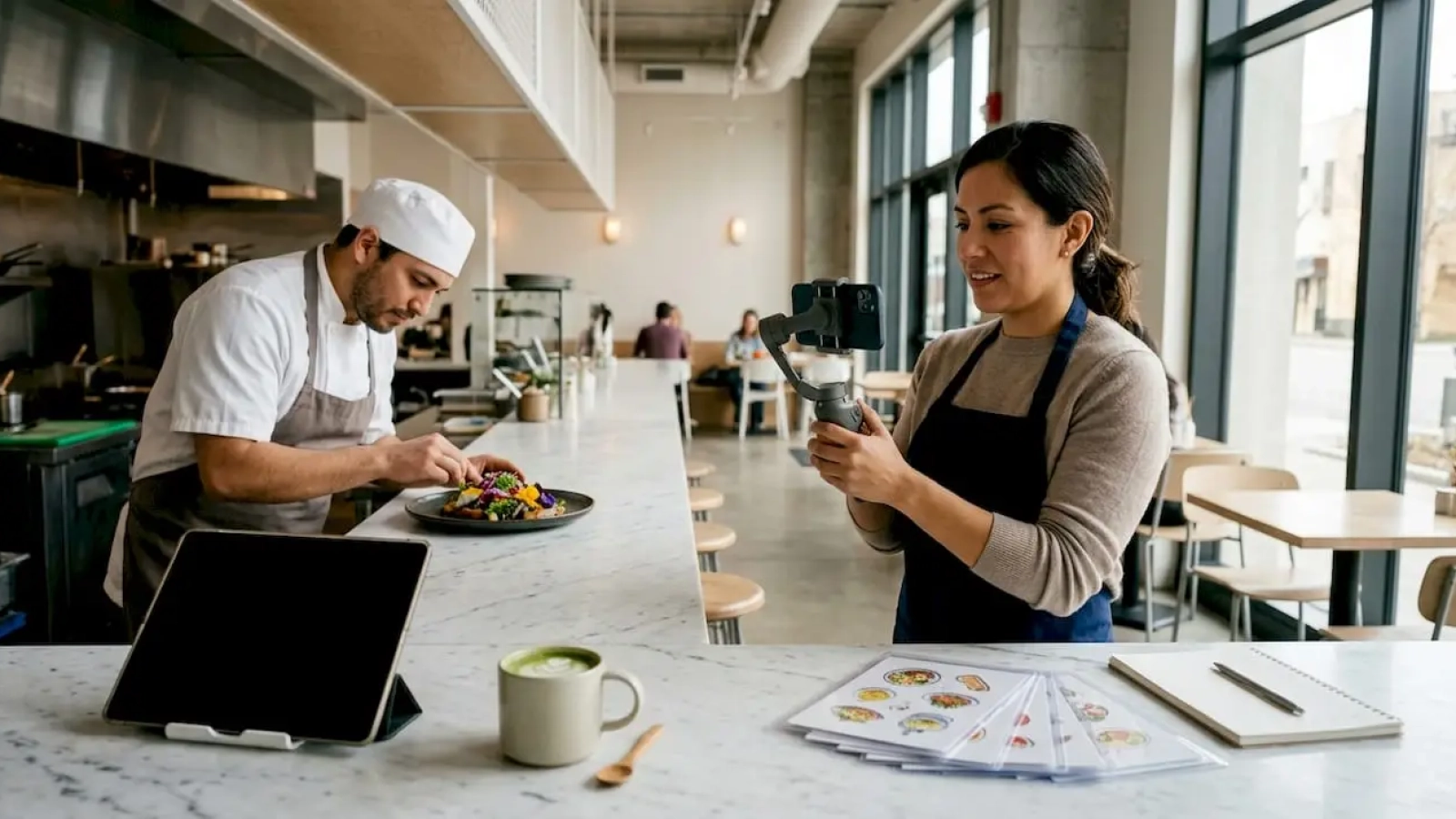
Video content is the most effective marketing tool restaurants have to convert curious scrollers into paying guests. The role of video content in restaurants goes far beyond pretty food shots. It builds trust, drives discovery on TikTok and Instagram Reels, and turns your Google Business Profile into a booking machine. Restaurants that rely only on photos miss the conversions that video captures every single day. This guide breaks down what works, what doesn’t, and how to build a video strategy that fills tables without draining your budget.
How does video content impact restaurant customer engagement and sales?
Video is both a discovery tool and a conversion tool. That combination makes it unlike any other format in restaurant marketing.
Start with reach. 74% of diners use social media to decide where to eat, and 57% have made a reservation directly through social media. That means your Instagram Reels and TikTok clips are not just entertainment. They are part of the decision chain that puts guests in your seats.
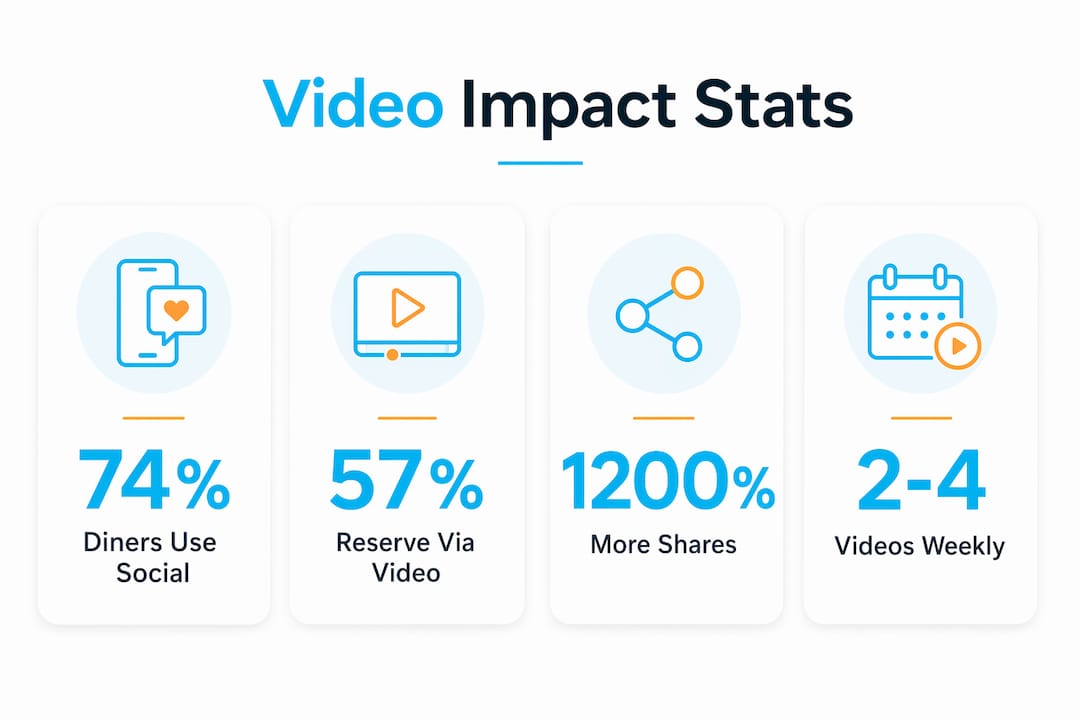
Video also generates 1,200% more shares than text and images combined. More shares mean more organic reach without spending a dollar on ads. Short-form vertical videos on TikTok and Instagram Reels deliver the highest return on investment of any format in restaurant marketing right now.
The conversion side is just as compelling. Websites with embedded video convert at 4.8% versus 2.9% without video. That gap represents real reservations and online orders you are leaving on the table if your website runs on static images alone.
Here is what that means in practice:
- Social video (TikTok, Instagram Reels, YouTube Shorts) drives top-of-funnel discovery and brand awareness
- Local intent video on Google Business Profile and your website converts high-intent searchers into bookings
- ️ Behind-the-scenes clips build emotional connection and lower the friction to visit
- Short-form video outperforms polished ads in reach and shares across every major platform
Social media acts as your top-of-funnel channel. Google Business Profile and your website close the deal. You need both working together to drive consistent bookings.
What types of video content work best for restaurants?
Not all video formats deliver the same results. The type of content you post determines whether you build an audience or just fill a feed.
| Video Type | Best Platform | Primary Goal | Production Level |
|---|---|---|---|
| Short-form Reels/TikToks | Instagram, TikTok | Discovery and shares | Smartphone, raw |
| Behind-the-scenes kitchen | TikTok, Instagram | Trust and authenticity | Smartphone, casual |
| Customer testimonials | Website, Facebook | Social proof | Minimal editing |
| Google Business Profile clips | Google Search | Local bookings | Clean, 30–60 seconds |
| Menu item reveals | TikTok, Instagram | Viral reach | Smartphone, close-up |
The biggest shift in 2026 is that authentic, staff-led kitchen content outperforms polished ads. Social platforms now actively downrank over-produced videos in favor of real, identity-attached content. A chef plating a dish on a $1,200 camera setup loses to a line cook showing the same dish on an iPhone with natural kitchen noise in the background.
This is counterintuitive for restaurant owners who spent years investing in professional photography. The algorithm has changed the rules. Relatable beats refined every time on TikTok and Instagram.
Pro Tip: Film your most visually dramatic dish being plated during a real service rush. The noise, the speed, and the steam make it scroll-stopping. No studio required.
Behind-the-scenes content also humanizes your restaurant faster than any ad campaign. When guests feel like they already know your team before they walk in, the decision to book becomes easy. That emotional familiarity is what separates restaurants with loyal regulars from those constantly chasing new customers.
For Google Business Profile, keep clips clean and focused. Show your dining room, your bar setup, and one or two signature dishes. These viewers are already searching for a place to eat near them. Your job is to confirm you are the right choice, not to entertain them.
Explore fresh content ideas that pair well with each of these formats to keep your posting calendar full.
How can restaurants create effective video on a limited budget?
You do not need expensive equipment to produce video that fills tables. A smartphone, good lighting, and a consistent schedule are enough to compete.
The most practical approach is batch production. Posting 3–5 videos weekly using just a smartphone maintains visibility on social feeds without requiring a full-time content team. Batch-producing 30 minutes of footage per week gives you enough raw material to stay consistent across TikTok, Instagram, and YouTube Shorts.
Here is a simple batch-production process you can start this week:
- Clean your smartphone lens before every shoot. A smudged lens kills video quality faster than any other mistake.
- Film during prep or service when the kitchen is naturally active. Authentic action beats staged setups.
- ️ Block 30 minutes twice a week for filming. Consistency beats marathon sessions you never actually do.
- ✂️ Edit in CapCut or Instagram’s native editor. Both are free and built for vertical video.
- Use AI video tools for polished promotional assets on your website. Combining smartphone footage with AI-produced videos keeps total production costs under $400 per year.
Pro Tip: Assign one team member as your “content captain” for the week. Rotate the role monthly so the content stays fresh and no one burns out.
Posting 2–4 short videos per week consistently outperforms monthly polished productions in both reach and account growth. Platforms reward frequency and engagement signals, not production budgets. Start small, stay consistent, and scale up as you see what resonates with your audience.
How to use video strategically across platforms for maximum impact
A video strategy without platform logic is just guessing. Each platform serves a different role in your marketing funnel, and treating them the same wastes effort.
-
TikTok: Build discovery fast. Post raw, authentic clips of your kitchen, staff, and signature dishes. TikTok’s algorithm surfaces content to non-followers, making it your best tool for reaching new diners. Viral menu item videos can cause measurable foot traffic spikes within a week. Plan for that operationally. If a clip goes viral on a Tuesday, you need staff and inventory ready by Thursday.
-
Instagram Reels: Reinforce your brand. Reels reach both followers and new audiences. Use them to show your atmosphere, seasonal specials, and packed private events. Add location tags and relevant hashtags to every post. This is where your brand awareness compounds over time.
-
YouTube Shorts: Capture long-tail search. Diners searching “best pasta in Chicago” or “rooftop bar NYC” find YouTube Shorts in Google search results. A 45-second clip with a clear title and location in the description can drive local traffic for months.
-
Google Business Profile: Convert local intent. Upload a 30–60 second video showing your dining room, bar, and one hero dish. This viewer is already searching for a restaurant near them. A clean, welcoming video confirms you are the right choice and pushes them to call or book.
-
Your website: Close the sale. Embed video on your homepage and reservation page. Websites with video convert at 4.8% versus 2.9% without it. Every reservation page without a video is a missed conversion.
The TikTok-to-foot-traffic loop is real and measurable. But it only works if you treat social media as discovery and your website and Google profile as conversion. Use proven social media campaigns to connect both ends of that funnel effectively.
Key Takeaways
Video content is the single most effective tool restaurants have to build trust, drive discovery, and convert local searchers into paying guests.
| Point | Details |
|---|---|
| Video drives discovery and bookings | 74% of diners use social media to choose where to eat, and embedded video lifts website conversions to 4.8%. |
| Authentic content beats polished ads | Staff-led, kitchen-cam videos outperform studio-produced content under current platform algorithms. |
| Batch production keeps costs low | 30 minutes of smartphone filming per week, combined with AI tools, keeps annual costs under $400. |
| Platform strategy determines results | Use TikTok and Reels for discovery, Google Business Profile and your website for local conversions. |
| Consistency outperforms perfection | Posting 2–4 short videos per week beats monthly polished productions in reach and account growth. |
What most restaurant owners get wrong about video marketing
Most restaurant owners I work with assume video is about making their food look beautiful. That instinct is understandable, but it is the wrong frame entirely.
The restaurants winning with video in 2026 are not the ones with the best lighting rigs. They are the ones whose owners or chefs show up on camera, talk about why they opened the restaurant, argue about the right way to make a sauce, or film the chaos of a Saturday night service. That content builds a relationship. A perfectly lit dish shot does not.
The second mistake I see constantly is treating social media as the finish line. Getting a thousand views on a TikTok clip is a starting point, not a win. The win is when that viewer searches your name on Google, watches your Business Profile video, clicks through to your website, and books a table. That full loop requires intentional content at every stage, not just one viral moment.
The restaurants that scale their video marketing successfully do one thing differently. They start with what they can actually sustain. Two authentic clips per week filmed on a phone beats a monthly production day that never happens. Build the habit first. Upgrade the production later when you have proof of what your audience responds to.
Video marketing is not a one-time campaign. It is a system. And like any system in a restaurant, it works best when it runs consistently, even on the days you do not feel like it.
— Doug
How Ionhospitality helps restaurants turn video into booked tables
Ionhospitality works exclusively with restaurants to build video-led social media campaigns that drive real results: more guests, more online orders, and more private event bookings.
The team at Ionhospitality handles content strategy, video production direction, and platform-specific targeting so you can focus on running your restaurant. Every campaign is built around the discovery-to-conversion funnel described in this guide. That means scroll-stopping social content paired with high-intent local assets that close the booking. Explore Ionhospitality’s restaurant social media advertising services to see how a done-for-you video strategy fits your operation. Or schedule a discovery call to talk through what your restaurant specifically needs.
FAQ
How does video content help restaurants get more customers?
Video builds trust and drives discovery faster than any other format. 74% of diners use social media to decide where to eat, making video the most direct path to new guests.
What is the best type of video for restaurant marketing?
Authentic, staff-led short-form videos on TikTok and Instagram Reels deliver the highest reach and engagement. Platforms actively downrank over-produced content in favor of real, relatable clips.
How often should a restaurant post video content?
Posting 2–4 short videos per week consistently outperforms monthly polished productions in reach and growth. Frequency and authenticity matter more than production quality.
Do restaurants need a big budget for video marketing?
No. Smartphone footage combined with free editing tools like CapCut covers social media needs. Adding AI-produced videos for your website keeps total annual costs under $400.
Which platforms should restaurants prioritize for video?
Use TikTok and Instagram Reels for discovery and brand building. Use Google Business Profile and your website for local conversions. Both channels serve different roles and work best together.

Add a Comment