
TL;DR:
- Pre-planned social media content and authentic storytelling drive restaurant bookings through platforms like Instagram and Facebook. Consistent posting and integration with local search strategies amplify visibility and direct reservations. Restaurants achieve better results by focusing on quality, systematizing content creation, and measuring actual revenue impact instead of vanity metrics.
Full service restaurant social media event coverage is the intentional capture and promotion of your dining events across platforms like Instagram and Facebook to drive measurable bookings and foot traffic. 54% of consumers use social media to discover restaurants, and 79% of Millennials say social media aesthetics directly influence their dining decisions. That means your event content is not decoration. It is a revenue driver. One restaurant grew its campaign reach from 15,000 to over 775,000 in three months through consistent event content. The same result is available to you when you treat social media coverage as a core business function, not an afterthought.
1. What are the essential components of full service restaurant social media event coverage?
Effective event coverage starts before the event happens. You need a pre-planned content map that identifies every shot, clip, and story you want to capture. That map should include behind-the-scenes prep, plated dishes, cocktail pours, staff moments, and the energy of a packed dining room.
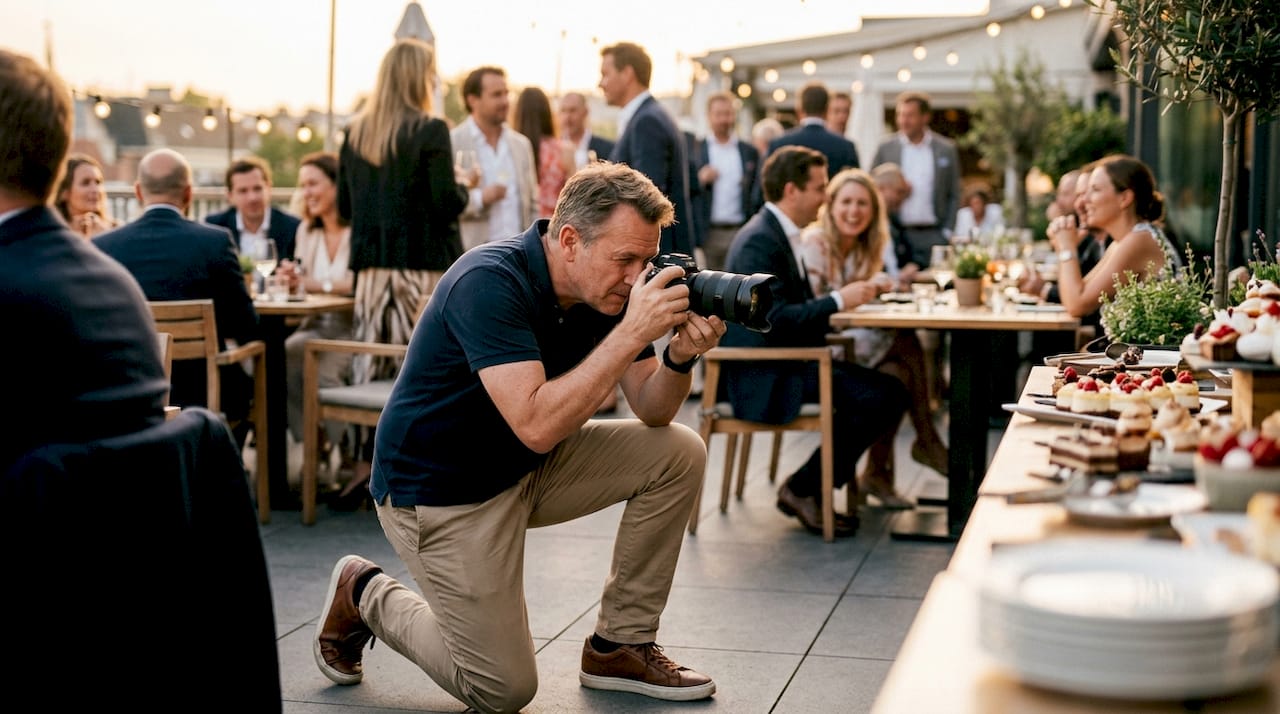
Pre-planned content maps that emphasize authentic moments consistently outperform random posts. Filming in vertical, social-ready formats from the start means you can repurpose the same footage across Instagram Reels, Stories, and Facebook without reshooting.
Here are the foundational elements every full service restaurant needs in its event coverage plan:
- Pre-event teasers: Behind-the-scenes prep, menu previews, and staff introductions build anticipation.
- Day-of capture: Signature dishes, cocktail visuals, chef commentary, and crowd energy.
- ️ Authentic storytelling: Feature your owner, head chef, or a key staff member speaking directly to the camera.
- Consistent posting cadence: Restaurants posting weekly on social platforms see up to 70% more engagement than those posting sporadically.
- ⚖️ Content balance: Mix promotional posts with lifestyle and community content to avoid audience fatigue.
Pro Tip: Schedule a single high-intensity content shoot per event rather than grabbing occasional staff photos. One focused shoot produces enough material for two to three weeks of posts.
2. Which platforms deliver the highest return for restaurant event promotion?
Instagram is the primary platform for full service dining social media. Its average engagement rate of 2.2% is roughly ten times higher than Facebook’s 0.22%. That gap matters when you are trying to fill seats and sell private event packages.
Facebook still earns its place, especially for reaching the 35-to-50 age group and promoting local community events. Facebook Events is a direct booking tool that Instagram cannot replicate. Use it for ticketed dinners, holiday parties, and wine tastings where older, local guests are your primary audience.
| Platform | Avg. Engagement Rate | Best Use Case | Audience Fit |
|---|---|---|---|
| 2.2% | Reels, Stories, visual aesthetics | Millennials, Gen Z | |
| 0.22% | Events, local community, groups | Ages 35–50 | |
| TikTok | Variable | Short-form viral discovery | Gen Z, younger Millennials |
Platform sprawl kills momentum. Master Instagram first. Add Facebook or TikTok only when you have the content volume to sustain both. A restaurant that posts great content on one platform beats a restaurant posting mediocre content on five. For deeper guidance on Instagram-specific tactics, the approach matters as much as the platform itself.
3. What content types and storytelling techniques drive the most bookings?
Short-form video is the single most effective content format for restaurant event promotion right now. Instagram Reels increase discoverability and local follower growth more than static posts. A 15-to-30 second clip of a sizzling dish or a bartender crafting a signature cocktail stops the scroll in a way that a photo simply cannot.
Here is a proven content mix for event coverage:
- Behind-the-scenes prep clips: Show your kitchen team plating the event menu. This builds trust and excitement simultaneously.
- Chef or owner commentary: A 20-second clip of your chef explaining the inspiration behind a seasonal dish outperforms a polished commercial every time.
- Signature dish reveals: Film the hero dish of the event from multiple angles. Use natural light when possible.
- Customer reaction moments: Capture genuine guest reactions with permission. This is user-generated content at zero cost.
- Staff spotlights: Introduce your sommelier before a wine dinner or your pastry chef before a dessert event. People book experiences, not just meals.
- Event recap Reels: Compile the best clips from the night into a 30-to-60 second recap. Post it within 24 hours while the energy is fresh.
Pro Tip: Shoot everything vertically (9:16 ratio) from the start. Horizontal footage cannot be repurposed for Reels or Stories without cropping out key details.
Authenticity around owner and chef storytelling builds long-term loyal audiences far more effectively than polished commercial-style videos. Your guests want to feel connected to the people behind the food.
4. How to integrate event coverage into your local search and marketing strategy
Social media for restaurants works best when it connects to your broader visibility infrastructure. Posting a great Reel and stopping there leaves reach on the table. Integrating social content with Google Business Profile updates and local SEO creates compounding visibility that converts engagement into direct reservations.
Here is how to build that connection:
- Update your Google Business Profile after every event. Add event photos, update your hours for special occasions, and post event announcements directly on GBP. This feeds local search signals.
- Post seasonal event content 4–6 weeks in advance. Seasonal content posted early compounds over time and builds owned local visibility rather than renting attention through paid ads alone.
- Repurpose social content on your website. Embed your best Reels on your events page. This reinforces brand consistency and improves on-site engagement metrics.
- Create event-specific landing pages. A dedicated page for your New Year’s Eve dinner or Valentine’s Day tasting menu improves SEO and gives you a direct booking destination to link from every social post.
- Track reservations, not just likes. Vanity metrics do not pay rent. Measure how many reservations or private event inquiries each campaign generates. Structured digital marketing systems can yield 15%+ revenue growth without increasing ad spend.
Modern diners use AI-powered search tools to research restaurants before they visit. A consistent presence across social platforms, GBP, and your website makes your restaurant the obvious answer when a local diner asks an AI assistant for a recommendation.
5. Practical tips for restaurants new to social media event coverage
Starting from zero feels heavy, but the path forward is straightforward. Pick one platform, build a repeatable system, and grow from there. Most restaurants that fail at social media do so because they try to be everywhere at once.
- Start with Instagram. It delivers the highest engagement for food and beverage content and has the clearest path from discovery to reservation.
- Batch your content shoots. Schedule one focused shoot per event or per month. A single two-hour shoot can produce enough content for four weeks of posts.
- Use your own face. Owner-led content consistently outperforms agency-produced polished videos in engagement and connection. Speak directly to your audience on camera.
- Run targeted paid social ads for events. Even a modest daily budget on Instagram or Facebook, targeted to a 10-mile radius around your restaurant, can fill seats for a ticketed dinner. Set a clear goal before you spend a dollar.
- Measure what matters. Track reservation clicks, private event inquiries, and phone calls from social posts. Social media engagement tied to clear revenue goals produces results that random posting never will.
Pro Tip: Ask your best regulars to tag your restaurant in their event photos. Repost their content with credit. This builds social proof without adding to your production workload.
Restaurants with modest budgets consistently outperform larger competitors when they focus on authenticity and consistency over production value. A smartphone, good natural light, and a clear content plan are enough to get started.
Key takeaways
Full service restaurant social media event coverage works when it combines planned content, authentic storytelling, and direct integration with local search signals to convert engagement into real reservations.
| Point | Details |
|---|---|
| Instagram is your primary platform | Its 2.2% average engagement rate makes it the top channel for event promotion and discovery. |
| Plan content before the event | A pre-mapped content shoot produces weeks of posts and prevents last-minute scrambling. |
| Authenticity beats polish | Owner and chef-led video content builds loyal audiences faster than commercial-style production. |
| Connect social to local search | Linking event posts to Google Business Profile updates compounds your visibility over time. |
| Measure revenue, not vanity metrics | Track reservations and private event inquiries to know which content actually drives growth. |
What I’ve learned after years of restaurant social media marketing
Most restaurant owners treat social media like a bulletin board. They post when they remember, share a blurry photo of last night’s special, and wonder why nobody books. That is not a content problem. It is a systems problem.
The restaurants I have seen win with social media all share one trait: they treat content creation like a prep shift. It is scheduled, it has a checklist, and someone is accountable for it. The content itself does not need to be perfect. It needs to be consistent and genuine.
The biggest mistake I see is chasing platform trends instead of building an audience. A restaurant that posts three times a week on Instagram for six months will always outperform one that goes viral once and disappears. Viral moments are great. A system that fills your private dining room every month is better.
One more thing: stop treating social media as separate from your marketing. Your Instagram Reels, your Google Business Profile, your event landing pages, and your email list are all part of the same machine. When they work together, event marketing strategies produce compounding returns that no single tactic can match alone. Build the machine. Then run it consistently.
— Doug
How Ionhospitality helps restaurants fill seats and book more events
Running a full service restaurant leaves little time to plan, shoot, edit, and post content consistently. That is exactly where Ionhospitality steps in.
Ionhospitality is a social media marketing and advertising agency built exclusively for restaurants. The team handles everything from content strategy and event coverage to targeted paid social campaigns, all with zero commissions on your bookings. If you want to sell more private events, fill more seats, and build a social presence that actually drives revenue, the social media advertising services at Ionhospitality are built for exactly that. You can also book a discovery call to talk through your specific goals and get a clear plan in place.
FAQ
What is social media event coverage for restaurants?
Social media event coverage is the planned capture and promotion of a restaurant’s events across platforms like Instagram and Facebook. The goal is to drive reservations, private event bookings, and foot traffic through consistent, engaging content.
Which social media platform is best for restaurant event promotion?
Instagram is the top platform for restaurant event promotion, with an average engagement rate of 2.2%. Facebook is valuable for reaching local guests aged 35–50 and for promoting ticketed events through Facebook Events.
How far in advance should restaurants post about events on social media?
Post event content 4–6 weeks before the event date. Early posting builds anticipation, improves local SEO signals, and gives your content time to reach a wider audience before the event sells out.
Does social media event coverage need a big budget?
No. Restaurants with modest budgets consistently produce strong results by focusing on authentic, owner-led content shot on a smartphone. A small targeted paid social budget on Instagram or Facebook can amplify reach without major production costs.
How do I measure whether my restaurant event social media coverage is working?
Track reservation clicks, private event inquiry forms, and phone calls generated from social posts. Likes and follower counts are secondary. Revenue-linked metrics tell you whether your content is actually filling seats.

Add a Comment