
TL;DR:
- Social trends, especially social media, now drive significant restaurant discoveries and customer visits. Micro-influencers and authentic community connections outperform large accounts and broad campaigns in building loyalty and immediate foot traffic. Adapting menus and spaces for health-conscious and social-sharing audiences is essential for sustainable growth in 2026.
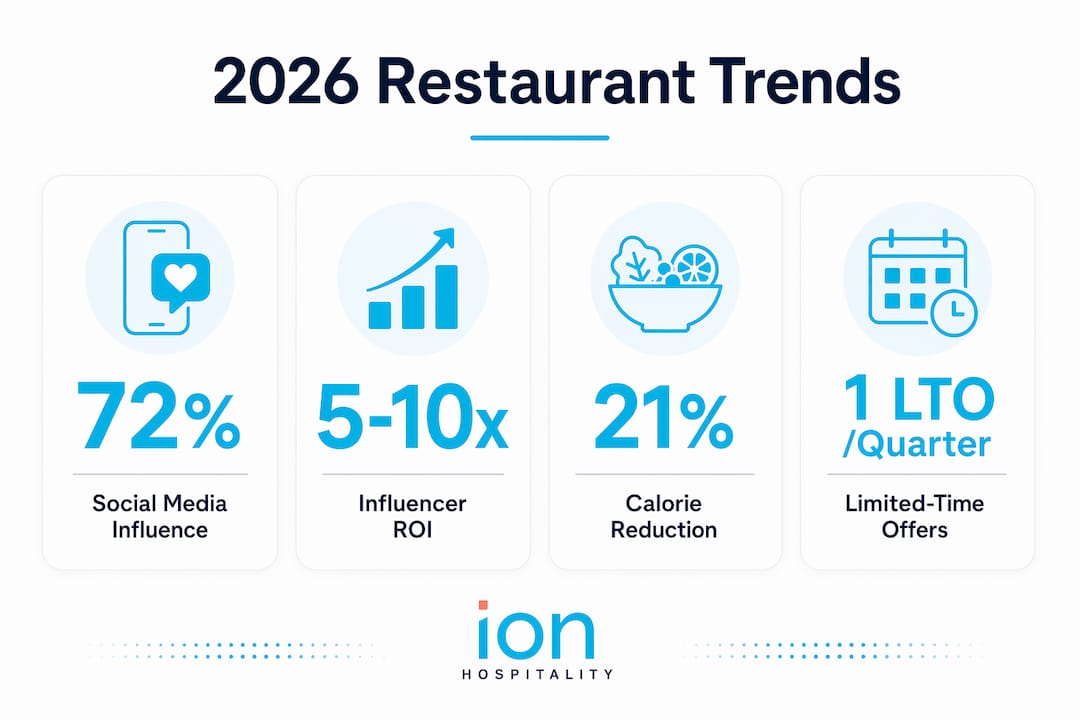
Social trends are the primary force shaping how consumers discover, choose, and experience restaurants today. The role of social trends in restaurants now extends far beyond menu inspiration. Instagram, TikTok, and YouTube drive foot traffic, shift customer preferences in dining, and pressure operators to rethink everything from interior design to pricing strategy. 72% of diners visit a restaurant because they saw it on social media. That single number reframes social media from a marketing add-on into a core business driver. Restaurants that read these signals early win. Those that ignore them lose ground fast.
How social media and influencer marketing shape restaurant discovery
Social media is the new word of mouth, and it moves at a speed no traditional marketing channel can match. Instagram and TikTok, in particular, have become the primary discovery engines for dining experiences. A single scroll-stopping reel of a cheese pull or a towering over-the-top cocktail can send a restaurant from obscure to fully booked within 48 hours.
Food influencers are the accelerant. But not all influencers deliver equal results. Micro-influencers with 5,000–50,000 followers consistently outperform larger accounts on engagement and local audience alignment. That means a neighborhood restaurant in Austin or Chicago gets more value from a local food creator with 20,000 engaged followers than from a national account with 500,000 passive ones.
The mechanism behind this is trust. Influencer credibility is the key factor converting social media posts into actual restaurant visits. Content attractiveness alone does not close the deal. When a follower trusts a creator’s taste and judgment, the parasocial relationship translates directly into a reservation or walk-in. This is why ongoing partnerships outperform one-off sponsored posts. Repeated exposure from a trusted voice builds the kind of familiarity that drives decisions.
Here is what effective influencer marketing looks like in practice:
- Ongoing partnerships over single posts: consistent brand advocacy builds recognition
- Local micro-influencers for neighborhood restaurants: higher relevance, lower cost
- Content-first thinking: give creators a great experience and let them tell the story
- Track direct acquisition: measure reservations and walk-ins tied to influencer posts, not just likes
Pro Tip: Align your restaurant’s visual identity with the content style of any influencer you partner with. A mismatch between your brand and their aesthetic confuses their audience and kills conversion.
Influencer partnerships done right can yield a 5–10x ROI. That return positions influencer marketing as a direct acquisition channel, not just a brand awareness play.
How consumer behavior shifts are rewriting the menu
The social influences on restaurants go deeper than discovery. They are reshaping what customers want to eat, how much they want to spend, and which communities they want to belong to.
The micro community effect
The Micro Community Effect describes a shift away from mass-market dining toward niche, values-driven communities. Consumers no longer just want a good meal. They want to eat at a place that reflects who they are. A plant-based restaurant in Brooklyn builds loyalty not just through food quality but through shared identity. A sports bar in Nashville retains regulars because it represents a lifestyle, not just a menu.
This has real implications for marketing. Broad campaigns targeting everyone tend to resonate with no one. Restaurants that build authentic connections with smaller, identity-driven groups create the kind of loyalty that survives price increases and new competition.
The glp-1 effect on dining frequency and spend
A structural shift is quietly hitting restaurant revenue. GLP-1 medication users consume 21% fewer calories and spend roughly one-third less on food overall. They also dine out less frequently. Industry analysts estimate this trend could reduce restaurant revenue by $30–55 billion by 2030–2034. That is not a rounding error. It is a category-level disruption.
The practical response is menu adaptation. Smaller, protein-forward portions with high perceived value protect ticket size without alienating health-conscious diners. Restaurants that ignore this shift will see average check sizes erode without understanding why.
Limited-time offers and the value equation
Trends shaping restaurant menus in 2026 include a sharp rise in limited-time offers (LTOs). The total number of LTOs increased 134% over five years, with 3% more growth forecast for 2026. More telling: 32% of LTOs are now value-oriented, up from 21% in 2023. Consumers are not just chasing novelty. They want to feel like they are getting something special at a fair price.
Pro Tip: Build LTOs around social-trend ingredients or formats (think birria, smash burgers, or viral sauce combinations) to generate organic content from guests who want to share the experience.
Price-led vs. value-led growth: what actually works now
For years, restaurant operators used price increases to protect margins. That strategy has run its course. L.E.K. Consulting finds that price increases no longer reliably drive restaurant growth. The guest value equation has broken down, and rebuilding it requires a different playbook.
The impact of dining trends here is direct. Social media has made guests more informed and more vocal. A bad experience gets shared. A great one gets amplified. Pricing that feels disconnected from value gets called out publicly. The restaurants winning in 2026 are those that combine sharper menu architecture, consistent execution, and technology-driven loyalty programs.
McDonald’s and Starbucks both demonstrate this with loyalty programs that drive repeat visits through personalization and rewards, not just discounts. You can explore loyalty program strategies that apply these principles at any scale.
| Growth Driver | Price-Led Approach | Value-Led Approach |
|---|---|---|
| Primary lever | Menu price increases | Guest experience and perceived value |
| Social media impact | Negative: price complaints go viral | Positive: great experiences get shared |
| Customer retention | Low: guests leave for cheaper options | High: loyalty built on identity and trust |
| Menu strategy | Fewer items at higher prices | Sharper architecture with LTOs and health options |
| Long-term outcome | Diminishing returns | Sustainable repeat business |
The evolution of dining experiences is not about charging more. It is about delivering more of what guests actually value, and making sure they see and share it.
Practical ways to leverage social trends in your restaurant
Knowing the trends is one thing. Acting on them is another. Here is a practical framework for aligning your restaurant with the social forces driving customer decisions right now.
1. Design your space for content creation. Successful restaurants now plan interior design, lighting, and focal points from the start to encourage guest-generated social media content. A neon sign, a dramatic plating station, or a photogenic bar setup costs little but generates thousands of organic impressions. Design is marketing.
2. Build a micro-influencer roster. Identify three to five local food creators whose audience matches your customer profile. Invite them in for a genuine experience. Do not script it. Let them create. Ongoing relationships produce better content and more consistent advocacy than one-time paid posts.
3. Adapt your menu to health-conscious dining. Add smaller, protein-forward options that appeal to GLP-1 users and health-conscious diners without shrinking your average check. Portion-controlled tasting formats or “light plates” let you serve this segment without overhauling your entire menu.
4. Use LTOs strategically. Launch one LTO per quarter tied to a social trend or seasonal moment. Promote it two weeks before launch on Instagram and TikTok. Give influencers early access. Create urgency with a clear end date.
5. Build your hashtag strategy. Use a mix of broad food hashtags (#foodie, #eeeeeats) and hyper-local tags (#[yourcity]eats, #[neighborhood]food) to reach both discovery audiences and local regulars. Check out top restaurant hashtags that are driving real reach in 2026.
6. Run social media contests. Photo contests, tag-a-friend giveaways, and UGC (user-generated content) campaigns turn your existing guests into your marketing team. They cost almost nothing and generate authentic content that outperforms polished ads.
| Tactic | Primary Goal | Best Platform |
|---|---|---|
| Micro-influencer partnerships | Discovery and trust | Instagram, TikTok |
| LTO launches | Urgency and novelty | Instagram Stories, TikTok |
| Guest-generated content | Organic reach | Instagram, Google |
| Hashtag campaigns | Local discovery | Instagram, TikTok |
| Social media contests | Engagement and growth | Instagram, Facebook |
Pro Tip: Monitor which social trends are gaining traction before they peak. Tracking online trends gives you a two-to-four week head start on competitors who wait until a trend is already saturated.
Key takeaways
Social trends are the most direct and measurable force shaping restaurant discovery, customer loyalty, and menu strategy in 2026.
| Point | Details |
|---|---|
| Social media drives visits | 72% of diners visit a restaurant based on social media exposure, making it a direct acquisition channel. |
| Micro-influencers outperform big accounts | Creators with 5,000–50,000 followers deliver higher engagement and better local reach for restaurants. |
| Health trends reshape menus | GLP-1 users spend one-third less on food, pushing operators toward smaller, protein-forward menu options. |
| Price-led growth is over | L.E.K. Consulting confirms that guest experience and loyalty programs now outperform price increases as growth levers. |
| Design is a marketing asset | Content-ready restaurant spaces generate organic social sharing that no paid campaign can replicate at the same cost. |
What i’ve learned after years of watching restaurants win and lose on social
Here is the uncomfortable truth most restaurant owners do not want to hear: the best food in the room does not always win. The most visible restaurant does.
I have watched incredible kitchens struggle because they treated social media as an afterthought. And I have watched average concepts explode because they understood one thing: every guest with a phone is a potential content creator. Give them something worth filming, and they will do your marketing for free.
The Micro Community Effect is real, and it is the most underused insight in this industry. Restaurants that try to appeal to everyone end up owning no one’s loyalty. The ones that plant a flag and say “this place is for people like you” build the kind of repeat business that survives economic downturns, new competitors, and even bad Yelp reviews.
The GLP-1 shift worries a lot of operators. My take: it is an opportunity. The restaurants that adapt their menus now, before the revenue impact becomes undeniable, will own the health-conscious dining segment before anyone else figures out how to serve it well.
And on influencer marketing: stop chasing follower counts. A local food blogger with 8,000 highly engaged followers in your city is worth more than a national account with 300,000 passive ones. Trust is the currency. Reach is just noise.
The restaurants that will thrive in the next three years are not the ones with the biggest budgets. They are the ones that read the room, move fast, and build genuine connections with the communities they serve.
— Doug
How Ionhospitality helps you turn social trends into full tables
Social trends move fast. Keeping up while running a restaurant is a full-time job on top of a full-time job. That is exactly why Ionhospitality exists.
Ionhospitality is a social media marketing and advertising agency built specifically for restaurants. We create scroll-stopping content, run proven social media campaigns that convert followers into guests, and handle everything from influencer outreach to hashtag strategy. No commissions. No guesswork. Just more butts in seats, more online orders, and more private events booked. If you are ready to stop leaving tables empty and start turning social trends into real revenue, boost your social media bookings with a strategy built for restaurants like yours.
FAQ
How does social media directly impact restaurant revenue?
72% of diners visit a restaurant because they saw it on social media, making platforms like Instagram and TikTok direct acquisition channels that drive measurable foot traffic and reservations.
What is the micro community effect in dining?
The Micro Community Effect describes consumers gravitating toward niche, values-driven dining communities rather than mass-market options. Restaurants build stronger loyalty by aligning with specific identities and lifestyles.
Why are micro-influencers better for restaurants than large accounts?
Micro-influencers with 5,000–50,000 followers deliver higher engagement rates and stronger local audience alignment than large accounts. Ongoing partnerships with these creators produce consistent brand advocacy at a fraction of the cost.
How are health trends like glp-1 changing restaurant menus?
GLP-1 medication users consume 21% fewer calories and spend roughly one-third less on food, pushing restaurants to add smaller, protein-forward menu options to maintain profitability without losing this growing customer segment.
Is price increasing still a reliable growth strategy for restaurants?
No. L.E.K. Consulting confirms that price-led growth has lost its effectiveness. Restaurants now grow by rebuilding guest value through sharper menus, loyalty programs, and consistent execution rather than higher prices.

Add a Comment