
TL;DR:
- Upselling in restaurants involves suggesting premium, add-on, or bundled items to enhance the guest experience and increase revenue. The success of upselling relies on timing, menu design, staff training, and digital tools tailored to service style, framing suggestions as hospitality rather than sales. When executed with menu knowledge and genuine service focus, upselling boosts income without alienating guests.
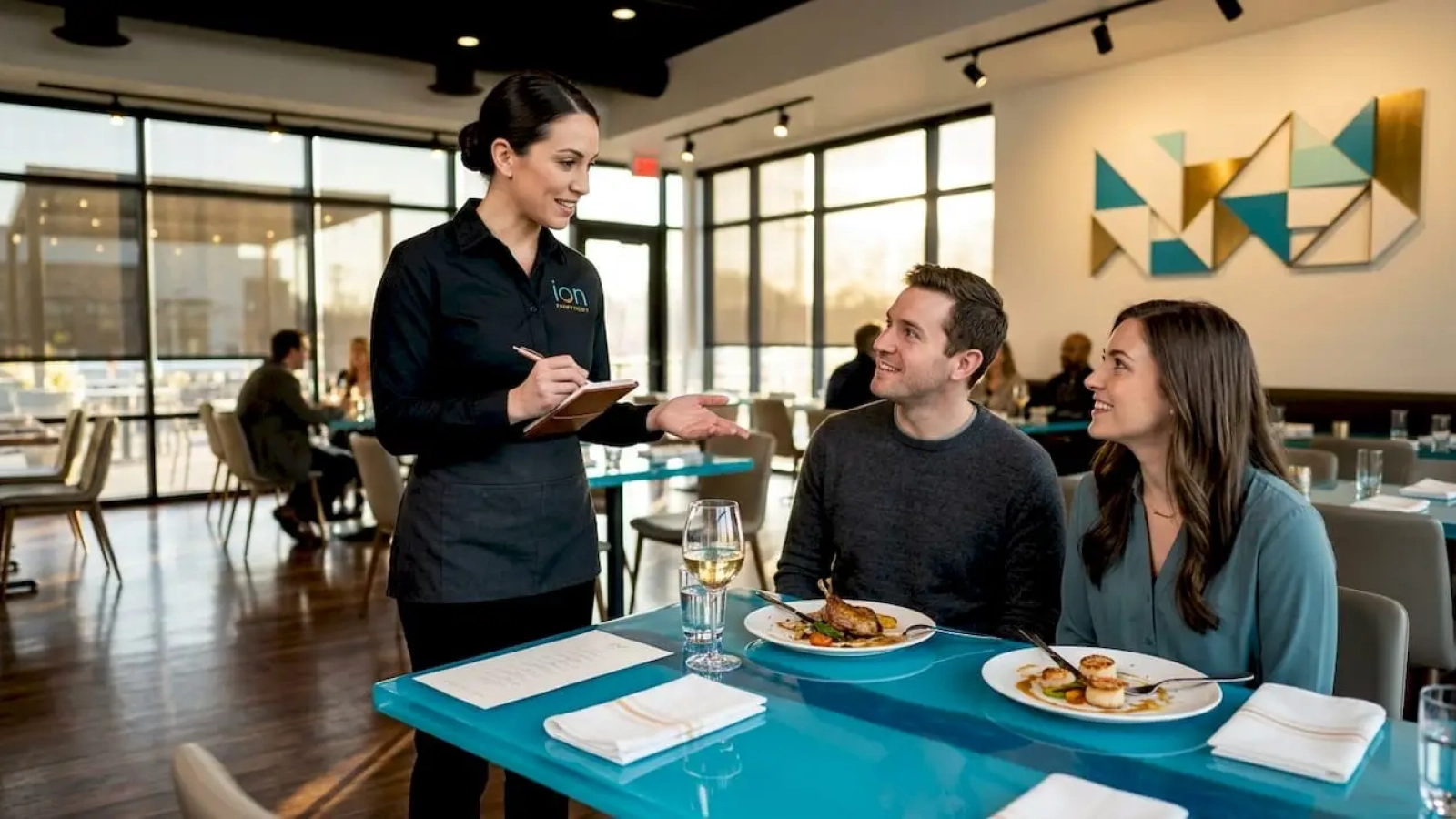
Upselling in restaurants is defined as the practice of suggesting premium, upgraded, or additional menu items that enhance the guest’s experience while increasing the average check size. The industry term is “suggestive selling,” and the best operators treat it as hospitality, not a sales tactic. When your servers know the menu cold, read the table accurately, and offer the right item at the right moment, upselling stops feeling like pressure and starts feeling like service. The types of upselling techniques for restaurants covered in this guide span premium upgrades, add-ons, bundles, timing strategies, menu design, and digital tools — everything you need to train your team and grow revenue without alienating guests.
1. What are the core types of upselling techniques?
The three core upselling types in restaurants are premium upgrades, add-ons and complements, and bundles. Each one targets a different order moment and a different guest mindset.
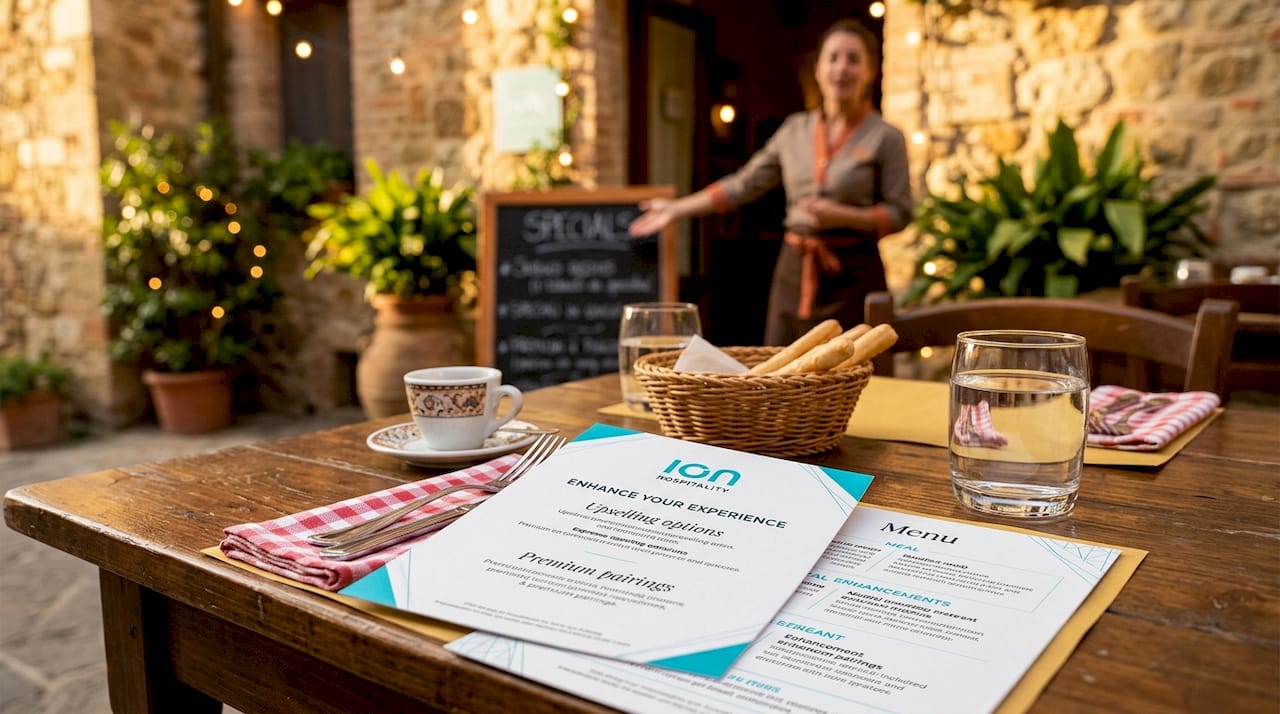
Premium upgrades are the most straightforward. A guest orders a 6 oz. sirloin and your server mentions the 10 oz. dry-aged cut for $8 more. Or a guest orders a house margarita and the server suggests a top-shelf tequila for a small upcharge. The key is framing the upgrade around quality and experience, not just price. “The dry-aged cut has a lot more depth of flavor” lands better than “it’s only $8 more.”
Add-ons and complements work at every price point and every service style. These include:
- Sides: truffle fries, seasonal vegetables, upgraded salads
- Drinks: wine pairings, craft cocktails, non-alcoholic specialty beverages
- Sauces and toppings: house-made aioli, specialty cheese, premium garnishes
- Desserts: suggested after the main course clears
Bundles and meal combos are the most underused technique in full-service restaurants. Bundles simplify guest decisions and raise average checks more than standalone add-ons by framing a complete dining experience. A starter, main, and paired drink offered as a curated set removes decision fatigue and increases perceived value. Guests feel like they’re getting a deal. You’re increasing the check. Both outcomes win.
2. How timing shapes upselling success
Timing is the single biggest variable in whether a upsell lands or gets rejected. Upsells matched to service touchpoints like arrival drinks, main meal ordering, and mid-meal dessert suggestions reduce friction and increase acceptance rates significantly. That means you need to map your upsell opportunities to specific moments in the dining sequence.
Here is how the sequence breaks down:
At arrival: The table is fresh, guests are in a good mood, and they haven’t committed to anything yet. This is the best moment to suggest a signature cocktail, a seasonal specialty, or a shareable appetizer. A server who says “Can I start you off with our smoked old fashioned while you look over the menu?” is doing hospitality, not sales.
During main course ordering: Once guests know what they want for their entree, the server can suggest a wine pairing, a side that complements the dish, or a protein upgrade. This is the highest-value upsell window in a sit-down restaurant. The guest is engaged and making decisions.
Mid-meal and post-entree: Suggesting dessert mid-meal increases conversion because guests are still enjoying themselves and haven’t mentally closed the tab. Waiting until after the plates clear is too late. A quick “Save room for our warm chocolate lava cake” while refilling water works far better than a dessert menu dropped after the check is requested.
Pro Tip: Pro Tip: Never stack upsells. If a server pitches a cocktail, an appetizer, a side, and a dessert in the same breath, guests tune out. Pick the one or two highest-margin upsells for each table and make those the focus.
3. Menu design and staff training as upselling tools
Your menu is a silent salesperson. The way it is structured, written, and laid out either supports or undermines every upsell your servers attempt. The “Golden Triangle” principle in menu engineering holds that guests’ eyes land first on the top right, then top left, then center of a menu page. Placing your highest-margin items in those zones increases their selection rate without any server involvement.
Descriptive, sensory language improves upsell conversion rates without seeming pushy. “Slow-braised short rib with roasted bone marrow butter” outsells “beef short rib” every time. The language does the upselling before the server even opens their mouth.
On the training side, the comparison below shows what actually works versus what most restaurants default to:
| Approach | What it looks like | Why it works (or doesn’t) |
|---|---|---|
| Scripted phrases | “Would you like to add a salad?” | Low conversion; feels robotic and generic |
| Reason codes | “The Caesar pairs really well with the salmon” | Higher acceptance; gives guests a reason to say yes |
| Pre-shift briefing | 5-minute daily focus on 2-3 current upsell items | Keeps servers current and confident |
| Monthly deep training | Hour-long sessions on full menu | Quickly outdated; hard to retain |
Pre-shift brief training focused on current upsell items outperforms monthly deep sessions, especially when the menu changes frequently. Five minutes before service covering two or three specific items with a reason code for each is more effective than any binder. Servers need to know why a pairing works, not just what to say. Reason codes behind upsell suggestions significantly improve acceptance rates versus memorized phrases alone.
4. How digital tools enhance upselling onsite and online
Digital ordering platforms and kiosks have changed the math on upselling. They are consistent, never tired, and never forget to make the offer. Digital kiosk upselling can increase average ticket size by up to 45% due to consistent, pressure-free prompts at the right moment. PJ’s Coffee saw this exact result in 2025 when kiosk-driven upsells outperformed staff averages by a wide margin.
The reason kiosks perform so well is structural. A POS-integrated kiosk syncs with inventory in real time, so it only suggests items that are actually available. No awkward “sorry, we’re out of that” moments. The upsell prompt appears at the exact moment a guest selects an item, which is the highest-intent decision point in the ordering flow.
For online ordering, the placement of upsells matters just as much as the offer itself:
- Item-level upsells: Triggered immediately after a guest adds an item. “Add truffle fries?” appears right when they select a burger.
- Cart-level upsells: Shown when the guest reviews their order. “Guests who ordered this also added…” style prompts work well here.
- Checkout upsells: Final opportunity before payment. Best used for low-friction additions like a dessert or a drink.
Online ordering upsells placed logically at item-level, cart-level, and checkout increase order completeness and guest satisfaction. Starting with expected add-ons like fries or sauces improves acceptance because the suggestion feels natural. Avoid irrelevant or excessive upsell prompts in digital ordering flows. Too many pop-ups create friction and cause guests to abandon their cart entirely. Two to three well-placed prompts outperform six poorly placed ones every time. You can learn more about how digital ads workflows connect to your online ordering strategy.
5. Tailoring upselling to your restaurant type and guest
Not every upsell works in every setting. The technique that closes at a fine dining table in Manhattan will fall flat at a fast-casual counter in Austin. Upselling techniques need to adjust to guest pace and dining context. Shorter, named suggestions work for rushed tables. More elaborate, story-driven recommendations work for guests who are settled in for a long meal.
Here is how to think about it by service style:
Fine dining: Guests expect guidance. Wine pairings, tasting menu upgrades, and tableside preparations are all natural upsell moments. The server’s depth of knowledge is the upsell. A sommelier who explains why a specific Burgundy complements the duck is adding value, not pressure.
Casual full-service: Focus on add-ons and bundles. A family at a casual Italian spot is receptive to “add a Caesar for the table” or “we have a pasta and wine pairing tonight for $12 more per person.” Keep it simple and social.
Fast casual and counter service: Upselling here is almost entirely digital or at the point of payment. Train counter staff to mention one item only. “Do you want to add a drink to that?” is enough. Anything more slows the line and irritates guests.
Pro Tip: Pro Tip: Read the table before you pitch. A couple on a first date wants to feel taken care of. A table of six splitting the check wants speed. Adjust your upsell length and tone to match what the table is actually communicating.
Upselling works best when perceived as hospitality with confidence and genuine understanding. Connecting upsells directly to a guest’s current choices builds trust and reduces pushback. That is the difference between a server who sells and a server who serves. You can also explore personalized marketing strategies that extend this same guest-first thinking beyond the table.
Key takeaways
The most effective restaurant upselling combines the right technique type with the right service moment and a staff that understands the “why” behind every suggestion.
| Point | Details |
|---|---|
| Know your three technique types | Premium upgrades, add-ons, and bundles each target different order moments and guest mindsets. |
| Time every upsell deliberately | Match offers to arrival, ordering, and mid-meal moments to maximize guest receptiveness. |
| Train daily, not monthly | Pre-shift briefings on two to three current items with reason codes outperform long training sessions. |
| Use digital tools strategically | Kiosks and online ordering platforms drive consistent upsells but only when prompts are relevant and limited. |
| Adapt to your service style | Fine dining, casual, and fast casual each require a different upsell approach, tone, and length. |
Why upselling is really just good hospitality
I have worked with enough restaurant teams to know that the word “upselling” makes a lot of servers uncomfortable. They picture the pushy car salesman, not the knowledgeable host. That discomfort is worth addressing directly because it is the single biggest barrier to execution.
The servers who consistently raise their check averages are not the ones with the most aggressive pitches. They are the ones who know the menu well enough to make a genuine recommendation, who time their suggestions to when the guest is most open, and who frame every offer around the guest’s experience rather than the restaurant’s revenue. That is not salesmanship. That is hospitality.
The biggest mistake I see managers make is treating upselling as a script problem. They write new phrases, run a training session, and wonder why nothing changes. The real problem is almost always product knowledge and timing. A server who has never tasted the dry-aged steak cannot sell it convincingly. A server who pitches dessert after the check is already on the table has missed the window entirely.
Technology helps, but it does not replace this. Kiosks and digital menus are consistent and tireless, but they cannot read a table. The best operations I have seen use digital tools to handle the volume and train their human staff to handle the nuance. That combination is where the real revenue lives.
— Doug
Ready to grow your restaurant revenue beyond the table?
Upselling is one piece of the revenue puzzle. The restaurants that grow fastest are the ones driving more guests through the door in the first place, filling private event spaces, and building word-of-mouth that keeps tables turning.
At Ionhospitality, we help restaurants do exactly that through social media marketing, advertising, and digital strategy built specifically for food and beverage operators. No commissions. No guesswork. Just more customers, more bookings, and more revenue. If you are ready to put a real growth system behind your restaurant, book a discovery call with our team or explore our social media advertising services to see what is possible.
FAQ
What is upselling in restaurants?
Upselling in restaurants is the practice of suggesting premium or additional menu items to increase the guest’s check size while improving their dining experience. It differs from cross-selling, which involves recommending entirely separate product categories rather than upgrades to existing choices.
What are the most effective upselling techniques for servers?
The most effective sit-down restaurant server upsell techniques are timed suggestions at arrival, during main course ordering, and mid-meal, paired with specific reason codes rather than generic phrases. Servers who explain why a pairing or upgrade works convert at higher rates than those using memorized scripts.
How much can upselling increase restaurant revenue?
Digital kiosk upselling has been shown to increase average ticket size by up to 45%, and descriptive menu language combined with trained server suggestions can meaningfully raise per-table averages. The exact lift depends on service style, menu margins, and how consistently the techniques are applied.
How do you upsell without being pushy?
Upselling without pressure means connecting every suggestion directly to what the guest has already ordered or expressed interest in. One specific, well-timed recommendation lands far better than multiple generic offers stacked together.
Should restaurants use digital tools for upselling?
Yes, but with limits. Digital prompts at item-level, cart-level, and checkout increase order value when they are relevant and spaced appropriately. Overloading guests with pop-ups causes cart abandonment and frustration, so two to three targeted prompts per order is the practical ceiling.

Add a Comment