
TL;DR:
- Effective restaurant customer acquisition hinges on precise CAC tracking, optimized Google profiles, active social media engagement, and targeted promotions.
- Implementing measurable, attribution-based campaigns and regular profile updates can significantly increase new guest visits and revenue growth.
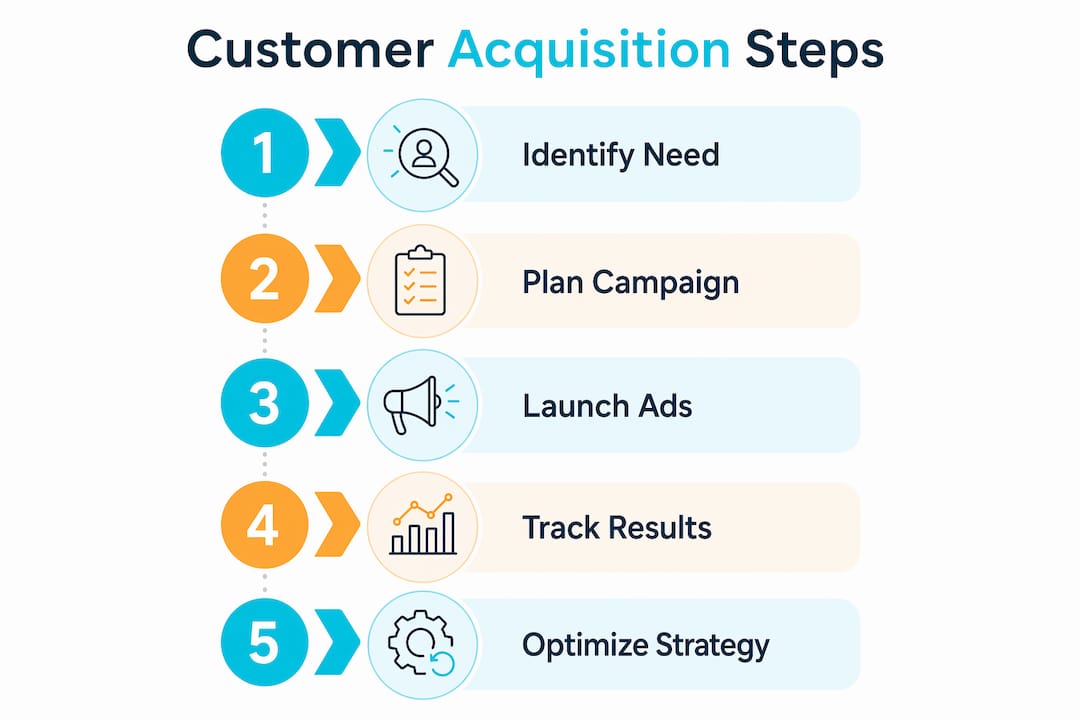
Restaurant customer acquisition is the process of attracting first-time guests through measurable marketing tactics that convert strangers into paying customers. The industry term for this discipline is customer acquisition management, and it sits at the center of every growth decision you make. Your customer acquisition cost (CAC) tells you exactly how much you spend to bring one new guest through the door. Average restaurant CAC ranges from $30 to $80 depending on concept type, which means a poorly tracked campaign can quietly drain your margins. This guide covers the exact methods to calculate CAC, optimize your Google Business Profile, run social media campaigns that pay off, and deploy smart promotions that fill seats without burning your budget.
What is restaurant customer acquisition and why does your CAC matter?
CAC is calculated as total marketing expenses divided by the number of new customers acquired within the same time window. The formula sounds simple, but most restaurant owners get it wrong because they lump all customers together instead of isolating first-time visitors. Your POS system, loyalty program signups, and unique promo codes are the three most reliable tools for separating new guests from returning ones.
Here is why the number matters beyond accounting. CAC only makes sense when you compare it to customer lifetime value (CLV). If a guest visits your restaurant six times a year and spends $45 per visit, their annual value is $270. Paying $50 to acquire that guest is a strong return. Paying $50 to acquire someone who visits once and never returns is a loss.
Many restaurants struggle to control CAC because they cannot attribute which specific campaign brought in each new customer. Running three promotions simultaneously makes it impossible to know which one worked. That attribution gap is where marketing budgets disappear without explanation.
The fix is straightforward: run one campaign at a time, assign each a unique promo code or landing page, and track redemptions through your POS. This approach to traceable marketing tactics gives you clean data and real control over what you spend per new guest.
Pro Tip: Assign a unique coupon code to every ad campaign you run, whether it is a Facebook ad, a Google promotion, or a flyer drop. When customers redeem it, your POS records the source. After 30 days, you know exactly which channel delivered the lowest CAC.
How to optimize your Google Business Profile to drive new visits
Your Google Business Profile (GBP) is the single most underused free marketing asset in the restaurant industry. When someone searches “best tacos near me” or “brunch spots in Austin,” your GBP listing is what determines whether they call you or your competitor. Getting this right is non-negotiable.
Here is what a fully optimized GBP looks like in practice:
- ✅ Claim and verify your listing through Google Search Console or the Google Business app
- ✅ NAP consistency: your name, address, and phone number must match exactly across your website, Yelp, and every other directory
- ✅ Categories: select a primary category (e.g., “Mexican Restaurant”) and add secondary categories that reflect your full menu
- ✅ Business description: write 750 characters that include your cuisine type, neighborhood, and what makes you different
- ✅ Attributes: mark “outdoor seating,” “live music,” “private dining,” and any other features guests search for
- ✅ Menu upload: add every item with descriptions and prices so Google can surface your dishes in relevant searches
- ✅ Q&A section: proactively post and answer common questions like parking, reservations, and corkage fees before guests ask
The photo volume on your profile has a direct, measurable impact. Restaurants with 100+ photos on Google Business Profile receive 520% more calls than those with fewer images. That is not a marginal improvement. It is the difference between a phone that rings and one that sits silent.
Weekly posts also move the needle. Weekly posts increase profile interactions 15 to 20%, which means more clicks to your website, more direction requests, and more reservation taps. Post your weekend specials, new menu items, or upcoming events every Monday morning and treat it like a non-negotiable task.
Pro Tip: Photograph your top five dishes in natural light and upload them the same week you claim your profile. Then set a calendar reminder every Friday to upload one new photo. Consistency beats perfection here.
| GBP Element | Impact on Discovery |
|---|---|
| 100+ photos | 520% more calls vs. profiles with few images |
| Weekly posts | 15 to 20% increase in profile interactions |
| Complete menu | Surfaces dishes in food-specific searches |
| Active Q&A | Reduces friction and builds pre-visit trust |
| Consistent NAP | Improves local search ranking across Google Maps |
For deeper tactics on building your online presence beyond GBP, the strategies around review management and website alignment are just as critical.
How does social media marketing actually increase restaurant revenue?
Social media is not just about looking good online. It is a direct revenue driver when executed with discipline. Social media strategies led to an average 9.9% revenue increase for B2C brands, but restaurants that committed to a social-first approach saw 14.1% revenue growth. That gap represents the difference between posting occasionally and building a real community.
Social-first brands that blend community engagement with consistent content and conversion tactics consistently outperform competitors who treat social as an afterthought. Here is what that looks like in practice:
- Short-form video: post Instagram Reels and TikTok clips of your kitchen, your team, and your most photogenic dishes. Scroll-stopping content earns organic reach that paid ads cannot replicate
- Influencer collaborations: partner with local food creators who have 10,000 to 100,000 followers. Micro-influencers in your city drive real foot traffic because their audience trusts their recommendations
- Contests and giveaways: run a “tag a friend to win a free dinner for two” contest. This generates shares, new followers, and direct awareness among people who have never heard of you
- Event promotion: promote private dining packages, holiday events, and themed nights on social at least two weeks in advance. Packed seasonal events photograph well and create organic word of mouth
- Community management: respond to every comment and DM within 24 hours. Guests who feel heard become loyal regulars
“Posting regularly and engaging with your community on social media distinctly boosts revenue beyond mere presence.” — Deloitte Digital, 2025
Paid social ads amplify everything above. Run geo-targeted Facebook and Instagram ads to reach people within a 5-mile radius of your restaurant. Use your best-performing organic post as the creative for your ad. If it already earned engagement for free, it will convert better as a paid placement. Track ROI by channel every month and cut what does not perform.
Pro Tip: Check your Instagram Insights every Sunday. Identify your top three posts by reach and saves. Those are your templates for the next week’s content. Stop guessing what your audience wants. The data tells you.
For proven campaign frameworks, social media campaigns for restaurants that have driven measurable growth are worth studying before you build your next content calendar.
What promotional strategies and automation fill seats most efficiently?
Smart promotions are not about discounting your way to a full dining room. They are about reaching the right guest at the right moment with the right offer. Automation makes that precision possible without requiring a full marketing team.
-
Weather-triggered campaigns: a 2026 case study found that weather-triggered happy hour campaigns increased covers from 19 to 28 on rainy days, with payback periods under 30 days. The logic is simple. When it rains, people want comfort food and a reason to go out. An automated SMS or push notification sent at 3 PM on a rainy Tuesday converts because the timing is perfect.
-
Loyalty program signups as acquisition tools: offer a free appetizer or a $10 credit to any new guest who joins your loyalty program on their first visit. This captures their contact information, gives you a channel for future promotions, and increases the probability of a second visit. Loyalty program ideas like this cost less than a paid ad and deliver higher lifetime value.
-
Targeted email campaigns: segment your email list by visit frequency. Send a “we miss you” offer to guests who have not visited in 60 days. Send a “bring a friend” offer to your most frequent guests. Personalized timing outperforms generic blasts every time.
-
Limited-time offers with clear deadlines: “Free dessert this weekend only” creates urgency. Open-ended promotions train guests to wait for a deal. A deadline forces a decision.
-
Referral programs: give existing customers a unique referral code. When a new guest uses it, both parties get a reward. This turns your regulars into a distributed acquisition channel.
| Promotion Type | Estimated Payback Period | Best Channel |
|---|---|---|
| Weather-triggered happy hour | Under 30 days | SMS or push notification |
| Loyalty signup offer | 1 to 2 visits | In-person and email |
| Referral program | 30 to 60 days | Email and social media |
| Limited-time offer | Immediate to 7 days | Paid social and Google ads |
Pro Tip: Start with one automated workflow before building a full system. Set up a single weather-triggered SMS campaign for your slowest weekday. Run it for 30 days, measure the cover count change, and calculate your CAC for that channel before adding complexity.
Key takeaways
Effective restaurant customer acquisition requires tracking CAC precisely, optimizing your Google Business Profile consistently, committing to social-first content, and deploying targeted promotions with measurable payback periods.
| Point | Details |
|---|---|
| Calculate CAC accurately | Divide total marketing spend by new customers only, using POS data and unique promo codes for clean attribution. |
| Maximize your GBP | Upload 100+ photos and post weekly to drive 520% more calls and 15 to 20% more profile interactions. |
| Commit to social-first | Restaurants with active community engagement see up to 14.1% revenue growth vs. 9.9% for passive social presence. |
| Automate smart promotions | Weather-triggered and loyalty-based campaigns deliver payback periods under 30 days with minimal ongoing effort. |
| Compare CAC to CLV | A $50 acquisition cost is profitable only if the guest’s lifetime value exceeds it. Always measure both together. |
What I have learned about restaurant acquisition after years in the trenches
Most restaurant owners I work with have the same blind spot: they spend money on marketing but have no idea which dollar brought in which guest. They run a Facebook ad, a Groupon deal, and a flyer campaign in the same month, and then wonder why their CAC looks inflated. The problem is not the spend. It is the attribution.
The shift that changes everything is treating your marketing like a series of controlled experiments. One campaign at a time. One tracking mechanism per campaign. Thirty days of data before you make a judgment. This discipline feels slow at first, but it compounds. After six months, you know exactly which channel delivers the lowest CAC for your specific concept and neighborhood.
The other thing I push hard on is Google Business Profile. I have seen restaurants with gorgeous Instagram accounts and a GBP listing with three photos and no menu. That is a conversion leak. The guest who finds you on Instagram will Google you before they book. If your profile looks abandoned, they move on.
Social media in 2026 is not optional for restaurants. But the restaurants winning are not the ones posting the most. They are the ones posting with intention, responding to every comment, and partnering with local creators who already have the trust of their community. Creator partnerships and live event marketing are the two tactics I expect to define restaurant acquisition over the next two years. If you are not experimenting with both right now, you are behind.
— Doug
How Ionhospitality helps restaurants grow their customer base faster
Running a restaurant is already a full-time job. Building a marketing system that consistently attracts new guests on top of that is where most owners hit a wall.
Ionhospitality specializes in social media advertising built exclusively for restaurants. We create scroll-stopping content, run geo-targeted paid campaigns, and manage your community so you can focus on the food. Our website development services are built to convert online visitors into reservations and online orders. We also help restaurants sell out private events and catering packages through targeted event marketing strategies that drive bookings without commissions. If you are ready to stop guessing and start growing, Ionhospitality is built for exactly that.
FAQ
What is a good CAC for a restaurant?
Average restaurant CAC ranges from $30 to $80 depending on your concept and market. A good CAC is any number that stays well below your customer lifetime value.
How do I track new customers accurately?
Track new customers using POS data, loyalty program signups, and unique promo codes assigned to each campaign. This gives you clean attribution without guesswork.
How many photos should my Google Business Profile have?
Aim for 100 or more photos. Profiles with 100+ photos receive 520% more calls than those with minimal images, making photo volume one of the highest-ROI free tactics available.
Does social media actually increase restaurant revenue?
Yes. Social media strategies increase B2C revenue by an average of 9.9%, with social-first brands reaching 14.1% growth. Active community engagement drives the difference.
What is the fastest way to attract new restaurant customers?
Combine a fully optimized Google Business Profile with geo-targeted paid social ads and a traceable first-visit offer. This three-channel approach covers discovery, conversion, and attribution simultaneously and typically shows results within 30 days.

Add a Comment