
TL;DR:
- Successful viral campaigns are deliberately engineered using psychological triggers, platform native formats, and strategic seeding. Consistent performance relies on measuring and improving the viral coefficient while accounting for hidden private sharing channels. Building a system of repeatable, data-driven tactics ensures sustained growth rather than relying on luck or one-off posts.
Most marketers assume viral success is pure luck. It isn’t. Understanding how to create viral campaigns comes down to psychology, platform mechanics, and a repeatable system you can run again and again. The restaurants and brands that consistently go viral aren’t the ones with the biggest budgets. They’re the ones who understand what makes people share, when to release content, and how to measure whether their campaign is actually spreading. This article gives you that system from start to finish.
Table of Contents
- Key takeaways
- How to create viral campaigns: start with psychology
- Designing content built to spread
- Seeding and viral loop engineering
- Measuring and optimizing viral campaign performance
- My honest take on viral marketing
- Ready to build your viral presence?
- FAQ
Key takeaways
| Point | Details |
|---|---|
| Virality is engineered, not accidental | Campaigns activating multiple psychological drivers consistently outperform single-element approaches. |
| Platform format drives shareability | Content native to TikTok, Instagram, or YouTube performs exponentially better than repurposed content. |
| Viral coefficient (K-factor) is your north star | A K-factor above 1.0 means genuine exponential growth. Track and optimize it every campaign. |
| Dark social is real and significant | Private sharing on WhatsApp and DMs distorts your data. Use layered attribution to account for it. |
| Measurement determines your next move | Track share velocity, earned reach, and business impact together to identify where your funnel leaks. |
How to create viral campaigns: start with psychology
Before you touch a camera or write a caption, you need to understand why people share. Not what they say they share. What actually triggers the behavior.
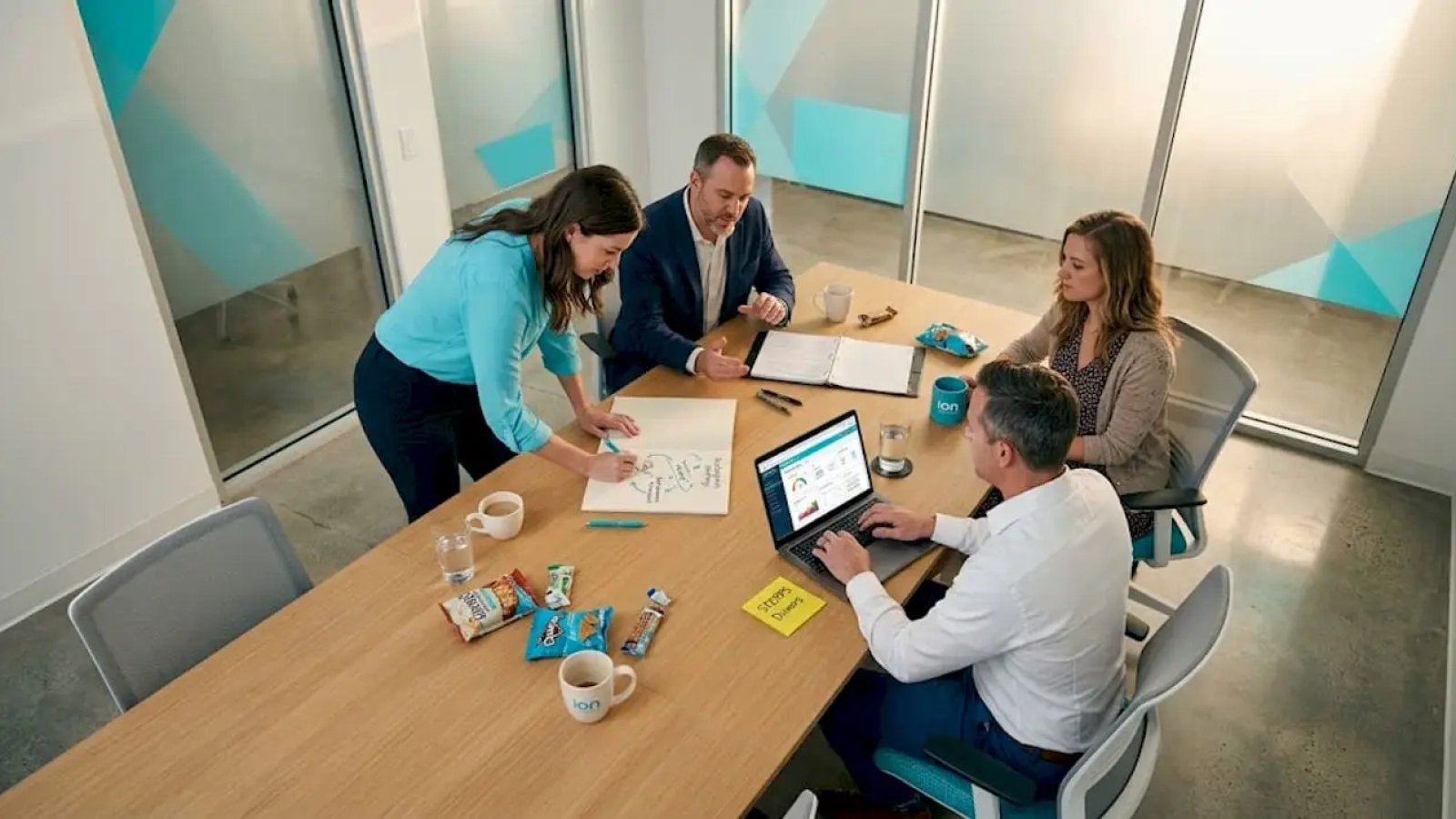
Jonah Berger’s STEPPS framework is the most useful model here. Campaigns activating multiple drivers outperform single-element campaigns by a significant margin. The six drivers are:
- Social Currency: People share content that makes them look smart, funny, or in the know.
- Triggers: Content tied to something people encounter regularly gets shared more often.
- ❤️ Emotion: High-arousal emotions like awe, amusement, and anger drive sharing. Low-arousal emotions like sadness or contentment do not.
- ️ Public Visibility: Content that is visible in the real world or easy to see others consuming spreads faster.
- ️ Practical Value: Useful content gets forwarded. Tips, how-tos, and inside knowledge travel far.
- Stories: People share narratives, not facts. Wrap your message in a story people want to repeat.
Virality is predictable when you deliberately engineer these drivers into your campaign before you hit publish.
The second layer is emotional mapping by audience. Gen Z responds strongly to humor, absurdity, and self-aware irony. Millennials tend to share inspirational and values-driven content. Older demographics share practical tips and feel-good community stories. Your campaign should trigger the right emotion for the right group. A scroll-stopping reel of your chef flambéing a dessert works because it hits emotion and practical curiosity at the same time.
Pro Tip: Before building any campaign, list which three or more STEPPS drivers your content will activate. If you can only identify one, rework your concept until you can hit three.
Designing content built to spread
Psychology tells you what to trigger. Content design determines whether it actually works on screen.
Every piece of content you create for virality needs to answer one question from the sharer’s perspective: “What does sharing this say about me?” If posting your content makes someone look cool, helpful, or in the loop, they’ll share it. If it doesn’t, they won’t. That’s the whole game.
Highly visual, surprising, or controversial content generates millions of views on TikTok and Instagram without paid promotion. The visual hook in the first two seconds is everything. A plate being sliced open to reveal a surprise filling. An over-the-top cocktail being assembled from scratch. A before-and-after transformation of your dining room. These are scroll-stopping moments that demand a second watch and a share.
“The best viral content doesn’t just entertain. It gives the audience something to do with it — remix it, debate it, respond to it.” This is memetic engineering in practice.
Successful viral content is designed to be remixed and debated, aligning with cultural subcultures and trends. Concretely, this means:
- Form: Use formats that are native to the platform. Vertical video on Reels and TikTok. Carousel posts for step-by-step reveals on Instagram.
- Function: Make the content do something useful. A recipe shortcut, a hack, a surprising fact about your dish.
- Stance: Take a position. Content that agrees with everything gets ignored. A mild opinion or a “hot take” about food culture invites debate and comments.
- Genre: Tap into an existing trend format rather than inventing one from scratch. Trend surfing is faster than trend creation.
Pro Tip: Polarizing content outperforms agreeable content on every major platform algorithm. Pick a side on something your audience actually cares about, even if it’s low stakes like “deep dish is not pizza.”
Seeding and viral loop engineering
Creating great content is only half the battle. How you launch it determines whether it builds momentum or dies quietly.
The viral coefficient, or K-factor, is your most important metric. A K-factor above 1.0 means each user is generating more than one new user, which produces genuine exponential growth. Below 1.0, growth decelerates over time. Your goal is to understand what your current K-factor is, then systematically improve it.
Here’s how to engineer a viral launch:
- Seed with nano-influencers simultaneously. Coordinated posting by 50 to 100 nano-influencers at the same time creates algorithmic saturation that triggers trend designation on TikTok and Instagram. One influencer won’t move the needle. Fifty posting on the same Tuesday morning might.
- Time releases to cultural moments. A post about comfort food on a cold January Monday hits a Trigger. A behind-the-scenes look at your Valentine’s prep released on February 10th rides a trend. Timing is not luck. It’s scheduling.
- Build sharing triggers into your campaign. Design moments that naturally prompt someone to tag a friend. “Tag someone who needs to try this” is basic but still works. Better: create content so specific to a feeling or community that tagging feels instinctive.
- Optimize your landing experience. If your campaign drives traffic to a link, that page needs to convert fast. Viral loops amplify existing behaviors. If the destination is friction-heavy or confusing, you kill the loop before it compounds.
- Account for dark social. A large chunk of sharing happens on WhatsApp, in Slack channels, and through direct messages. You’ll never track it directly, but you can design for it. Short, memorable codes and URLs that survive copy-paste behavior keep your content working in private channels.
| Tactic | Goal | Metric to Watch |
|---|---|---|
| Nano-influencer seeding | Trigger platform algorithm | Posts per hour, reach spike |
| Cultural moment timing | Maximize relevance and emotion | Engagement rate, shares per post |
| Sharing trigger design | Increase invitations per user | Comment-to-tag ratio, reshares |
| Landing page optimization | Convert new arrivals to participants | Bounce rate, conversion rate |
| Dark social code design | Track private sharing | UTM attribution, promo code redemptions |
Pro Tip: Most teams only optimize the number of invitations per user. But K-factor also depends on conversion rate of those invitations. Double your focus: get more shares AND make sure the share actually converts.
Measuring and optimizing viral campaign performance
A campaign you can’t measure is a campaign you can’t improve. Here’s how to track real virality, not just surface-level vanity metrics.
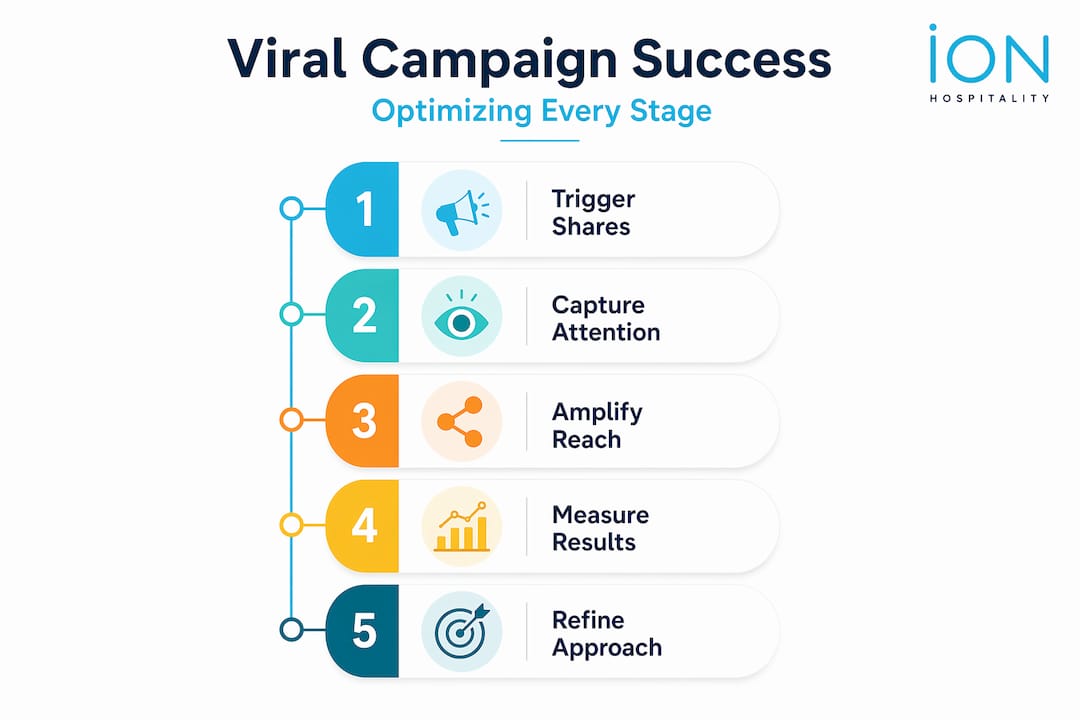
Start by separating earned reach from paid reach. If 80% of your impressions came from ads, you don’t have a viral campaign. You have an expensive one. Viral reach is organic. It grows because people chose to share it, not because you paid for distribution.
Track these metrics together to get a real picture:
| Metric | What It Tells You |
|---|---|
| Share velocity | How fast content is spreading hour by hour |
| Viral coefficient (K-factor) | Whether growth is accelerating or decelerating |
| Earned vs. paid reach ratio | How much organic momentum your content has |
| Brand lift | Awareness and sentiment shifts from the campaign |
| Dark social attribution | Estimated reach in private channels via codes and lift tests |
Dark social sharing distorts performance measurement in ways most teams underestimate. If your campaign is primarily targeting younger demographics, assume a significant portion of your sharing is invisible to your standard analytics. Use creator-specific UTM links, promo codes, and geo-based or time-based lift tests to estimate the impact. Layered attribution with codes and lift testing gives you a far more reliable view of actual performance.
Once you have real data, identify the weakest step in your viral funnel. Improving the weakest funnel step produces disproportionate gains in K-factor. If people are seeing your content but not sharing, your sharing trigger needs work. If people are clicking but not converting, your landing page is the problem. Fix the bottleneck first, then optimize the rest.
Pro Tip: Run A/B tests on your sharing trigger copy, not just your ad creative. The sentence that asks for a share often moves performance numbers more than the visual does.
My honest take on viral marketing
I’ve worked with a lot of restaurant owners who come in expecting one viral post to change their business forever. Here’s the truth: it can give you a spike. What it rarely does is build a business on its own.
What I’ve seen actually work is when restaurant owners stop treating virality as a one-off campaign and start building it into their regular content rhythm. Post shareable content consistently. Build your viral reels library the same way a chef builds a menu. Not every dish is a bestseller, but you always have options rotating through.
The campaigns I’ve seen hit the biggest numbers always activated at least three STEPPS drivers, had a clear sharing mechanism, and were seeded through coordinated influencer posting. None of that is luck. Every single element was a deliberate choice made before the camera turned on.
The other thing most people get wrong is ignoring dark social entirely. Your WhatsApp shares and private DMs are probably generating more real conversions than your public metrics show. If you’re not designing for that invisible layer, you’re leaving results on the table.
Viral marketing is not a magic button. It’s a system. And like any system, you refine it over time. The restaurants winning on social right now aren’t the ones who got lucky once. They’re the ones who kept running the system, measuring what worked, and improving the weakest link every single time.
— Doug
Ready to build your viral presence?
If you’re a restaurant owner who wants to stop guessing and start getting real traction on social, Ionhospitality is built exactly for this. We create scroll-stopping content, run coordinated influencer seeding campaigns, and track every layer of performance so you know what’s actually driving customers through your door.
From social media advertising built for restaurants to proven campaigns that drive bookings, we handle the full execution with zero commissions. You keep all the revenue from the customers we bring you. If you’re ready to see what a real viral campaign strategy looks like for your restaurant, book a discovery call and let’s talk through what’s possible.
FAQ
What makes a campaign go viral?
Virality is engineered through deliberate use of psychological sharing triggers like emotion, social currency, and practical value. Campaigns that activate three or more of Berger’s STEPPS drivers consistently outperform those built around a single element.
What is a viral coefficient and why does it matter?
The viral coefficient (K-factor) measures how many new users each existing user generates. A K-factor above 1.0 means your campaign is growing exponentially. Below 1.0, growth will eventually stall regardless of your initial reach.
How do you track viral sharing you can’t see?
Perfect measurement of dark social is impossible, but you can estimate it through blended attribution. Use creator-specific UTM links, unique promo codes, and geo or time-based lift tests to account for the private sharing happening on WhatsApp, Slack, and DMs.
How many influencers do you need to seed a viral campaign?
Coordinating 50 to 100 nano-influencers posting simultaneously creates the kind of algorithmic saturation that triggers trend signals on TikTok and Instagram. One or two influencers rarely moves the algorithm the same way.
What’s the biggest mistake brands make with viral campaigns?
Most brands focus only on creating great content and ignore the viral loop. Converting exposure into the next share is what drives sustained growth. A campaign without a sharing trigger, a smooth landing experience, and ongoing measurement will spike once and disappear.
Recommended
- The Free Viral Reels Playbook – ION Hospitality – Restaurant Marketing & Advertising Agency, New York, NY
- The Free Viral Events Playbook – ION Hospitality – Restaurant Marketing & Advertising Agency, New York, NY
- Viral restaurant marketing guide for more bookings 2026
- How to launch restaurant campaigns that drive bookings

Add a Comment