

Choosing a restaurant marketing agency that actually understands operational realities and can connect campaigns to increased sales is complicated when most firms either lack hands-on restaurant experience or only disclose pricing on a discovery call. Agencies often avoid publishing clear rates, focus on generic engagement metrics instead of tracked revenue or reviews, or won’t support small or single-location operators. This comparison details the specialties, approach, and availability of six alternatives so you can match the right marketing partner to your restaurant’s size, market, and real sales goals.
Table of Contents
- ION Hospitality
- Restaurant Media Group
- Foodie Agency
- Society Unlocked
- Iconik Social
- Epicurean
- Comparative Analysis: Restaurant Marketing Agencies
ION Hospitality
At a Glance
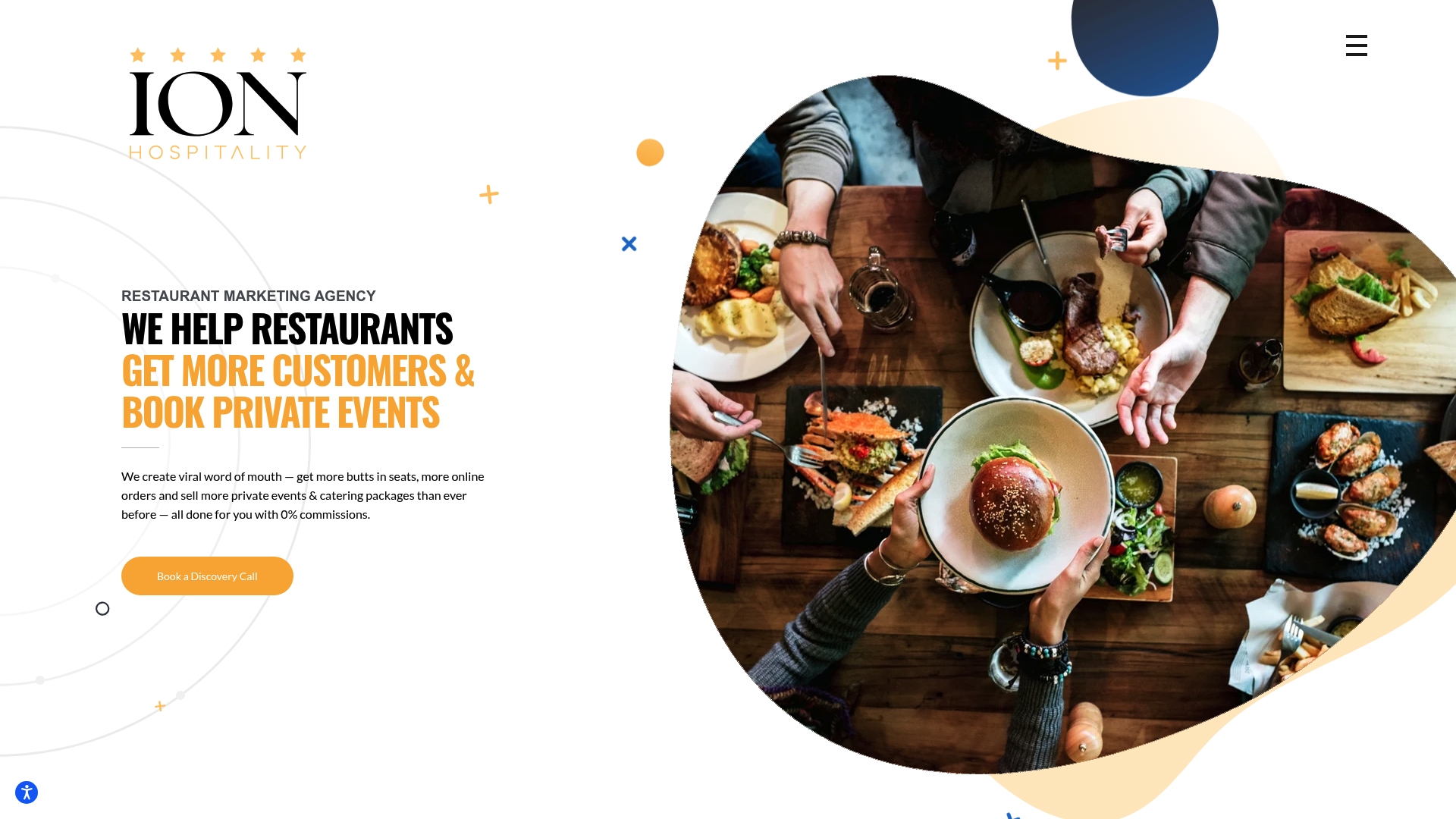
ION Hospitality’s marketing materials state a 0% commission model for private-event and catering bookings, a concrete selling point for restaurants that sell events directly. The agency also operates restaurants of its own and uses that hands-on experience to shape social content, ads, and websites.
Core Features
- Content creation for social channels and marketing that aims to drive local engagement and word of mouth.
- Geo-targeted advertising and retargeting to reach diners within defined catchment areas and convert interest into visits.
- High-converting websites and basic SEO work built to turn visitors into orders and event inquiries.
- Practical case studies and playbooks drawn from the agency’s restaurant ownership experience.
Key Differentiator
The team runs restaurants themselves and applies those operational lessons to client campaigns. That lived experience shows up in creative briefs, event promotion tactics, and the way ad copy speaks to local diners rather than generic audiences.
Pros
-
Deep operational insight. Because team members have owned restaurants, they can recommend menu-level creatives, event setups, and timing that align with real service constraints.
-
Local-first creative. The agency focuses on social formats and hooks that aim to generate shareable moments and direct walk-in interest rather than abstract brand metrics.
-
Full-service marketing for restaurants. Content, paid social, and website builds live under one engagement so handoffs between creative and ad execution are tighter.
-
Playbooks and case studies. Clients get practical templates and examples tested in actual restaurant settings, which speeds decision making and reduces trial-and-error.
-
Free resources. Guides and playbooks on the site let you test basic ad copy and event promotions before signing a retainer.
Cons
- No published pricing. The site lacks clear service tiers or rate cards, so you must request a proposal to learn fees and scope.
Who It’s For
Restaurant owners and managers who want partners that understand front-of-house, back-of-house, and event sales. Best for operators focused on driving foot traffic, private events, and local online orders rather than enterprise or non-restaurant brands.
Unique Value Proposition
That 0% model changes how restaurants can price private events and catering while keeping margin in house. Paired with the agency’s owner experience, the model is aimed at operators who want agency execution without transaction fees on bookings.
Real World Use Case
According to the company, a client hired ION Hospitality for viral social campaigns plus a new site and saw increased foot traffic, more event bookings, and higher online orders over several months. The work combined short-form video, geotargeted ads, and a landing page optimized for reservations.
Pricing
The agency does not publish rates; pricing is handled via proposals and scoped engagement. Expect an initial discovery and proposal to outline deliverables, timelines, and fees rather than seeing a fixed menu of packages online.
Website: https://ionhospitality.com
Restaurant Media Group
At a Glance
Full-service marketing and active review generation are offered specifically for established, high end restaurants rather than broad hospitality chains. The agency combines content production, local search work, and paid media into single engagements aimed at guest acquisition and reputation lift.
Core Features
- Social media management including content creation and comment response tailored to dining audiences.
- Food photography and styling plus short-form video and reels production for promotional channels.
- Reputation management with Google review generation and response workflows to improve local trust.
- Local listings upkeep and Google Ads management to drive reservation and order conversions.
- Email and SMS campaigns alongside website design and ongoing site management to boost online conversions.
Key Differentiator
The agency’s focus on established, high end restaurants is the defining angle. The team packages creative production, local SEO, and active review generation into one partner-led engagement. Compared with Ionhospitality, which emphasizes social ad funnels and private event sales, this firm leans heavier on reputation and premium brand presentation.
Pros
- The service mix targets restaurant needs end to end from photography to paid search which reduces vendor wrangling for owners.
- The team emphasizes restaurant experience, so briefings and content feel hospitality-first rather than generic marketing.
- Content production quality is oriented toward fine dining imagery and short-form video formats that convert on social platforms.
- Reputation management processes are part of the core offering which helps centralize review workflows and responses.
- Local SEO and ad management are packaged with creative work, helping the campaigns align with on-site menus and reservation pages.
Cons
- Pricing is not published which means you will need discovery calls to learn retainer ranges and minimums.
- The vendor provides limited disclosure about the specific platforms and tech stack they use for reporting and campaign automation.
- There are few independent case studies available in the public material, so claims about impact require reference checks.
When It May Not Fit
If you run a multi-state restaurant group that needs enterprise-grade scalability and detailed platform-level integrations you may find the offering too boutique. If you require transparent published pricing for quick procurement, the lack of public rates will slow your buy cycle.
Who It’s For
Successful restaurant owners and general managers who want to outsource every digital marketing task to a single agency and who prioritize reputation, visual content, and local search visibility.
Real World Use Case
A fine dining restaurant hires the agency to refresh its social channels, run targeted Google Ads, and systematically request and respond to reviews. Over several months the venue reports fuller weekends and cleaner local listings handed to reservation partners.
Pricing
The vendor does not publish pricing; the product data lists pricing as informational only. Expect to contact the agency for scopes, retainer options, and any minimum engagement terms.
Website: https://restaurantmediagrowth.com
Foodie Agency
At a Glance
Foodie advertises over two decades of experience focused on restaurants and packages its work into a proprietary phased growth framework called foodie360. The agency pitches coordinated demand, conversion, guest experience, and retention as a single system rather than isolated tactics.
Core Features
- foodie360 phased growth system that sequences marketing work across locations or single outlets.
- Multi-channel strategy and paid media across platforms such as Meta, TikTok, Google, and Yelp.
- Custom restaurant website development and brand identity plus menu engineering for guest-facing assets.
- Organic and paid social management plus reputation and review strategy delivered as month-to-month campaign work.
Key Differentiator
The appeal here is that the agency organizes services around the phased foodie360 playbook so each channel is meant to support the next. For restaurant groups this creates a single roadmap for launches, promotions, and retention instead of independent vendor silos.
Pros
- Decades of category experience. The experience claim above gives Foodie a clear shortcut on restaurant-specific tactics and seasonal calendar rhythm.
- Integrated delivery. You can get web, branding, social, paid media, and reputation under one retained relationship rather than stitching separate contractors together.
- Reporting and communication focus. Clients report monthly reporting and frequent check-ins that keep campaigns visible to operators and GM teams.
- Scales from single locations to regional groups. The phased approach maps to both one-off launches and multi-site rollouts.
Cons
- Public user feedback is polarized, with repeated complaints about billing, subscription management, and slow support responses.
- Several reviews describe difficulty canceling subscriptions or getting timely customer service, which raises risk for operators who prefer tight vendor control.
- Pricing and scopes are not published, so procurement requires discovery calls and negotiation rather than immediate self-selection.
When It May Not Fit
If you want a low-cost, DIY toolkit or a la carte project work, Foodie will likely be overkill and more expensive than hiring specialists. The polarized review record above suggests you should plan for stronger contract terms around billing and exit if client service responsiveness matters.
Who It’s For
Mid-sized restaurants and regional groups across the U.S. that need a single marketing partner to coordinate paid, owned, and earned channels. Best when you want strategic sequencing and a retained relationship tied to phased launches.
Real World Use Case
A regional chain used Foodie to align social media, paid advertising, web presence, and reputation work under the foodie360 roadmap. The chain ran a coordinated summer promotion across five locations, resulting in higher reservation fills and clearer reporting to operations teams.
Pricing
Foodie does not publish standard rates; pricing appears to vary by scope and number of locations. Expect to discuss retainer levels and phased scopes during a discovery call rather than see a public rate card.
Website: https://foodie.agency
Society Unlocked
At a Glance
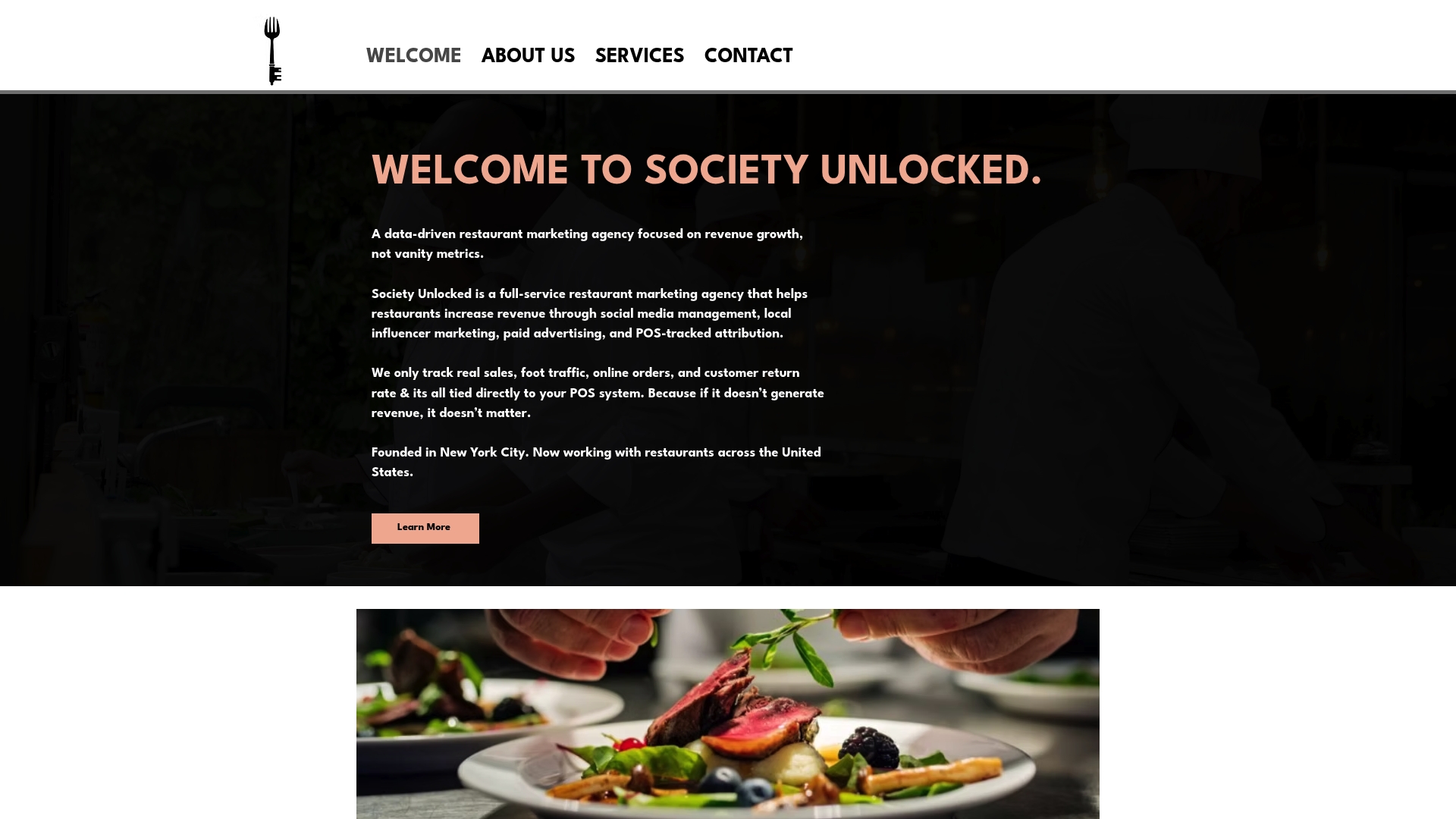
Society Unlocked’s marketing materials emphasize POS-tracked attribution that connects campaigns to actual point-of-sale sales and return-customer rates. The agency was founded in New York City and, according to its site, now works with restaurants across the United States.
Core Features
- POS-tracked attribution to map marketing activity back to sales and repeat visits.
- Social media management including content and platform posting schedules tied to campaign goals.
- Influencer marketing and paid advertising programs that the agency pairs with POS data for measurement.
- Full-service delivery model covering creative, paid media, and measurement under one engagement.
Key Differentiator
The firm’s standout claim is the attribution loop between marketing and the register. Rather than estimating impact from impressions or link clicks, Society Unlocked emphasizes tracing lifts in revenue and customer return rates through POS data. That attribution focus is the central selling point.
Pros
-
Specializes in revenue-focused marketing for restaurants, keeping measurement aligned with sales outcomes rather than vanity metrics.
-
Combines organic social, influencer work, and paid ads in one program, which reduces vendor handoffs for owners juggling multiple partners.
-
The emphasis on repeat-customer metrics makes it easier to evaluate lifetime value changes after campaigns instead of only first-touch effects.
-
New York City roots and stated national coverage suggest experience with both independent restaurants and multiunit concepts.
Cons
-
Publicly available details are minimal; several pages were not viewable, so the scope of services is not fully transparent.
-
No third-party reviews or client testimonials were found, leaving user satisfaction and delivery consistency unverified.
-
Pricing and packaging are not published, which forces inquiries for basic budget alignment and slows vendor comparisons.
Who It’s For
Restaurant owners and general managers who want marketing tied directly to sales and repeat visits. This is a fit if you already capture POS data and prioritize measurable revenue impact over reach or follower growth alone.
Real World Use Case
A neighborhood bistro runs a month of influencer-posted promotions and boosted social ads. Society Unlocked aligns those campaigns with POS data, reports the incremental sales lift, and tracks whether new customers return over the next 30 to 90 days using the same register data.
Pricing
No public pricing is listed. The site presents the service descriptions and measurement approach but does not publish rates or retainer brackets, so expect to contact the agency for a proposal and a custom quote.
Website: https://societyunlocked.com
Iconik Social
At a Glance
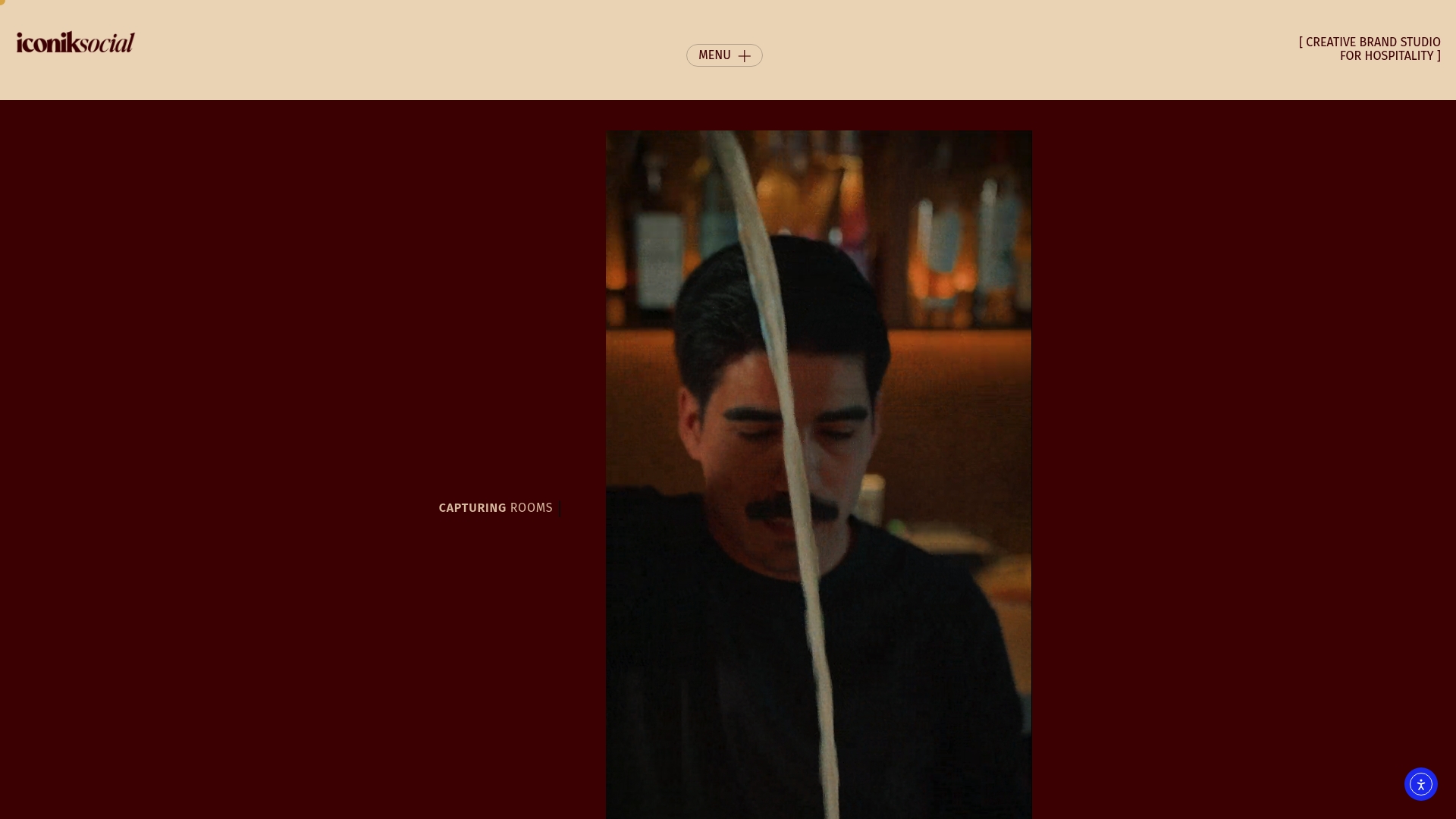
They prioritize long-term recognition over chasing viral moments, using observation-driven storytelling to shape restaurant and bar brands that feel familiar to regulars. Their work focuses on consistent presence rather than one-off posts, aiming for steady recall across social channels.
Core Features
Iconik Social centers its offering on visual and narrative services tailored to hospitality.
- Content creation and storytelling for social media that captures ambiance, staff moments, and guest interactions.
- Brand identity development including tone, visual rules, and messaging that carry across platforms and collateral.
- Paid media management to amplify seasonal campaigns and new-menu pushes.
- Ongoing social account management to keep posting consistent and aligned with the brand playbook.
- Web support and full brand strategy for venues that need cohesive online and on-site presentation.
Key Differentiator
The studio makes long-term recognition its north star, not short-lived virality. Iconik Social observes real service moments and venue energy, then translates those observations into repeatable creative rules so a restaurant reads the same way on Instagram, the website, and at the hostess stand.
Pros
- Deep hospitality focus. Their process is tailored for restaurants and bars, which speeds discovery of what gives a venue its personality.
- Offers both one-off projects and ongoing retainers, so you can test a campaign or hand over full social management.
- Emphasis on brand clarity over post volume reduces noisy feeds and helps regulars recognize the voice across seasons.
- Able to refine existing brands without erasing what works; good for concepts that want polish without a full relaunch.
- Local presence in Houston and Los Angeles supports on-site shoots and market-specific creative choices.
Cons
- No third-party reviews are available in the provided data, so buyer references are necessary to validate delivery and results.
- Pricing is scope-dependent and not published, which makes initial budget planning harder for operators used to clear rate cards.
- The focus on hospitality means Iconik Social is not a practical choice for non-hospitality brands seeking generalist agencies.
When It May Not Fit
If you need a strictly performance-first vendor that optimizes only for short-term paid metrics, this studio’s emphasis on brand recognition will feel slow. If you require published hourly rates or a fixed tiered menu of services, the scope-based pricing model will frustrate budget-minded owners.
Who It’s For
Restaurant and bar owners who want their venues to be recognizable month after month rather than chasing spikes. Works best for operators willing to invest in a visual and narrative system and who plan ongoing creative partnerships rather than single campaign bursts.
Real World Use Case
A three-location restaurant hires Iconik Social to unify its Instagram voice and site photography. The studio documents service rhythms, creates a repeatable shot list, and runs paid promos for new menus. The result is a consistent feed that mirrors in-venue energy and simplifies future content shoots.
Pricing
No public rate card is listed. The studio reports project and retainer options, with pricing determined by scope, shoot days, and ongoing posting requirements. Contact Iconik Social for a custom estimate and sample retainer structures.
Website: https://iconiksocial.com
Epicurean
At a Glance
Epicurean’s marketing materials describe it as Canada’s leading digital marketing agency focused exclusively on restaurants. The firm launched in 2023 and emphasizes influencer collaborations, in-house content creation, and Google review management for recognized restaurant brands across Canada.
Core Features
- Restaurant-specific strategies tailored to reservations, online orders, and menu browsing behavior.
- Content creation including photography and short-form video produced by an in-house team.
- Social media management with daily audience interaction and campaign execution.
- Influencer partnerships pre-vetted for ROI and brand alignment.
- Advanced analytics that link engagement to revenue and include Google review management.
Key Differentiator
Epicurean concentrates solely on restaurants and pairs that focus with proprietary influencer vetting plus internal production. That narrow niche means the team speaks kitchen schedules, service rhythms, and menu seasonality rather than general retail or hospitality marketing.
Pros
- Deep restaurant specialization. The team’s hospitality backgrounds shorten briefing cycles because they use restaurant language, not marketing abstractions.
- Strong influencer network that promises pre-vetted collaborations aimed at measurable foot traffic and online orders.
- Data-driven approach that claims to map social activity back to reservations and revenue, which gives owners tangible KPIs to discuss at weekly ops meetings.
- In-house content creators mean faster turnaround on shoots and consistent brand styling across platforms.
- Google review management helps protect star ratings and respond to feedback without pulling your manager away from service.
Cons
- No third-party user reviews are available to corroborate the vendor claims, which leaves client satisfaction hard to validate.
- Pricing is not published, so budgeting requires a discovery call and leaves room for surprise with boutique retainers.
- The agency works with recognized Canadian brands only, which limits fit for smaller independents or non-Canadian operators.
When It May Not Fit
If you run a U.S. restaurant or a small single-location independent with a shoe-string marketing budget, Epicurean will likely be the wrong match. The Canada-only client base and the agency’s boutique model mean slower onboarding for businesses outside its geographic or brand-size criteria.
Who It’s For
Restaurant owners, general managers, and marketing leads in Canada who want a specialist team that handles social, content, influencer outreach, and review management under one roof. Best for recognized brands that can commit to a boutique agency retainer.
Real World Use Case
A Toronto restaurant engaged Epicurean to launch a seasonal menu. Epicurean produced daily social content, recruited local influencers for a preview service, monitored reservation spikes, and managed Google responses. The campaign focused on converting online interest into bookings and repeat visits.
Pricing
Epicurean does not list standard packages on its site. The vendor appears to price services as custom retainers based on scope, which means you will need a discovery call to get a ballpark and a proposed retainer.
Website: https://epicurean.social
Comparative Analysis: Restaurant Marketing Agencies
The following analysis evaluates the unique aspects, strengths, and functional trade-offs among competing restaurant marketing agencies, based on provided detailed vendor descriptions.
Unique Local Expertise versus Broad Content Production
ION Hospitality brings a distinct approach to restaurant marketing by leveraging hands-on restaurant ownership experience. This operational insight allows them to craft highly targeted marketing strategies tailored to the specific challenges and opportunities of running a dining establishment. By contrast, Restaurant Media Group emphasizes high-end dining photography and active review management, providing aesthetics and streamlined reputation consolidation services. This makes Restaurant Media Group a strong contender for restaurants prioritizing visual quality and online reputation-building. Restaurants with artistic requirements might find the latter’s services particularly advantageous.
Direct Sales Commission Model versus Attribution Focus
ION Hospitality’s unique value proposition lies in their 0% commission sales model, designed to maximize profits on private events and catering without additional fees. However, for restaurants focusing on data-centric performance, Society Unlocked offers a standout feature with POS-tracked attribution. This establishes a direct link between marketing initiatives and sales performance, enabling precise adjustments for improvement. While lacking ION’s unique financial incentive, Society Unlocked serves restaurants particularly invested in leveraging advanced analytics and feedback loops.
Best Fit Summary
- ION Hospitality: Recommended for restaurants seeking localized and operationally informed marketing strategies focused on engaging communities, increasing foot traffic, and promoting private events efficiently.
- Restaurant Media Group: Suitable for restaurants emphasizing superior content production, high-quality visuals, and the consolidation of digital reputation through review management systems.
- Society Unlocked: Tailored for establishments with a strong interest in performance tracking and analytics while utilizing direct marketing attribution to measure and enhance customer retention.
Our Pick: ION Hospitality
While strengths vary across agencies, ION Hospitality proves exceptional for its commission-free booking model and deeply practical strategies cultivated from real restaurant operation experience. However, for restaurants heavily reliant on attribution-based marketing analytics, Society Unlocked might align better with their objectives, demonstrating the importance of aligning agency capabilities with specific business goals.
Restaurant Marketing Agencies Comparison
When selecting a marketing agency for your restaurant, consider their specialization and feature set to align with your operational goals.
| Product Name | Core Feature | Key Differentiator | Best For | Pricing | Notable Limitation |
|---|---|---|---|---|---|
| Ionhospitality | Content creation for social media | Operated by restaurant owners | Restaurant owners focusing on local traffic | Not disclosed | Requires contacting for pricing information |
| Restaurant Media Group | Social media management | Focus on high-end restaurants | High-end restaurant operators | Not disclosed | Limited reporting transparency |
| Foodie Agency | foodie360 phased growth system | Phased growth roadmap for scalability | Mid-sized restaurants with multiple locations | Not disclosed | Some reviews complain of slow service |
| Society Unlocked | POS-integrated revenue reporting | Tracks impact through POS data | Operators emphasizing measurable outcomes | Not disclosed | Client satisfaction details are minimal |
| Iconik Social | Brand identity development | Emphasizes consistent brand recognition | Venues prioritizing long-term branding | Not disclosed | Geared only towards hospitality clients |
Discover a Better Way to Market Your Restaurant with Ionhospitality
Choosing among dineline.co alternatives can be overwhelming when your goal is to get more customers, sell private events, and increase online orders without losing margin on commissions. Ionhospitality stands out by offering a 0% commission model so you keep more profits from your private events and catering bookings. Their experience running restaurants themselves means marketing campaigns are tailored to real service realities and local community engagement.
Ready to boost your foot traffic and event sales with marketing designed just for restaurants Visit Ionhospitality now to explore how their social media and advertising expertise can attract more diners without adding commission fees. Book a strategy call and get a custom plan that helps you sell more private events and online orders while keeping control of your margins.
Frequently Asked Questions
How does Ionhospitality’s commission model benefit restaurant owners?
Ionhospitality operates on a 0% commission model for private-event and catering bookings. This approach allows restaurant owners to retain more of their revenue from events and catering services compared to traditional agencies that charge commission fees. Restaurant owners can keep their margins intact while maximizing event profitability.
What is the difference between Ionhospitality and Restaurant Media Group?
Restaurant Media Group specializes in reputation management and active review generation for high-end restaurants. While Restaurant Media Group excels in enhancing a restaurant’s brand presence and managing reviews, Ionhospitality focuses on generating local engagement through social media content and high-converting websites. Depending on whether your priority is brand reputation or driving foot traffic, either agency can serve your specific needs well.
Can I expect practical templates and case studies from Ionhospitality?
Ionhospitality provides clients with playbooks and case studies drawn from their own restaurant ownership experience. These resources help clients make informed decisions more quickly by offering tested examples, which can be particularly beneficial for restaurant owners looking to implement effective marketing strategies without starting from scratch.
Does Ionhospitality offer publicly available pricing?
Ionhospitality does not publish its pricing, as fees and engagement scopes are determined through proposals after an initial discovery call. This means restaurant owners will need to inquire directly to understand the cost structure tailored to their specific needs.
Which platform is better for established restaurants, Ionhospitality or Foodie Agency?
Foodie Agency organizes its services around a proprietary phased growth framework called foodie360, making it a strong choice for multi-location restaurant groups. In contrast, Ionhospitality is ideal for those seeking a more hands-on approach with a focus on local engagement and content creation. Choosing between them will depend on whether you need a structured roadmap for growth or a direct partnership to enhance local marketing.

Add a Comment