

TL;DR:
- Responding to catering leads within five minutes significantly increases the likelihood of qualification and booking. Implementing structured referral programs and tiered pricing strategies boosts revenue and average event value efficiently. Automating follow-up sequences enhances booking rates and provides rapid return on investment.
The most effective increasing catering sales tips share one thing in common: they target every stage of the booking journey, from the first inquiry to the repeat client. Catering revenue growth, the industry term for sustained sales expansion across events, depends on speed, referral systems, tiered pricing, and digital visibility working together. Tools like Tripleseat for event management, Paytronix for loyalty programs, and CaterCamp for growth strategy benchmarks represent the standard that top catering operations measure themselves against. This article covers five proven tactics backed by 2026 research that you can implement starting this week.
1. Respond to catering leads within 5 minutes
Speed is the single most underrated catering sales strategy. Leads contacted within 5 minutes are 21 times more likely to qualify than those reached after 30 minutes. That gap exists because catering buyers are juggling multiple vendors and dates simultaneously. The first operator to respond builds trust and controls the conversation.
Here is how to make fast response a system, not a habit:
- Set mobile push notifications for every new inquiry form submission, so you or your team respond within minutes regardless of location.
- Create templated first responses that confirm receipt, state your response time promise, and ask one qualifying question about event date and guest count.
- Use AI voice agents or chatbots on your website to capture after-hours inquiries and send an instant acknowledgment with next steps.
- Assign backup coverage for weekends and evenings. Most catering inquiries arrive Thursday through Saturday, exactly when coverage is thinnest.
- Track response time in your CRM (Tripleseat and HoneyBook both log this) so you can hold your team accountable with real data.
Pro Tip: Set a personal rule: no catering inquiry goes unanswered for more than 15 minutes during business hours. Post a “We respond within 1 hour” promise on your inquiry form. That single line increases form completions because buyers know they will not be ignored.
2. Build a referral program with real incentives
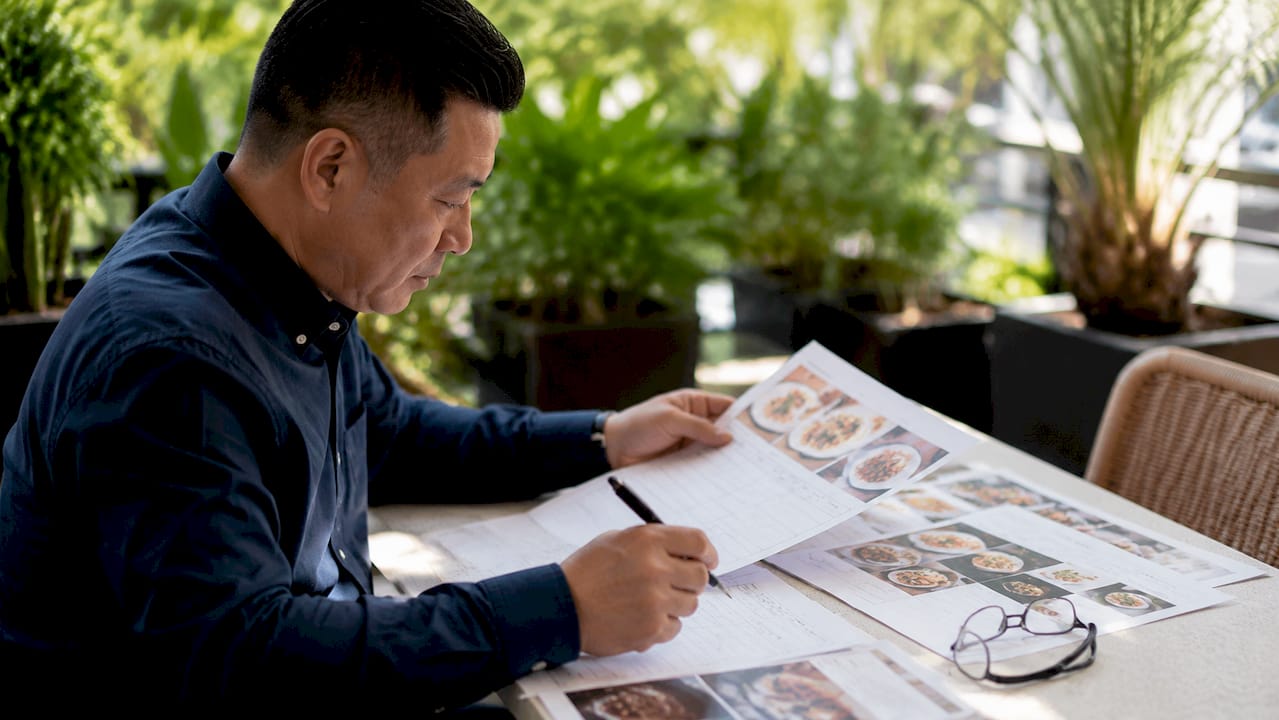
Passive word of mouth is not a strategy. Structured referral programs offering $100 to $300 in credit per booked referral generate 2 to 5 additional events per month. That is a predictable pipeline, not a lucky break.
Build yours in four steps:
- Time the ask correctly. Request a referral within one week of a successful event, when client satisfaction is at its peak. A thank-you email sent within 48 hours that includes a referral link converts far better than a cold follow-up weeks later.
- Offer tangible incentives. A $150 credit toward a future booking works better than a discount on the current invoice. It pulls clients back for repeat business while rewarding them for the referral.
- Recruit vendor partners. Venues, wedding planners, florists, and photographers all serve the same clients you want. Formalize referral agreements with a simple one-page document and a mutual commission or credit structure. This creates a predictable lead pipeline instead of relying on chance.
- Track every source in your CRM. Log where each booking originated. When a referral partner sends you three bookings in a quarter, acknowledge it with a handwritten note or a gift card. That relationship compounds over time.
Pro Tip: Create a “Preferred Vendor” page on your website and list your referral partners there. It costs nothing and gives partners a reason to send clients your way because you are publicly endorsing them too.
3. Use tiered pricing to increase average event revenue
Treating your catering menu like a product catalog changes how buyers make decisions. When you present three clearly defined package levels, buyers stop asking “can I afford this?” and start asking “which tier fits me best?” That mental shift increases both conversion rates and average order value.
Structure your tiers this way:
| Package | Positioning | Price Signal |
|---|---|---|
| Essential | Entry-level, core menu items | Baseline price |
| Signature | Most popular, mid-range add-ons | 25–35% above Essential |
| Premium | Full-service, live stations, bar | 60–80% above Essential |
The middle tier does the heavy lifting. Tiered pricing with a mid-level package set 25 to 35 percent above standard can increase average event revenue by 15 to 30 percent. Most buyers anchor to the middle option because it feels like the smart, balanced choice.
Profitable upsells to layer on top of any tier include:
- Bar packages (beer and wine, full bar, or premium spirits upgrade)
- Dessert stations (donut walls, macaron towers, custom cake service)
- Late-night snack packages (sliders, fries, mini tacos served at hour three)
- Live cooking stations (pasta bars, carving stations, action wok)
Present upsells only after the client has confirmed their base package. Timing upsells after base confirmation reduces buyer resistance because the client is already committed. Use proposal tools like Tripleseat or Caterease that display side-by-side package comparisons. Visual comparison makes the upgrade feel obvious rather than pushy.
4. Optimize your online presence for catering inquiries
Your website and Google Business Profile are your top-of-funnel sales tools. Google Business Profile optimization with photos, reviews, and all fields completed can increase organic catering inquiries by 30 to 50 percent within six months. That is free traffic converting into paid bookings.
Focus on these four areas:
- Google Business Profile: Upload at least 20 photos organized by event type (corporate, wedding, social). Respond to every review within 24 hours. Fill in your “Services” section with specific catering offerings so Google surfaces you for relevant searches.
- Professional event photography: Buyers make emotional decisions. A gallery of beautifully plated corporate lunches and packed wedding receptions sells the experience before you ever speak to a prospect. Organize photos by event type, not by date.
- Transparent pricing frameworks: You do not need to publish exact prices. A “Starting at $X per person” range on your website lets buyers self-qualify before they contact you. This filters out low-budget inquiries and attracts serious ones.
- Inquiry form placement: Put your inquiry form above the fold on your catering page. Include a visible response time promise (“We respond within 1 business hour”) directly next to the submit button.
A strong restaurant online presence also means your social media profiles show real events, real food, and real client reactions. Scroll-stopping video content of live cooking stations or packed seasonal events builds social proof that no ad budget can replicate.
Pro Tip: Ask every new client how they found you. If “Google” is the top answer, invest 30 minutes per month updating your Google Business Profile with fresh photos and a new post. That small habit compounds into significant organic inquiry growth.
5. Automate your follow-up to recover stalled bookings
Most catering sales are lost not at the inquiry stage but in the follow-up gap. Automation of inquiry handling and follow-up sequences leads to 40 percent more bookings and typically pays back the investment within 32 to 48 days. That return is faster than almost any other marketing spend.
The three automations with the highest ROI are:
- Instant inquiry response: A triggered email or text that fires within 60 seconds of form submission. It confirms receipt, sets expectations, and asks a qualifying question. This alone lifts conversion rates by 28 percent.
- Multi-touch follow-up sequence: A series of 3 to 5 touchpoints over 10 days for leads that go quiet after the initial quote. Each message adds value (a sample menu, a venue photo gallery, a client testimonial) rather than just asking “did you decide yet?”
- Post-event nurturing: Post-event follow-up within 48 hours increases repeat bookings by 82 percent. Automate a thank-you message, a photo share, and a review request as a three-part sequence. This converts one-time clients into long-term accounts.
Platforms like Tripleseat, HubSpot, and Mailchimp all support these sequences. The key is that automation ROI depends on a substantive first message. Generic “thanks for reaching out” emails do not move buyers. Personalized, event-specific responses do.
Key takeaways
Catering revenue growth requires speed, referrals, tiered pricing, digital visibility, and automated follow-up working as a system, not as isolated tactics.
| Point | Details |
|---|---|
| Respond within 5 minutes | Leads contacted in under 5 minutes are 21× more likely to qualify and book. |
| Incentivize referrals | Offer $100–$300 credit per booked referral to generate 2–5 extra events monthly. |
| Price in three tiers | A mid-tier set 25–35% above standard increases average event revenue by up to 30%. |
| Optimize your Google profile | Completing all fields and adding photos can lift organic inquiries by 30–50% in 6 months. |
| Automate follow-up sequences | Multi-touch follow-ups recover 40% of stalled leads and pay back investment within 48 days. |
What I’ve learned after watching caterers leave money on the table
I have worked with enough restaurant owners to know that most catering operations are sitting on untapped revenue. The problem is rarely the food. It is almost always the process.
The single biggest mistake I see is treating lead response as a “when I get to it” task. You will not get to it fast enough. By the time you reply three hours later, that client has already booked someone else. Speed is not a nice-to-have. It is the foundation everything else builds on.
Referral programs are the second area where I see operators underinvest. They assume satisfied clients will spread the word naturally. Some do. But a structured program with a real incentive converts passive satisfaction into active promotion. The difference is measurable within 60 days.
My honest advice: do not try to implement all five tactics at once. Start with lead response automation and one referral incentive. Get those two working before you add tiered pricing and Google optimization. Tracking KPIs like lead-to-booking rate and average event value will show you exactly where your biggest bottleneck is. Fix the bottleneck first. The compounding effect of two or three well-executed tactics beats five half-executed ones every time.
— Doug
How Ionhospitality helps caterers book more private events
If you are ready to put these catering sales strategies into practice but need the marketing infrastructure to support them, Ionhospitality builds it for you.
Ionhospitality is a social media marketing and advertising agency built specifically for restaurants and catering operations. From social media advertising that drives private event inquiries to website development designed to convert catering traffic into booked events, every service is built around one goal: more revenue, zero commissions. Ionhospitality also specializes in event marketing for private bookings that fills your calendar with corporate clients, weddings, and social events. Ready to see what is possible? Book a discovery call and get a custom growth plan for your catering operation.
FAQ
How fast should I respond to a catering inquiry?
Respond within 5 minutes whenever possible. Leads reached in under 5 minutes are 21 times more likely to qualify than those contacted after 30 minutes.
What is the best upsell for catering events?
Bar packages and late-night snack stations consistently produce the highest add-on revenue. Present them after the client confirms their base package to reduce resistance and increase acceptance rates.
How do I get more catering leads from Google?
Optimize your Google Business Profile with at least 20 event photos, respond to every review, and fill in all service fields. This approach can increase organic catering inquiries by 30 to 50 percent within six months.
Does a referral program really work for catering?
Yes. Structured programs offering $100 to $300 in credit per booked referral generate 2 to 5 additional events per month. Timing the ask within one week of a successful event produces the highest conversion rate.
How much can automation improve catering sales?
Automating inquiry responses and follow-up sequences produces 40 percent more bookings on average and typically pays back the investment within 32 to 48 days, making it one of the fastest-returning tools in catering sales.

Add a Comment