

TL;DR:
- Engagement in restaurant advertising relies on entertainment, interaction, and e-WOM to drive loyalty and real visits. Personalized marketing significantly improves retention, with a focus on tracked confirmed visits rather than impressions. Using strategic platform choices and integrating data optimizes ROI and transforms engagement into full tables.
Engagement in restaurant advertising is defined as the meaningful interaction between a customer and your brand that moves them from passive viewer to paying guest. The role of engagement in restaurant ads goes far beyond likes and shares. It directly determines whether your ad spend translates into full tables, repeat visits, and real revenue. Research confirms that social media activities like entertainment, interaction, trendiness, and electronic word-of-mouth (e-WOM) significantly increase consumer brand engagement and customer loyalty. Meanwhile, 1:1 personalized marketing achieves 42% year-over-year retention compared to just 13% from general advertising. If you are still measuring success by impressions alone, you are leaving serious money on the table.
What types of engagement work best in restaurant advertising today?
Not all engagement is created equal. A 2026 academic study using PLS-SEM analysis on the culinary sector found that entertainment, interaction, trendiness, and e-WOM are the four social media marketing activities that significantly drive consumer brand engagement and loyalty. Customization, despite being a popular tactic, showed no significant effect. That finding should reshape how you allocate your creative budget.

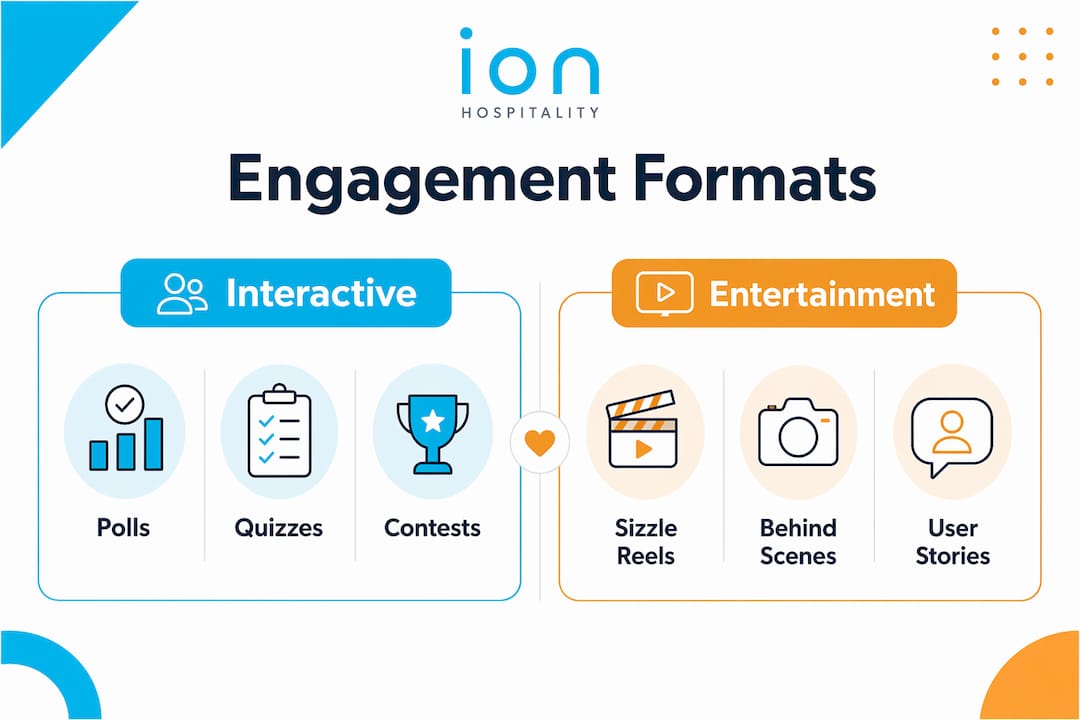
Here is what that means in practice. Entertaining content, think sizzle reels of your signature dish or behind-the-scenes kitchen clips, outperforms polished but generic branded posts. Interactive content, like polls asking followers to vote on the next menu special, creates two-way conversation that builds real connection. Trendy content that taps into viral audio or food challenges on TikTok and Instagram Reels puts your restaurant in front of audiences who are already primed to engage.
The e-WOM piece is especially powerful. When a guest tags your restaurant in a post or shares a story about their experience, that organic endorsement reaches their entire network. You can amplify this by creating shareable moments in your ads, a visually stunning dish, a limited-time offer with a countdown, or a community challenge tied to a local event.
TikTok deserves specific attention here. A 2026 survey of 150 active TikTok users found that TikTok advertising significantly enhances brand awareness and purchase intentions in the food and beverage industry, with brand awareness acting as the key mediating factor. That means TikTok ads do not just drive immediate clicks. They build the recognition that makes someone choose your restaurant over the competitor down the street.
Pro Tip: A/B test your ad formats every 30 days. Run an entertainment-focused video against an interactive poll ad and compare cost per click, saves, and shares. The data will tell you exactly what your specific audience responds to.
How does customer engagement in ads translate to measurable business results?
Engagement metrics in advertising only matter when they connect to a real business outcome. The most direct outcome for a restaurant is a confirmed physical visit. Everything else, clicks, profile visits, email signups, is a stepping stone, not the destination.
The STAMPEDE complete customer journey model tracks cost per confirmed visit as the true ROI metric for restaurant marketing. The model follows a customer from ad exposure through coupon redemption, capturing every touchpoint along the way. This is a fundamentally different approach from standard digital advertising attribution, which stops counting at the click. For restaurants, the click is irrelevant if the guest never walks through the door.
The data on 1:1 personalized marketing makes this concrete. An analysis of 300M+ credit card transactions across 2,000+ locations showed that 1:1 marketing drives 42% year-over-year guest retention versus 13% from general advertising. Re-engagement of inactive guests runs over 3x higher with personalized outreach. Those numbers represent the difference between a restaurant that builds a loyal base and one that constantly chases new customers at high acquisition cost.
Here is a direct comparison of the metrics most restaurant marketers track versus the ones that actually predict revenue:
| Standard Ad Metrics | True Visit Metrics |
|---|---|
| Impressions and reach | Confirmed physical visits |
| Clicks and link taps | Coupon or offer redemptions |
| Email signups | Loyalty QR code scans |
| Follower growth | Repeat visit frequency |
| Cost per click | Cost per confirmed visit |
The right column is what pays your rent. Without proof-of-visit mechanisms like loyalty QR code scans, you cannot accurately calculate your customer acquisition cost or prove that your ads are working. Many restaurant marketers optimize for the left column because it is easier to measure. That is the most common and most expensive mistake in restaurant advertising.
Pro Tip: Set up a loyalty QR code at your host stand or on your table tents. Link it directly to your ad campaigns so every scan ties back to a specific ad, audience, or offer. This single step transforms your reporting from guesswork into proof.
Comparing engagement-driven ad formats and channels for restaurants
Choosing the right channel is as important as choosing the right message. Each platform offers different engagement mechanics, and your restaurant’s audience profile should drive the decision.
Here is how the major platforms stack up for restaurant advertising:
| Platform | Best engagement format | Primary audience | Engagement strength |
|---|---|---|---|
| TikTok | Short video, trending audio | 18 to 34 year olds | Brand awareness, viral reach |
| Reels, Stories, polls | 25 to 44 year olds | Visual discovery, e-WOM | |
| Video ads, event promotions, contests | 35 to 55 year olds | Community building, event RSVPs |
Beyond organic posts, interactive ad formats consistently outperform static image ads for restaurants. Contests and giveaways, such as “tag a friend and win a dinner for two,” generate high comment volume and expand your reach to warm audiences who trust the person who tagged them. These formats work because they turn your existing customers into active promoters. You can find proven frameworks for this in social media contests that have driven measurable growth for restaurants.
Real-world results back this up. The 2026 Taste & Travel Week campaign generated over 112,000 reach across participating restaurants, with awards given based on social engagement counts including hundreds of Instagram and Facebook reactions. That level of community-driven engagement does not happen by accident. It comes from campaigns designed around interaction and shared experience, not just brand broadcasting.
- TikTok: Best for reaching new audiences and building awareness through entertaining, trend-driven video content
- Instagram: Best for visual storytelling, Reels discovery, and driving e-WOM through shareable food content
- Facebook: Best for event promotion, community contests, and retargeting warm audiences
- Contests and giveaways: Best for rapid follower growth and activating your existing audience as brand advocates
Pro Tip: Always include a location tag and 3 to 5 relevant hashtags on every post and ad. Location tags make your content discoverable to people actively searching your neighborhood, and the right hashtags put your content in front of food-focused communities already looking for their next dining experience.
Practical strategies to enhance engagement in your restaurant ads
Knowing what works is only half the battle. Here is how to put it into practice systematically.
-
Build your opt-in list from day one. Every ad campaign should include a mechanism to capture guest data, whether that is an email signup for a discount, a loyalty program enrollment, or a reservation form. This data powers your 1:1 personalized marketing and makes every future campaign more precise and more profitable.
-
Lead with storytelling, not selling. Ads that show the story behind a dish, the chef’s inspiration, or a packed Saturday night create emotional connection. Emotional content drives shares and saves, which extends your organic reach without additional ad spend.
-
Actively collect and amplify customer-generated content. Ask guests to share their experience and tag your restaurant. Repost the best content in your ads and Stories. This creates a feedback loop where real customer voices do your marketing for you, which is the most credible form of e-WOM you can generate.
-
Test entertainment and trendiness first. Given that customization has no significant effect on engagement while entertainment and e-WOM do, prioritize scroll-stopping creative over personalized messaging in your top-of-funnel ads. Save personalization for retargeting and loyalty campaigns where you already have guest data.
-
Track beyond the click. Set up your attribution to measure actual visits and redemptions. Marketing impact improves dramatically when purchase data is tied to unique guest identifiers. Connect your ad platform to your loyalty system or POS so you can see which campaigns drive real walk-ins, not just website traffic.
-
Integrate your loyalty program with your ad platform. When your loyalty data and your ad targeting work together, you can suppress offers to guests who already visited this month, re-engage guests who have gone quiet, and reward your highest-value regulars with exclusive content. This is where restaurant customer retention strategies and advertising strategy become the same thing.
Key takeaways
Engagement in restaurant ads drives measurable ROI only when it is built on entertainment, interaction, and e-WOM, tracked through confirmed visits, and powered by 1:1 personalized data.
| Point | Details |
|---|---|
| Engagement type matters | Entertainment, interaction, and e-WOM drive loyalty; customization does not, per 2026 research. |
| 1:1 marketing outperforms | Personalized outreach delivers 42% retention vs. 13% from general advertising. |
| Track confirmed visits | Cost per confirmed visit is the only metric that proves real restaurant marketing ROI. |
| Platform selection is strategic | TikTok builds awareness, Instagram drives discovery, Facebook builds community and event RSVPs. |
| Data integration is non-negotiable | Linking purchase data to guest identifiers makes every future campaign more accurate and effective. |
Why engagement quality beats engagement volume every time
Here is something I have seen repeatedly working with restaurant clients: the operators who chase follower counts and impression numbers almost always underperform the ones who obsess over who is actually walking through the door.
The hardest part of this work is not creating engaging content. It is convincing restaurant owners to stop celebrating a post that got 500 likes if none of those people made a reservation. Vanity metrics feel good. Confirmed visits pay the bills.
The data integration challenge is real and underappreciated. Most restaurants run their ads on Meta or TikTok, their loyalty program on a separate platform, and their POS on a third system. None of them talk to each other by default. That gap means you are flying blind on attribution. You might have a campaign that looks like it is underperforming on clicks but is actually driving significant walk-in traffic. Or the reverse. Without connecting those systems, you will never know.
What I have also noticed is a shift in how guests respond to personalized offers. When a restaurant sends a guest a birthday offer or a “we miss you” message tied to their actual visit history, the response rate is dramatically higher than a generic promotional blast. That is not a coincidence. It is the importance of engagement in ads playing out at the individual level. Guests feel recognized, and recognized guests come back.
My recommendation: pick one metric that connects your ad spend directly to a physical visit, set it up this week, and make it the only number your team reports on. Everything else is context.
— Doug
How Ionhospitality helps restaurants turn engagement into full tables
Ionhospitality specializes in social media advertising built specifically for restaurants. We create scroll-stopping content, run targeted ad campaigns across TikTok, Instagram, and Facebook, and connect your advertising directly to guest retention and private event bookings. No commissions. No guesswork.
Every campaign we build is designed around the engagement mechanics that actually drive visits, not just impressions. We handle the creative, the targeting, the testing, and the reporting so you can focus on running your restaurant. If you are ready to see what data-driven, engagement-first advertising looks like for your specific concept, book a discovery call with our team. We will show you exactly where your current ads are leaving revenue behind and how to fix it.
FAQ
What is the role of engagement in restaurant ads?
Engagement in restaurant ads is the mechanism that converts ad viewers into loyal, repeat customers by creating meaningful interaction between your brand and your audience. Research confirms that entertainment, interaction, trendiness, and e-WOM are the engagement types that most directly drive customer loyalty in the restaurant sector.
Which social media platform drives the most engagement for restaurants?
TikTok delivers the strongest brand awareness and purchase intention impact for food and beverage businesses, based on a 2026 survey of active F&B ad viewers. Instagram excels at visual discovery and e-WOM, while Facebook performs best for community building and event-based campaigns.
How do you measure real ROI from restaurant ad engagement?
Real ROI is measured by cost per confirmed physical visit, not cost per click or email signup. Tools like loyalty QR code scans tied to specific ad campaigns give you proof-of-visit data that connects your ad spend directly to revenue.
Does personalized ad content improve restaurant engagement?
Personalization matters most at the retention stage, not the awareness stage. A 2026 academic study found that customization had no significant effect on initial consumer brand engagement, while entertainment and e-WOM did. Save personalization for retargeting and loyalty re-engagement campaigns.
How does 1:1 marketing compare to general restaurant advertising?
1:1 personalized marketing achieves 42% year-over-year guest retention compared to 13% from general advertising, based on analysis of 300M+ credit card transactions across 2,000+ restaurant locations. Re-engagement of inactive guests also runs over 3x higher with personalized outreach.

Add a Comment