
TL;DR:
- High-quality food photos influence customer choices more than menu descriptions or reviews by triggering appetite and desire. Strategic image placement and consistent style across channels boost sales, brand trust, and online engagement, making photography a vital marketing investment. Focusing on natural lighting, proper styling, and selective menu featuring maximizes the return on visual marketing efforts, filling tables and driving revenue.
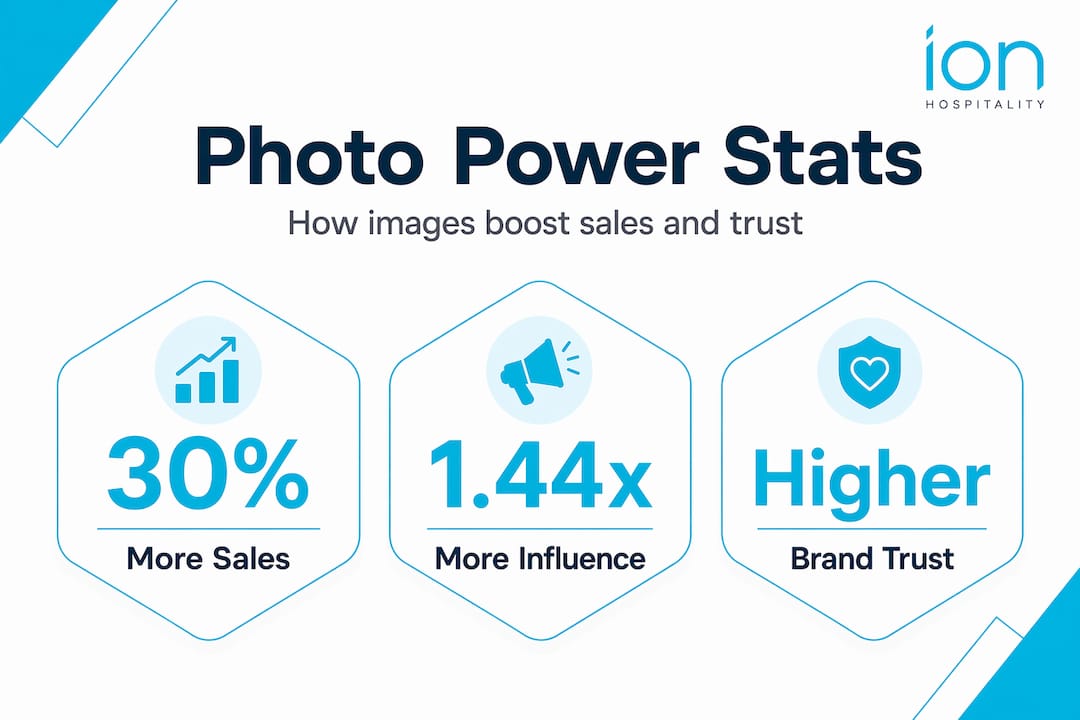
Your menu descriptions are not closing the deal. Neither are your reviews. High-quality food photos are rated 1.44 times more important than menu descriptions and 1.38 times more influential than written reviews when customers decide what to order. The role of food photography in marketing goes far deeper than aesthetics. It shapes purchasing decisions, builds brand perception, and drives measurable sales. If your restaurant is not treating food imagery as a strategic asset, you are leaving money on the table every single day.
Table of Contents
- Key Takeaways
- The role of food photography in marketing your menu decisions
- Strategic photo selection across your menus and channels
- What separates good food photos from great ones
- Measuring the real ROI of food photography
- My take: most restaurants treat photos like an afterthought
- How Ionhospitality turns great food photos into full tables
- FAQ
Key Takeaways
| Point | Details |
|---|---|
| Photos outrank reviews | Customers value strong food images more than descriptions or written reviews when choosing what to order. |
| Selective use wins | Photographing 20-30% of menu items maximizes sales impact without cheapening your brand perception. |
| Lighting makes or breaks shots | Natural side lighting creates depth and appetite appeal that overhead kitchen lights and phone flash cannot match. |
| Photos increase average checks | Strategic image placement using the golden triangle principle can raise average check size by 10-30%. |
| Photography is a brand investment | Consistent, high-quality visuals build long-term brand equity that supports every other marketing channel you use. |
The role of food photography in marketing your menu decisions
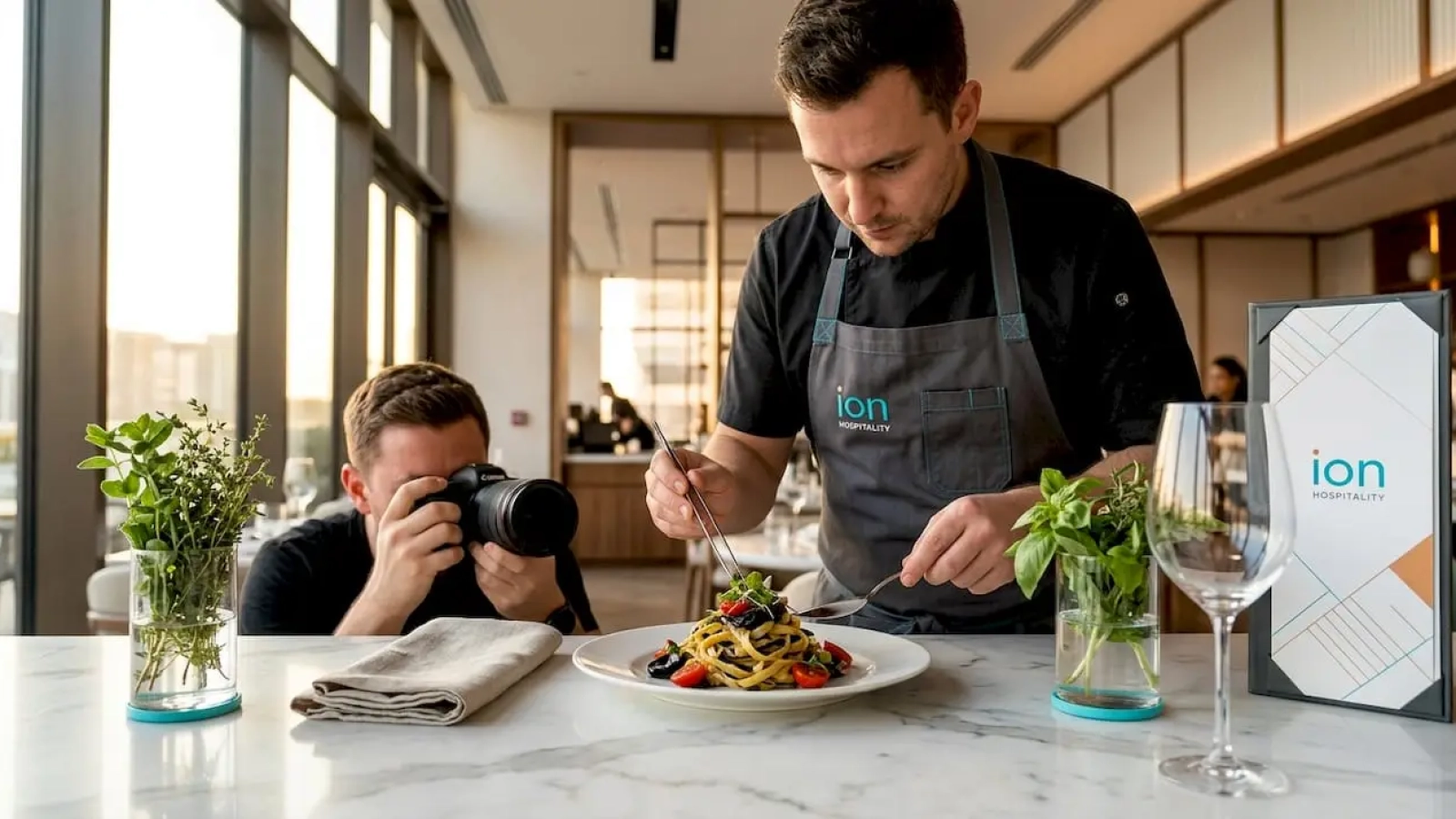
Food photography does something menu text never can. It bypasses rational thought and hits the part of the brain that processes appetite and desire. Visual food stimuli activate ghrelin release, the hunger hormone, even when a person is not physically hungry. That means a great shot of your short rib pasta at 10am can make someone crave it for lunch. This is not a trick. It is biology, and smart restaurant marketers use it intentionally.
“Eating with your eyes” is not just a saying. It is a documented physiological response that drives real purchasing behavior.
When a customer sees a beautifully lit plate of food before they ever sit down, they form an emotional expectation. They mentally commit to the experience. Images reduce decisional friction by removing uncertainty, which is one of the biggest barriers between interest and a booked reservation or placed order. A person scrolling your Instagram or your online menu at 7pm needs to feel confident in what they are getting. A photo does that instantly. A paragraph of description does not.
The impact of food photography also works on brand trust. Consistent, high-quality visuals signal that you care about every detail, including the details diners cannot see yet. It tells people your standards are high before they ever taste a bite.
Strategic photo selection across your menus and channels
Not every dish needs a photo. In fact, photographing everything on your menu is one of the most common mistakes restaurants make. Research shows that overloading menus with photos actually reduces perceived quality. Diners associate photo-heavy menus with fast food chains, not premium dining experiences. The sweet spot is photographing 20 to 30 percent of your menu items.
Here is how to decide which dishes to feature:
- Signature dishes that define your restaurant’s identity
- High-margin items you want customers to order more of
- Visually distinctive plates that are hard to describe but stunning on camera
- Seasonal specials that create urgency and FOMO
- Cocktails and desserts that are natural scroll-stoppers on social
Pro Tip: Batch your menu photo shoots around your two or three highest-traffic items first. Get those right, then expand. You do not need 40 perfect shots before you launch. Five great ones beat 40 mediocre ones every time.
The channel where you deploy photos matters just as much as which items you shoot. Here is a comparison of how food photography performs across different placements:
| Channel | Key benefit | Best photo style |
|---|---|---|
| Digital menus | Higher order rates per item | Clean, zoomable, consistent backgrounds |
| Instagram / Reels | Organic reach and virality | Lifestyle, motion, behind-the-scenes |
| Paid social ads | Lower cost per click, higher CTR | Vibrant color, bold composition |
| Website homepage | First impression, booking intent | Hero-style, aspirational, brand-aligned |
| Google Business Profile | Local search conversion | Real food, real environment, no filters |
Menu engineering psychology research shows that photos placed in the “golden triangle,” the area of a menu or screen that the eye naturally scans first (top center, top right, middle left), direct customers toward your most profitable items. On a digital menu or website, strategic photo placement is not decoration. It is sales architecture.
For restaurants leaning into restaurant Instagram marketing, food photography is the engine behind every post, reel, and story that drives traffic to your door.
What separates good food photos from great ones
The gap between a photo that makes someone scroll past and one that makes them pick up the phone to make a reservation often comes down to three technical factors: lighting, styling, and composition. Most restaurant owners do not know what is wrong with their photos. They just know something feels off.
Lighting is everything
Natural side lighting is the gold standard for food photography. Light coming from the left side or from a window creates depth, highlights texture, and makes food look three-dimensional. Phone flash and overhead kitchen lights flatten everything out and create color casts that make food look unappetizing. Even a simple setup near a bright window on a cloudy day outperforms a ring light pointed directly at the plate.
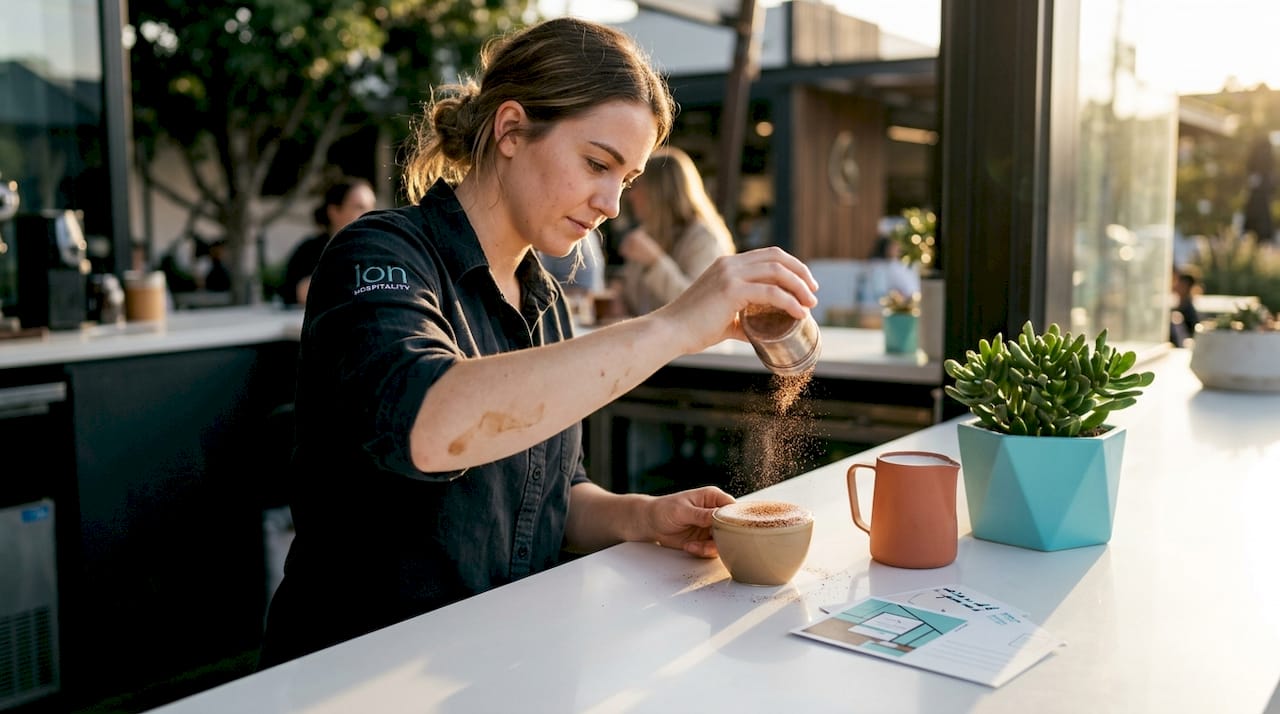
Pro Tip: Shoot during “golden hours,” the first two hours after sunrise or two hours before sunset, when natural light is softest and most flattering. Batch your photography sessions during these windows to cut costs and keep your visual style consistent across your entire menu.
Styling and texture that sell
Food styling is about balance. You want your dishes to look like something a real person would order, not a science project from a food lab. But “real” does not mean sloppy. Wiping plate edges, adding a fresh herb garnish, and catching steam or sauce in motion all create appetite appeal without deception.
Texture and motion in food photos significantly increase viewer engagement. Techniques like shallow depth of field (where the background blurs gently behind the dish) and action shots showing a pour or a cut pull viewers into the moment. They feel like they are there.
Here are the technical elements that matter most:
- Lighting direction: Side or window light, never direct flash
- Focal point: One hero element in sharp focus per shot
- ️ Background: Neutral or brand-consistent surfaces that do not compete with the food
- Props: Minimal and purposeful. Less is more.
- Composition: 45-degree angle or overhead “flat lay,” depending on the dish’s strongest visual angle
Consistency across all of your images builds a cohesive visual identity. Inconsistent or poor-quality photos signal disorganization and lower perceived food quality, even when the food itself is excellent.
Measuring the real ROI of food photography
Let’s talk numbers, because this is where restaurant owners often hesitate. Photography feels like a cost. It is actually one of the highest-return marketing investments you can make.
Menu items with photos sell 30% more than those without. And strategic image placement using menu engineering principles can raise your average check size by 10 to 30 percent. On a restaurant doing $50,000 per month in revenue, a 10 percent lift from smarter menu photography is $5,000 more per month.
| Investment level | What you get | Expected ROI timeline |
|---|---|---|
| Smartphone with good lighting | Decent social content, limited professional use | Immediate, modest lift |
| Freelance food photographer | High-quality menu and web images | 1 to 3 months |
| Professional food photographer with stylist | Brand-level imagery for ads, menus, and press | 3 to 6 months, compounding |
Pro Tip: Treat photography as a long-term brand equity investment, not a one-time expense. The photos you take today will appear in ads, on your website, and across review platforms for years. Spend what you need to get them right.
Photography also amplifies every other channel you use. Great food imagery improves click-through rates on paid social ads, boosts engagement on organic posts, and even supports restaurant SEO by making your Google Business Profile more compelling to local searchers. None of your other restaurant marketing strategies work as well without strong visuals behind them.
My take: most restaurants treat photos like an afterthought
I have worked with a lot of restaurant owners, and the ones who struggle most with marketing often share one trait: they treat photography as the last item on the to-do list. They get headshots done, they build a website, they run ads, and then they pull out a phone and snap something quick before service starts. Then they wonder why their ads are not converting.
Here is what I have learned: photography is not decoration for your marketing. It is the foundation. Every ad, every post, every email campaign performs better or worse based on the image attached to it. A great offer with a bad photo loses to a decent offer with a stunning photo almost every time.
The other mistake I see constantly is restaurants trying to show everything. Twenty photos on the menu, fifty posts on Instagram, all with no consistent style or purpose. Diners get confused or overwhelmed. They scroll past. What actually works is being strategic and disciplined. Feature three to five dishes that represent your brand, shoot them beautifully, and repeat those images across every channel. That repetition builds recognition. Recognition builds trust. Trust fills seats.
Photography is also about visual storytelling, not just product shots. The restaurants that win on social and in ads are the ones using imagery to create a feeling, not just show a dish. That is the difference between a photo that gets a like and one that gets a reservation.
— Doug
How Ionhospitality turns great food photos into full tables
At Ionhospitality, we build restaurant marketing campaigns around the kind of visuals that actually stop the scroll and convert lookers into diners. We integrate professional food imagery directly into social media advertising campaigns built to fill seats, drive online orders, and sell private events. You do not have to figure out what works on your own. Our team handles creative, targeting, and optimization so your best food images reach the right people at the right time. Want to see how we would do it for your restaurant? Book a free discovery call and let’s map out a visual marketing plan that gets results.
FAQ
How much does food photography affect restaurant sales?
Menu items with professional photos sell 30% more than those listed without images. Strategic photo placement can also increase average check size by 10 to 30 percent.
How many menu items should have photos?
Research recommends photographing 20 to 30 percent of your menu items. Too many photos lower perceived quality, while the right selection draws attention to your most profitable dishes.
What is the best lighting for food photography?
Natural side lighting or window light produces the most appetizing results. It creates depth and texture that phone flash and overhead kitchen lights cannot replicate.
Why do food photos outperform written descriptions?
Consumers rank food photos 1.44 times more influential than menu descriptions because visuals trigger physiological appetite responses that words simply cannot activate.
Can good food photography support my restaurant’s SEO?
Yes. Strong food images improve engagement on your Google Business Profile and social platforms, which supports local search visibility. Pairing photography with local restaurant SEO creates a compounding effect on discoverability.

Add a Comment