
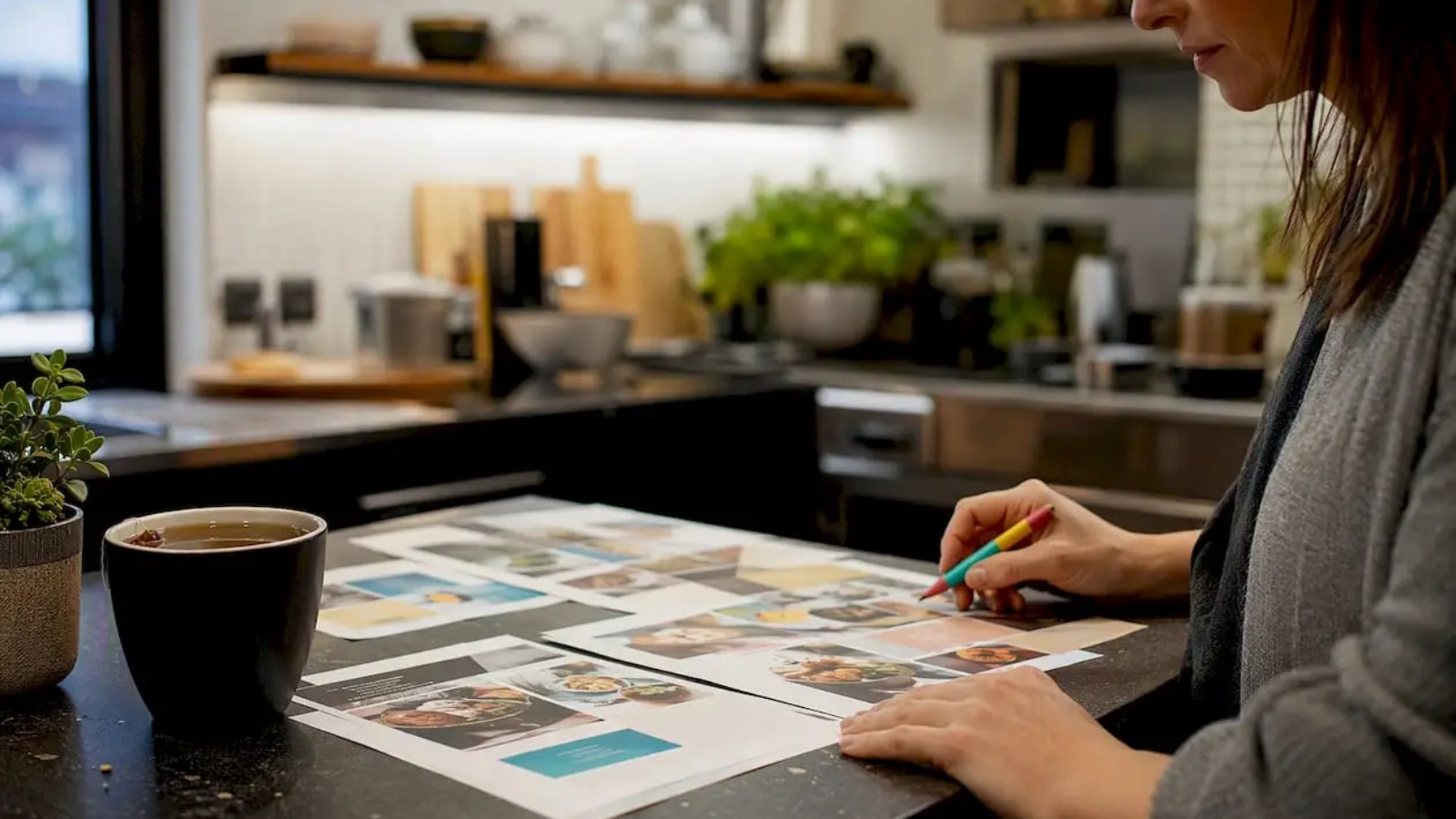
The formula that consistently converts for restaurants is simple: Hook + Specific Dish/Offer + Time/Place + CTA. Every high-performing ad you’ve seen follows some version of it. Here are three you can paste and run today:
🍕 Foot-traffic/dine-in (cold audience, radius-targeted):
“Your Friday night just got better. Wood-fired margherita, crispy prosciutto flatbread, and a rooftop table with your name on it. Reserve yours before 6 PM — [Restaurant Name], Downtown Chicago.”
→ Use this for cold local audiences on Meta. Run Thursday–Friday, dinner daypart.
🛵 Delivery (warm audience, retargeting):
“Craving our truffle mac? Order now and get it at your door in 30 minutes. Free delivery on orders over $35 tonight only.”
→ Best for retargeting people who’ve visited your website or engaged with your content.
🥂 Reservations/private events (warm audience, event planners):
“Planning a corporate dinner or birthday celebration? We handle everything — private room, custom menu, full bar. Inquire today and hold your date.”
→ Run this to warm audiences and lookalikes of past event bookers.
Key Takeaways
The most effective restaurant ad copy leads with a specific dish or offer, names the location, and closes with a single CTA matched to the objective.
| Point | Details |
|---|---|
| Use the core formula | Hook + Specific Dish/Offer + Time/Place + CTA converts across every format and objective. |
| Match format to objective | Reels for foot traffic, carousel for delivery, single image for awareness — copy priorities differ for each. |
| Lead with food on cold audiences | Food close-ups outperform ambiance shots for audiences who don’t know your restaurant yet. |
| Test hooks first | Run hook vs. hook before changing visuals or offers; allow at least 7 days and 1,000 impressions per variation. |
| Ionhospitality runs it for you | Full-service campaigns (creative, copy, targeting, retargeting) with no commissions on bookings or orders. |
Table of Contents
- Why restaurant ad copy works differently than other ads
- What format and copy should you run for each objective?
- Practical copy rules that actually move guests
- Paste-ready templates and swipe file for Meta, Google, and SMS
- 30+ headline and opener ideas for cold, warm, and hot audiences
- How copy and visuals must work together
- How to test copy, target locally, and read your benchmarks
- The ION Hospitality retargeting and private-event ad playbook
- What actually wins in restaurant ads, from the agency side
- Ionhospitality builds and runs your restaurant’s ad campaigns for you
- Sources
Why restaurant ad copy works differently than other ads
Generic retail copy fails restaurants because restaurants sell a perishable, time-sensitive, location-dependent experience. A shoe ad can run for six months unchanged. Your lunch special expires at 2 PM.
Four constraints force every copy decision you make:
- 🕐 Time/day sensitivity. A dinner ad served at 9 AM is wasted spend. Lunch copy needs to hit between 10:30 AM and noon. Your words must match the moment.
- 📍 Location and radius relevance. Nobody drives 45 minutes for a Tuesday taco. Copy that doesn’t signal “you’re close” loses the click. Mention the neighborhood, the cross street, or the city.
- 🥩 Perishable product. Urgency is built in. “Tonight only,” “limited seats,” and “order before 8 PM” are honest, not manipulative. Use them.
- 👅 Sensory expectations. People eat with their eyes and their imagination before they ever taste your food. Copy that says “great food” does nothing. Copy that says “slow-braised short rib, falling off the bone, finished with a red wine demi-glace” does everything.
These four constraints change what your copy must accomplish. It needs to stop the scroll, create appetite, remove friction, and make a local action obvious. That’s a tighter brief than almost any other ad category.
What format and copy should you run for each objective?
Match your objective to your format before you write a single word. The 3×3 objective×format matrix for restaurant Meta ads gives you a practical starting point:
| Objective | Best Format | Copy Priority | CTA Example |
|---|---|---|---|
| Foot traffic / dine-in | Reels / short video | Hook on atmosphere + hero dish | “Reserve a table tonight” |
| Delivery | Carousel | Lead with 3–4 menu items + price | “Order now” |
| Brand awareness | Single image | Emotion + story + location | “See our full menu” |
Why each works:
- Reels for foot traffic. Video shows the sizzle, the crowd, the plating. It sells the experience before the guest arrives. Your hook needs to land in the first two seconds. Lead with the dish, not your logo.
- Carousel for delivery. Carousel lets you show multiple menu items, which mirrors how people browse a menu online. Each card gets its own mini-headline. Keep them short and price-specific.
- Single image for awareness. One strong food photo with a clean headline and a soft CTA. No clutter. This is where you build brand recognition with cold audiences who aren’t ready to order yet.
Format-specific dos and don’ts:
- ✅ Lead with food on cold audiences. Food close-ups consistently outperform ambiance shots when targeting people who don’t know you yet.
- ✅ Use location in your primary text, not just your targeting settings.
- ❌ Don’t run the same copy across all three formats. Each format has a different scroll context and attention window.
- ❌ Don’t save your best offer for the caption. Put it in the first line.
Practical copy rules that actually move guests
Good restaurant promotional text is specific, sensory, and frictionless. Here are the rules that separate ads that get clicks from ads that get ignored:
1. Name the dish. “Our pasta” is invisible. “Hand-rolled cacio e pepe, finished tableside” is a reservation.
2. Lead with sensory detail. Texture, temperature, and aroma are your most powerful words. “Crispy,” “smoky,” “slow-braised,” “ice-cold,” “charred” all trigger appetite before the brain catches up.
3. Use a concrete offer. “Great deals” means nothing. “Half-price appetizers every Wednesday 4–6 PM” means something. Specificity builds trust.
4. Include location and timing. “Join us tonight” is weak. “Join us tonight at our Midtown location, 5th & 47th, open until 11 PM” removes every excuse not to come.
5. One CTA only. “Reserve a table, order online, or call us” is three CTAs. Pick one per ad. The right one depends on your objective.
6. Cut empty adjectives. “Amazing,” “delicious,” and “the best” are noise. Every restaurant says them. Replace with specifics: the ingredient, the technique, the origin.
7. Use social proof with specificity. “Loved by locals” is weak. “4.8 stars on Google, 1,200+ reviews” is credible. Even better: quote a real review line if you have permission.
8. Match urgency to reality. If the offer genuinely expires, say so. If it doesn’t, don’t fake it. Readers notice.
9. Write for one person, not a crowd. “You’ve been craving this” outperforms “Come visit us” every time.
10. Keep primary text under 125 characters for your hook line. Instagram ad copy performs best when the primary hook is 125 characters or fewer, the headline is 40 characters, and the description is 25 characters.
Weak vs. strong examples:
| Weak | Strong |
|---|---|
| “Great food, great vibes.” | “Crispy duck confit. Reserve your table tonight.” |
| “Order online today!” | “Free delivery on orders over $30. Order by 8 PM.” |
| “We have private event spaces.” | “Private dining for 20–80 guests. Inquire and hold your date.” |
Pro Tip: Menu and hero copy should prioritize clarity over poetry. Specific ingredient and dish detail increases ordering confidence and perceived value more reliably than flowery language. “Aged 60 days, hand-cut ribeye” signals quality without a single adjective like “amazing.”
Paste-ready templates and swipe file for Meta, Google, and SMS
Use these as starting points. Edit the dish name, price, and location. Launch. Test. Improve.
🎬 Meta/Instagram Reel — primary text (foot traffic)
- “Friday nights hit different here. 🔥 [Dish Name] + craft cocktails + a rooftop view. Reserve your table before it’s gone → [Link]”
- “You’ve been thinking about [Dish Name] all week. Come get it tonight. [Neighborhood], open until midnight. Reserve now.”
- “Our [Dish Name] sells out every Saturday. Don’t say we didn’t warn you. Book your table → [Link]”
🖼️ Single-image ad — headline (40 characters max) + description (25 characters max)
- Headline: “[Dish Name] — Reserve Tonight” | Description: “[City] · Open Until 11 PM”
- Headline: “Half-Price Apps Every Wednesday” | Description: “4–6 PM · [Neighborhood]”
- Headline: “Private Dining for Any Occasion” | Description: “Inquire · Hold Your Date”
🎠 Carousel — delivery (primary text + per-card headlines)
- Primary text: “Your favorite [Restaurant Name] dishes, delivered in 30 minutes. Free delivery on orders over $[X] tonight only. Order now → [Link]”
Card 1: “[Dish 1] — $[Price]” | Card 2: “[Dish 2] — $[Price]” | Card 3: “[Dish 3] — $[Price]” | Card 4: “Order Now — Free Delivery”
📍 Google Local Search — headlines (30 characters max each)
- “[Dish Name] in [City]” / “Reserve a Table Tonight” / “Open Until 11 PM”
- “Private Events — [City]” / “Custom Menus Available” / “Book Your Date Now”
📱 SMS (160 characters max)
- “[Name], your table is waiting. 🍷 [Dish Name] + happy hour specials until 7 PM tonight. Reserve: [Link] Reply STOP to opt out.”
- “Free delivery tonight on orders $30+. Order [Dish Name] before 8 PM: [Link] Reply STOP to opt out.”
- “Planning a private event? We have dates open in [Month]. Inquire now: [Link] Reply STOP to opt out.”
Pre-launch QA checklist:
- ☐ Does the hook land in the first two seconds (video) or first line (static)?
- ☐ Is the dish or offer named specifically?
- ☐ Is there a single, clear CTA?
- ☐ Does the copy include location or timing?
- ☐ Squint test: can you read the text overlay at arm’s length on a phone?
- ☐ Does the CTA match the landing page?
Pro Tip: Generate 3–8 copy variations per ad set using different angles (price-led, benefit-led, urgency-led), then test them simultaneously. Never ship the first draft unchanged. The winning line is almost never the first one you write.
30+ headline and opener ideas for cold, warm, and hot audiences
Your headline is the most important line in your ad. It either stops the scroll or loses the click. Here’s a working list grouped by objective, with notes on audience temperature.
🦶 Foot traffic / dine-in
- “Your [Day] night plans just got better.” (cold — curiosity)
- “[Neighborhood]’s best-kept dinner secret.” (cold — prestige + local)
- “We saved you a table. 🍽️” (warm — personal, FOMO)
- “You haven’t tried [Dish Name] yet. Fix that tonight.” (warm — direct)
- “Last call for [Seasonal Dish]. Gone after [Date].” (hot — urgency)
- “The [Dish Name] that’s breaking the internet — now on our menu.” (cold — social proof)
- “Dinner for two, done right. Reserve in 30 seconds.” (warm — convenience)
- “[City]’s most-reviewed [cuisine type]. See what everyone’s talking about.” (cold — social proof)
- “It’s [Day]. You deserve [Dish Name].” (warm — permission)
- “Our [Dish Name] sells out every weekend. Book early.” (hot — scarcity)
🛵 Delivery
- “[Dish Name] at your door in 30 minutes. 🛵” (cold — convenience)
- “Skip the line. Get [Dish Name] delivered tonight.” (warm — friction removal)
- “Free delivery on your first order. Try [Dish Name].” (cold — low-risk offer)
- “Craving [Dish Name]? We’re already on our way.” (hot — urgency + humor)
- “Order by 8 PM. Eat by 8:30.” (warm — speed + specificity)
- “[Dish Name], $[Price], delivered. What are you waiting for?” (hot — direct)
- “Your couch called. [Dish Name] is on the way.” (warm — personality)
📣 Brand awareness
- “[Restaurant Name] — [City]’s [cuisine type] since [Year].” (cold — heritage)
- “Where [City] goes for [occasion].” (cold — positioning)
- “Every dish tells a story. Ours starts with [key ingredient].” (cold — narrative)
- “Meet the chef behind [Dish Name].” (cold — personality)
- “[Restaurant Name]: [City]’s most-loved [cuisine type].” (cold — social proof)
- “We source every ingredient within 50 miles. Taste the difference.” (cold — values)
🥂 Private events
- “Planning a corporate dinner? We’ve got the room, the menu, and the team.” (warm — B2B)
- “Birthday dinners, rehearsal dinners, holiday parties — we handle it all.” (cold — occasion list)
- “Private dining for 20–80 guests. Custom menus. Zero stress.” (warm — specificity)
- “Your next event deserves a better venue. Inquire today.” (warm — upgrade)
- “Hold your date before it’s gone. [Month] is filling fast.” (hot — scarcity)
- “We’ve hosted 500+ private events. Yours is next.” (cold — social proof)
Emotional trigger guide:
| Trigger | Audience Temp | Best Format |
|---|---|---|
| FOMO / scarcity | Hot | Reel, SMS |
| Convenience | Warm | Carousel, SMS |
| Prestige / exclusivity | Cold | Single image, Reel |
| Value / price | Cold/Warm | Carousel, Google |
| Social proof | Cold | Single image |
Adapting one headline across formats:
- Reel caption: “Your Friday night just got better. 🔥 Wood-fired margherita, rooftop table, craft cocktails. Reserve before 6 PM.”
- Image headline (40 chars): “Wood-Fired Pizza — Reserve Tonight”
- SMS (160 chars): “Friday night at [Restaurant Name]. 🍕 Wood-fired margherita + rooftop table. Reserve before 6 PM: [Link] Reply STOP to opt out.”
How copy and visuals must work together
Copy can’t save a bad visual. And a stunning food photo with weak copy leaves clicks on the table. The two work as a system, and strong creative visuals are the foundation of ad performance for restaurants.
The food-first rule for cold audiences. When someone doesn’t know your restaurant, they need to see the food before they’ll read anything. Lead with a tight, well-lit shot of your hero dish. Not the dining room. Not the logo. The food. This is the single most consistent finding across top-performing restaurant ad archetypes.
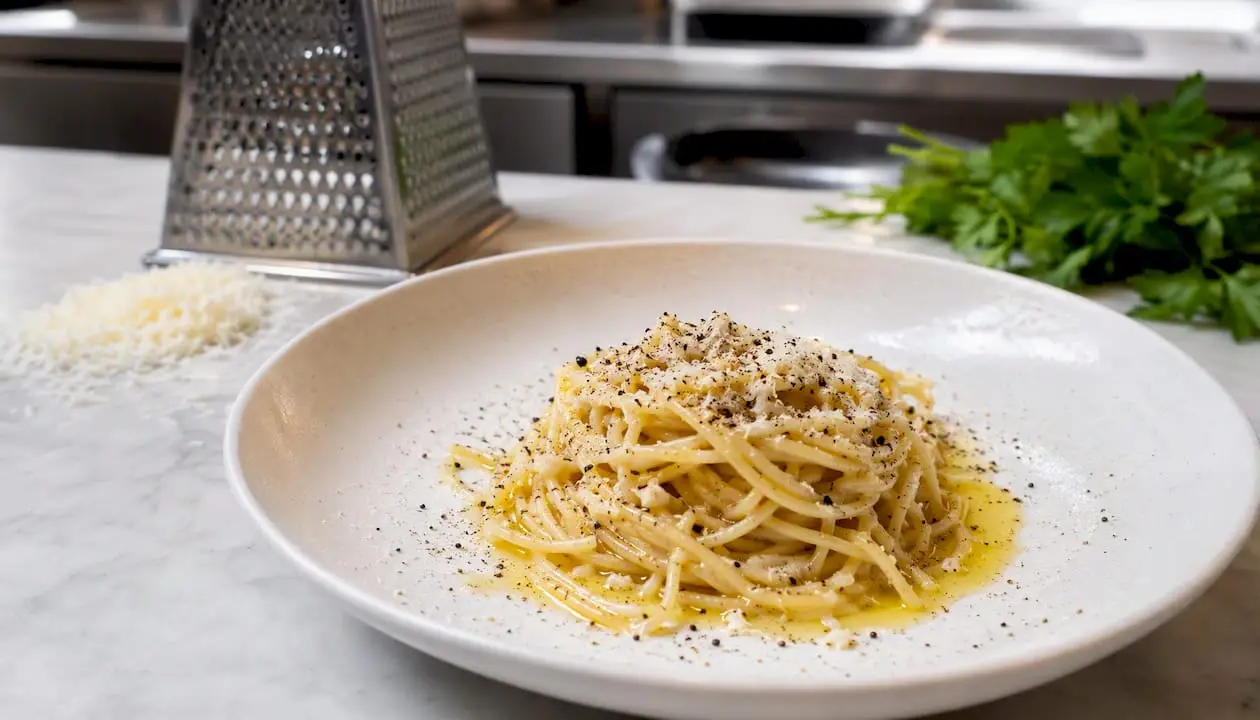
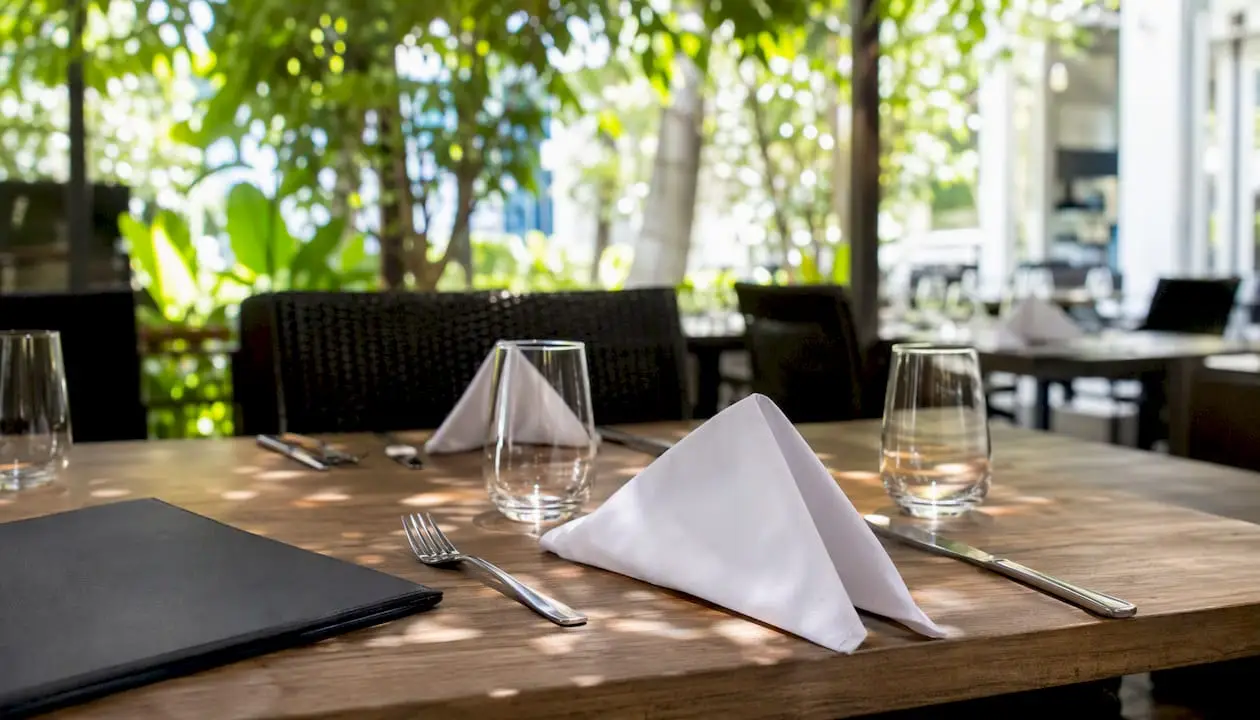
When ambiance works. Ambiance shots earn their place in retargeting and awareness campaigns, where the viewer already knows you. At that stage, you’re selling the experience and the emotion, not the dish. A moody, candlelit dining room shot with copy like “Your anniversary dinner is waiting” works beautifully for warm audiences.
Text-on-image checklist:
- ☐ No more than 20% of the image covered by text (Meta’s historical guideline)
- ☐ High contrast between text and background
- ☐ Font size readable on a 5-inch phone screen
- ☐ One message per image — not three bullet points
- ☐ Squint test: blur your eyes and confirm the focal point is still the food
Pro Tip: Whimsical or AI-generated imagery can stop the scroll and humanize your brand when used carefully. The Black & Beige Bistro AI chef cat campaign showed that a character-driven creative can generate attention without sacrificing food credibility — as long as the food itself still appears prominently. Test personality-driven creative on warm audiences first, not cold ones.
Spectacle works at scale too. DoorDash’s Sandcastle Restaurant activation reframed the brand as a premium reservations player through a single large-scale cultural moment. Small restaurants can borrow the principle at lower cost: a limited-time pop-up, a chef collaboration, or a seasonal menu launch tied to a local event. Pair it with strong copy and you get earned media on top of paid reach.
How to test copy, target locally, and read your benchmarks
Testing isn’t optional. It’s how you find the line that actually converts. Here’s a practical system for local restaurant advertisers.
Testing checklist
- Run hook vs. hook first. The first line of your primary text drives 80% of the click decision. Test two different hooks against the same visual before you change anything else.
- Then test offer vs. offer. Once you have a winning hook, test two different offers (e.g., “Free delivery on $30+” vs. “10% off your first order”).
- Then test CTA. “Reserve now” vs. “Book your table” vs. “Order tonight” — small wording changes move conversion rates.
- Run each test for at least 7 days with a minimum of 1,000 impressions per variation before drawing conclusions. Local budgets are small; don’t kill a test after 48 hours.
- One variable at a time. Changing the image AND the copy simultaneously tells you nothing useful.
Targeting guidance
- Radius: A 5–8 mile default radius works for most full-service restaurants in urban and suburban markets. Tighten to 3 miles for lunch campaigns. Expand to 10–15 miles for private events and catering, where guests travel further.
- Dayparting: Run lunch ads 10:30 AM–1 PM. Dinner ads 4–7 PM. Late-night ads 9 PM–midnight for bars and late-service restaurants. Delivery ads can run broader windows but peak 5–8 PM.
- Audience temperature: Cold audiences (interest-based, lookalikes) need food-first creative and a low-friction offer. Warm audiences (website visitors, video viewers, past engagers) respond to urgency, social proof, and event-specific copy. Aligning copy with current culinary trends can sharpen your hook for cold audiences who are already interested in a cuisine style.
Benchmark reference
The 3×3 matrix benchmarks give format-level CTR and CPM context for restaurant Meta ads:
| Format | Typical CTR Range | Notes |
|---|---|---|
| Reels / video | Higher end | Strong for foot traffic; hook must land in 2 seconds |
| Carousel | Mid-range | Best for delivery; each card needs its own mini-headline |
| Single image | Baseline | Awareness and retargeting; food-first on cold audiences |
CTR and CPM vary by market, budget, creative quality, and audience size. Use these as directional ranges, not guarantees. If your CTR is below the baseline for your format after 1,000+ impressions, test a new hook before adjusting targeting.
The ION Hospitality retargeting and private-event ad playbook
Here’s the step-by-step workflow Ionhospitality uses to take a restaurant client from brief to live campaign. You can adapt this for your own operation. The squad-based execution model runs a creative sprint and a copy sprint in parallel, which cuts launch time significantly.
Step-by-step: brief to launch
-
Audience build (Day 1–2). Define cold, warm, and hot audience segments. Cold = interest-based + lookalikes. Warm = website visitors (30-day window), video viewers (50%+), Instagram engagers. Hot = past customers, email list uploads.
-
Creative sprint (Day 2–4). Shoot or source 3–5 hero food assets (photo + short video). Prioritize tight food shots for cold audiences. Capture ambiance and team content for warm audiences.
-
Copy sprint (Day 3–4). Write 3 hook variations per objective (foot traffic, delivery, private events). Write headlines and CTAs for each format. QA against the pre-launch checklist above.
-
Launch (Day 5). Go live with one ad set per objective. Set dayparting from the start. Don’t wait for “perfect” creative.
-
Retargeting sequence (Day 7–30). Anyone who clicked but didn’t convert gets a retargeting ad within 7 days. Use urgency copy: “Still thinking about it? Your table is waiting.” Anyone who visited the private events page gets a specific private-event ad within 3 days.
-
Creative refresh (Day 30+). Swap the lowest-performing hook. Introduce a new food asset. Keep the winning CTA.
Private-event retargeting copy examples
For anyone who visited your private dining or events page:
- “You were this close to booking. Private dining for up to [X] guests — custom menu, dedicated staff, no stress. Inquire today and hold your date: [Link]”
- “[Month] dates are filling fast. Lock in your private event at [Restaurant Name] before it’s gone: [Link]”
For group dining and private event promotion, the copy should always include guest count range, a mention of customization, and a single low-friction CTA (inquire, not “buy now”).
Pro Tip: Private-event ads convert better when they lead with logistics, not atmosphere. “Private room for 20–60 guests, custom menu, full bar” outperforms “an unforgettable evening” every time. The buyer is a planner. Speak to their checklist, not their emotions.
What actually wins in restaurant ads, from the agency side
The hardest part of restaurant advertising isn’t writing the copy. It’s building trust with someone who has never eaten at your restaurant. That’s the real lift.
Most restaurant owners focus on the offer. “Run a discount, get customers.” But the first job of any cold-audience ad is credibility, not conversion. The viewer needs to believe your food is worth trying before they’ll act on any offer. That’s why food-first creative, specific dish names, and real social proof (star ratings, review counts, press mentions) matter more than the discount percentage.
The single change that moves campaigns most consistently: replacing vague benefit copy with a specific dish name and a concrete offer. “Great Italian food in Brooklyn” becomes “Hand-rolled tagliatelle Bolognese, $22, served nightly in Carroll Gardens.” The second version does three things the first doesn’t: it names the dish, anchors a price, and signals a neighborhood. That’s three trust signals in one line.
For private events, the copy shift that drives inquiries is moving from aspirational language to operational specifics. “An unforgettable evening” tells a planner nothing. “Private room for 30 guests, custom prix-fixe menu, dedicated server, AV available” tells them everything they need to make a decision.
Ionhospitality builds and runs your restaurant’s ad campaigns for you
Writing great restaurant ad copy is one part of the equation. Shooting the food assets, building the audiences, running the tests, and managing the retargeting sequences is the rest. Most restaurant owners don’t have time for all of it.
Ionhospitality handles the full campaign for full-service restaurants: creative content (photography, videography, copywriting), geo-targeted and retargeted ad campaigns on Meta and Instagram, and social media management. No commissions on your orders or bookings. You pay a flat agency fee and keep everything you earn. The deliverable is a complete ad creative and copy pack, launched and managed for you.
If you’re ready to get more walk-ins, online orders, and private event inquiries without building a marketing department, book a discovery call with the Ionhospitality team. Or explore the full social media advertising service to see exactly what’s included.
Sources
- Best Restaurant Meta Ads Examples 2026
- How to Write Instagram Ad Copy for Restaurants
- The Sand Castledonna — One Club (DoorDash case)
- Restaurant Ads: 13 Creative Advertising Ideas to Inspire You

Add a Comment