
TL;DR:
- Seasonal restaurant promotions help increase sales and stabilize revenue through careful planning and timely execution. Digital marketing, including weekly profile updates and targeted social ads, drives customer engagement and reservations. Local and event-specific strategies outperform broad seasonal branding and foster repeat business.
A restaurant seasonal promotion is a targeted marketing effort designed to attract customers and increase sales during specific holidays or seasonal events. Done right, this approach is one of the most reliable ways to fill tables, sell private events, and keep revenue steady year-round. Seasonal campaigns stabilize revenue by 15–25% for restaurants that apply them consistently. That kind of stability does not happen by accident. It comes from planning early, aligning your menu with what diners actually want, and showing up where they search. This restaurant seasonal promotion guide gives you a step-by-step framework to do exactly that.
What are the essential planning steps for seasonal promotions?
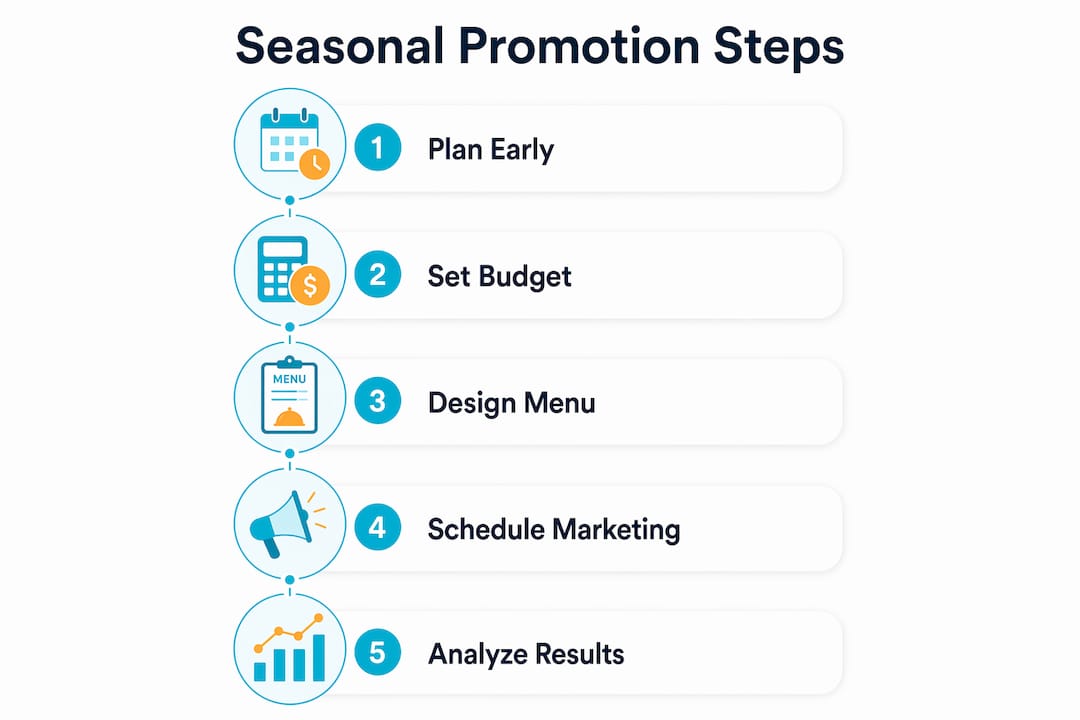
Planning is where most restaurants lose before they even start. The operators who win during the holidays are the ones who started preparing weeks before anyone else. Plan 6–8 weeks ahead for standard seasons, and push that to 8–10 weeks for peak holidays like Christmas and New Year’s Eve.
Here is a practical planning sequence you can follow:
- Build your seasonal calendar. Map out every major U.S. holiday and local event for the year. Include Valentine’s Day, St. Patrick’s Day, Mother’s Day, Fourth of July, Halloween, Thanksgiving, and Christmas. Add local triggers like sports playoffs, festivals, or school events that drive traffic in your area.
- Lock in your suppliers early. Synchronizing supply chain ordering with your campaign launch dates prevents cost spikes and ingredient shortages. Secure seasonal ingredients 8–10 weeks before major events. Do not wait until your competitors have already bought up the local pumpkin supply.
- Research what your customers actually want. Pull your reservation and sales data from the same period last year. Identify which dishes sold out, which promotions drove the most covers, and which nights were slow. Let real numbers guide your menu design.
- Define your promotion format. Decide whether you are running a prix fixe menu, a limited-time dish, a themed event, or a bundled deal. Each format serves a different goal. Prix fixe menus increase average check size. Themed events drive social sharing. Limited-time offers create urgency.
- Assign roles and train your team. A packed Valentine’s Day service with an undertrained staff is a reputation killer. Brief your front-of-house team on the promotion details, upsell opportunities, and reservation procedures at least two weeks before launch.
Pro Tip: Build your seasonal marketing calendar at the start of each year. Restaurants that plan all four seasons at once spend less time scrambling and more time executing.
Your planning window also needs to account for marketing lead time. A promotion that goes live the week of the holiday reaches diners too late. Most people make dining decisions days or even weeks in advance, especially for high-demand nights like New Year’s Eve or Mother’s Day.
How to use digital marketing tools for seasonal restaurant promotions
Your online presence is your first impression. Most diners search for restaurants before they ever walk through your door, and your digital profiles need to reflect your current promotions in real time.
Start with your Google Business Profile. Posting weekly seasonal photos yields up to 70% more engagement and boosts your local map visibility. The numbers get even more striking when you look at call volume. Restaurants with 100 or more photos on their Google Business Profile generate 520% more calls than those with fewer than 10. That is not a minor difference. Update your profile with seasonal menu shots, event flyers, and holiday hours every single week.
Here is how to build a digital marketing push that actually moves the needle:
- Update Google Business Profile weekly with seasonal photos, current hours, and event details
- Run behavior-based email campaigns targeting guests who visited during the same season last year. Automated personalized offers increase order frequency by about 15% compared to static promotions
- Post short-form video content on Instagram and TikTok showing your seasonal dishes being prepared or plated. Scroll-stopping clips of a flaming holiday dessert or a vibrant spring salad drive shares and saves
- Partner with local food creators. Micro-influencers with 5,000–50,000 local followers often deliver stronger trust and conversion than larger accounts. Their audiences are hyper-local and highly engaged
- Run paid social ads focused on immediate availability. The decision-to-purchase window for many diners is under 30 minutes. Your ads should highlight today’s special, current wait times, or tonight’s open tables, not just your brand story
Pro Tip: Use your email campaign strategy to send a “last chance” message 48 hours before a limited-time offer ends. Urgency converts fence-sitters into reservations.
For deeper SEO and profile optimization, the restaurant SEO guide from Todd Stager covers how to rank for local seasonal searches in 2026.
Which seasonal menu and event ideas attract customers during U.S. holidays?
The best seasonal promotions combine a compelling menu with an experience worth sharing. Discounts alone do not fill tables. 51% of restaurants identify promoting in-person events on social media as the top method to increase foot traffic. That stat tells you something important: diners want a reason to show up, not just a coupon.
Seasonal menu ideas by quarter
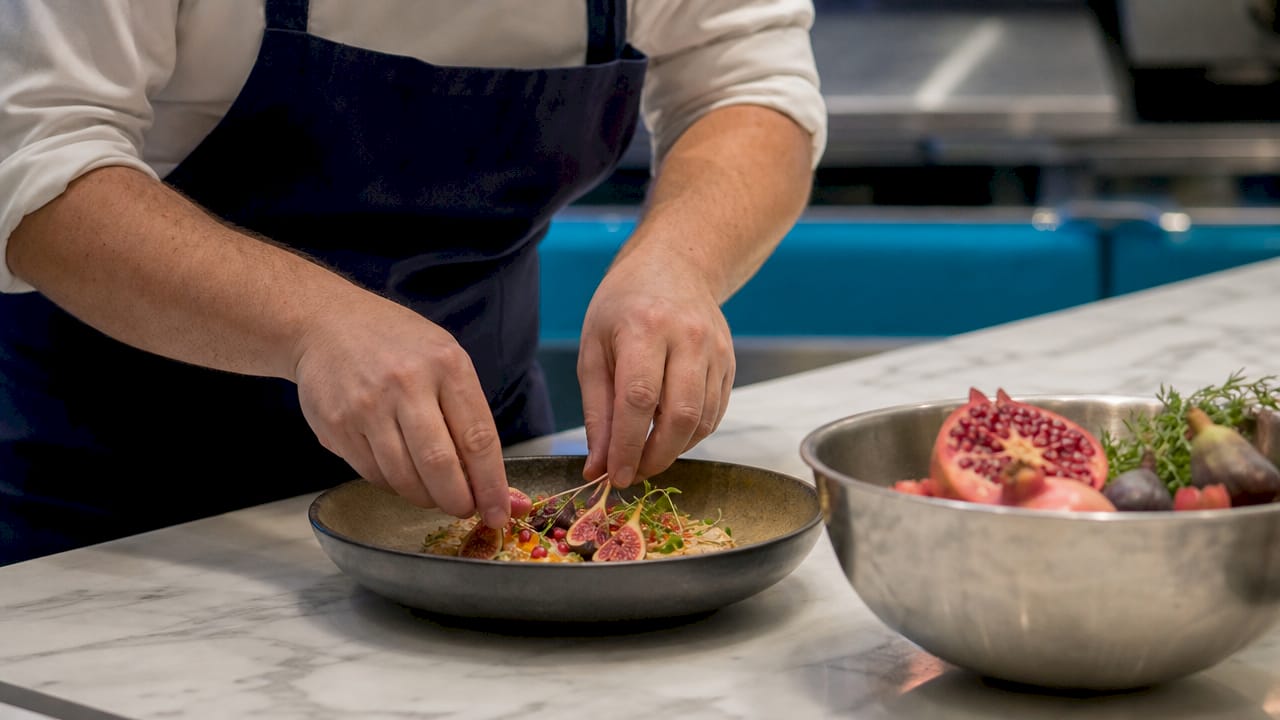
Spring (March through May): Lean into fresh and light. Think pea shoots, asparagus, ramps, and citrus-forward cocktails. Offer a Mother’s Day brunch prix fixe with a mimosa package. Create a “spring refresh” menu that rotates weekly to keep regulars coming back.
Summer (June through August): Outdoor dining and terrace specials drive traffic. Introduce frozen cocktails, grilled seafood boards, and shareable appetizers built for groups. Tie in local sports with watch-party nights and game-day specials on weekends.
Fall (September through November): This is your richest storytelling season. Pumpkin, apple, butternut squash, and braised meats all photograph beautifully. Run a “harvest dinner” series on Thursday nights with a fixed menu and wine pairing. Halloween themed cocktail nights and Friendsgiving packages sell out fast when promoted three weeks in advance.
Winter (December through February): Holiday indulgence is the expectation. Offer a New Year’s Eve ticketed dinner with a champagne toast. Build a Valentine’s Day couples menu with a shareable dessert. January is traditionally slow, so counter it with a “comfort food” promotion featuring hearty dishes at a value price point.
Event formats that drive bookings
- Limited-time reservation packages with a set menu and included drink. The scarcity of “only 20 tables available” creates real urgency.
- Weekend themed nights tied to local events, sports seasons, or cultural moments.
- Family occasion packages for birthdays, anniversaries, and graduations that include a complimentary dessert or photo moment.
- Private event buyouts for corporate holiday parties, which generate high revenue per booking and strong word-of-mouth.
Use event marketing strategies to promote these packages across every channel at least three weeks before the date.
How to measure success and optimize your seasonal promotions
Running a promotion without tracking it is like cooking without tasting. You need data to know what worked and what to change next time.
Track these metrics for every seasonal campaign:
- Reservation rate: How many covers did you book versus your baseline for that period?
- Revenue uplift: Compare total sales during the promotion window to the same window last year
- Social media engagement: Track reach, saves, shares, and comments on every promotional post
- Repeat visit rate: Did guests who came for the promotion return within 60 days? Use your POS data or reservation system to find out
- Campaign ROI: Divide your total promotion revenue by your marketing spend. A ratio above 4:1 is a strong benchmark for restaurant promotions
Monitor your campaigns in real time, not just at the end. If a promoted dish is not selling by day three, swap the photo, change the caption, or offer a staff recommendation push. Waiting until the promotion ends to review performance means leaving money on the table.
Pro Tip: After each seasonal campaign, document what worked in a shared file your whole team can access. Next year’s planning gets faster and sharper every time you do this.
Customer feedback is also a direct data source. Read your post-visit reviews on Google and Yelp during the promotion window. Guests will tell you exactly what they loved and what missed the mark. Use that input to refine your next offer before you launch it.
What common pitfalls should restaurant owners avoid in seasonal promotions?
Most seasonal promotion failures trace back to the same handful of mistakes. Avoid these and you are already ahead of the majority of your competition.
- ❌ Starting too late. Launching a Christmas promotion in the first week of december gives you almost no runway. Start your marketing push in mid-october for holiday season campaigns.
- ❌ Ignoring local search intent. Diners search for “Valentine’s Day dinner near me” or “Thanksgiving brunch [city name],” not just “restaurant specials.” Align your Google Business Profile posts and website copy with those specific searches.
- ❌ Letting your digital profiles go stale. An outdated menu photo or wrong holiday hours on Google costs you reservations. Audit every platform before each promotion launches.
- ❌ Relying only on discounts. A 20% off coupon trains guests to wait for deals. Experiential promotions, like a chef’s table tasting or a cocktail-making class, create value without cutting your margin.
- ❌ Skipping staff prep. Your team is the promotion. If servers cannot describe the seasonal special confidently, the promotion underperforms no matter how good your ads are.
Why local timing beats broad seasonal branding every time
Working with restaurants across the country has taught me one thing that most marketing advice gets wrong. Broad seasonal branding, the kind that just says “Happy Holidays” or “Spring is here,” does almost nothing for foot traffic. What actually moves the needle is connecting your promotion to a specific local moment.
I have seen a neighborhood Italian spot in Chicago pack its dining room on a random Thursday in october by tying a pasta special to a Cubs playoff game. No discount. No influencer. Just a well-timed post on Instagram and a Google Business Profile update that said “Watch the game with us tonight.” That is real-time customer intent in action.
The restaurants that build loyal clientele do not just show up during peak seasons. They stay in front of their guests between promotions through email, social content, and customer retention strategies that keep the relationship warm. A guest who feels connected to your restaurant in January is far more likely to book a Valentine’s Day table with you in february.
My honest advice: spend less time designing the perfect promotion and more time getting it in front of the right local audience at the right moment. The blend of digital and real-world experiences is what separates restaurants that grow from restaurants that just survive the season.
— Doug
How Ionhospitality helps you run seasonal promotions that fill tables
Running a great seasonal promotion takes more than a good idea. It takes consistent content, targeted ads, and the right timing across every platform. That is exactly what Ionhospitality does for restaurants.
Ionhospitality is a social media marketing and advertising agency built specifically for restaurants. The team creates scroll-stopping content, runs paid social campaigns timed to your seasonal menu, and promotes your private events to local diners who are ready to book. Every campaign is done for you with zero commissions. If you are ready to fill more tables this season, book a discovery call and get a custom strategy built around your restaurant’s goals. You can also explore Ionhospitality’s social media advertising services to see exactly how the process works.
Key takeaways
Seasonal promotions work best when planning starts early, digital profiles stay current, and experiential events replace discount-only tactics.
| Point | Details |
|---|---|
| Start planning early | Launch standard season campaigns 6–8 weeks out and holiday campaigns 8–10 weeks out. |
| Update Google Business Profile weekly | Frequent posts and 100+ photos generate dramatically more calls and local visibility. |
| Promote events, not just discounts | In-person event promotion on social media is the top driver of restaurant foot traffic. |
| Track campaign ROI in real time | Monitor reservation rates, revenue uplift, and engagement during the promotion, not after. |
| Align with local intent | Target specific local searches and micro-moments rather than broad seasonal branding. |
FAQ
How far in advance should I plan a seasonal restaurant promotion?
Plan standard seasonal promotions 6–8 weeks before the season starts. For peak holidays like Christmas and New Year’s Eve, extend that window to 8–10 weeks to secure suppliers and build marketing momentum.
What is the most effective way to promote seasonal specials online?
Update your Google Business Profile weekly with seasonal photos and post short-form video content on Instagram and TikTok. Restaurants with 100 or more Google Business Profile photos receive significantly more customer calls than those with fewer images.
Should I discount my menu for seasonal promotions?
Discounts alone reduce margin and train guests to wait for deals. Experiential promotions, like themed dinners, chef’s table events, or cocktail pairings, create perceived value without cutting your prices.
How do I measure whether a seasonal promotion worked?
Track reservation rates, total revenue versus the same period last year, social media engagement, and repeat visit rate within 60 days. A campaign ROI above 4:1 is a strong benchmark for restaurant promotions.
Which U.S. holidays drive the most restaurant revenue?
Valentine’s Day, Mother’s Day, Thanksgiving, and New Year’s Eve consistently rank as the highest-revenue holidays for U.S. restaurants. Each requires a distinct promotion format and should be planned well in advance to capture early reservations.

Add a Comment