
TL;DR:
- Group dining is a high-margin, under-marketed revenue channel that generates 20–30% more income per booking. Effective marketing targets corporate planners through direct outreach, clear packages, and dedicated online presence, while operational optimizations ensure bookings are captured and converted efficiently. Treating group dining as a separate business unit increases repeat bookings and unlocks significant revenue potential.
Group dining is defined as a structured, high-value restaurant offering that generates measurably higher revenue per booking than standard table service. The role of group dining in marketing goes far beyond filling seats. Group and private dining bookings generate 20–30% higher revenue than traditional dine-in, driven by minimum spend thresholds and pre-set menus. Nearly 48% of corporate event planners actively seek non-hotel venues, and 45% specifically target restaurants for ambiance and food and beverage expertise. If you are not marketing group dining as a product, you are leaving a significant revenue stream untapped.
How does group dining directly impact restaurant marketing and revenue?
Group dining is not just a bigger table. It is a separate revenue channel with its own economics, and treating it that way changes how you market your restaurant entirely.
** The revenue case is clear:**
- Higher average spend per guest. Pre-set menus and drink packages push per-head spend well above walk-in averages. Add-ons like cocktail hours, dessert platters, and wine pairings stack margin on top of the base menu price.
- Predictable kitchen output. Pre-fixe menus reduce food waste and eliminate the guesswork that kills kitchen efficiency during peak service. Your team knows exactly what is coming out and when.
- Advance booking visibility. Group bookings confirmed days or weeks ahead give you real planning power. You can staff correctly, prep accurately, and avoid the scramble that hurts service quality.
- Repeat business and brand loyalty. Pre-booked events with drink packages see more than 20% higher repeat booking rates compared to walk-in customers. A great group experience turns a corporate client into a recurring annual account.
The marketing implication is direct. When you build group dining into your restaurant event marketing strategy, you are not just selling a meal. You are selling a predictable, high-margin product that compounds over time through repeat bookings and referrals.
Pro Tip: Track group booking revenue separately from your regular dining revenue. Once you see the margin difference, you will prioritize it differently.
What are effective marketing strategies to promote group dining?
Marketing group dining requires a fundamentally different approach than promoting your daily specials or happy hour. You are selling to a decision-maker, not a hungry individual scrolling Instagram at noon.
** Target corporate planners directly:**
LinkedIn outreach targeting corporate planners produced $32,800 in revenue and $9,000 in deposits with zero ad spend in just 30 minutes of daily effort. That number proves the channel works when you position your restaurant as a business venue, not just a place to eat. Connect with event coordinators, executive assistants, and office managers in your city. Send a direct, specific message about your private dining room capacity, menu options, and booking process.
** Package your offering clearly:**
Tiered pricing and set menus are marketing tools, not just operational conveniences. When a planner can see exactly what they get at each price point, the decision becomes easy. Offer three tiers: a standard set menu, a premium menu with wine pairing, and a fully custom package for larger groups. Clear pricing removes friction and speeds up the booking decision.
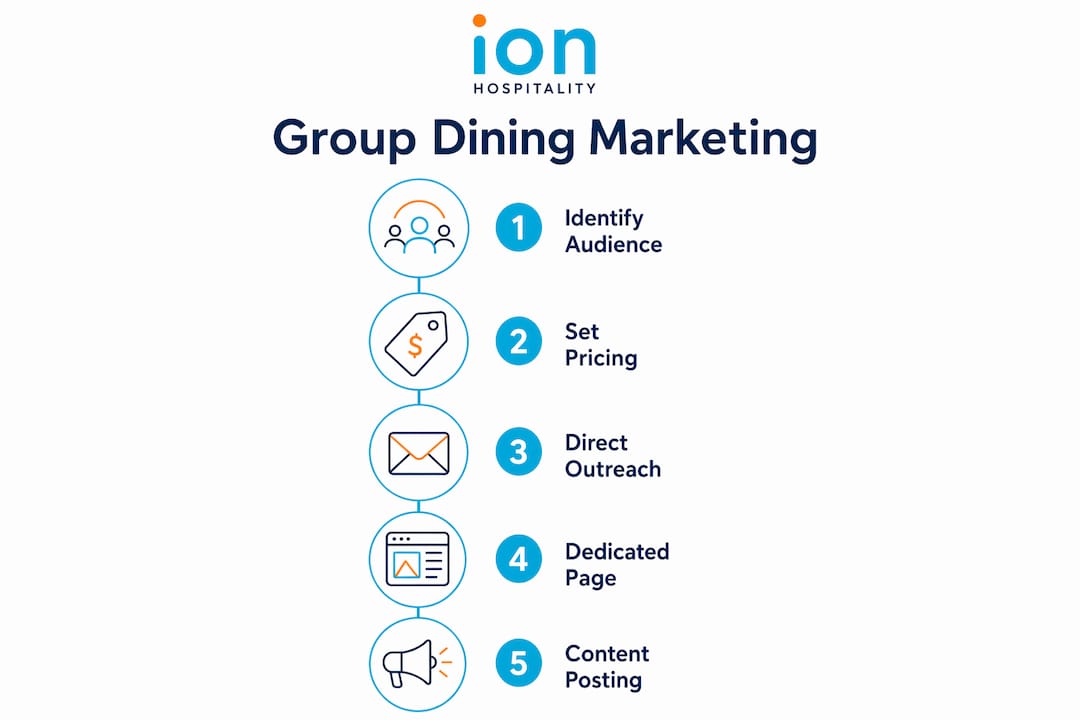
** Get listed where planners search:**
Platforms like Cvent put your restaurant in front of corporate buyers actively searching for venues. Positioning your space as an established business venue rather than casual dining shifts how planners perceive your value. Fill out your profile completely, include photos of your private dining setup, and list your capacity, AV options, and catering packages.
** Build a dedicated group dining page on your website:**
Your main website menu page does not sell group dining. A dedicated landing page with photos of past events, package details, testimonials, and a clear inquiry form does. Pair it with content strategies that drive bookings through social posts showing real group events, behind-the-scenes setup content, and client spotlights.
Pro Tip: Post one piece of group dining content per week on Instagram and LinkedIn. Show the setup, the food, the atmosphere. Corporate planners scroll too.
How can restaurants operationally optimize group dining for marketing success?
Great marketing brings the inquiry. Great operations close the booking and earn the repeat. These two things are inseparable in group dining.
Here is the operational framework that supports your marketing:
-
Map your floor plan for group configurations. Pre-mapping table combinations for groups of 6, 8, 10, and 12 or more prevents last-minute service disruptions. Know exactly which tables combine, what the flow looks like, and how staff move around the space. A planner who visits for a site check will notice if you have clearly thought this through.
-
Require deposits with clear cancellation terms. Deposit policies with per-person charges reduce no-shows and protect your revenue. A standard approach charges a per-person deposit applied to the final bill, with a clear cancellation window. This also signals professionalism to corporate clients who expect structured agreements.
-
Automate your inquiry responses. Approximately 40% of group dining inquiries arrive outside standard business hours. If your response is a voicemail or a next-day email, you are losing bookings to whoever responds first. Set up an automated reply that confirms receipt, shares your group dining package PDF, and books a follow-up call. Automating large party booking processes can increase group reservations by 25–40%.
-
Require pre-orders 48 hours in advance. Pre-orders submitted 48 hours ahead enable accurate kitchen and supplier planning. This protects your kitchen from chaos during service and improves the guest experience because food arrives faster and more consistently.
-
Build a post-event communication workflow. Send a thank-you message within 24 hours. Follow up two weeks later with your next available dates. A simple CRM or even a shared spreadsheet can manage this. Communication is the key differentiator in successful group dining operations, more than food quality or service speed.
Pro Tip: Create a group dining inquiry kit: a one-page PDF with your room capacity, menu tiers, deposit policy, and contact details. Send it automatically with every inquiry response.
What differentiates group dining marketing from traditional restaurant marketing?
Group dining marketing is event marketing applied to a restaurant context. The audience, the sales cycle, and the success metrics are all different from what you use to fill tables on a Tuesday night.
Here is how the two approaches compare:
| Factor | Traditional dining marketing | Group dining marketing |
|---|---|---|
| Primary audience | Walk-in diners, local residents | Corporate planners, event organizers |
| Sales cycle | Immediate, impulse-driven | Days to weeks, multiple touchpoints |
| Marketing channels | Instagram, Google, local ads | LinkedIn, Cvent, direct outreach |
| Success metrics | Foot traffic, covers per night | Booking conversion rate, deposit revenue |
| Offer structure | Daily specials, prix fixe | Tiered packages, custom menus |
| Communication style | Broadcast to audience | One-to-one relationship building |
Restaurants failing at group dining marketing treat it as an afterthought rather than a primary business product. That is the core mistake. When you package group dining as a structured product with tiered pricing, menu options, and communication workflows, you compete on a completely different level. You are no longer hoping a group finds you. You are actively selling to the people who book groups for a living.
The sales cycle difference matters most. A corporate planner booking a team dinner for 20 people will compare two or three venues, check reviews, request menus, and ask about AV setup. Your marketing needs to address every one of those questions before they ask. A dedicated event marketing strategy built around group dining handles this systematically.
Key Takeaways
Group dining is the highest-margin product most restaurants already have but rarely market with the focus it deserves.
| Point | Details |
|---|---|
| Revenue impact is measurable | Group bookings generate 20–30% higher revenue than standard dine-in through minimum spends and pre-set menus. |
| Corporate planners are your target | Nearly 45% of corporate event planners prefer restaurants, making direct outreach on LinkedIn a high-return tactic. |
| Automation captures lost bookings | 40% of group inquiries arrive outside business hours; automated responses prevent losing them to faster competitors. |
| Package it like a product | Tiered menus, deposit policies, and dedicated landing pages convert group dining from a service into a sellable offer. |
| Communication drives repeat business | Post-event follow-up and pre-event pre-orders build the client relationships that generate recurring annual bookings. |
Why most restaurants are sitting on an untapped revenue product
I have worked with restaurant owners who spend thousands on Instagram ads to fill tables on a slow Wednesday, while their private dining room sits empty every single week. The math never made sense to me. One corporate booking for 20 people at a minimum spend beats a full dining room on a slow night, with less stress on the kitchen and a higher chance of rebooking.
The mistake I see most often is under-pricing. Owners set group minimums based on what feels comfortable, not on what the market actually pays. Corporate clients expect to spend. They have budgets. When you price too low, you signal that your space is not a serious venue. Raise your minimums, build real packages, and watch how the perception of your restaurant shifts.
The second mistake is treating group inquiries like regular reservations. A corporate planner who emails you at 9 PM on a Friday and gets a response Monday afternoon has already booked somewhere else. Automation is not optional at this point. It is the difference between capturing that booking and losing it permanently.
The restaurants I have seen win consistently at group dining all share one trait. They treat it as a separate business unit with its own marketing, its own operations, and its own revenue targets. They know their group booking conversion rate. They track deposit revenue monthly. They follow up with every past client before the holiday season. That level of intention is what separates a restaurant that occasionally hosts groups from one that fills its private dining room 40 weeks a year.
— Doug
How Ionhospitality helps restaurants fill their private dining rooms
Ionhospitality specializes in restaurant social media marketing and private event promotion, with a direct focus on getting more group bookings and catering sales without commissions.
If your group dining inquiries are inconsistent or your private dining room sits empty more than it should, the issue is almost always visibility and follow-through. Ionhospitality builds the social media presence and marketing systems that put your restaurant in front of corporate planners, event organizers, and group bookers before they even start comparing venues. From social media campaigns that drive bookings to full private event marketing strategies, the work is done for you. Book a discovery call to see exactly what is possible for your restaurant.
FAQ
What is the role of group dining in restaurant marketing?
Group dining functions as a productized, high-margin revenue channel that requires dedicated marketing to corporate planners, event organizers, and group bookers. It generates 20–30% higher revenue per booking than standard dine-in service.
How do I attract corporate clients for group dining?
Direct outreach on LinkedIn to event coordinators and executive assistants, combined with a listing on platforms like Cvent, puts your restaurant in front of the decision-makers who book group events regularly.
Why does group dining need a separate marketing strategy?
The sales cycle is longer, the audience is different, and the success metrics focus on booking conversion and deposit revenue rather than foot traffic. Standard dining promotions do not reach or convert corporate planners.
How does automation improve group dining bookings?
Automated inquiry responses capture the 40% of group bookings that arrive outside business hours. Faster responses directly increase conversion rates before a competitor responds first.
What operational changes support better group dining marketing?
Pre-mapped floor configurations, 48-hour pre-order requirements, deposit policies, and post-event follow-up workflows all improve the guest experience and increase the likelihood of repeat corporate bookings.

Add a Comment