

TL;DR:
- Targeting local diners requires precise geo-targeting, optimized Google Business Profiles, and genuine community engagement.
- Most effective campaigns focus on a 3 to 4 km radius in cities, and slightly wider in suburban areas, based on diner habits.
Targeting local diners is the practice of using location-specific advertising, online optimization, and community engagement to attract nearby customers to your restaurant. Most restaurant owners waste money on broad campaigns that reach people who will never walk through the door. The fix is precision. By combining geo-targeted ads, a well-managed Google Business Profile, and genuine neighborhood presence, you can attract local customers consistently and cost-effectively. Ionhospitality works with restaurants every day to build exactly this kind of focused, results-driven marketing.
How to target local diners with the right geo-targeting radius
The single biggest mistake in local restaurant advertising is targeting too wide. Most diners travel no more than 3 to 3.3 miles for a casual meal. That number tells you exactly where your ad dollars should go.
Your ideal radius depends on your restaurant type and location:
- ️ Urban restaurants: Target a 3–4 km radius. Foot traffic is dense, and diners have many options nearby. Tight targeting keeps your budget focused on people who can actually walk or take a short ride.
- ️ Suburban restaurants: Expand to 5–8 km. Suburban diners drive more and plan ahead, so a slightly wider net makes sense.
- Destination restaurants: Go 10–15 km or more. If your concept is unique enough to justify a trip, people will make it. Think farm-to-table spots, tasting menus, or highly rated ethnic cuisine.
Targeting too broadly wastes budget on people outside your realistic draw area. A downtown Italian spot in Chicago does not need to reach diners in the suburbs who have dozens of closer options.
Pro Tip: Start your first campaign with a slightly wider radius than you think you need. Run it for two to three weeks, then pull the geographic performance data from your ad platform. Cut the zones with low engagement and double down on the ones converting.
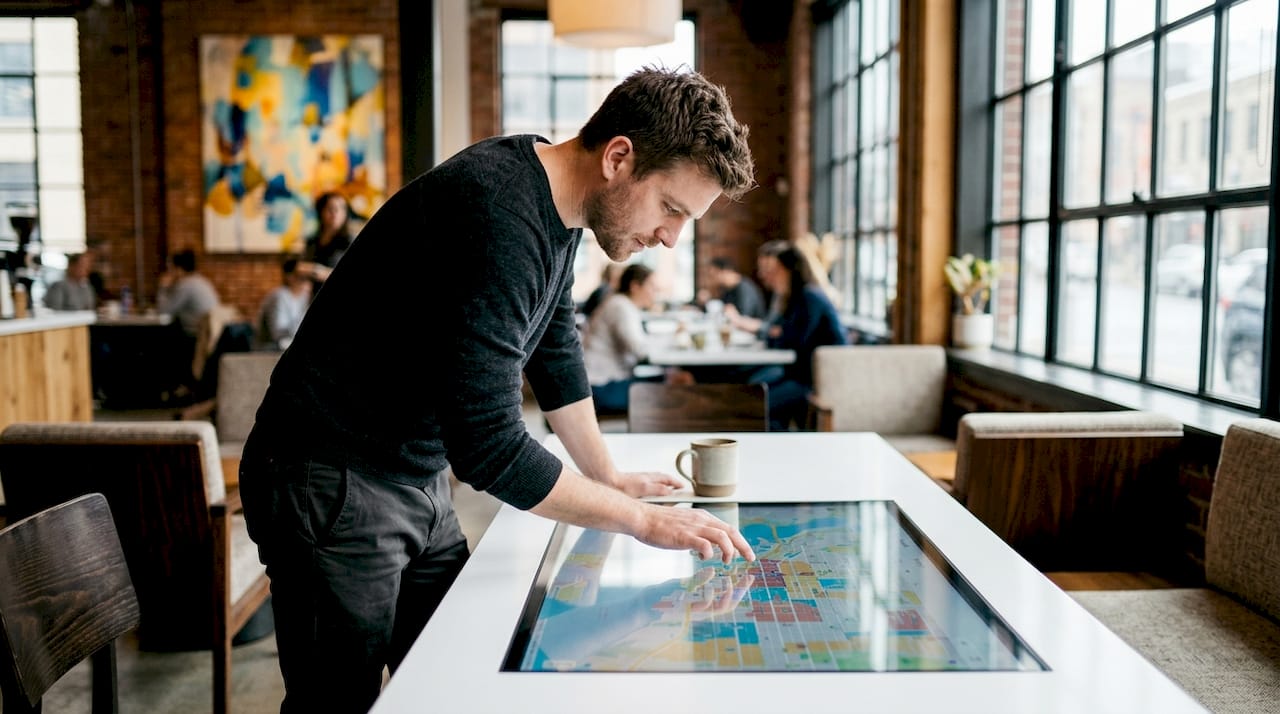
The concept here is called geo-targeting, and it is the foundation of effective local restaurant advertising. Without it, every other tactic you layer on top loses efficiency.
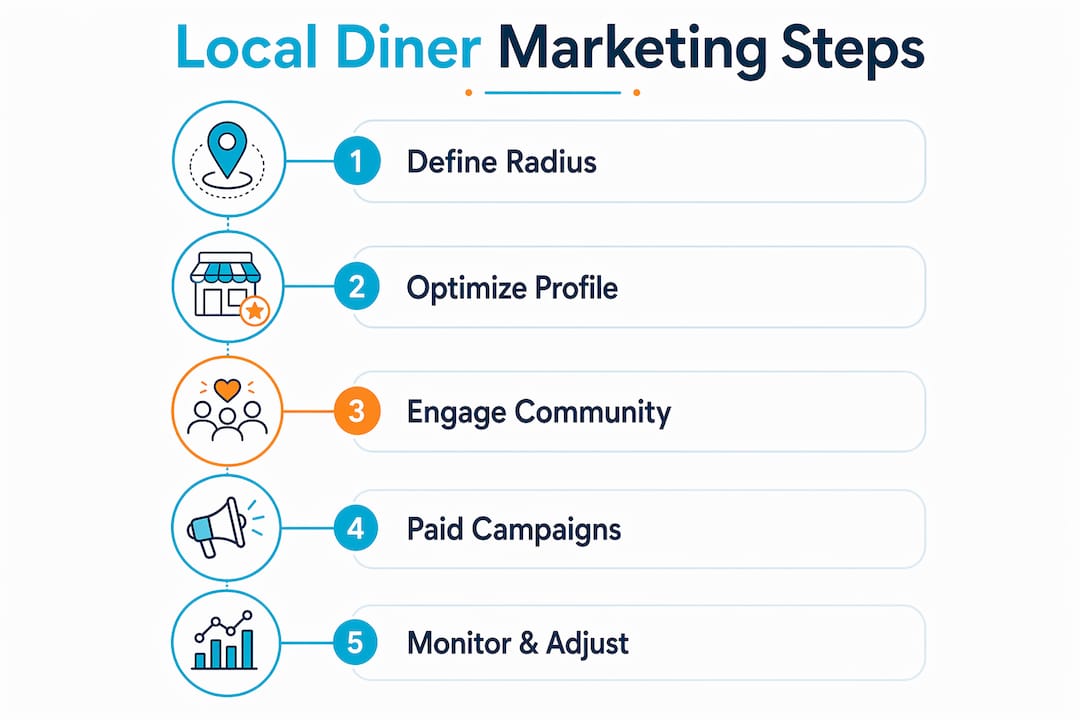
How does Google Business Profile optimization drive local discovery?
Your Google Business Profile (GBP) is the most powerful free tool you have for reaching nearby foodies. Optimizing your GBP with frequent photo updates, accurate hours, and quick review responses can boost local map visibility by up to 70%. That is not a minor improvement. That is the difference between showing up in the local map pack and being invisible.
Here is what a fully optimized GBP looks like in practice:
- Update photos weekly. Post images of your actual dishes, your dining room, and your team. Profiles with fresh photos signal activity to Google and attract more clicks.
- Keep hours accurate. Wrong hours are the fastest way to lose a diner forever. Update holiday hours, seasonal changes, and special closures the moment they are confirmed.
- Add your full menu with pricing. Diners make decisions before they leave home. Give them the information they need directly in your profile.
- Respond to every review within 24 hours. Positive or negative, a response shows you are engaged. Skipping GBP optimization forces higher paid ad costs because you lose the trust signals that lower conversion costs.
- Write a description using neighborhood language. Mention your specific neighborhood, nearby landmarks, and the type of dining experience you offer.
Beyond GBP, local SEO content is your next lever. Search engines now reward restaurants that demonstrate genuine local expertise over those stuffing generic keywords into their pages. A post about “the best date night spots in Wicker Park” or “where to find authentic pho in Midtown” wins traffic that a generic “best restaurant” page never will.
Long-tail hyperlocal queries like “dog-friendly brunch near Logan Square” collectively generate more steady traffic than chasing one or two competitive keywords. Write content that answers those specific questions, and you build a pipeline of organic discovery.
Pro Tip: Write one neighborhood-focused blog post per month. Feature a local supplier, highlight a nearby event, or create a “neighborhood guide” that positions your restaurant as a community hub. Google reads that content as a trust signal.
| GBP Element | Impact on Local Visibility |
|---|---|
| Weekly photo updates | Signals active profile, increases click-through rate |
| Accurate hours and menu | Reduces friction, builds diner confidence |
| Review responses within 24 hours | Improves ranking and shows community engagement |
| Neighborhood-specific description | Matches local search intent and long-tail queries |
Which community tactics build trust with neighborhood diners?
Digital ads get attention. Community presence builds loyalty. The two work together, and you need both to consistently engage local food lovers.
The U.S. Chamber of Commerce notes that offline actions like sponsoring local causes, volunteering, and hosting events anchor a restaurant’s reputation in its community. That reputation is what turns a first-time visitor into a regular.
Here are the tactics that actually move the needle:
- Partner with neighboring businesses. A coffee shop, a yoga studio, or a local bookstore all share your customer base. Cross-promote with a joint offer or a shared event. It costs almost nothing and puts your name in front of a warm audience.
- Host events that fit your concept. A wine pairing night, a cooking class, or a neighborhood trivia event gives people a reason to visit beyond just eating. Events also generate social media content organically.
- Sponsor local causes. Youth sports teams, school fundraisers, and neighborhood cleanups all create visible goodwill. Your logo on a jersey or a banner at a local event reaches people who may never see your Instagram.
- Join local Facebook groups and Nextdoor. These platforms are where neighborhood conversations happen. Participate genuinely, not just to promote. Answer questions, share useful information, and let your restaurant’s personality show.
- Work with micro-influencers. Local influencers with 10,000 to 50,000 followers often deliver higher local engagement than larger accounts. Their audience trusts them, and that trust transfers to your restaurant.
The goal is to become a recognized part of the neighborhood fabric. When people think of where to eat, your name should come up naturally because they have seen you at the farmers market, read your neighborhood guide, or watched a local food creator rave about your short rib tacos.
Building this kind of local reputation through social media takes consistency, but the payoff compounds over time.
How to create paid ad campaigns that reach nearby foodies
Paid social campaigns on Meta (Facebook and Instagram) are the fastest way to put your restaurant in front of people who are actively looking for a place to eat. The key is building your campaign around audience layers, not just location.
Follow these steps to set up a campaign that converts:
- Set your geo-location first. Target people who live within your realistic radius or who have recently been in that area. This is your baseline filter. Everything else layers on top.
- Add demographic and interest filters. Layer in age ranges that match your typical diner, dining interests, and behaviors like “frequent restaurant visitors.” This narrows your audience to people most likely to convert.
- Build custom audiences from your existing customer data. Upload your email list or phone numbers to create a custom audience. These are people who already know you, and they convert at a much higher rate.
- Create lookalike audiences. Once you have a custom audience, Meta can find new people who share similar characteristics. This is how you reach nearby foodies who have never heard of you but match your best customers exactly.
- Structure your campaign around funnel stages. Meta ads perform best when built around awareness, consideration, and conversion. A cold audience needs to see your brand first. A warm audience needs a reason to book. Retargeting closes the deal.
Starting broad within a realistic radius and refining based on engagement data outperforms overly granular targeting from day one. Let the data tell you who is responding, then tighten your focus.
Pro Tip: Your best performing ad creative is almost always a short video of your food being prepared or plated. Scroll-stopping clips of a sizzling pan or a towering dessert outperform static images every time. Shoot on your phone, keep it under 15 seconds, and add captions.
For a deeper look at building restaurant social media ads that drive real bookings, the approach above is your starting framework.
Key takeaways
Targeting local diners requires combining precise geo-targeting, an optimized Google Business Profile, genuine community presence, and structured paid campaigns to drive consistent foot traffic.
| Point | Details |
|---|---|
| Geo-targeting radius matters | Match your ad radius to your restaurant type: 3–4 km urban, 5–8 km suburban, 10–15 km destination. |
| GBP optimization is non-negotiable | Weekly photo updates, accurate hours, and fast review responses can lift local map visibility by up to 70%. |
| Community trust drives loyalty | Sponsoring local causes, hosting events, and partnering with nearby businesses builds repeat business. |
| Paid campaigns need audience layers | Stack geo-location, demographics, custom audiences, and funnel stages for the best ad efficiency. |
| Hyperlocal content wins organic traffic | Long-tail queries like “brunch near [neighborhood]” generate steady, lower-competition search traffic. |
What I’ve learned about targeting neighborhood diners that most guides miss
Most articles on marketing to local diners treat it like a checklist. Post on Instagram. Claim your Google listing. Run some ads. Done. That is not how it works in practice.
The shift I have watched happen over the past few years is real. Search engines and AI-powered answer tools now reward restaurants that demonstrate actual neighborhood expertise. Thin content and keyword stuffing are actively penalized. A restaurant that writes a genuine guide to its neighborhood, features its local suppliers, and responds to every review is outranking competitors with bigger ad budgets. That is a meaningful change.
The other thing I see restaurant owners get wrong is over-engineering their ad targeting too early. They spend hours building hyper-specific audience segments before they have any real performance data. The result is a tiny audience, high costs, and no useful signal. Start broader. Let the data show you who is engaging. Then narrow. It sounds simple because it is.
Offline trust is still underrated. A restaurant that sponsors the local little league team and shows up at the neighborhood street fair has a community presence that no ad can replicate. That presence feeds your digital marketing. People search for you by name. They tag you in posts. They leave reviews unprompted. That engagement drives ad ROI in ways that pure digital tactics cannot.
The restaurants winning at local marketing in 2026 are not the ones with the biggest budgets. They are the ones who show up consistently, both online and in the neighborhood.
— Doug
How Ionhospitality helps restaurants fill seats with local diners
Ionhospitality specializes in social media marketing and advertising built specifically for restaurants. The team handles everything from geo-targeted Meta campaigns to Google Business Profile management, so you can focus on running your kitchen.
If you are ready to stop guessing and start filling seats with the right local diners, Ionhospitality’s social media advertising services are built for exactly this. Every campaign is managed with 0% commissions, meaning your budget goes toward results, not fees. Book a free discovery call and get a personalized strategy for your restaurant’s market, concept, and goals.
FAQ
What is the best ad radius for a local restaurant?
Most diners travel no more than 3 to 3.3 miles for a casual meal, making a 3–5 mile radius the standard starting point for urban and suburban restaurants. Destination concepts can extend to 10–15 km depending on their draw.
How does Google Business Profile help attract local customers?
A fully optimized Google Business Profile with regular photo updates, accurate hours, and fast review responses can increase local map visibility by up to 70%. It also lowers paid ad conversion costs by building trust before a diner ever clicks an ad.
What type of content works best for local restaurant SEO?
Hyperlocal long-tail content targeting queries like “dog-friendly brunch near [neighborhood]” consistently outperforms generic keyword pages. Neighborhood guides, supplier stories, and event recaps all signal genuine local expertise to search engines.
How do micro-influencers help with targeting neighborhood diners?
Micro-influencers with 10,000 to 50,000 followers typically generate higher local engagement than larger accounts because their audience is more geographically concentrated and trusts their recommendations.
Should I run Meta ads before optimizing my Google Business Profile?
No. GBP optimization is foundational because it builds the trust signals that lower your paid ad conversion costs. Running ads to a profile with missing information or no reviews wastes budget and reduces campaign performance.

Add a Comment