

TL;DR:
- Strong branding shapes guest expectations, builds loyalty, and differentiates restaurants with similar menus.
- Effective branding begins with foundational elements like mission, values, target audience, and visual identity.
- Long-term success requires continuous evaluation and adaptation of the brand to market changes and guest preferences.
Picture two restaurants side by side. Same neighborhood, similar menus, comparable prices. One has a line out the door on Friday night. The other struggles to fill half its tables. The food quality is nearly identical. So what’s the difference? Branding. A strong restaurant brand tells guests who you are before they ever take a bite. It shapes their expectations, builds loyalty, and turns first-time visitors into regulars who bring friends. Many owners skip this step or rush through it, and it costs them dearly. This guide walks you through a clear, step-by-step process to build a restaurant brand that actually sticks, attracts the right guests, and keeps them coming back.
Table of Contents
- Get ready: What you need before branding
- Step 1: Define your restaurant’s brand identity
- Step 2: Create a compelling visual identity
- Step 3: Develop your brand voice and guest experience
- Step 4: Launch, measure, and adapt your new brand
- Why lasting branding is a process, not an event
- Take the next step for your restaurant’s brand
- Frequently asked questions
Key Takeaways
| Point | Details |
|---|---|
| Foundation matters most | Strong branding starts with mission, vision, values, and a defined audience. |
| Consistency drives recognition | Uniform messaging and visuals across all channels make your restaurant memorable and trustworthy. |
| Test and adapt | Pilot brand changes, use guest feedback, and update tactics regularly to stay ahead. |
| Digital is essential | Integrating your brand with online platforms is key for reaching today’s restaurant goers. |
Get ready: What you need before branding
Before you pick a font or choose a logo color, you need to do some groundwork. Jumping straight into design is one of the most common and costly mistakes restaurant owners make. Branding without a foundation is like building a dining room without a floor plan. It might look okay at first, but it falls apart fast.
Mission, vision, values, and target audience are foundational to effective branding. These aren’t just corporate buzzwords. They are the compass that guides every design, message, and guest interaction you create.
Here’s what you need to gather and clarify before starting any visual or messaging work:
- Your mission statement: Why does your restaurant exist beyond making money? What problem do you solve or experience do you create?
- Your vision: Where do you want to be in five years? One location or ten? A neighborhood staple or a regional brand?
- Your core values: What principles guide how your team operates and how guests are treated?
- Your target audience profile: Age range, income level, lifestyle habits, dining motivations, and what they value most in a restaurant experience.
- Competitive research: Know who else is competing for your guests’ attention and what they’re doing well or poorly.
- Sample visuals: Pull images, colors, and design styles that feel right for your concept, even if you can’t explain why yet.
| Preparation item | Why it matters |
|---|---|
| Mission statement | Anchors all brand decisions |
| Target audience profile | Shapes messaging and design |
| Competitive research | Reveals gaps and opportunities |
| Sample visual inspiration | Speeds up designer collaboration |
| Business plan summary | Keeps branding aligned with goals |
Common early missteps include trying to appeal to everyone, copying a competitor’s aesthetic, or letting a designer make all the decisions without your input. Your brand has to reflect your restaurant’s soul, not someone else’s.
Pro Tip: Build a simple one-page brand brief before your first design meeting. Include your mission, three words that describe your vibe, and a description of your ideal guest. It saves hours of back-and-forth. You can also check out our brand awareness guide for more prep strategies.
Step 1: Define your restaurant’s brand identity
Now that you’ve got your groundwork in place, it’s time to move into the first major step: defining the essence of your restaurant’s brand. This is where strategy meets personality.
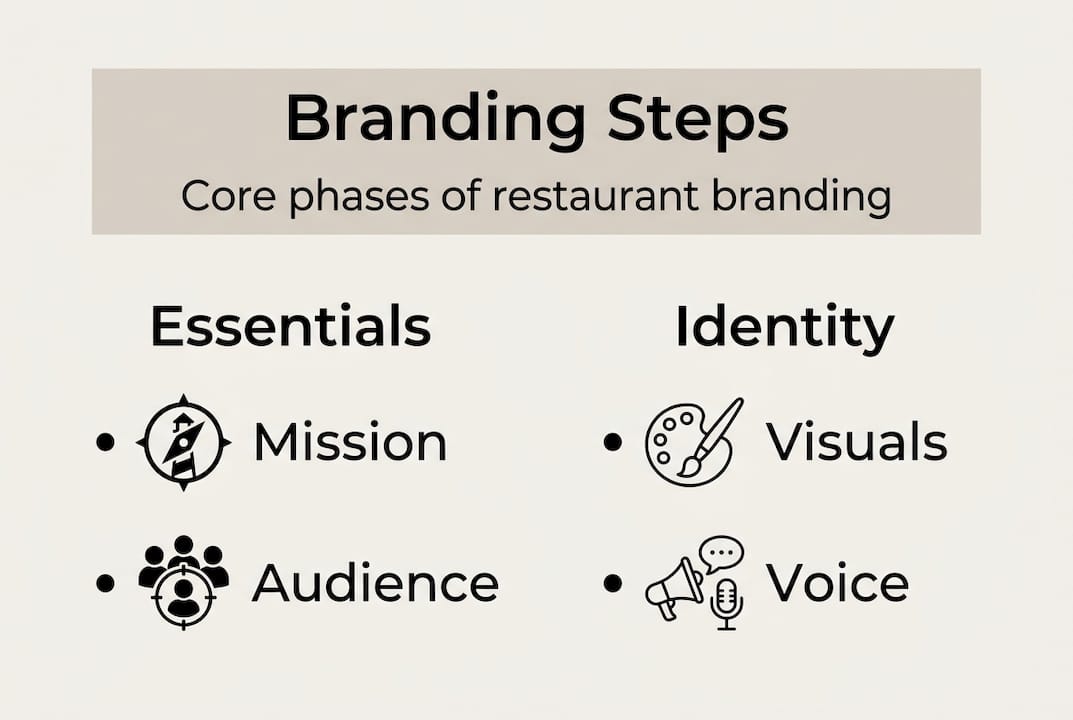
Defining brand personality and audience is the essential first step in the branding process. Without this clarity, everything else you build will feel disconnected.
Here’s how to work through it:
- Write your mission statement. Keep it to one or two sentences. It should answer: what you do, who you serve, and why it matters. Example: “We serve authentic Oaxacan street food to food lovers who crave bold flavors and real cultural connection.”
- Define your vision. This is your long-term aspiration. Think big but stay grounded in your concept. Where is this brand going?
- Identify your core values. Pick three to five values that are non-negotiable. Hospitality, sustainability, creativity, community. These guide hiring, menu decisions, and how you handle complaints.
- Build your ideal guest profile. Go beyond demographics. What does your ideal guest do on weekends? What restaurants do they already love? What do they post on Instagram? The more specific, the better.
- Choose your brand personality. Is your restaurant playful and casual? Sophisticated and refined? Rustic and warm? Pick two or three personality traits and use them as a filter for every decision going forward.
“Your brand personality is the emotional handshake between your restaurant and your guests. Get it right, and loyalty follows naturally.”
Your brand identity also shapes the language you use everywhere, from your menu descriptions to your social media captions. Explore how marketing evolution strategies can help you align your identity with modern guest expectations.
Step 2: Create a compelling visual identity
Once your brand essence is locked in, the next step is making it visual and tangible. This is the part most people think of first, but it only works when it’s built on the foundation you’ve already laid.
A consistent visual identity is critical to recognition across menus, websites, packaging, and décor. Guests should be able to see your takeout bag, your Instagram post, and your front door signage and immediately know it’s you.
Here’s what makes a visual identity work:
- Logo: Simple, scalable, and meaningful. It should work in black and white, at thumbnail size, and on a large banner. Avoid overly complex designs that lose clarity when scaled down.
- Color palette: Colors trigger emotions. Red and orange stimulate appetite and urgency. Blue is calming but rarely used in food branding for a reason. Green signals freshness and health. Choose two to four colors that reflect your personality.
- Typography: Your fonts say a lot. Script fonts feel personal and handcrafted. Sans-serif fonts feel modern and clean. Serif fonts feel classic and established. Pick one primary font and one supporting font, and stick with them.
- Photography style: Bright and airy or dark and moody? Lifestyle-focused or close-up food shots? Your photo style is part of your brand.
| Visual element | Strong example | Weak example |
|---|---|---|
| Logo | Clean icon, works at all sizes | Complex illustration, unreadable small |
| Color palette | 2-4 consistent colors | 6+ colors used randomly |
| Typography | 2 complementary fonts | 4+ mismatched fonts |
| Photography | Consistent lighting and style | Mixed filters, no visual theme |
Red flags to watch for: using stock photos that don’t match your vibe, switching colors between platforms, or letting every team member create their own graphics. Visual chaos kills brand trust fast. Strong content creation tips can help you keep your visuals sharp and on-brand across every channel.
Step 3: Develop your brand voice and guest experience
A visual brand is only powerful when matched by your restaurant’s personality and the full guest journey. This step is where a lot of restaurants drop the ball, and it shows.
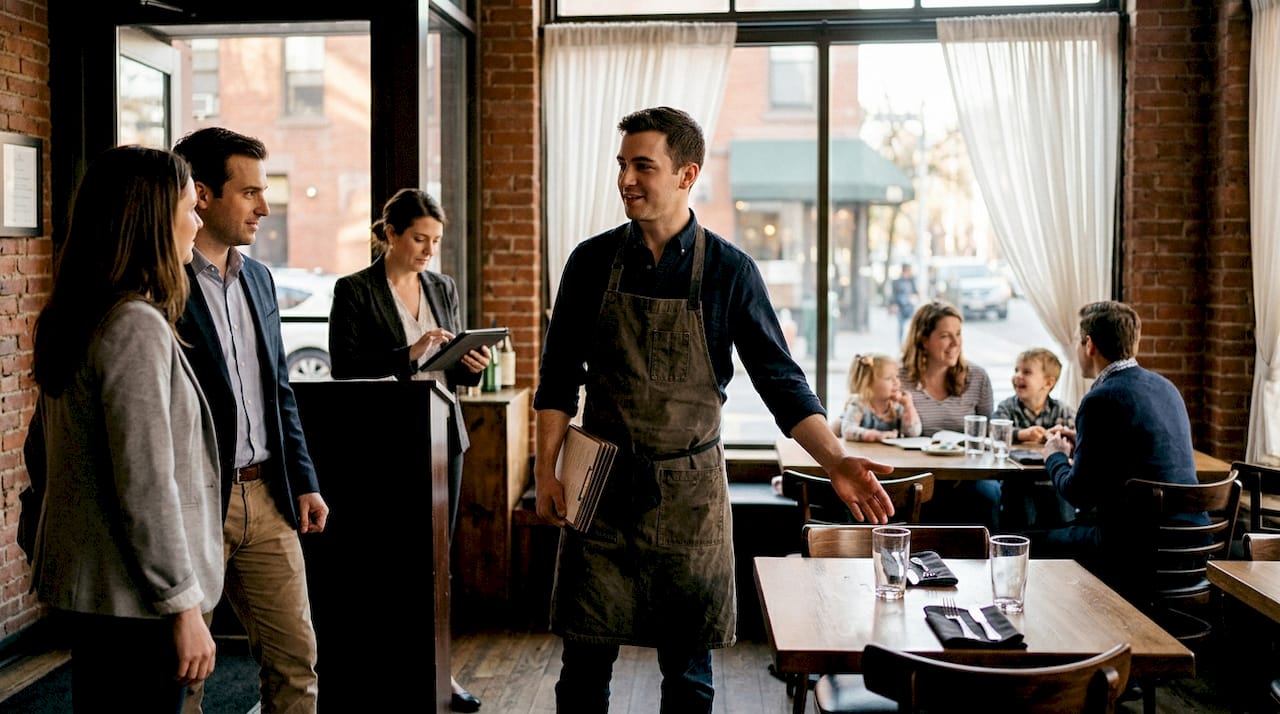
Brand voice and messaging must align with your personality and stay consistent across every channel. Your Instagram caption, your server’s greeting, and your menu descriptions should all feel like they come from the same place.
Here’s how to build and maintain your brand voice:
- Write a voice guide. List three to five words that describe how your brand sounds. Warm, witty, bold, approachable, elevated. Then write examples of what that voice says and what it never says.
- Apply it to your menu. Dish names and descriptions are brand touchpoints. A playful brand might call a burger “The Mess Maker.” A refined brand would call it “House-ground wagyu with aged cheddar.”
- Train your team. Your servers are your brand in person. Their language, energy, and attitude should reflect your brand values every single shift.
- Extend it online. Your Google Business profile, email replies, and social media comments all carry your brand voice. Inconsistency here confuses guests and erodes trust.
- Audit your touchpoints every quarter. Walk through your restaurant as a guest would. Read your own website. Check your social profiles. Does it all feel cohesive?
Pro Tip: Record a short video walking through your restaurant and narrate what a guest experiences from the parking lot to the check. You’ll spot brand gaps you never noticed before.
Brand failures often arise from inconsistent rollout, not design flaws. You can have a beautiful logo and a well-written mission statement, but if your team isn’t delivering on the brand promise in person, guests feel the disconnect. Check out how branded experiences can tie your digital and in-person presence together seamlessly.
Step 4: Launch, measure, and adapt your new brand
Once you’ve created your brand and mapped the experience, it’s time to debut it and learn from real data. A brand launch isn’t a one-day event. It’s a rollout that requires strategy, patience, and a willingness to adjust.
Testing changes incrementally, especially for heritage brands, reduces risk and builds buy-in from loyal guests. Don’t flip everything overnight. Introduce changes in phases so guests can follow along rather than feel blindsided.
Here’s how to launch and learn effectively:
- Start online first. Update your social profiles, website, and Google Business listing before anything changes in-store. This gives you early feedback before you invest in physical signage or printed materials.
- Announce the change with a story. Tell guests why you’re evolving. People support brands they feel connected to. Share the behind-the-scenes process on social media.
- Gather feedback actively. Use Instagram polls, Google reviews, and direct conversations with regulars. Ask specific questions, not just “Do you like it?”
- Track engagement metrics. Monitor follower growth, post reach, website traffic, and reservation volume after the launch. Numbers tell you what feelings can’t.
- Be ready to pivot. If something isn’t landing, adjust it. This isn’t failure. It’s how strong brands get built.
Pro Tip: Run a social media campaign around your brand launch to generate buzz and get guests excited before the full rollout. Pair it with a viral events playbook to turn your brand debut into a packed-house moment.
Negative feedback is not the enemy. It’s data. The restaurants that handle criticism with transparency and speed are the ones that come out stronger on the other side.
Why lasting branding is a process, not an event
Here’s the uncomfortable truth most branding guides won’t tell you: your brand is never finished. Treating it like a one-time project is one of the most expensive mistakes a restaurant owner can make.
The market shifts. Guest expectations evolve. New competitors enter your space. What felt fresh and relevant two years ago can start to feel dated fast. Branding must integrate digital and experiential elements to succeed in 2026. That means your brand strategy needs to live on social media, in your dining room, and in every online review response you write.
We’ve seen restaurants invest heavily in a beautiful rebrand, then let it collect dust while the world moved on. The brands that win long-term are the ones that treat branding as a living system. They check in on it regularly, update it when needed, and never stop listening to their guests.
Your brand should grow with your restaurant, not stay frozen in the moment you launched it. Revisit your brand building insights at least once a year and ask yourself: does this still reflect who we are and who we’re trying to reach?
Take the next step for your restaurant’s brand
You now have the roadmap. The real question is: how fast can you execute it? Building a brand from scratch or refreshing an existing one takes time, creative energy, and marketing know-how that most restaurant owners are already stretched too thin to handle alone.
That’s exactly where we come in. At ION Hospitality, we help restaurants build and amplify their brand through social media advertising, content creation, and website development that drives real results. No commissions, no guesswork. Just more guests, more orders, and more private events. Explore our brand awareness strategies or book a call with our team today and let’s build something your guests will never forget. 🚀
Frequently asked questions
What’s the first step in branding a restaurant?
Branding begins with mission, vision, values and a clear picture of your target audience. These four elements shape every design and messaging decision that follows.
How can I avoid backlash when rebranding?
Test changes gradually and monitor guest feedback closely. Avoid wiping out the elements loyal customers love most, as that’s usually where the strongest emotional reactions come from.
Why does my restaurant’s visual identity need to be consistent?
Consistency builds recognition across every touchpoint, from your menu to your social media to your front window. Guests who recognize your brand instantly are far more likely to trust and choose you.
How important is digital branding for restaurants in 2026?
Critical. 72% of guests research via social media before visiting, which means your digital brand is often the first impression you make. Make it count.
Recommended
- Boost Restaurant Brand Awareness: A Step-by-Step Guide
- How hospitality marketing evolved: strategies for restaurants
- Crowd marketing for restaurants: 5 proven strategies
- 5 Proven Social Media Campaigns for Restaurant Growth
- Website branding guide for Dubai SMBs: build trusted presence
- How SEO shapes branding for sustainable business growth

Add a Comment