
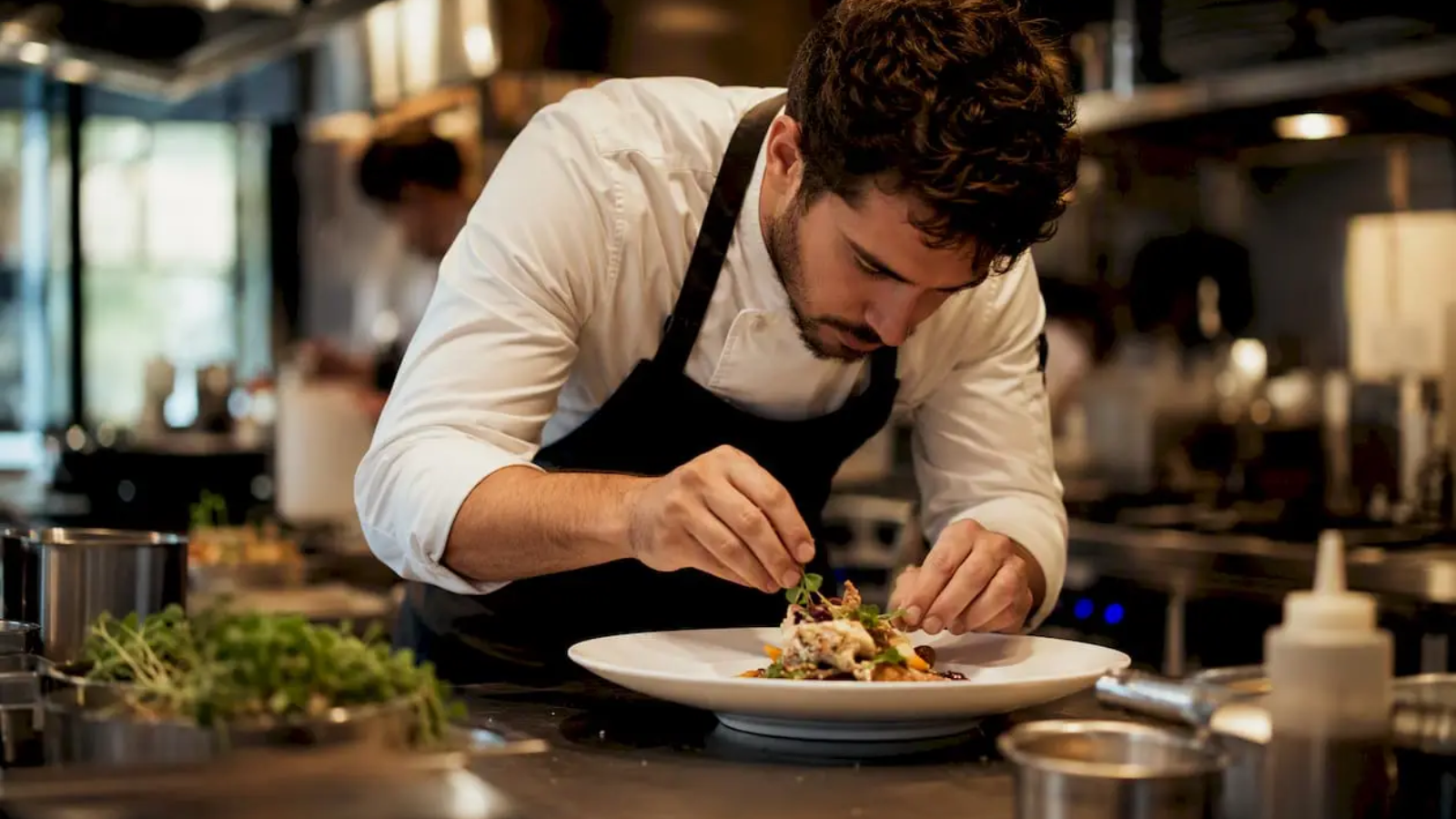
Three actions move the needle fastest for a new menu promotion: geo-targeted discovery ads with local retargeting, a fully optimized Google Business Profile with an updated online menu, and a staff-driven in-house upsell program built around soft-launch tastings. Each one hits a different revenue lever within days, not months.
Discovery ads on Instagram or TikTok put your new dishes in front of people who’ve never eaten at your restaurant but live close enough to try it this week. Google Business Profile captures the diner who already searched “restaurants near me” tonight and is deciding right now. Your staff, trained on the new dishes and incentivized to push them, converts every table that walks in the door regardless of what marketing spent. Set a real number to chase, like a 15% increase in average check, so you know if the launch worked.
- Pick one discovery platform this week and brief your creative
- Enable catering and private-event attributes on Google Business Profile today
- Schedule a staff soft launch before you spend a dollar on ads
Pro Tip: Run your soft launch as a comped or discounted staff meal before the public sees the menu. You’ll catch plating errors and slow ticket times before a paying guest ever does.
Key Takeaways
A successful new menu promotion combines geo-targeted discovery ads, an optimized Google Business Profile, and a trained staff upsell program running together across a 14 to 90 day timeline.
| Point | Details |
|---|---|
| Start with three actions | Launch discovery ads, optimize Google Business Profile, and train staff before spending on anything else. |
| Run a soft launch first | Comp or discount a staff-only tasting to catch kitchen and timing issues before the public sees the menu. |
| Follow the 70/20/10 budget split | Put roughly 70% of paid spend behind proven organic content, 20% into retargeting, 10% into new creative tests. |
| Track daily for two weeks | Tag new items in your POS and review covers, orders, and leads daily before shifting to weekly reviews. |
| Consider agency support | Ionhospitality builds the creative, paid media, and tracking infrastructure for a 60 to 90 day launch package. |
Table of Contents
- 7-14 Day Launch Checklist: What To Prepare First
- Campaign Phases: A 14-90 Day Timeline From Tease To Sustain
- Creative Assets And Offers That Actually Convert
- Which Paid Channels And Budget Split Actually Work?
- Operations And Measurement: Turning Attention Into Revenue
- How ION Hospitality Runs Your Menu Launch For You
- Frequently Asked Questions
- Sources
7-14 Day Launch Checklist: What To Prepare First
Before a single ad runs, get your foundation in order. Menu engineering comes first: price new dishes against a food cost target of roughly 25–30% so profit isn’t an afterthought once covers pick up.
Work through this list in order over the next two weeks:
- Finalize menu engineering and confirm food cost targets on every new dish
- Write the photography brief and hero video shot list
- Build landing pages for the new menu, catering, and private events
- Update your online ordering platform and reservation system with new items
- Refresh Google Business Profile listings, photos, and attributes
- Set staff training dates and assign upsell talking points
- Confirm ingredient lead times with vendors and run kitchen test batches
- Lock portion specs so plating stays consistent under volume
Test-run every new dish at full kitchen speed, not a quiet Tuesday afternoon prep session. That’s the only way to know if a six-top order of your new short rib special blows up your ticket times on a Friday night.
Pro Tip: Pay your staff to eat the new menu the night before launch. Their tasting notes and objections become your best talking points for guests who ask, “What’s good?”
Campaign Phases: A 14-90 Day Timeline From Tease To Sustain
A new menu launch isn’t a single event. It’s four overlapping phases, each with its own job.
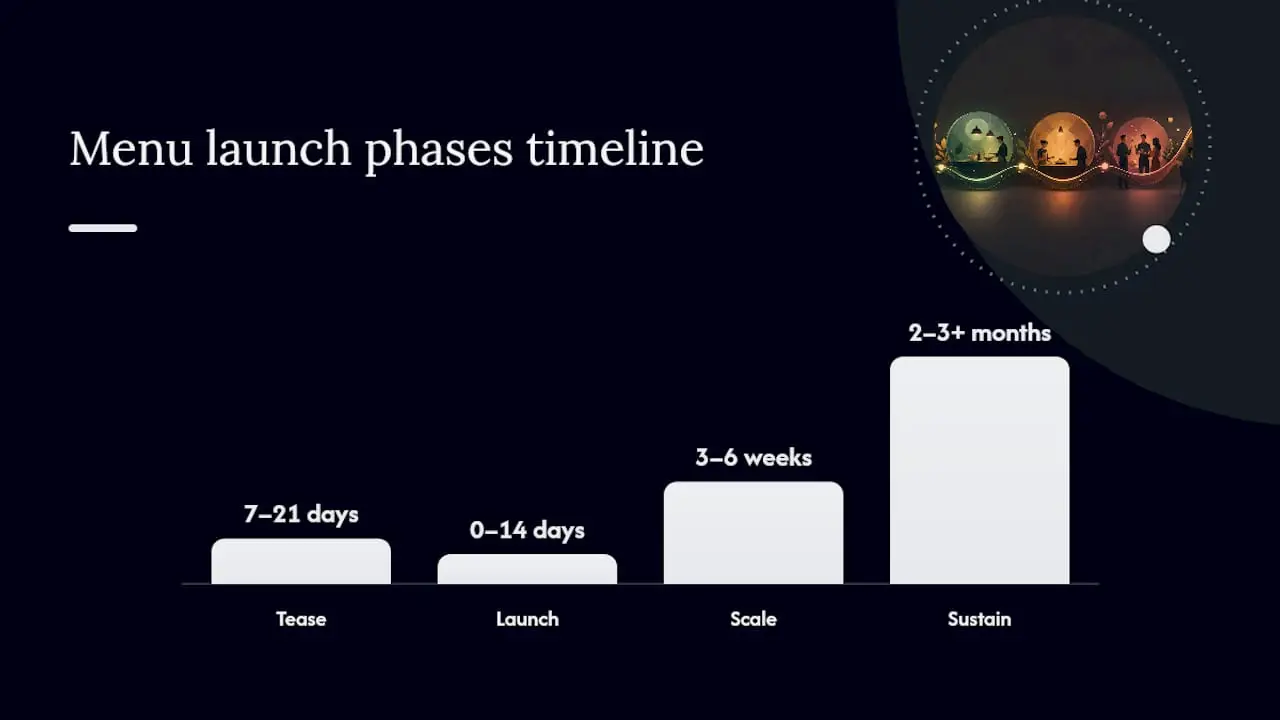
Tease (7–21 days out). Build anticipation with behind-the-scenes content: prep footage, ingredient sourcing stories, staff reactions to tasting the new dishes. This is also when pre-launch previews and a soft staff launch surface operational problems before the public ever sees them.
Launch (day 0–14). Public reveal. Hero photo and video go live, paid discovery ads start, Google Business Profile posts announce the new items, and email or SMS goes out to your existing guest list.
Scale (weeks 3–6). Double down on whatever creative is converting. Add retargeting for anyone who engaged but hasn’t booked or ordered. Push outreach to catering leads and private-event planners who saw the launch buzz.
Sustain (months 2–3+). New items fold into regular content rotation. Influencer or user-generated content reshares keep momentum without the intensity of launch week.
Assign ownership so nothing stalls: the chef locks the menu and trains staff, the GM handles reservation and POS updates, the marketing lead (in-house or agency) manages creative and ad spend, and the owner signs off on budget and pricing.
- Tease phase deliverables: 3–5 teaser posts, staff tasting event, email announcement draft
- Launch phase deliverables: hero photo/video live, paid ads active, GBP posts published, staff talking points distributed
- Scale phase deliverables: retargeting audiences built, catering outreach sent, top-performing creative reused as paid amplification
- Sustain phase deliverables: new items merged into regular content calendar, UGC reshare schedule
Before moving to the next phase, confirm: soft-launch feedback resolved any kitchen issues, at least one creative asset is outperforming the rest, and tracking (pixels, UTMs) is verified and firing correctly.
Creative Assets And Offers That Actually Convert
Static plate photos alone won’t carry a launch. Process video, 15 to 30 seconds of plating, pouring, or prep, along with reshared user-generated content, consistently outperforms static photography for both reach and conversion.
Build your production list around these formats:
- One hero photo per new dish, shot for both social and menu use
- A 15–30 second process video showing plating or prep
- 6–10 short social cutdowns pulled from the hero video for different platforms
- Clean product images formatted for your online ordering menu
- Table tent designs announcing new items to dine-in guests
- Photos of your private-event space styled for catering and buyout inquiries
Offers do the heavy lifting once the creative is out. A weeknight prix fixe built around new dishes lifts slow-night covers. A first-week online-order discount pushes trial through digital channels. A preview-tasting invite for loyal guests builds word of mouth before the public launch even starts. For catering, build a dedicated bundle with clear per-person pricing and stated minimums rather than making planners guess at cost.
Give your creators a real brief instead of hoping they improvise something usable. One establishing shot, one movement shot, and one reaction shot give you three distinct assets from a single shoot, cut for different placements. Draft ad angles around urgency (“this run ends in three weeks”), ingredient story (“why we drove four hours for this cheese”), and event-hosting solutions with three clear pricing tiers.
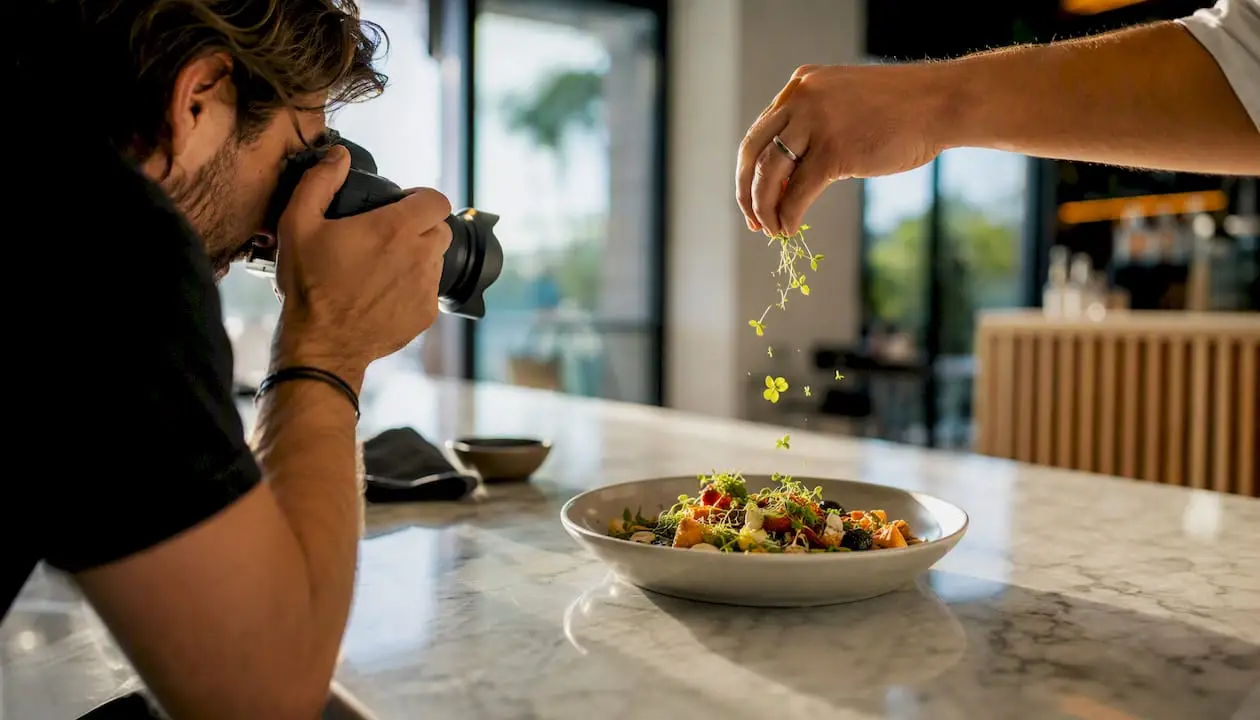
Pro Tip: Get usage rights in writing before the shoot, not after. A verbal agreement with a creator falls apart fast when you want to run their clip as a paid ad six weeks later.
Which Paid Channels And Budget Split Actually Work?
Your channel mix should mirror where your guests already spend time and where they search when they’re ready to book. Instagram tends to work best for a broader 25 to 55 demographic, while TikTok skews younger and rewards personality-driven content. Either way, Google Business Profile is the non-negotiable local intent surface that catches high-intent searches you’d otherwise miss.
Four channel roles cover the funnel:
- Discovery: Instagram or TikTok ads introducing new dishes to people who don’t know you yet
- High-intent local capture: Google Ads and Google Business Profile posts for people actively searching
- Retargeting: Meta and Google remarketing to anyone who engaged but hasn’t converted
- Trial conversion: local search and maps optimization to turn nearby searchers into bookings
A recommended budget split allocates roughly 70% to amplifying content that’s already performing organically, 20% to retargeting, and 10% to testing new creative — a discipline that stops you from throwing money at unproven ads.
Layer your audiences deliberately. Build a lookalike or local-similar audience off your best existing guests, add radius targeting by zip code, overlay office parks for catering-focused ads, and build a separate segment targeting event planners and executive assistants for private-event inquiries. Retarget anyone who’s ordered from you before with new-menu messaging specifically.
None of it means anything without measurement. Install the Meta pixel and Google Ads conversion tracking before launch, not after. Track reservation clicks, online-order confirmations, and private-event inquiry form submissions as distinct conversion events, then build a short dashboard tracking cost per acquisition against covers, orders, and event leads by channel.
Operations And Measurement: Turning Attention Into Revenue
Marketing fills the funnel. Operations decides whether that attention becomes repeat business or a one-star review about a 45-minute ticket time. Staff up for launch week specifically, hold inventory buffers on ingredients for whatever dish you expect to be the breakout hit, and write a plating SOP so quality doesn’t slip once volume increases. Have a contingency plan ready for the day you sell out of your top ingredient before dinner service ends.
On the data side, tag every new menu item distinctly in your POS so you can track its performance daily. Daily sales review for the first two weeks lets you catch a poorly performing dish or a portion size that’s killing your margin before it does real damage.
| Metric | Target/Tracking Method |
|---|---|
| Covers | Daily POS count, compared against pre-launch baseline |
| Online orders | UTM-tagged campaign links tied to order confirmations |
| Catering inquiries | Dedicated landing page form submissions, tagged by source |
| Private-event leads | Inquiry form + response time tracked from click to quote |
| Cost per acquisition | Ad spend divided by tracked conversions per channel |
- Set up UTM templates for every ad and email link before launch, not during
- Tag reservation sources so you know which channel actually drove the booking
- Review performance daily for two weeks, then shift to weekly once patterns settle
- Pivot creative or offers the moment a channel’s cost per acquisition climbs past what a comparable channel delivers
How ION Hospitality Runs Your Menu Launch For You
Everything above works whether you run it yourself or hand it to a team that does this daily. That’s the difference Ionhospitality brings to a menu launch: you get the creative production, the paid media management, and the tracking setup running in parallel instead of stacked on your own to-do list between shifts.
A typical engagement covers a 60 to 90 day launch package: photo and video production, social media advertising across discovery and retargeting, Google Business Profile optimization, and landing page work that connects directly to your reservation and online ordering systems. Catering and private-event funnels get built alongside the core launch, not bolted on afterward, using pricing structures and bundle templates proven to convert planners into booked deposits. Weekly reporting keeps you looking at covers, orders, and leads instead of vanity metrics.
Book a discovery call and we’ll audit your current launch checklist against what’s actually driving covers, orders, and bookings in your market right now.
A Quick Note From Doug
This plan works because it treats a menu launch as a revenue system, not a social media moment. Discovery ads bring new guests through the door, Google Business Profile catches the ones already searching, and trained staff close the sale on every table regardless of ad spend. Owners who run all three together see faster movement on covers and catering leads than those chasing likes alone.
Frequently Asked Questions
How long should a new menu promotion campaign run?
Plan for a full 90-day arc: two to three weeks of teaser content, a two-week public launch push, four to six weeks of scaling what’s working, then folding new items into your ongoing content calendar. Shorter campaigns often lose momentum right as word of mouth starts building.
What’s the fastest way to get feedback before a public launch?
Run a staff-only soft launch, paid or comped, a few days before going public. It surfaces kitchen timing issues, plating inconsistencies, and gives your team real talking points instead of a script they’ve never tasted.
Do I need a separate landing page for catering during a menu launch?
Yes. A dedicated catering page with clear per-person pricing and preset bundles converts inquiries at meaningfully higher rates than expecting planners to parse your full dinner menu for options.
How fast should I respond to private-event inquiries during launch?
As fast as possible. Quotes returned within two hours convert substantially better than those returned a day later, so build a response SLA into your launch operations before the inquiries start coming in.
Should I run paid ads before I know which creative is working?
No. Post organically first, identify what’s already getting engagement, then put budget behind it. That’s the logic behind the 70/20/10 amplification split instead of guessing with cold ad spend on unproven content.
Sources
Start with your Google Business Profile setup and staff soft launch before touching paid creative. Once those are locked, move to production and ad testing.
- How to Handle Restaurant Menu Launch Marketing – Lavu
- Restaurant Social Media Strategy for Operators 2026
- Restaurant Social Media Strategy: A 2026 Revenue Guide – JoinBrands

Add a Comment