
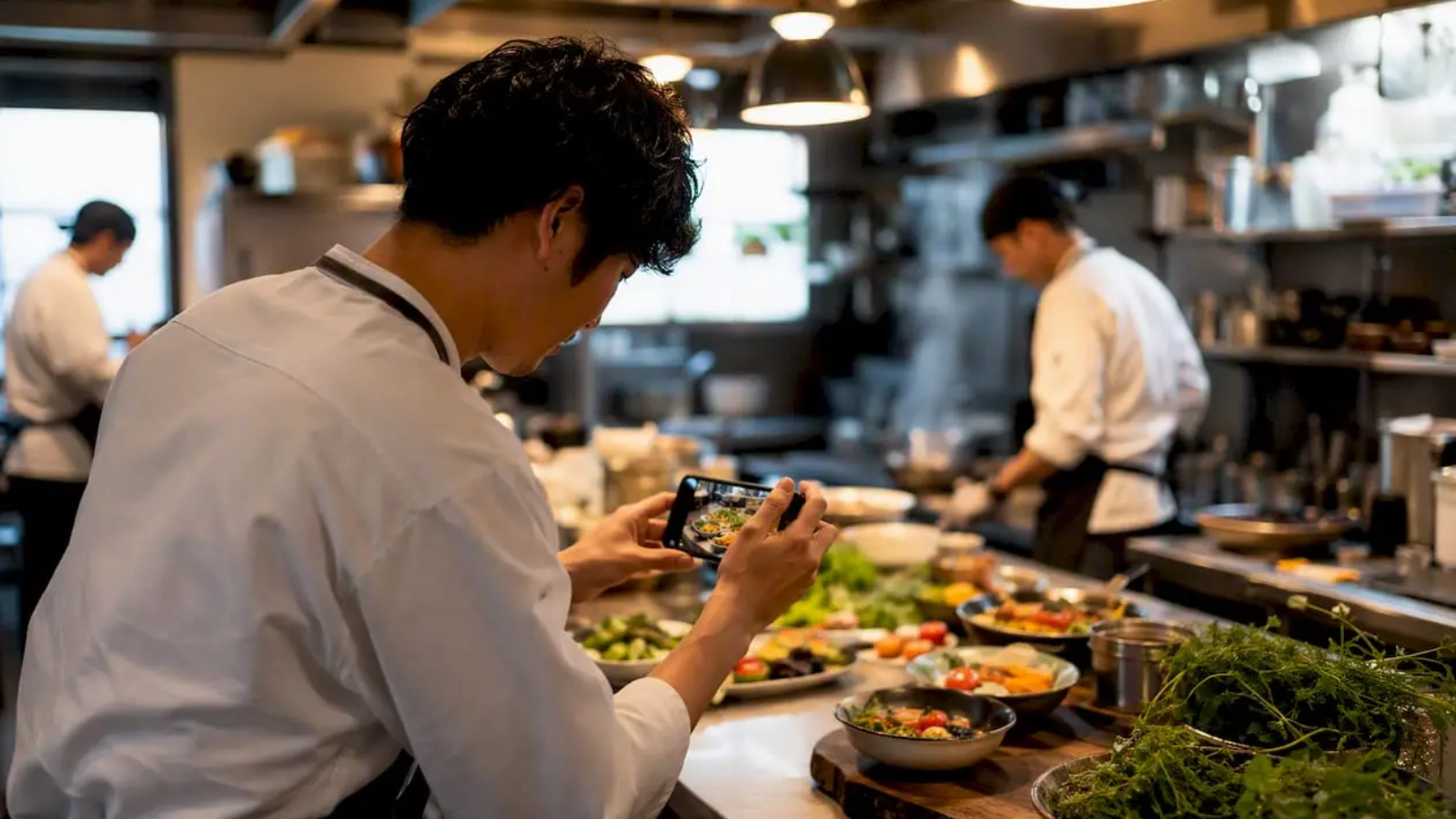
Yes — restaurants can use TikTok to drive real bookings, orders, and walk-ins when each video is built as a short, measurable funnel: hook in the first two seconds, one clear story, one low-friction next step. This is not a vanity channel. TikTok reaches substantial audiences across key dining-age groups in the U.S., and the platform’s discovery algorithm actively surfaces local food content to users who have never heard of your restaurant. The opportunity is real — but only if you treat every clip as a conversion tool, not as a billboard.
Your 1-week quick-start checklist:
- Day 1: Switch to a TikTok Business Account and complete your profile (photo, bio with city + cuisine, deep-link to reservations or online ordering).
- Day 2: Film your signature dish close-up. Hook line: “This is the [dish name] everyone keeps asking about.” End with: “Order link in bio.”
- Day 3: Post a 30-second behind-the-scenes kitchen prep clip. Caption: “Come see us tonight — link in bio to book.”
- Day 4: Identify two local food creators (5k–50k followers). Send a direct message offering a complimentary tasting.
- Day 5: Post a staff pick video. “Our chef’s go-to order — and it’s not what you’d expect.”
- Day 6: Set up UTM parameters on your bio link and create a TikTok-exclusive promo code (e.g.,
TIKTOK10). - Day 7: Review your first week of analytics: watch time, profile visits, and link clicks. Double down on whichever video format held attention longest.
Caption and voiceover CTA examples to use right now:
- “Tap the link in bio to grab your table tonight.”
- “Use code TIKTOK10 at checkout — online order link in bio.”
- “We’re taking reservations for this weekend. Link in bio, takes 30 seconds.”
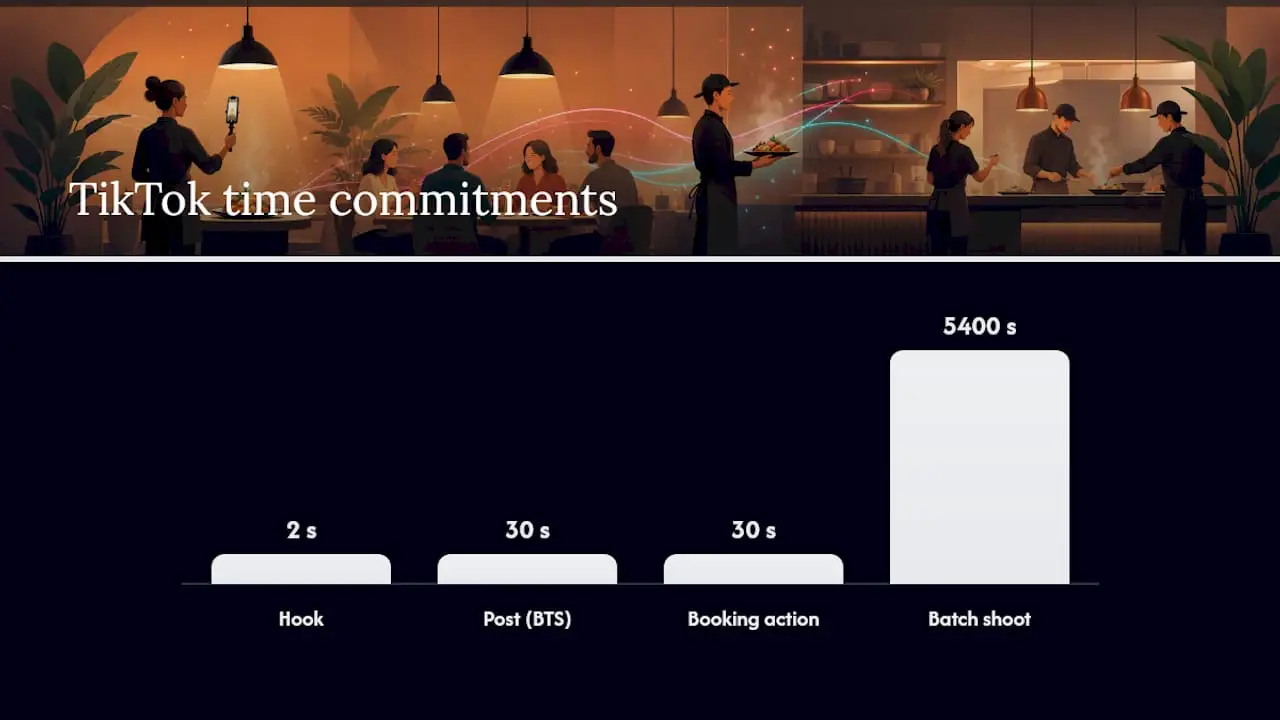
Pro Tip: Film all three of your first-week videos in a single 90-minute session. Batch production is the fastest way to stay consistent without burning out your team.
Key Takeaways
TikTok drives real restaurant revenue when every video is structured as a measurable funnel — hook, story, and one direct next step tied to a trackable link or promo code.
| Point | Details |
|---|---|
| Build every video as a funnel | Hook in 2 seconds, tell one story, close with a deep-link CTA or promo code every time. |
| Set up tracking before you post | UTM-tagged bio link and unique promo codes let you attribute orders and bookings to specific videos. |
| Post 3–5x per week once ready | Start at 1–2 posts per week to build the habit, then scale to 3–5 for measurable local growth. |
| Micro-influencers drive local ROI | Creators with 5k–50k local followers convert better for restaurants than large national accounts. |
| Ionhospitality handles the full pipeline | From content production to creator programs and paid ads, Ionhospitality ties TikTok activity directly to bookings and orders with zero commissions. |
Table of Contents
- Why TikTok works for restaurants — and how the algorithm favors you
- How to set up your restaurant TikTok account for discovery and conversions
- Proven restaurant TikTok content ideas you can shoot today
- How to create videos that actually get views
- How to work with creators and turn UGC into real bookings
- How to measure TikTok performance and convert views into revenue
- Use trend listening to drive limited-time offers and menu decisions
- Best practices, posting cadence, and mistakes that will cost you
- What most restaurants get wrong about TikTok (an honest take)
- Ionhospitality turns your TikTok views into booked tables and online orders
- Sources
Why TikTok works for restaurants — and how the algorithm favors you
🍽️ TikTok is one of the largest social networks globally by active users, and its U.S. audience skews heavily toward the 18–34 age group — the demographic that eats out most frequently and makes dining decisions on their phones. For restaurants, that demographic alignment is a genuine advantage.
The algorithm rewards two things above everything else: watch time and shares. If a viewer watches your video past the 3-second mark, TikTok pushes it further. If they share it, the reach multiplies fast. Unlike Instagram, TikTok does not require a follower base to go wide — a brand-new account with zero followers can reach thousands of local diners on day one if the content holds attention.
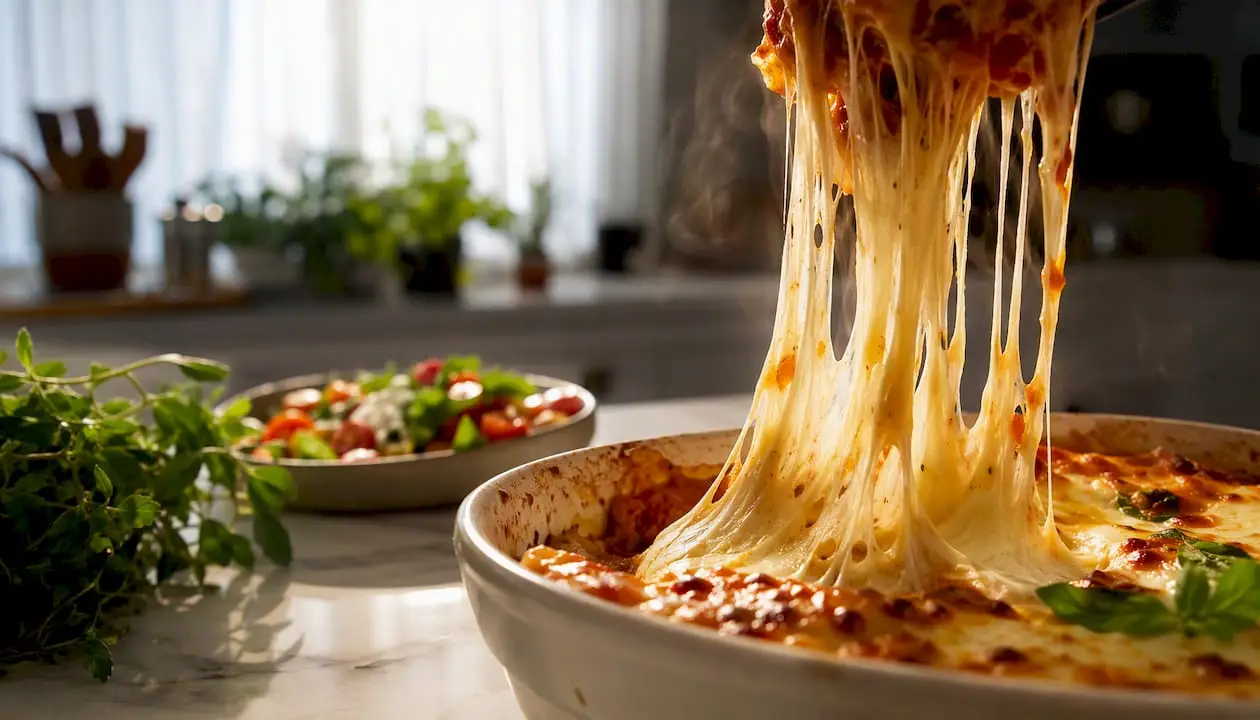
Restaurants have a structural edge here. Food is inherently visual. A bubbling sauce, a perfect cheese pull, a bartender torching a cocktail — these are scroll-stopping moments that cost nothing extra to capture. Add to that the platform’s growing use as a local search tool, where users type “best tacos in Austin” or “date night restaurants NYC” directly into TikTok search, and you have a discovery channel that rivals Google Maps for a specific, high-intent audience.
The content planning implication: make ordering obvious and immediate. Every video should make it effortless for a viewer to go from watching to booking or ordering in under 30 seconds.
How to set up your restaurant TikTok account for discovery and conversions
Getting the account right before you post a single video saves you weeks of lost traffic. A complete Business account setup — bio link, analytics access, and contact actions — is the foundation of every tactic that follows.
Switch to a TikTok Business Account first
A Business Account unlocks TikTok Analytics (watch time, completion rate, traffic sources), the ability to run paid ads, and a contact button that lets diners call or email directly from your profile. Go to Settings → Manage Account → Switch to Business Account. It is free and takes two minutes.
Profile optimization checklist ✅
- Username: your restaurant name, no extra characters. Keep it identical to your Instagram handle if possible.
- Profile photo: your logo or a high-quality hero dish photo. Crisp, square, recognizable at thumbnail size.
- Bio: 80 characters max. Format:
[Cuisine] in [City] 📍 | [One hook line] | Order/Reserve below 👇 - Link in bio: a direct deep-link to your reservation form or online ordering page — not your homepage. Every extra click you force costs you a conversion.
- Contact button: enable it so diners can call or email without leaving TikTok.
- Pinned videos: pin your three best-performing clips (or your three most conversion-focused videos when starting out).
How to format your bio link for tracking
Use UTM parameters so you know exactly how much traffic TikTok is sending. A basic template:
https://yourrestaurant.com/order?utm_source=tiktok&utm_medium=social&utm_campaign=bio-link&promo=TIKTOK10
This tells your analytics platform the visit came from TikTok, from the bio link, and which promo code the viewer used. Pair it with a landing page that has the promo code field pre-filled and you cut friction to near zero. For restaurants using full-service POS and ordering integrations, most systems support UTM pass-through to your order reports.
Pro Tip: Test your bio link on a real phone before you post anything. A broken link on launch day means every view you earn goes nowhere.
Proven restaurant TikTok content ideas you can shoot today
The best-performing restaurant content on TikTok falls into a handful of repeatable categories. Consistent posting with location-based hashtags and creator collaborations drives measurable local discovery — but the content itself has to earn the watch time first. Here is a practical library organized by objective.
🎯 Discovery content (get found by new diners)
- Signature dish close-up. Film a slow pour, a cheese pull, or a dramatic plating moment. CTA: “Find us at [location] — link in bio to order.”
- City/cuisine search clip. Speak your city and cuisine out loud and put them on-screen as text. “Best birria in Chicago? We’ll let the video speak.” This feeds TikTok’s local search index directly.
- Timelapse of a full prep. Show a dish going from raw ingredients to plated in 30 seconds. No narration needed — the visual does the work.
🤝 Trust content (turn viewers into first-time guests)
- Behind-the-scenes kitchen prep. Film your chef breaking down a whole fish or laminating dough. Authenticity here beats any polished ad.
- Staff personality moment. “Our bartender rates every cocktail he makes — here’s tonight’s score.” People book restaurants they feel connected to.
- “What to order” recommendation. A server or chef speaks directly to camera: “If you’ve never been, start with this.” Short, confident, personal.
💰 Conversion content (drive orders and bookings now)
- Limited-time offer (LTO) reveal. Show the dish, name the deadline, give the code. “This is only on the menu through Sunday. Use TIKTOK10 online.”
- Guest UGC response. Duet or stitch a guest’s video of your food and add your own commentary. It validates the original poster and shows new viewers that real people love your food.
- Reservation push for a specific night. “We have 12 tables left for Saturday. Link in bio — takes 30 seconds to book.” Scarcity and specificity both drive action.
Pro Tip: Aim for a 70/30 split: 70% evergreen content (signature dishes, behind-the-scenes, staff picks) and 30% trend-based posts. Trends spike your reach; evergreen content builds the audience that keeps coming back. For audio, use trending sounds when they fit naturally — but never sacrifice your hook for a trending audio that starts slow.
Pair your hashtag strategy with location tags. For a deeper breakdown of which restaurant hashtags drive the most local traffic, the research is clear: city + cuisine combinations outperform generic food tags every time.
How to create videos that actually get views
You do not need a production crew. You need a phone, decent light, and a clear plan for the first two seconds. Treating each TikTok as a short funnel — hook fast, tell one story, close with one action — is the consistent recommendation from restaurant marketing practitioners.
Minimum equipment setup
- Phone: vertical (9:16), rear camera for food, front camera for talking-head clips.
- Light: natural window light is your best option. Shoot between 10 AM and 2 PM for the cleanest results. A $25 ring light handles evening shoots.
- Audio: a clip-on lavalier mic ($20–$40) eliminates kitchen noise for voiceovers. For dish-only clips, let the ambient sound run — sizzling and pouring audio performs well organically.
- Stability: a simple phone tripod or a stack of cookbooks. Shaky video kills completion rate.
Shot order for a 30–45 second restaurant video
- 0–2 seconds: close-up of the most visually striking moment (the pour, the pull, the flame).
- 3–15 seconds: context — show the dish being plated, the chef at work, or the dining room filling up.
- 16–35 seconds: the story — a quick voiceover, on-screen text, or a staff member speaking directly to camera.
- 36–45 seconds: the close — on-screen text with your CTA and promo code, spoken aloud if possible.
Editing checklist
- Add captions/subtitles — a large share of TikTok is watched on mute.
- Use on-screen text to reinforce your CTA in the final 5 seconds.
- Keep pacing cuts tight; a new cut every 3–5 seconds holds attention.
- Add a trending audio track in the background at low volume if your voiceover is the primary audio.
Pro Tip: Batch your shoots. One 90-minute kitchen session — before service, when the space is clean and the team is fresh — can produce a full week of content. Film 5–7 clips, edit them across two evenings, and you have a consistent posting schedule without disrupting operations. For more on building a video content workflow that scales, the principles are the same whether you’re posting once or five times a week.
How to work with creators and turn UGC into real bookings
Micro-influencers — creators with 5,000–50,000 followers — consistently deliver better local ROI than macro-influencers for restaurants. Their audiences are tighter, more geographically concentrated, and more likely to act on a dining recommendation from someone they trust. A creator with 12,000 local followers who posts about your weekend brunch special will drive more covers than a national food account with 500,000 followers spread across 50 states.
Creator outreach checklist
- Search TikTok for your city + cuisine keywords. Note which creators appear in the top results.
- Check their comment sections — are followers asking where to find the food? That signals purchase intent.
- Send a direct message: offer a complimentary tasting for two, no strings attached, in exchange for honest content.
- Provide a unique promo code (
CREATOR10) and a UTM-tagged link so you can track every booking or order they generate. - Give creative freedom. Brief them on the goal, not the script.
Creator brief template (keep it to one page)
- Goal: drive reservations for [specific night/event] or orders of [specific dish/LTO].
- Format: 1–3 TikTok videos, 15–45 seconds each, posted within [timeframe].
- Required tags: @yourrestaurant, #[yourcity]eats, #[yourcuisine].
- Promo code:
CREATOR10— unique to this creator for tracking. - Deliverables: raw files shared within 48 hours of posting for resharing.
Turning guest posts into a UGC engine
Place a small card at the table: “Tag us on TikTok — we reshare our favorites.” Print your TikTok handle on receipts. When a server sees a guest filming their food, a quick “Tag us and we’ll feature you” is all it takes. Reshare UGC with the original creator’s permission (a comment reply or DM confirmation is sufficient). For structured UGC campaigns and social contests that go beyond organic resharing, a formal contest mechanic can accelerate the volume significantly.
Track every creator and guest post with unique promo codes. When a code gets redeemed, you know exactly which post drove the order.
How to measure TikTok performance and convert views into revenue
Views without a measurement system are just noise. Treating TikTok as a measurable funnel means linking posts to direct ordering or reservation paths and tracking results with promo codes and UTM parameters. Here is what to track and what each metric tells you.
| Metric | What it signals | How to track it |
|---|---|---|
| Views | Reach and content distribution | TikTok Analytics → Content tab |
| Watch time / completion rate | Hook and story strength | TikTok Analytics → Video insights |
| Shares | Viral potential and audience resonance | TikTok Analytics → Content tab |
| Profile visits | Intent to learn more about your restaurant | TikTok Analytics → Overview |
| Link clicks | Direct conversion intent | UTM-tagged bio link + Google Analytics |
| Promo code redemptions | Attributed orders/bookings | POS or ordering platform reports |
| Order/booking spikes | Post-to-revenue correlation | Compare order volume 24–48 hrs after each post |
Conversion-ready flow checklist
- Deep-link in bio goes directly to the reservation form or order page — not the homepage.
- Landing page is mobile-first and loads in under 3 seconds.
- Promo code field is visible above the fold.
- Staff is briefed before any high-reach post goes live — a viral video that sends 200 people to a booking page your team isn’t ready for is a missed opportunity and a reputation risk.
KPI targets by phase
- Days 1–30: focus on completion rate (target above 30%) and profile visits. If completion rate is low, your hook needs work.
- Days 31–60: watch link clicks and promo redemptions. If profile visits are high but clicks are low, your bio link or CTA copy needs fixing.
- Days 61–90: track order and booking volume against your pre-TikTok baseline. This is where you calculate real ROI. Social media engagement tied directly to bookings is measurable — you just need the attribution infrastructure in place from day one.
Use trend listening to drive limited-time offers and menu decisions
TikTok is not just a marketing channel — it is a real-time signal of what diners want to eat next. Social listening teams at restaurant brands now use TikTok to identify viral ingredient combinations and customer-modified orders, accelerating LTO development faster than traditional R&D cycles. You do not need a dedicated team to do this. You need a 20-minute weekly habit.
Search TikTok for your cuisine category, your city, and trending food terms. Watch what your guests are already ordering and filming. When a specific dish or ingredient starts appearing in multiple guest posts, that is your signal to build an LTO around it — before your competitors notice.
The two-way menu: Customers are no longer just ordering from your menu — they are writing it. When a guest’s TikTok of a custom modification goes viral, the smartest operators turn that into a named LTO within days. The brands that move fast capture the demand spike. The ones that wait two weeks for a committee meeting miss it entirely.
Operational readiness checklist for LTO launches
- Simplify the recipe to 3–5 steps so line staff can execute it at speed during a surge.
- Build a 2-week inventory buffer on key ingredients before the post goes live.
- Add a POS modifier so the LTO rings up cleanly and you can track sales volume in real time.
- Brief every front-of-house and back-of-house team member before the video drops — not after.
Moving too slowly is the real risk. A viral moment has a window of roughly 48–72 hours at peak velocity. If your kitchen isn’t ready to execute and your booking system can’t handle the volume, you convert a marketing win into a service failure. Gastronomy trends in 2026 show that the restaurants capitalizing on social-driven demand are the ones with lean, flexible menus and pre-built operational playbooks for rapid launches.
Best practices, posting cadence, and mistakes that will cost you
Recommended posting schedule
Start with 1–2 posts per week to build the habit without overwhelming your team. Once you have a content batching system in place, push to 3–5 posts per week — the cadence where consistent posting drives measurable local growth. Post when your audience is most active: Tuesday through Friday between 11 AM–1 PM and 6–9 PM local time tend to perform well for restaurant content.
Common mistakes to stop making
- Over-polishing your content. Highly produced ads underperform raw, authentic kitchen clips on TikTok. The algorithm and the audience both reward realness.
- Vague CTAs. “Check us out!” drives nothing. “Tap the link in bio to book your table for Saturday” drives bookings.
- Broken bio links. Check your link every Monday morning. A broken link on a high-performing post is pure waste.
- Ignoring comments. Reply to every comment in the first hour after posting. TikTok’s algorithm reads comment activity as engagement signal and pushes the video further.
- Failing to prepare operations. A video that goes wide and sends 500 people to a booking page you can’t fulfill damages your reputation faster than no video at all.
Comment crisis response framework
If a negative comment thread starts gaining traction, respond once, publicly, with: “We hear you — please DM us so we can make this right.” Do not argue. Do not delete. Move the conversation private and resolve it there.
Paid ads: when to spend
Organic content first, always. Once you identify a post with strong completion rate and profile-visit numbers, put $50–$150 behind it as a Spark Ad (TikTok’s format that boosts existing organic posts). This amplifies what is already working rather than spending on untested creative. For a full breakdown of TikTok ad types, targeting, and budgeting for restaurants, the paid layer becomes most powerful once your organic content has proven the message.
Integrating TikTok with your other channels
Your best TikTok clips belong on Instagram Reels and Facebook too — same video, same caption adapted for each platform’s tone. Cross-posting extends reach without extra production time. For Instagram-specific restaurant marketing ideas that complement your TikTok strategy, the content categories overlap significantly: signature dishes, behind-the-scenes, and staff picks perform well across all three platforms.
What most restaurants get wrong about TikTok (an honest take)
The biggest misconception is that TikTok success requires going viral. It does not. Virality is unpredictable, short-lived, and operationally dangerous if you are not ready for the demand spike. What actually builds a restaurant’s TikTok presence is something far less exciting: a consistent posting schedule, a direct link in bio, and a team that replies to comments.
The restaurants that win on TikTok are not the ones with the most creative videos. They are the ones that treat every post as a small, measurable experiment — tracking which format drove profile visits, which CTA drove link clicks, which promo code got redeemed. Over 90 days, that data tells you exactly what your local audience responds to. No guessing, no chasing trends for their own sake.
There is also a real operational risk that most marketing guides skip entirely. When a video does go wide, the window is 48–72 hours. If your reservation system crashes, your online ordering page times out, or your kitchen runs out of the featured dish by 7 PM on a Friday, you have converted a marketing win into a public service failure. Operational readiness is not a footnote — it is half the strategy. Viral restaurant moments have produced outsized business impact, but the restaurants that sustained that impact were the ones with the infrastructure to handle it.
Build the funnel. Prepare the kitchen. Then post.
Ionhospitality turns your TikTok views into booked tables and online orders
Ionhospitality is the done-for-you alternative to figuring out TikTok on your own — built specifically for full-service restaurants that need real results, not just views. While most restaurant owners spend weeks testing content formats and chasing metrics they don’t fully understand, Ionhospitality’s team handles the entire pipeline: content strategy, video production, creator partnerships, UTM and promo-code attribution setup, and paid ad amplification on TikTok and beyond.
The concrete difference: every campaign is wired for measurement from day one. Your bio link is UTM-tagged, your promo codes are unique to each creator or ad set, and your landing page is built to convert on mobile. When a post performs, you know exactly how many orders or reservations it drove — not just how many people watched. Ionhospitality also prepares your team for demand surges before a video goes live, so a strong post turns into revenue instead of a service problem.
Zero commissions. No revenue sharing. Just a clear agency engagement focused on getting more guests through your door and more private events on your calendar. Book a discovery call and find out what a TikTok-first restaurant marketing strategy looks like for your specific location and concept.
Sources
A short list of the most useful resources referenced in this guide:
- TikTok Marketing for Restaurants | ChowNow
- The Ultimate Guide to TikTok for Restaurants and Cafes
- TikTok Restaurant Marketing: 7 Tactics to Fill Tables (2026) | HappyChef
- Statista

Add a Comment