

TL;DR:
- Community building for restaurants focuses on creating genuine connections with guests to increase loyalty and repeat visits. It relies on consistent, authentic engagement over at least 90 days to develop habits and long-term relationships. Digital and physical tactics, such as private groups and local partnerships, amplify community ties and drive sustainable growth.
Community building for restaurants is the deliberate practice of creating lasting, genuine connections with guests and neighbors to drive loyalty and repeated visits. Unlike traditional advertising, which pushes messages at people, community building pulls people toward your restaurant through trust, belonging, and shared identity. Regular guests deliver up to $685 in lifetime value compared to $26 for one-time visitors. That 26x multiplier is the clearest argument for treating community engagement as a core business strategy, not a side project. Ionhospitality works with restaurant owners every day who want to move beyond discounts and build something that actually lasts.
What is community building for restaurants, and why does it matter?
Community building for restaurants is the ongoing process of turning casual diners into regulars, and regulars into advocates. The industry term for this approach is community-led marketing, a model where your guests, neighbors, and staff become the engine of growth rather than paid ads alone. It is the opposite of transactional marketing, where every interaction ends at the check.

The business case is direct. Restaurants using private customer groups on platforms like Facebook see a 30% retention increase within six months. Retention is the single most underrated lever in the restaurant business. A guest who returns twice a month is worth exponentially more than a guest you win back with a coupon every quarter.
Community-led marketing also changes how your staff shows up. When your team understands they are building relationships, not just running tables, service quality rises naturally. That shift in culture is something no ad campaign can manufacture.
What are the core strategies and pillars of effective restaurant community building?
Start with two or three pillars, not ten. Spreading your effort too thin kills momentum before results appear.
Physical community tactics
- Community noticeboard: Post local events, school fundraisers, and neighborhood news near your entrance. Small physical steps like noticeboards and reciprocal neighborhood discounts build genuine connections that advertising cannot replicate.
- Reciprocal local deals: Partner with a nearby gym, bookstore, or salon. They promote you; you promote them. No cash changes hands, and both businesses gain warm referrals.
- Personalized staff training: Teach your team to remember names, dietary preferences, and birthdays. A guest who feels recognized returns. One who feels like a transaction does not.
Digital community tactics
- Private customer groups: Create a closed Facebook or WhatsApp group for regulars. Share early access to specials, behind-the-scenes content, and exclusive events. This is where social media engagement turns into real bookings.
- Social storytelling: Feature your team, your suppliers, and your regulars on Instagram and TikTok. People connect with people, not logos.
- Local calendar alignment: Plan content and events around neighborhood moments: school graduations, local sports seasons, and community festivals. Relevance drives reach.
Pro Tip: Block 90 minutes every week specifically for community tasks. Respond to comments, check your private group, and plan one local outreach action. Effective community building requires a sustained 90-day execution plan before habits form and results become visible.
Commit to the 90-day minimum before judging results. Community-led marketing is not a switch you flip. It is a habit you build, and the payoff compounds over time.
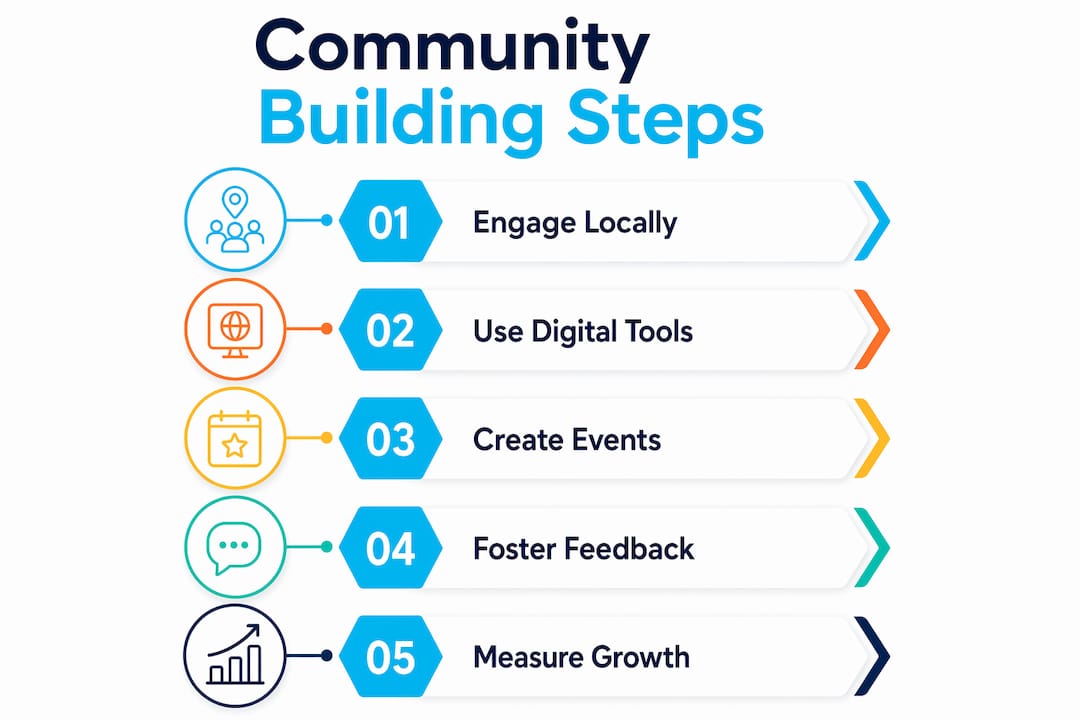
How can restaurants engage authentically with their local community?
Authentic engagement means showing up for your neighborhood even when there is nothing in it for you that day. The biggest mistake restaurant owners make is treating community involvement as a one-way promotional channel. Genuine two-way communication builds loyal guests in ways that broadcast marketing never will.
“Radical transparency, sharing both your wins and your struggles, builds more trust with local communities than any polished corporate message ever could. When Nixta Taqueria installed a community fridge outside their restaurant and shared the story publicly, they earned local loyalty that translated directly into national attention.”
That example is not a fluke. Sharing authentic moments, including challenges and setbacks, creates stronger bonds than curated branding. Your guests want to root for you. Give them a real story to follow.
Watch out for the MINO trap. MINO stands for Marketing In Name Only, and it describes restaurants that make a small charity donation, post about it once, and call it community work. Avoid the MINO trap by actively amplifying local events and partnering with community organizers rather than writing a check and moving on.
Here is what genuine engagement looks like in practice:
- Host a local artist’s opening night in your dining room on a slow Monday.
- Partner with a school fundraiser and promote the event across your social channels.
- Invite a neighborhood organizer onto your Instagram Live to talk about a local cause.
- Respond to every Google review, positive or negative, within 24 hours.
Each of these actions costs more time than money. That is exactly the point. Authenticity in branding builds the kind of trust that paid ads cannot buy.
What digital tools and social media practices sustain restaurant communities?
Digital platforms are your community megaphone. Used well, they keep your restaurant present in guests’ minds between visits. Used poorly, they become a one-way broadcast that people tune out.
- Create and moderate a private group. A closed Facebook group for your regulars gives you a direct line to your most loyal guests. Post exclusive content, ask for feedback, and run members-only offers. The key word is moderate: respond to every post and keep the conversation active.
- Tell stories about your team. A 30-second reel of your head chef explaining where this week’s produce comes from outperforms a promotional post every time. People follow people. Put faces to your brand consistently.
- Respond to reviews as a community act. When you reply to a negative review with empathy and a real solution, every future reader sees how you treat people. That transparency converts skeptics into first-time guests.
- Run social media contests. Photo contests, caption competitions, and “tag a friend” posts generate organic reach and pull new guests into your community orbit. Social media contests are one of the fastest ways to grow a local audience without paid spend.
- Schedule content around your local calendar. Post about the high school championship game the night before it happens. Celebrate a neighborhood business’s anniversary. Stay woven into the fabric of local life, not just your own promotions.
Pro Tip: Use audience engagement strategies that prioritize replies over reach. A post that generates 20 genuine comments beats one with 500 passive likes every time when it comes to building real community.
How does community building translate into measurable financial results?
The financial case for community-led marketing is concrete. Community-led marketing has a 45–90 day payback period before habit formation and significant results appear. That timeline is longer than a discount campaign, but the results last far longer too. A discount brings someone in once. A community brings them back for years.
The lifetime value gap is the most compelling number in this conversation. A regular guest is worth $685 over their relationship with your restaurant. A one-time visitor is worth $26. Building a base of 50 true regulars is worth more than running 500 discount promotions.
Community building also fills your slow nights. When your private group members feel like insiders, they show up on a Tuesday because you asked them to, not because you cut your margins with a deal. That is a fundamentally different and more profitable relationship.
| Metric | Transactional marketing | Community-led marketing |
|---|---|---|
| Customer lifetime value | $26 (one-time visitor) | $685 (regular guest) |
| Retention improvement | Minimal | 30% within 6 months |
| Payback timeline | Immediate but short-lived | 45–90 days, then compounds |
| Staff engagement | Low | High (culture-driven) |
| Slow night impact | Discount-dependent | Community-driven attendance |
Operationally, community building also improves your team. Staff who feel like ambassadors, not just servers, stay longer and perform better. Lower turnover reduces training costs and keeps the guest experience consistent. That consistency is itself a community-building tool.
Key Takeaways
Community-led marketing builds lasting guest loyalty by replacing one-way promotions with genuine, two-way relationships that compound in value over time.
| Point | Details |
|---|---|
| 26x lifetime value gap | Regular guests are worth $685 versus $26 for one-time visitors. |
| 90-day commitment | Effective community building requires at least 90 days before measurable habits form. |
| Two-way communication | Responding to reviews and moderating private groups converts followers into loyal guests. |
| Avoid the MINO trap | Amplify local events and partner with organizers rather than making token gestures. |
| Digital plus physical | Combine community noticeboards and staff training with private social groups for full impact. |
Why community building is the long game worth playing
I have worked with restaurant owners who want results in two weeks. I get it. Payroll does not wait. But every time I see a restaurant chase short-term wins with discounts, I watch the same cycle repeat: a busy weekend, then silence, then another discount, then another busy weekend. Nothing compounds.
The restaurants that genuinely embed themselves in their neighborhoods do something different. They show up at the school fundraiser without a banner. They post the story of their dishwasher’s 10-year anniversary. They respond to the one-star review at 11:00 PM because they care what that person thinks. None of those actions feel like marketing. That is exactly why they work.
The hardest part is not the tactics. It is the patience. Most restaurant owners abandon community-led efforts at week six, right before the results would have started showing. The 90-day rule is not arbitrary. It is the minimum time needed for habits to form in your guests’ lives.
My honest advice: pick one physical tactic and one digital tactic. Execute both for 90 days without measuring ROI. At day 91, look at your return visit rate. You will not go back to discounts.
— Doug
How Ionhospitality helps restaurants build and amplify their communities
Building a community takes time. Amplifying it takes the right tools and the right team behind you.
Ionhospitality specializes in social media advertising for restaurants, helping you turn community moments into scroll-stopping content that fills seats and books private events. We handle the content creation, ad targeting, and community management so you can focus on the floor. No commissions. No guesswork on your end. Just a steady stream of new and returning guests who already feel connected to your brand before they walk in the door. Ready to see what that looks like for your restaurant? Book a discovery call and let’s map it out together.
FAQ
What is community building for restaurants?
Community building for restaurants is the practice of creating genuine, two-way relationships with guests and neighbors to increase loyalty and repeat visits. It goes beyond promotions by embedding your restaurant in local culture through events, personalized service, and transparent communication.
How long does it take to see results from restaurant community building?
Community-led marketing takes 45–90 days before habit formation and measurable results appear. Commit to a full 90-day plan before evaluating your return.
Why are regular guests more valuable than new customers?
Regular guests deliver up to $685 in lifetime value compared to $26 for one-time visitors. That 26x difference makes retention through community building far more profitable than discount-driven acquisition.
What is the MINO trap in restaurant marketing?
MINO stands for Marketing In Name Only. It describes restaurants that make superficial gestures like a single charity donation without genuine involvement. Real community engagement means actively amplifying local events and building ongoing partnerships with neighborhood organizers.
What digital tools work best for restaurant community engagement?
Private social groups on Facebook or WhatsApp, consistent social storytelling featuring your team, and active review responses are the most effective digital tools. Restaurants using private customer groups see a 30% retention increase within six months.

Add a Comment