
TL;DR:
- The evolving online ordering landscape merges dine-in, delivery, and reservation channels, boosting guest loyalty and revenue. AI influences restaurant discovery and personalization, making digital listings and visuals crucial for market competitiveness. Building first-party ordering systems and unified guest data helps operators improve margins and create seamless customer experiences.
The gap between your dine-in revenue and your delivery revenue is closing faster than most operators realize. Restaurant online ordering trends in 2026 are not just about apps and commissions anymore. They’re about AI discovering your restaurant for customers before you’ve even run an ad, guests bouncing between your dining room and your delivery menu like it’s one seamless experience, and margin pressure that can quietly kill profitability if you’re not paying attention. This article breaks down exactly what’s shifting, why it matters for your bottom line, and what you can do about it right now.
Table of Contents
- Key Takeaways
- Restaurant online ordering trends: channels are merging
- How AI is reshaping restaurant discovery
- First-party vs. third-party: the margin conversation
- The off-premise shift and what it means for operations
- Practical strategies to capitalize right now
- My take on where this is all going
- Grow your online orders without giving away your margin
- FAQ
Key Takeaways
| Point | Details |
|---|---|
| Channels are connected | 74% of dine-in guests later order delivery from the same restaurant — treat every visit as a loyalty moment. |
| AI is already finding your restaurant | 22% of consumers use AI tools to discover restaurants, so your digital listings and menu visuals must be current. |
| Third-party commissions compress margins | Platform fees between 15% and 30% per order make first-party ordering a financial priority, not just a preference. |
| Off-premise is the majority of QSR revenue | Over 70% of revenue at leading chains now comes from delivery, pickup, and drive-thru formats. |
| Tech integration reduces costly errors | Siloed ordering systems create manual entry mistakes and operational drag that directly hurt profitability. |
Restaurant online ordering trends: channels are merging
Your guests don’t think in channels. They think in cravings, occasions, and convenience. One night they’re sitting at your bar; three days later they’re ordering the same dish from your DoorDash listing. 74% of consumers say a dine-in visit led them to later order delivery from that same restaurant. Flip it around: 62% say a delivery order eventually brought them in for a dine-in visit.
That is a massive opportunity most operators are leaving on the table.
The behavior tells you that a great in-person experience plants the seed for digital orders, and a great delivery experience plants the seed for a table reservation. 64% of U.S. consumers say they prefer one app to manage delivery, pickup, and reservations together. Guests want continuity. If your systems aren’t connected, you lose the thread.
Here’s what that looks like operationally:
- Build a unified guest profile. Capture email or phone at every touchpoint, whether it’s your POS, your online ordering system, or your reservation platform. This lets you market to the same guest across channels.
- Flag cross-channel behaviors. If a guest orders delivery twice in a row, trigger an offer to bring them in for dine-in. If a table hasn’t come back in 45 days, send a delivery incentive.
- Train your staff to support the loop. Front-of-house teams should mention your app or loyalty program during the visit, not just at checkout.
80% of dine-in visits and 79% of orders come from previously tried restaurants. Loyalty is the engine here, but only if you build a system that recognizes the same guest across every channel.
Pro Tip: Set up a simple CRM or loyalty tool that tags whether a guest first came in through delivery or dine-in. That single data point tells you exactly which channel to use when you want to re-engage them.
How AI is reshaping restaurant discovery
This is the shift most restaurant owners are not watching closely enough. 22% of consumers now use AI tools like ChatGPT or Google Gemini to find restaurants, and 41% of those AI recommendations pull directly from listing platforms like DoorDash. That means your DoorDash profile, your Google Business listing, and your online menu are now feeding AI models that recommend you to potential customers.
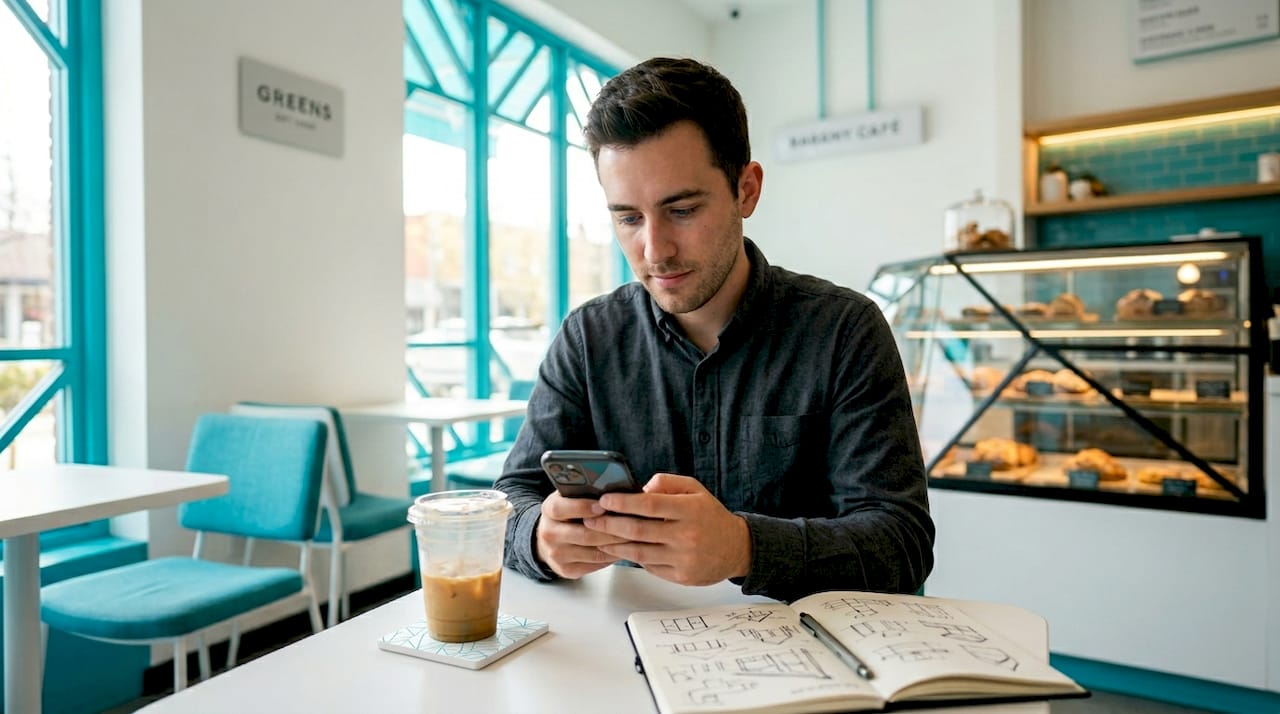
If your menu photos are bad, your descriptions are thin, or your hours are outdated, AI will recommend someone else.
The personalization side is just as significant. AI-driven personalization on delivery platforms can increase average order value by 15% to 20%. That’s not a rounding error. On a $35 average order, that’s an extra $5 to $7 per transaction, before you’ve changed a single thing on your menu.
There’s also a wide-open operational gap here. Only 28% of restaurant operators currently use AI to manage calls and customer service, even though 75% of consumers say they’re comfortable with AI handling reservations. That’s a staffing cost and a customer experience issue sitting right in front of you.
What you should be doing right now:
- Audit every digital listing. Google, Yelp, DoorDash, Uber Eats. Check hours, photos, and descriptions on every single one.
- Add high-quality food photography. 87% of consumers choose what to order based on an appealing photo or video of the dish. This is not optional anymore.
- Explore AI reservation tools. Platforms that handle inbound calls and reservation requests via AI free up your front-of-house and reduce missed bookings.
- Write menu descriptions that match how people search. Think occasion and flavor, not just ingredient lists. “Perfect for date night” or “our spiciest dish” performs better in AI search contexts than just “chicken with sauce.”
Stat to know: Only 28% of operators use AI for customer service, yet 75% of guests are comfortable with it. That gap is your competitive edge if you move first.
First-party vs. third-party: the margin conversation
Here is the honest math. Commission rates on major delivery platforms typically run between 15% and 30% per order depending on your contract and marketing placement. When you factor in food costs running at 28% to 35% and labor at another 30% or more, surrendering roughly $0.25 of every delivery dollar to platform fees leaves very little margin for error.
The case for first-party ordering is real. Here’s a side-by-side:
| Factor | Third-party platforms | First-party ordering |
|---|---|---|
| Commission per order | 15% to 30% | Zero (flat tech fee) |
| Customer data access | None | Full access |
| Brand control | Limited | Complete |
| Customer relationship | Platform owns it | You own it |
| Discovery reach | High | Lower initially |
For context on the scale: switching a 50-location brand from third-party to first-party ordering is estimated to save approximately $3.78 million per year in avoided commissions. That’s not a small brand at massive scale. That’s a mid-size regional chain making a deliberate choice about where their margin goes.
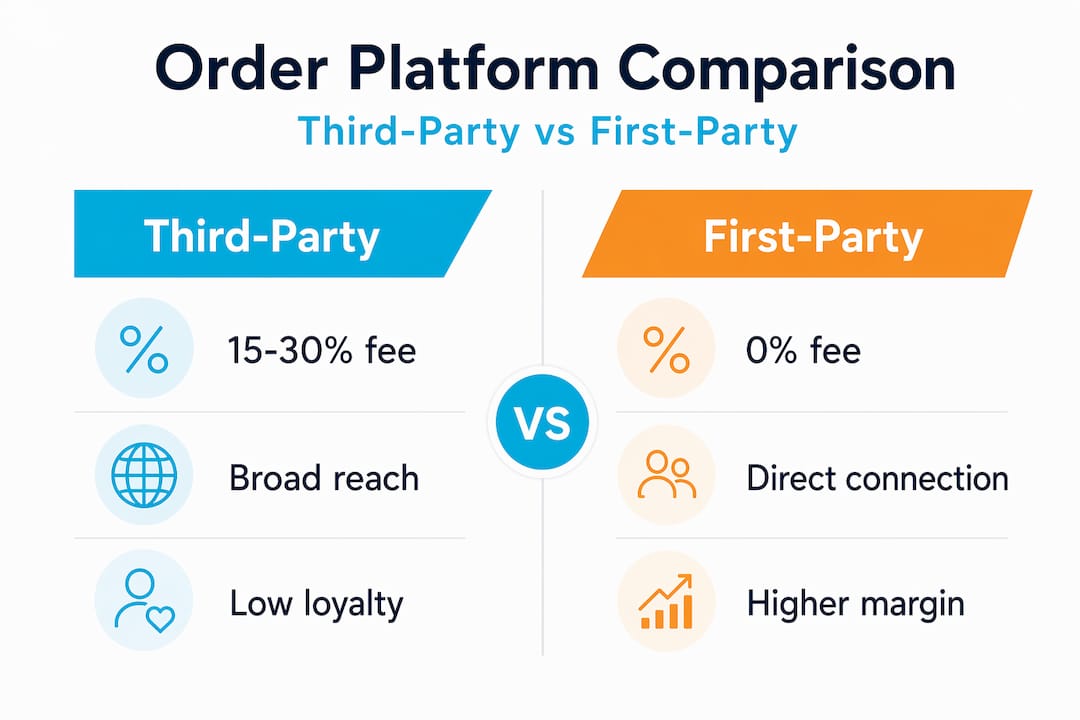
The smarter play is a hybrid model. Use third-party platforms for discovery and new customer acquisition. Use your first-party system to convert those customers into loyal, direct-ordering regulars. Think of platforms like DoorDash as your top-of-funnel marketing channel, not your permanent ordering infrastructure.
Pro Tip: Add a card or QR code to every delivery order that offers a discount on the customer’s next direct order through your website or app. A one-time 10% incentive to convert them to first-party pays for itself within two or three orders.
The off-premise shift and what it means for operations
The numbers here should get your attention. Off-premise formats now account for over 70% of revenue at leading quick-service brands, up from roughly 60% before the pandemic. This is not a temporary trend. It’s a structural shift in how Americans eat.
Here’s what leading operators are doing to keep up:
- Redesigning kitchen flow for fulfillment. More prep stations are dedicated to packaging and delivery staging, not just plating for the dining room.
- Investing in multi-lane drive-thrus. Several major QSR chains have built dedicated drive-thru lanes for mobile pickup orders only, reducing wait times for both channels.
- Deploying AI voice ordering at drive-thru and phone. This increases throughput and reduces labor dependency during peak hours.
- Shifting labor allocation. Front-of-house headcount is shrinking at many locations while kitchen and fulfillment staffing grows to meet off-premise volume.
- Integrating tech stacks to cut errors. Siloed ordering systems create manual re-entry mistakes and fulfillment delays that show up as bad reviews and refund requests. A single integrated platform reduces that friction significantly.
Most full-service restaurants are not running at 70% off-premise yet, but the direction matters. Even if delivery and pickup represent 30% of your current revenue, that’s the number you want to understand, optimize, and grow.
Practical strategies to capitalize right now
You don’t need to overhaul everything at once. Start with the moves that have the biggest return for the least disruption.
- Unify your guest data first. Before you add new tech, make sure the tools you already have are sharing data. Your POS, your online ordering platform, and your reservation system should know about the same customer.
- Optimize your digital menu for visuals and search. Update photos, sharpen descriptions, and make sure every item has a clear, appetizing image. Check out hospitality marketing trends for guidance on how menu presentation connects to digital performance.
- Build a loyalty mechanic into your first-party channel. Even a simple points program or VIP email list creates a reason for guests to order direct instead of through a platform.
- Use third-party platforms strategically. Run promotions on DoorDash or Uber Eats to reach new customers, then redirect them toward your owned channel over time.
- Track the metrics that matter. Cost per order, repeat order rate, and channel mix are the three numbers that tell you whether your digital ordering strategy is actually working. Learn to monitor these by tracking online ordering trends in your own data, not just industry benchmarks.
- Personalize your outreach. If someone orders the same pasta dish three times, send them a “your favorite is back” message the next time you run a pasta special. That kind of timely, specific messaging drives repeat orders at a fraction of the cost of acquisition.
Pro Tip: Don’t wait for a loyalty platform to get sophisticated. A simple email list segmented by “delivery customer” vs. “dine-in customer” already lets you send more relevant, higher-converting messages this week.
My take on where this is all going
I’ve worked with enough restaurant operators to know that the ones who thrive aren’t the ones with the most tech. They’re the ones who understand what their guests actually need and build systems around that.
Here’s my honest read on the current state: most restaurants are still treating delivery, dine-in, and reservations as three separate businesses. They have different platforms, different data, different staff handling each. That fragmentation is costing you in ways you can’t always see directly, but it shows up in lower repeat rates, more operational errors, and a marketing strategy that can’t connect the dots.
The operators I see winning right now are the ones who treat the guest journey as one connected experience, regardless of channel. A customer who dines in on Friday and gets a delivery discount on Monday is twice as likely to become a regular. That’s not theory. That’s the data from the DoorDash 2026 report.
My caution is this: do not let third-party platforms become your entire digital strategy. They’re useful for reach. They’re terrible for building a relationship. Every order that goes through a platform is a customer you do not own. You don’t know their name, their preferences, or how to reach them again without paying the platform again. That is a dangerous position to be in as commissions stay high and competition for placement grows.
Invest in your first-party infrastructure now. It doesn’t need to be perfect. It just needs to exist.
— Doug
Grow your online orders without giving away your margin
If everything in this article clicked but you’re not sure where to start, that’s exactly where Ionhospitality comes in. We work with restaurants to build social media and advertising strategies that drive real online orders and private event bookings, without the 0% commission model that leaves platforms owning your customers.
From social media advertising that puts your best dishes in front of hungry local audiences, to content strategies that turn first-time scrollers into regulars, we handle it all for you. We know what moves the needle in 2026 because we’re in the data every day. Ready to see what that looks like for your restaurant? Book a discovery call and let’s map out a plan built around your specific location, menu, and growth goals.
FAQ
How do online ordering trends affect restaurant profitability?
Third-party platform commissions of 15% to 30% per order directly compress margins when combined with food and labor costs. Restaurants that build first-party ordering channels retain more revenue per transaction and own the customer relationship long-term.
What percentage of restaurant revenue comes from off-premise orders?
At leading quick-service brands, off-premise formats including delivery, takeout, and drive-thru now account for over 70% of total revenue, a significant jump from roughly 60% before the pandemic.
How is AI changing how customers find restaurants?
22% of consumers now use AI tools like ChatGPT or Google Gemini to discover where to eat, and 41% of those recommendations pull from digital listing platforms. Keeping your listings and menu visuals updated is now part of your discoverability strategy.
What is the best way to reduce third-party delivery commissions?
The most effective approach is a hybrid model. Use third-party platforms like DoorDash for new customer discovery, then convert those customers to your first-party ordering channel using incentives like a direct-order discount on their next purchase.
Do dine-in customers also order delivery from the same restaurant?
Yes, and the numbers are strong. 74% of dine-in guests later placed a delivery order from the same restaurant. This makes every in-person visit a prime opportunity to capture a guest for your digital channel.

Add a Comment