
TL;DR:
- Effective restaurant storytelling creates emotional connections that boost loyalty and repeat business. Sharing authentic origin stories, chef inspirations, and behind-the-scenes content across multiple channels enhances customer engagement and ROI. Consistent and genuine storytelling, rather than discounts, builds long-term attachment and competitive advantage.
Your food can be exceptional, your ambiance spot-on, and your service impeccable, yet guests still won’t return if they don’t feel emotionally connected to your restaurant. That’s the gap storytelling fills. Storytelling lifts customer loyalty by 20%, a number that should make every restaurant owner pay attention. In a market where diners have more choices than ever, the restaurants that win aren’t just serving great plates. They’re creating experiences people feel compelled to talk about, share online, and come back for again and again.
Table of Contents
- Why storytelling matters in restaurant marketing
- Storytelling channels: From the menu to Instagram
- ROI of storytelling: Does it actually drive business?
- Authenticity and pitfalls: When storytelling goes wrong
- Getting started: Practical steps for restaurants
- Perspective: Why storytelling beats discounts and what most restaurateurs miss
- Transform your restaurant with expert storytelling and marketing support
- Frequently asked questions
Key Takeaways
| Point | Details |
|---|---|
| Storytelling boosts loyalty | Restaurants that invest in authentic narrative see measurable lifts in returning guests. |
| Multiple storytelling channels | Menus, social media, and staff all offer opportunities to connect through stories. |
| High ROI marketing strategy | Content/story-based marketing consistently outperforms traditional ads for restaurant ROI. |
| Authenticity is crucial | Genuine stories outperform scripted or excessive narratives in building customer trust. |
| Start simple and measure | Begin with easy wins—like sharing your origin—and adjust based on real guest feedback. |
Why storytelling matters in restaurant marketing
With the stakes established, let’s explore why storytelling is more than just a trend. It’s central to modern restaurant success.
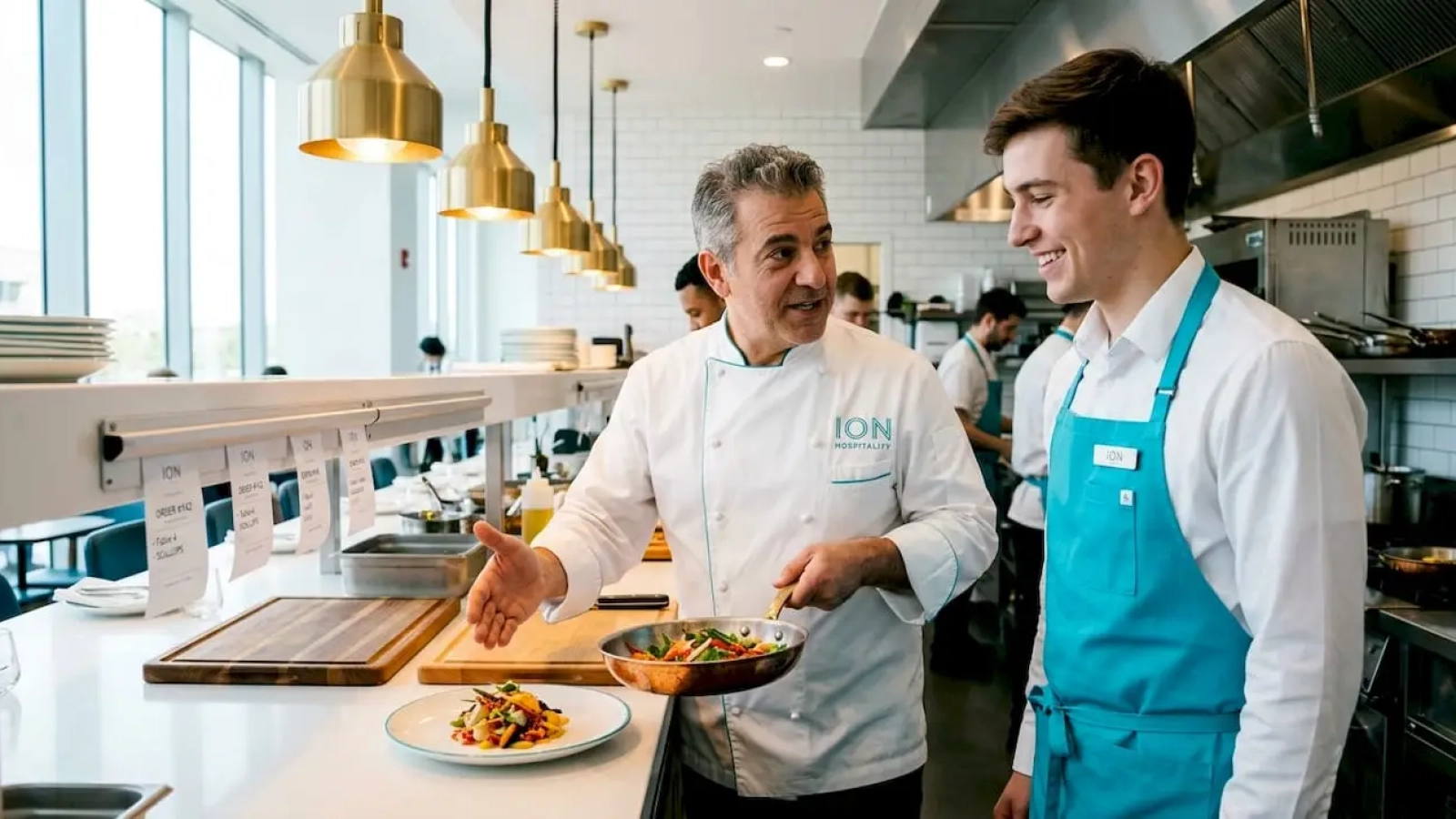
People don’t fall in love with restaurants because of calorie counts or ingredient lists. They fall in love because of how a place makes them feel. Storytelling is the engine behind that feeling. When a guest learns that your grandmother’s sofrito recipe inspired your signature dish, or that your head chef spent three years training in Oaxaca to perfect that mole, a meal becomes a memory.
“Stories are how humans process experience. In a restaurant, the right story transforms a transaction into a relationship.”
That relationship is worth real money. Storytelling builds emotional connections that turn one-time visitors into loyal regulars and loyal regulars into brand ambassadors who recruit their friends, family, and social followers on your behalf. That’s organic marketing you can’t buy with a Yelp ad.
Here’s why storytelling outperforms traditional promotion every single time:
- 🎯 Emotional resonance: A story triggers feelings that a discount never can. Guests who feel something are more likely to return and spend more per visit.
- 🔁 Repeatability: A compelling origin story or chef narrative can be retold across dozens of channels, from Instagram captions to table tents, without losing its power.
- 📣 Word-of-mouth multiplier: Stories travel. Guests who connect with your narrative share it at dinner parties, on Google reviews, and in social posts, multiplying your reach with zero ad spend.
- 💡 Differentiation: Your story is the one thing no competitor can copy. The food trend will pass. Your story won’t.
Understanding the evolution of hospitality marketing makes it clear: the brands winning right now are the ones that figured out authenticity converts better than any promotional formula. Storytelling is the most authentic tool in your marketing kit.
Storytelling channels: From the menu to Instagram
Understanding why it’s so influential, here’s exactly where and how you can introduce stories across your customer interactions. The good news? You don’t need a massive budget or a full marketing team to do this well.
Where to tell your story 📍
| Channel | Story type | Impact level |
|---|---|---|
| Menu descriptions | Ingredient sourcing, chef’s intent | High (in-the-moment) |
| Instagram/Reels | Visual narratives, chef spotlights | Very high (viral potential) |
| Website “Our Story” page | Origin story, supplier history | High (drives discovery) |
| Staff interactions | Table-side anecdotes, dish recommendations | Medium-high (trust builder) |
| Email newsletters | Behind-the-scenes updates, seasonal features | Medium (retention) |
| User-generated content reposts | Guest photos, reviews | Very high (social proof) |
Here’s a practical breakdown to get started on each front:
-
Menu descriptions: A two-sentence origin note on a signature dish does more than list ingredients. It gives guests a reason to order it and something to talk about. Storytelling is key for menu innovation and emotional connection, but it must be authentic and personal to your sourcing, not generic copy-paste language.
-
Staff training: Your servers are storytellers by default. Equip them with two or three genuine anecdotes about how dishes came to be or why a specific local farm supplies your produce. A server who says, “This pork belly comes from a family farm just 40 miles north. The owner and our chef have been friends for 12 years,” is more persuasive than any menu description.
-
Social media: Instagram and TikTok are your highest-leverage storytelling platforms right now. Share short Reels showing your kitchen prep, a 60-second clip of your chef explaining a dish’s origin, or a time-lapse of your team setting up for a big event. Leverage content strategies for engagement to build a posting rhythm that keeps your audience coming back.
-
Website: Your “Our Story” page is often the second thing a first-time visitor reads after checking your menu. Make it count. Video performs best here. Even a simple, well-lit 90-second video of your owner talking about why they opened the restaurant can dramatically improve conversion from web visitor to reservation.
-
User-generated content (UGC): Guests sharing their own photos and stories about your restaurant is the most credible storytelling that exists. Repost it. Celebrate it. Encourage it with a branded hashtag. If you want a deep dive on this, check out these Instagram marketing tips for building a consistent visual presence.
Pro Tip: Every month, ask your best regulars what they tell friends about your restaurant. Their words are your story. Use them verbatim in captions, email subject lines, and website copy. Real language from real guests is more effective than anything your marketing team will write.
ROI of storytelling: Does it actually drive business?
After mapping the main storytelling channels, let’s get into numbers that prove whether stories fill seats or just sound good.

Spoiler: they fill seats. Significantly.
Content marketing in hospitality, which includes storytelling-driven content, delivers an average 220% ROI. That’s not a rounding error. That’s more than double your investment coming back to you in measurable business results, including repeat visits, higher average checks, and online review volume.
But the most striking number? Influencer storytelling yields 11x higher ROI than traditional restaurant ads. That means a local food blogger or micro-influencer sharing a genuine story about their dinner at your restaurant will outperform a paid newspaper ad or radio spot by a factor of eleven.
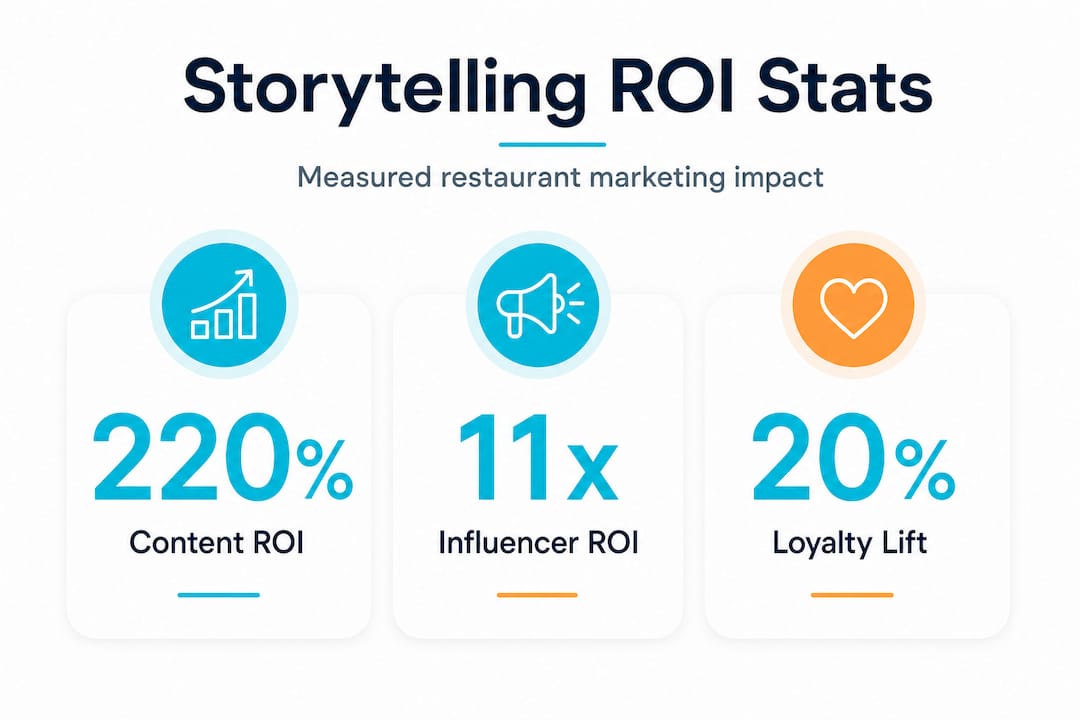
Here’s a quick comparison so you can see the full picture:
| Marketing approach | Average ROI | Guest trust level | Repeatability |
|---|---|---|---|
| Traditional ads (print, radio) | 1x baseline | Low | Medium |
| Social media ads (no story) | 2-3x | Medium | High |
| Content marketing with storytelling | 220% average ROI | High | Very high |
| Influencer storytelling | 11x | Very high | Medium-high |
The trackable outcomes that storytelling drives for restaurants include:
- ⬆️ Customer frequency: Guests who feel emotionally connected return more often. A 20% loyalty lift translates to more covers per week without adding a single new customer.
- ⬆️ Average ticket size: When guests understand the story behind a premium ingredient or a chef-curated pairing, they’re more willing to spend on it.
- ⬆️ Online review volume: Guests who have a story to tell are more likely to leave a detailed, positive review. Those reviews become your SEO engine.
- ⬆️ Private event bookings: Couples and corporate clients who love your story are far more likely to choose your venue for a private dinner or event.
The key is building a content creation habit. Use your content creation strategies to plan a weekly storytelling touchpoint, even if it’s just one Instagram post and one staff huddle. Pair that with campaigns that boost bookings and you’re building a repeatable growth engine.
Authenticity and pitfalls: When storytelling goes wrong
With ROI and channel options on the table, it’s critical to recognize what NOT to do. Storytelling done badly can actually hurt your brand.
The biggest mistake? Too much, too fast. Excessive storytelling on menus via long paragraphs or server monologues disrupts the guest’s decision-making flow, increases price scrutiny, and chips away at the seamless dining experience you’ve worked hard to create. A menu that reads like a novel is not charming. It’s exhausting.
The second major mistake is inauthenticity. Guests are sharper than most marketers give them credit for. They can sense when a “farm-fresh” claim is generic marketing speak versus a real sourcing relationship. Inauthentic stories fail to build trust and can actively backfire, leading to negative reviews and social media skepticism.
“The restaurants that get storytelling wrong usually have one thing in common: they’re telling the story they wish were true instead of the one that actually is.”
Watch for these signs that your storytelling is losing its impact:
- 🚩 Menu descriptions are longer than three sentences per dish
- 🚩 Staff seem scripted or uncomfortable delivering the story
- 🚩 Social posts get lower engagement despite more frequent posting
- 🚩 Guest feedback mentions feeling “sold to” rather than welcomed
- 🚩 You’re embellishing sourcing claims that can’t be verified
The solution is always to pull back and simplify. Real stories don’t need polish. They need honesty. Building your restaurant brand awareness on authentic storytelling is a long game, but it pays off consistently because it’s rooted in something competitors can’t replicate.
Pro Tip: Before publishing any story online or training staff to tell it, ask yourself, “Can we back this up if a guest asks follow-up questions?” If the answer is yes, you’re on solid ground. If not, simplify.
Getting started: Practical steps for restaurants
Now that you’re aware of the risks and rewards, here’s how to put storytelling into practice the right way, one manageable step at a time.
You don’t need a branding agency or a content studio. You need commitment and a starting point. Here’s a simple roadmap:
-
Write your origin story in 150 words or less. Why did you open this restaurant? What problem were you solving or what passion were you following? Keep it real, keep it short. Post it on your website’s About page this week.
-
Launch a chef or staff spotlight on Instagram. One post per week featuring a team member and a dish they love is a storytelling habit that builds audience trust fast. Use origin stories and behind-the-scenes content to turn followers into fans who feel like insiders.
-
Update three menu items with sourcing notes. Don’t rewrite the whole menu. Pick your top three sellers and add one sentence about the ingredient’s origin or the chef’s inspiration. Measure guest response over four weeks.
-
Train your front-of-house team on two dish stories. Choose the two dishes you most want to push. Write a three-sentence story for each. Practice delivery in a team huddle so it feels natural, not recited.
-
Measure and iterate. Track your Google review volume, average check size, and reservation frequency month over month. Ask guests directly what they remember about their experience. That feedback tells you which stories are landing and which need work.
-
Build your online presence around your story. Every platform, from Instagram to Google Business Profile, should reflect the same narrative. A consistent story across channels multiplies its impact. Start with building your restaurant’s online presence as your foundation.
Pro Tip: Once a quarter, sit down with two or three of your most loyal regulars and ask them what they tell people about your restaurant. Their answers are gold. The language they use and the details they highlight are the exact storytelling angles that resonate with guests like them.
Perspective: Why storytelling beats discounts and what most restaurateurs miss
Here’s the uncomfortable truth most restaurant marketing advice won’t say out loud: discounts are the laziest loyalty strategy you have, and they’re actively training your guests to value price over experience.
When you run a happy hour special or a buy-one-get-one deal, you get a short-term spike in covers. But those guests come back for the deal, not for you. The moment your competitor offers a deeper discount, they’re gone. You’ve built nothing except a margin problem.
Storytelling builds something a discount never can: attachment. A 20% lift in customer loyalty from consistent storytelling compounds over time. Those loyal guests bring their families for birthdays. They book your private dining room for corporate events. They post about you without being asked.
Most restaurant owners we talk to are sitting on extraordinary stories they’ve never told. The chef who spent six years working in three countries to master a single technique. The owner who converted a 100-year-old building and preserved its original tile work. The supplier relationship that started as a handshake deal and became a decade-long friendship. These details are sitting dormant in your restaurant every single day.
The other mistake? Waiting until you have “professional” content before telling your story. A slightly shaky phone video of your chef explaining a dish with genuine passion will outperform a glossy produced ad every time. Authenticity is the currency. Production value is optional. Your restaurant marketing guide should always start with the story you already have, not the one you’re waiting to produce.
Stop defaulting to discounts. Start telling the truth about your restaurant. That’s where real loyalty lives.
Transform your restaurant with expert storytelling and marketing support
You now have the strategy. The next step is execution, and that’s where most restaurants stall. Consistency is everything in storytelling, and keeping up with content across Instagram, your website, staff training, and menus while running a full-service restaurant is genuinely hard.
That’s where ION Hospitality comes in. We help full-service restaurants craft and distribute compelling stories across every major channel, from scroll-stopping social media content to social media advertising campaigns that turn viewers into guests. Our team handles the content creation, the posting, the storytelling strategy, and the ad management, all with zero commissions. We also build social media engagement strategies that keep your audience coming back long after the first post. Ready to see what’s possible for your restaurant? Book a discovery call and let’s build your story together.
Frequently asked questions
What types of stories engage restaurant guests most?
Origin stories, chef inspirations, and behind-the-scenes content are consistently the most effective storytelling formats for building emotional connections and brand loyalty with restaurant guests.
Is storytelling ROI really trackable for restaurants?
Absolutely. Restaurants and hospitality brands see an average 220% ROI from content marketing that includes storytelling, measured through repeat visit rates, review volume, and average check size.
How do I keep storytelling authentic and not overdone?
Anchor every story to a real, verifiable detail, whether it’s your sourcing relationship or a chef’s personal background. Authenticity in personal sourcing is what separates compelling narrative from generic marketing copy.
Can influencer storytelling really outperform traditional ads for restaurants?
Yes, and the gap is enormous. Influencer storytelling delivers 11x ROI compared to traditional ads because it combines trusted voices with personal narratives that feel genuine to followers.
How soon can storytelling impact customer loyalty?
With consistent storytelling across channels, restaurants have achieved a 20% lift in customer loyalty, often within one to two quarters of focused narrative-driven marketing.

Add a Comment