
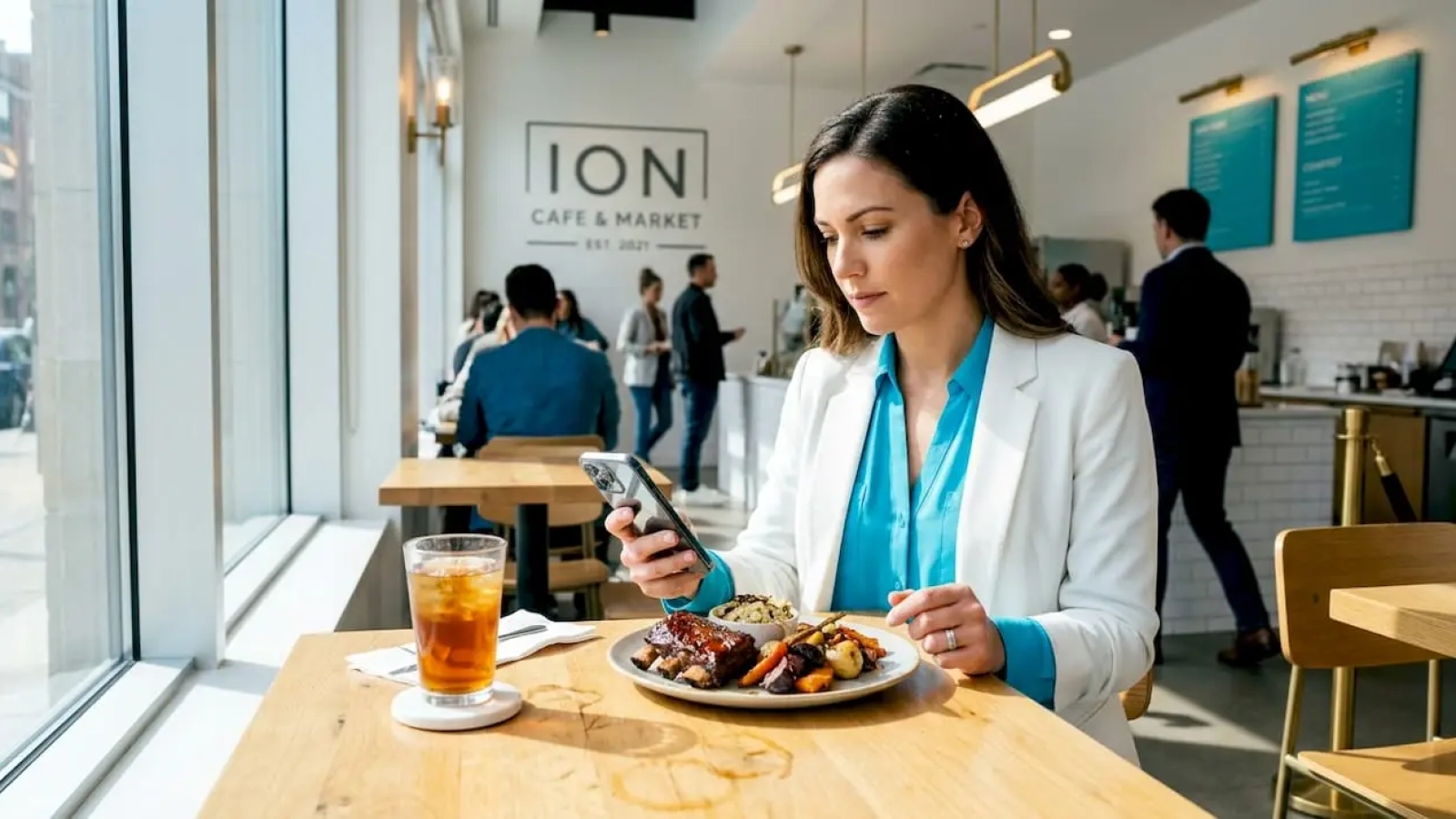
TL;DR:
- Effective mobile marketing in 2026 requires a strategic, full-system approach rather than isolated tactics. Mobile order-ahead is the most impactful feature, increasing control, data capture, and loyalty while reducing reliance on third-party apps. Optimizing website speed and mobile experience is crucial to convert high-intent visitors into returning customers and revenue.
Mobile marketing is not just about sending more text blasts and hoping customers show up. That’s the old playbook, and it’s costing restaurants real money. The strategic mobile marketing landscape in 2026 looks completely different. Customers now discover, evaluate, and order from restaurants entirely on their phones before they ever step through your door. If your mobile strategy is a loose collection of occasional push notifications and a website that barely loads on a small screen, you’re handing business to your competitors every single day.
Table of Contents
- What mobile marketing means for restaurants today
- The impact of mobile order-ahead and digital convenience
- Why mobile-first optimization is no longer optional
- Measuring what matters: Mobile marketing metrics for restaurants
- Why most restaurants underestimate mobile’s true power
- Next steps: Unlocking your restaurant’s full mobile potential
- Frequently asked questions
Key Takeaways
| Point | Details |
|---|---|
| Strategy matters | Treating mobile as an integrated system, not a silo, delivers better returns for restaurants. |
| Order-ahead boosts sales | Mobile order-ahead features improve conversion and create loyal repeat customers. |
| Optimize for mobile users | A seamless mobile web experience is essential as the majority of restaurant traffic is now mobile. |
| Measure success | Focus on actionable metrics like order conversions and repeat visits rather than vanity stats. |
What mobile marketing means for restaurants today
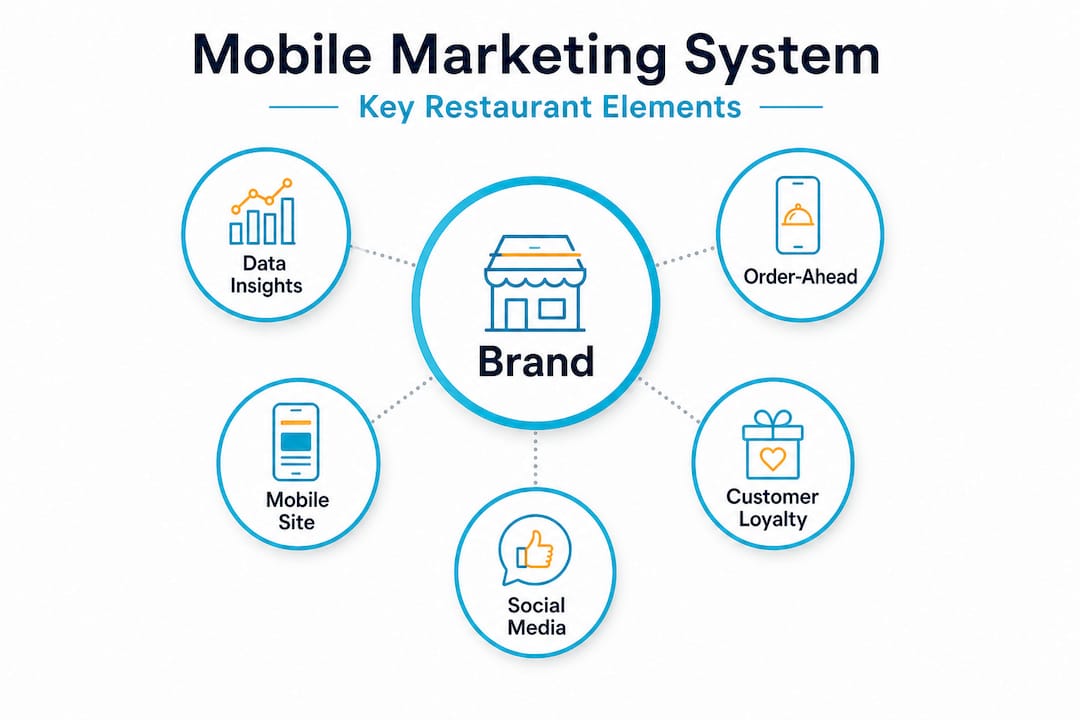
Let’s clear something up right away. Mobile marketing is not a single tactic. It’s a full system. And most restaurant owners are only using about 10% of it.
Think about how your customers actually behave. They wake up, scroll through Instagram, see a plate of short ribs that stops them mid-scroll, check your menu on their phone, read a few Google reviews, and either order online or decide to visit. That entire journey happened on a mobile device. Your job is to show up powerfully at every single step of it.
The problem is that many operators are still running outdated tactics that don’t fit how customers behave anymore. Random SMS blasts with no segmentation. Push notifications sent at the wrong time to the wrong audience. A mobile app that exists just to exist, with no clear goal and no measurement. These approaches don’t build loyalty. They erode it.
Here’s what separates old-school mobile marketing from what actually works in 2026:
- 📵 Old approach: Send a promo text to everyone on your list every Friday
- 📱 Modern approach: Segment your audience by behavior and send targeted offers that match their history
- 📵 Old approach: Add a mobile app to “stay current”
- 📱 Modern approach: Integrate ordering, loyalty, and data capture into a seamless mobile experience
- 📵 Old approach: Count push notification sends as a success metric
- 📱 Modern approach: Measure order conversion rate, repeat visit frequency, and revenue per mobile user
“Mobile marketing isn’t just about sending more. Measurement and strategy are required. Otherwise, digital efforts stall.” — MRM Exclusive
When you start thinking of mobile as a complete system for enhancing your restaurant’s brand and driving revenue, every decision gets clearer. You stop guessing and start building.
The impact of mobile order-ahead and digital convenience
Once you see mobile as a full strategy, the next question is: which features actually move the needle? The answer is clear. Mobile order-ahead is the single highest-ROI mobile feature most restaurants are not fully leveraging.
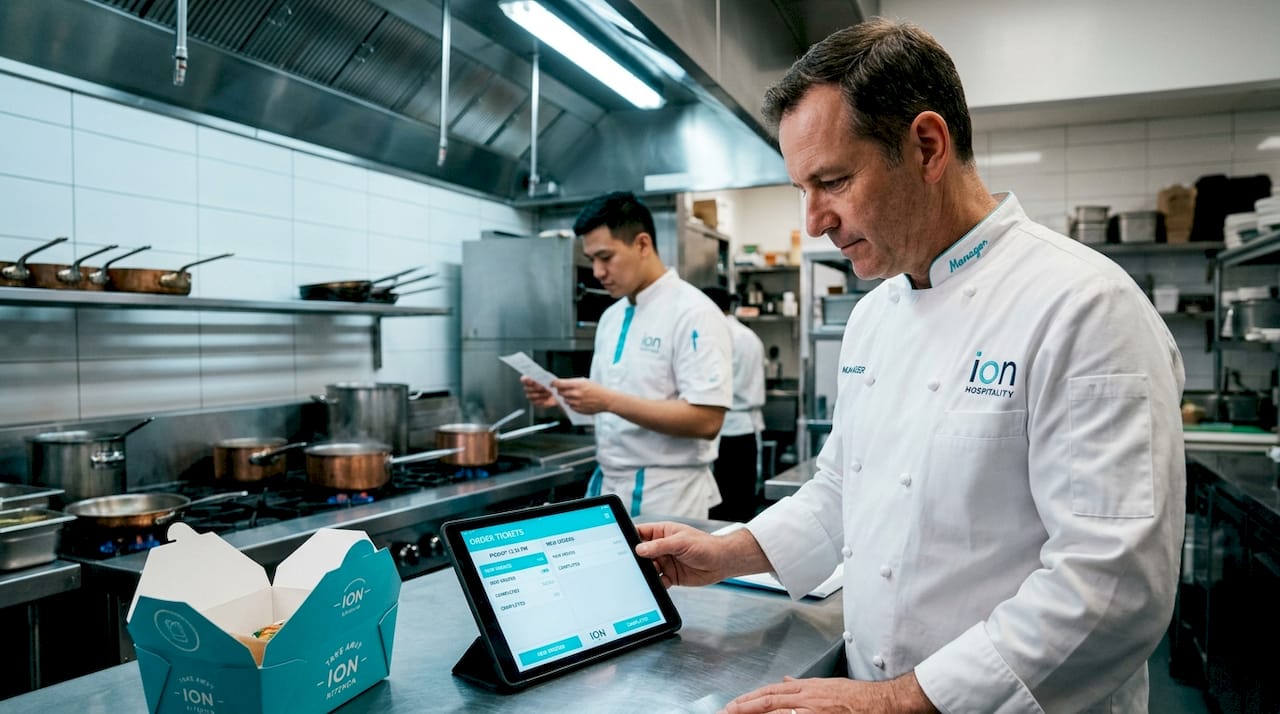
Order-ahead changes everything. Your customer decides what they want, pays in advance, shows up, grabs their order, and leaves happy. No wait time, no friction, no missed upsell. According to a QSR mobile order-ahead report, mobile order-ahead experiences improve conversion rates and raise the bar for what customers expect from a digital ordering journey.
Here’s how the three main ordering channels actually compare for restaurant operators:
| Feature | In-store ordering | Mobile order-ahead | Third-party apps |
|---|---|---|---|
| Speed of transaction | Moderate | Fast | Moderate |
| Upsell opportunity | High (staff-driven) | Medium (digital prompts) | Low (limited control) |
| Customer data capture | Low | High | None |
| Customer satisfaction | Variable | High | Variable |
| Commission cost | None | None or low | 15%–30% |
| Repeat visit driver | Low | High | Low |
The data tells the story. Third-party apps drain your margins. In-store ordering depends heavily on staff performance. Mobile order-ahead puts you in control of the experience, the data, and the relationship.
And here’s the part that surprises most independent operators: you do not need an expensive custom app to compete. Many affordable platforms offer mobile ordering features you can activate quickly, link to your website, and brand as your own. Monitoring online restaurant trends will help you stay ahead of which platforms are gaining traction with your customer base.
Smart operators are also using mobile ordering data to improve restaurant profit strategies by identifying top-selling items, optimizing prep time, and reducing waste based on real order patterns.
Pro Tip: Set up your mobile ordering flow and then personally test it on three different phones, including an older Android model. If it feels clunky or slow on one of them, your customers feel it too. Fix it before it costs you repeat orders.
The real power of order-ahead is repeat business. Customers who order ahead once are significantly more likely to return because the experience was frictionless and on their terms. That convenience becomes a habit. And habits are gold in the restaurant business.
Why mobile-first optimization is no longer optional
You can have the best mobile ordering feature in your city, but if your website loads slowly or looks broken on a phone screen, customers will bounce before they ever see your menu. That’s a conversion killer, and it’s happening right now at restaurants that don’t realize it.
📊 Here’s the number that should stop you cold: Over 70% of restaurant web traffic is now mobile. That means the majority of people visiting your site are doing it from a phone. If that experience is anything less than fast and smooth, you are actively losing customers who were already interested.
The guide to digital marketing for QSRs makes it clear: mobile-first is not a trend. Ignoring mobile optimization reduces conversions from high-intent searches, the people who are actively looking to order or visit right now.
Look at what the data shows when you compare optimized vs. non-optimized mobile experiences:
| Metric | Mobile-optimized site | Non-optimized site |
|---|---|---|
| Bounce rate | 25%–40% | 60%–80% |
| Average session time | 2.5–4 minutes | Under 1 minute |
| Order conversion rate | 4%–8% | 0.5%–2% |
| Average ticket value | Higher (upsells visible) | Lower (user exits early) |
| Google search ranking | Boosted | Penalized |
The gap is not small. A non-optimized mobile experience doesn’t just annoy customers. It actively tanks your search ranking, kills your conversions, and shrinks your average ticket. That’s a triple loss on every visit.
Building a strong restaurant online presence starts with making sure your mobile foundation is solid. And attracting new restaurant customers gets dramatically easier when your site loads fast and looks great on every screen.
Here are three steps you can take right now to check and improve your mobile readiness:
- Run a mobile speed test. Use Google’s PageSpeed Insights (free tool) on your restaurant website. Anything scoring below 70 on mobile is hurting your business. Work with your web developer to fix image sizes, reduce load time, and enable caching.
- Walk through your ordering flow as a customer. Pull up your ordering page on your own phone. Time how long it takes from landing to checkout complete. If it’s more than 90 seconds with no friction, it’s too long. Simplify the steps.
- Check your menu for mobile readability. Open your menu on the smallest screen you have. If text is tiny, images are cut off, or you have to pinch-zoom to read prices, your customers are giving up before they order.
Pro Tip: Do this mobile audit every 90 days. Technology and platforms change, and what worked perfectly six months ago may have a new bug or a broken link today. Regular testing is the simplest form of mobile quality control.
Measuring what matters: Mobile marketing metrics for restaurants
Here’s an uncomfortable truth: most restaurants have no idea whether their mobile marketing is working. They send the messages, post the content, run the promotions, and then… wait. No tracking. No benchmarks. No comparison from week to week.
That approach is how you burn budget without building a business.
Measuring mobile marketing impact requires discipline. You need to identify which numbers actually connect to revenue and ignore the ones that just look impressive in a dashboard. As the data shows, launching measurable marketing campaigns is what separates operators who grow from those who stay flat.
Here are the core mobile marketing KPIs every restaurant owner should track:
- Mobile order conversion rate. Of all visitors who land on your mobile ordering page, what percentage actually complete a purchase? This is the most direct measure of how well your mobile experience works.
- Repeat visit frequency. How often do mobile customers return within 30, 60, and 90 days? A rising repeat rate means your mobile strategy is building loyalty, not just one-time transactions.
- App downloads and active users (if applicable). Raw downloads mean nothing. Track how many users are actively ordering or engaging each month versus how many downloaded and never returned.
- Push or SMS opt-in rates. What percentage of your customers are saying “yes” to receiving your messages? A low opt-in rate signals that your value exchange isn’t compelling enough.
- Revenue per mobile customer. Calculate average spend for customers who order through your mobile channel vs. walk-ins or third-party apps. This tells you whether mobile customers are more valuable over time.
Now here are the vanity metrics to stop obsessing over:
- 🚫 Total push notifications sent (volume without conversion is noise)
- 🚫 Email open rates without click-through data (opens alone don’t drive revenue)
- 🚫 Social media impressions not tied to any action (reach without engagement is just exposure)
- 🚫 App downloads without active user data (a download you can’t activate is worthless)
When you connect mobile data to actual business outcomes, something shifts. You stop making guesses about what to do next. You have a real feedback loop. You can see what’s working, cut what isn’t, and double down on the campaigns and features that actually put money in the register.
Why most restaurants underestimate mobile’s true power
We’ve worked with enough restaurant owners to see the same pattern play out over and over. An operator invests in a mobile ordering platform, sends a few promotions, gets decent results early, and then declares that they “have mobile covered.” And then they stop pushing.
That’s where the real opportunity gets lost.
Mobile strategy is not a checkbox. It’s a compounding asset. Every improvement you make, whether it’s shaving two seconds off your load time, adding a well-placed upsell prompt, or segmenting your SMS list more precisely, stacks on top of the last one. A 1% improvement in mobile conversion rate might sound small. But if you’re doing 300 mobile orders a week with an average ticket of $22, that 1% improvement is over $3,400 in additional revenue per year from one change.
The restaurants that are quietly winning right now are not doing anything exotic. They’re thinking about how marketing drives bookings holistically, integrating mobile into every touchpoint instead of treating it as a separate marketing channel. Their loyalty program feeds their SMS list. Their social content drives traffic to mobile ordering. Their in-store experience reinforces their app or online ordering platform.
The hard-won lesson: mobile is not a department. It’s a mindset. When you approach it that way, adaptability becomes natural. You’re not reacting to what competitors are doing. You’re iterating on what your own data tells you. That’s where the real competitive edge lives.
Next steps: Unlocking your restaurant’s full mobile potential
You now have the blueprint. A clear understanding of what modern mobile marketing looks like, why order-ahead features are non-negotiable, why optimization is a revenue issue, and why measurement is what separates the restaurants that grow from those that plateau.
At ION Hospitality, we specialize in helping restaurants turn mobile strategy into packed dining rooms, more online orders, and sold-out private events. Our social media advertising services drive high-intent traffic directly to your mobile ordering pages. Our mobile-optimized website development ensures that traffic converts at the highest possible rate. And it’s all done for you with 0% commissions. If you’re ready to stop guessing and start growing, book a discovery call with our team today. The gap between where you are and where you could be is smaller than you think.
Frequently asked questions
What are the top benefits of mobile marketing for restaurants?
Mobile marketing increases order conversions, builds customer loyalty, and keeps your restaurant top-of-mind every time a hungry customer reaches for their phone.
Is mobile marketing effective for independent restaurants without big budgets?
Absolutely. Even modest investments in mobile optimization and order-ahead features give independent restaurants a real edge over local competitors who are still relying on word-of-mouth alone. The QSR mobile order-ahead data confirms that these features raise conversion rates across all restaurant sizes.
How can I tell if my restaurant’s mobile marketing is working?
Focus on order conversion rates, repeat customer frequency, and mobile-driven revenue. According to MRM research, measurement and clear strategy are what keep digital efforts from stalling.
Do customers actually prefer ordering on mobile devices?
Yes. Most diners now expect easy mobile ordering as a baseline, not a bonus feature. The state of QSR mobile ordering report confirms that customers prefer mobile order-ahead for the speed and convenience it delivers.

Add a Comment