
TL;DR:
- Hyper-local SEO and GEO are critical for restaurant discovery and should be prioritized now.
- Fast response to private event inquiries significantly increases booking conversions.
- Owned channels like email and SMS are essential for effective guest retention and personalized marketing.
More competition. More tech-savvy diners. More noise online. Finding what actually works to bring people through your doors and fill your private event calendar has never been harder. But 2026 is bringing a clear set of marketing shifts that separate the restaurants thriving from the ones scraping by. This article breaks down the top trends you need to act on now: hyper-local SEO, private event revenue strategies, owned channel retention, experience-driven differentiation, and a side-by-side comparison to help you decide where to invest first.
Table of Contents
- Prioritizing hyper-local SEO and generative engine optimization
- Maximizing private event revenue with targeted marketing
- Elevating guest retention with owned channels and AI personalization
- Focusing on value, experiences, and sustainability to stand out
- Summary comparison: Which marketing trends deliver the biggest impact?
- What most restaurants miss about marketing in 2026
- Partner with experts to elevate your marketing results
- Frequently asked questions
Key Takeaways
| Point | Details |
|---|---|
| Hyper-local SEO is critical | Neighborhood-focused online visibility attracts more walk-ins and local bookings. |
| Private events drive big revenue | Targeted event marketing can boost your bottom line by 30-40%. |
| Retention beats constant acquisition | Focusing on owned channels and personalized engagement builds long-term loyalty. |
| Value and experiences win | Unique offers and authentic sustainability set you apart amid rising costs. |
Prioritizing hyper-local SEO and generative engine optimization
Modern marketing starts with being discovered. And in 2026, discovery looks very different than it did just two years ago.
Search behavior has changed. Diners are no longer just typing “restaurants near me” into Google. They’re asking AI tools questions like “Where can I book a private dinner for 20 people in Lincoln Park this Friday?” That shift matters enormously for how you show up, or don’t show up, online.
Hyper-local SEO and GEO are critical for discovery, focusing on neighborhood-level optimization, accurate Google Business Profiles, and consistent data across every platform where your restaurant is listed. If your hours, address, phone number, or menu are outdated anywhere, AI-powered search tools will deprioritize you. Full stop.
What is GEO (Generative Engine Optimization)? It’s the practice of optimizing your restaurant’s online presence specifically for AI-generated search results. Think ChatGPT, Google’s AI Overviews, and Perplexity. These tools pull from your existing web presence to answer diner queries. The richer and more accurate your data, the more often your restaurant gets recommended.
Here’s what the SEO landscape looks like in 2026 for restaurants:
| Signal | Traditional SEO | GEO (AI-driven search) |
|---|---|---|
| Key factor | Keywords, backlinks | Accurate data, reviews, rich content |
| Profile type | Website optimization | Google Business Profile, review sites |
| Update frequency | Monthly | Weekly or faster |
| Review importance | Moderate | Critical |
| Local focus | City-level | Neighborhood-level |
To improve your online presence strategies right now, focus on these actions:
- ✅ Claim and update your Google Business Profile with current hours, photos, and a fresh menu
- ✅ Respond to every review, positive or negative, within 24 hours. AI tools factor in engagement signals.
- ✅ Use neighborhood-specific language on your website and listings (“best private dining in Wicker Park” vs. just “Chicago”)
- ✅ Sync your data across Yelp, TripAdvisor, OpenTable, and any local directories
- ✅ Add FAQ content to your website that mirrors how diners phrase search queries
Building strong brand awareness also plays a significant role here. When more people know and talk about your restaurant online, AI tools pick up those signals and treat your business as more credible and relevant. This creates a compounding effect over time where stronger visibility leads to more reviews, which leads to even stronger visibility.
The restaurants investing in hyper-local SEO and GEO right now are positioning themselves as the default answer to local dining queries. Don’t wait on this one.
Maximizing private event revenue with targeted marketing
Once you bring them in the door, private events can transform your bottom line. Here’s how to capture that opportunity.
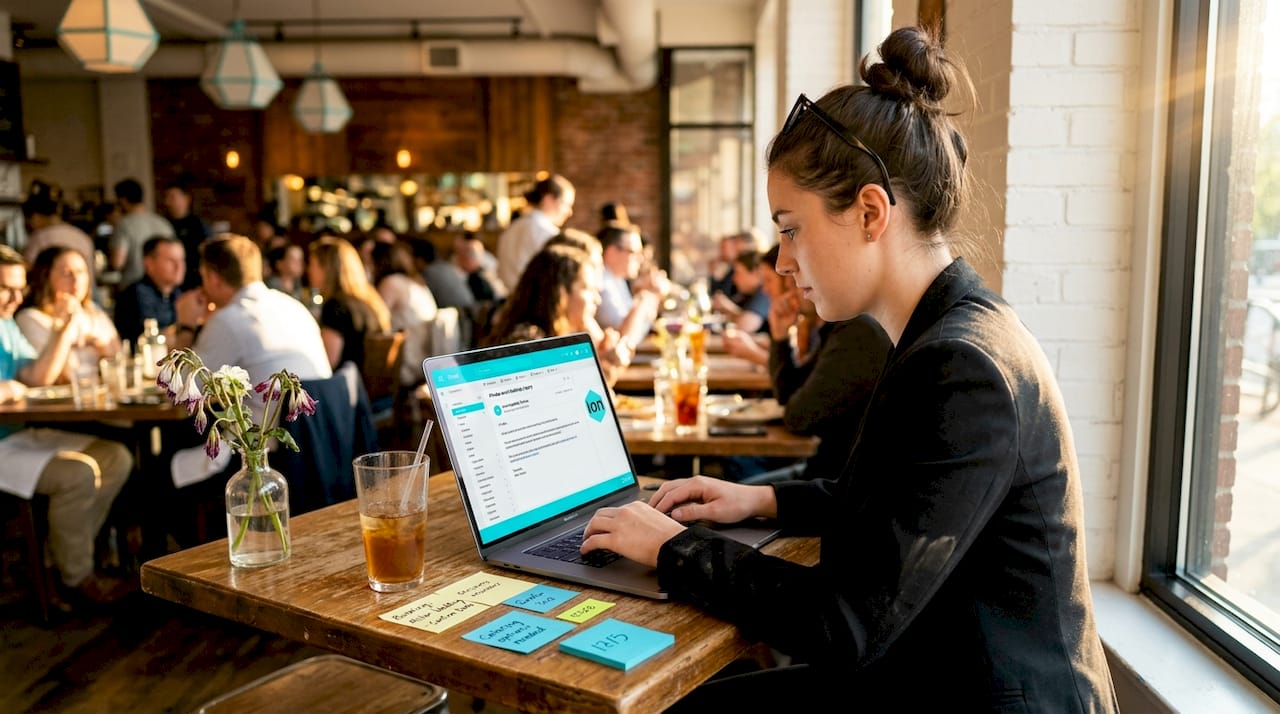
Private events are one of the highest-margin revenue streams available to full-service restaurants. Private events boost revenue 30-40%, and the marketing tactics that drive bookings are very specific: dedicated website pages, video walkthroughs of your private spaces, social media setups showing styled event layouts, and personalized emails sent to high-spend or loyalty guests.
Let’s look at which event marketing tactics perform best:
| Marketing tactic | Effort level | Revenue impact | Best for |
|---|---|---|---|
| Dedicated event page on website | Low | High | All restaurants |
| Video walkthrough of event space | Medium | Very high | Mid to upscale |
| Social media event setups | Medium | High | Restaurants with active profiles |
| Personalized email to loyalty guests | Low | Very high | Restaurants with email lists |
| Fast inquiry response (under 2 hours) | Low | Critical | Every restaurant |
Speed matters more than most operators realize. Responding to inquiries within 2 hours dramatically increases conversion rates. A potential client asking about a holiday party on a Tuesday afternoon will almost certainly book elsewhere if you don’t respond until Thursday.
Pro Tip: Set up a dedicated email address or contact form for event inquiries and assign someone specifically to monitor it during business hours. Even a brief “Got your message, we’ll have full details to you within the hour” reply keeps the lead warm.
Here’s how to build a winning private event marketing system in 2026:
- Create a dedicated events page with photos, capacity details, pricing ranges, menu options, and a simple inquiry form
- Film a short walkthrough video of your private dining space and post it on your website, Instagram, and YouTube
- Send segmented emails to guests who have spent over a certain amount or visited more than three times, offering early access to holiday event bookings
- Collect deposits (25-50%) at the time of booking to reduce no-shows and confirm commitment
- Follow up with booked clients two weeks before their event with logistics confirmation and upsell opportunities like custom menus or branded cocktails
Your event marketing strategies need to work together as a system. A great video means nothing if your inquiry form goes unanswered. Strong event marketing tactics combine compelling content with fast, human follow-up. That combination is what closes bookings consistently.
Elevating guest retention with owned channels and AI personalization
Booking the event is just the start. Here’s how to keep guests coming back.
Most restaurants pour money into acquisition: ads, promotions, influencer posts. But in 2026, with food costs up and margins tight, the real competitive advantage is retention. Turning a first-time guest into a regular is five times cheaper than acquiring a new one, and those repeat guests spend more and refer others.
Owned channels like email and SMS are your most powerful retention tools. Unlike social media, where an algorithm decides who sees your content, email and SMS land directly in the hands of the guest. You control the message, the timing, and the offer.
Here’s how to build an owned channel retention strategy that actually works:
- 📧 Collect emails at every touchpoint including reservations, loyalty signups, and WiFi logins
- 📱 Use SMS for time-sensitive offers like “Tonight only: complimentary dessert for parties of 4 or more”
- 🎯 Segment your list by visit frequency, average spend, event history, and menu preferences
- 🤖 Use AI tools for personalization, but always have a human review the messaging before it goes out
- 🔁 Build automated win-back campaigns for guests who haven’t visited in 60 to 90 days
- 💬 Create feedback loops by following up after visits with short surveys, then acting on the results publicly
Pro Tip: AI personalization tools can suggest the right offer for the right guest at the right time, but the tone, language, and final approval should always reflect your brand’s authentic voice. An AI-drafted message that sounds robotic or overly generic will do more harm than good.
The shift toward niche marketing is also part of this retention picture. When you know who your best guests are, specifically, you can target them with precision instead of blasting everyone the same promotion. A guest who books private events responds to different messaging than a weekday lunch regular. Treat them differently, and they’ll reward you with loyalty.
Understanding how hospitality marketing has evolved makes it clear: the days of one-size-fits-all promotions are over. Segmentation and personalization are now the baseline expectation, not a bonus feature.
Focusing on value, experiences, and sustainability to stand out
Beyond channels and tactics, your unique offer and brand can make all the difference.
Consumers are making deliberate dining choices in 2026. Rising prices have made them more selective, and they want to feel that their money is well spent. According to National Restaurant Association research, value and loyalty are key priorities for diners amid ongoing cost pressures, while sustainability and memorable experiences are the top differentiators for restaurants competing beyond price.
“The restaurants that win in 2026 won’t just serve great food. They’ll deliver an experience guests feel compelled to share, return to, and recommend.”
What does this look like in practice? Here are the areas worth investing in:
- 🌱 Sustainability messaging: Highlight locally sourced ingredients, reduced waste initiatives, or eco-friendly packaging on your menu and social channels. Diners notice and reward it with loyalty.
- 🎉 Curated experiences: Wine dinners, chef’s table nights, themed seasonal events, and hands-on cooking classes give guests something beyond a meal. These also serve as high-value private event upsells.
- ⏰ Off-peak incentives: Offer exclusive event pricing, bonus loyalty points, or unique menu experiences during slower weekday evenings to drive bookings when you need them most.
- 🏆 Loyalty program enhancements: Move beyond simple point accumulation. Offer members early access to events, complimentary tasting courses, or birthday experiences that make them feel genuinely valued.
Tracking industry trends helps you stay ahead of what diners value before it becomes mainstream. The restaurants attracting new customers consistently are the ones who show up authentically, deliver on their brand promise, and keep refining their offer based on real guest feedback. That combination creates the kind of word-of-mouth that no ad budget can fully replicate.
Summary comparison: Which marketing trends deliver the biggest impact?
To help you decide where to focus, here’s how these trends stack up side by side.
Every restaurant is different. What works brilliantly for a 200-seat upscale steakhouse may not be the starting point for a 60-seat neighborhood bistro. That’s why context matters. Use this comparison to identify where your biggest opportunity sits right now.
| Strategy | Best for | Speed to results | Revenue impact | Difficulty |
|---|---|---|---|---|
| Hyper-local SEO and GEO | All restaurants | Slow (3-6 months) | Very high long-term | Medium |
| Private event marketing | Restaurants with event space | Fast (weeks) | Very high | Medium |
| Owned channel retention (email/SMS) | Restaurants with existing guest data | Medium (1-3 months) | High | Low to medium |
| Value and experience marketing | Mid to upscale restaurants | Medium | High | Medium |
| Sustainability messaging | Restaurants with local sourcing | Slow | Moderate | Low |
Situational recommendations:
- 🚀 If you need revenue fast: Focus on private event marketing first. It has the fastest path to meaningful revenue gains.
- 📈 If you want long-term dominance: Invest in hyper-local SEO and GEO today. The compounding returns are unmatched.
- 🔄 If you have a guest database: Start email and SMS campaigns immediately. This is the lowest-cost, highest-return move you can make.
- 🌟 If you want to differentiate: Build out your experience and sustainability narrative. This is what separates memorable brands from forgettable ones.
The real power comes from combining these strategies. Hyper-local SEO drives new diners in. Private event marketing converts them into high-value bookings. Owned channel retention keeps them coming back. Value-driven experiences make them loyal advocates. Together, these 2026 marketing trends create a flywheel that builds momentum over time. Pick your starting point based on your current situation, and build from there.
What most restaurants miss about marketing in 2026
Here’s the uncomfortable truth we see constantly: most restaurant operators treat marketing like a one-time campaign. They run a promotion, see a short bump in traffic, then stop until things slow down again. That cycle is expensive and exhausting, and it never builds lasting momentum.
The restaurants that consistently grow treat marketing as an operating system, not an event. Responding faster to inquiries, segmenting emails smarter, delivering value through every touchpoint. Those small, consistent actions compound into a powerful advantage over 12 to 24 months.
Chasing the hottest new platform every quarter is a distraction. Consistency and iteration beat novelty every single time. One restaurant we’ve seen go from 3 private events a month to over 20 didn’t do it by finding a secret tactic. They did it by staying relentlessly consistent with driving private bookings year-round: updating their event page monthly, responding to every inquiry within an hour, and emailing their loyalty list every two weeks. Simple. Disciplined. Compounding.
Build your marketing system. Then work it every week without stopping.
Partner with experts to elevate your marketing results
If you’re ready to accelerate your results, partnering with experienced pros can save time and frustration.
At ION Hospitality, we specialize in helping full-service restaurants get more customers and book more private events through done-for-you social media marketing and advertising, with 0% commissions. Whether you need social media advertising solutions that generate real foot traffic, or website development help to build a high-converting private events page, we’ve got you covered.
Ready to start driving more private bookings and filling your dining room consistently? Let’s build the marketing system your restaurant deserves. Reach out to ION Hospitality today and let’s get to work.
Frequently asked questions
What is generative engine optimization (GEO) and why does it matter for restaurants?
GEO is optimizing for AI-driven search tools by building a data-rich, hyper-local online presence, and GEO is critical for discovery because AI tools now answer diner questions by pulling from your existing listings, reviews, and web content. If your data is incomplete or inaccurate, you simply won’t show up.
How quickly should restaurants respond to private event inquiries?
Inquiries should be answered within 2 hours to maximize your chances of converting a lead into a booking, because potential clients are often contacting multiple venues at the same time.
What’s the best channel for retaining restaurant guests in 2026?
Owned channels like email and SMS are the most effective for retention because you control delivery and can personalize messaging using AI tools with human oversight, without depending on social media algorithms.
How can restaurants increase bookings during off-peak times?
Offering exclusive experiences or pricing incentives for off-peak event bookings paired with targeted loyalty program outreach gives guests a compelling reason to visit during slower periods.
Does investing in sustainability help with restaurant marketing in 2026?
Absolutely. Diners increasingly prefer restaurants that align with their values, and sustainability and experiences differentiate restaurants in a crowded market, building the kind of loyalty that keeps guests coming back and referring others.

Add a Comment