

TL;DR:
- Personalized marketing in restaurants boosts guest lifetime value by 20 to 50 percent.
- Effective personalization relies on relevant offers, segmented messaging, and trust-building.
- Avoid data fragmentation, irrelevant offers, and over-customization to prevent damaging guest relationships.
Generic marketing is quietly killing your repeat business. While you’re blasting the same email to every guest on your list, personalized strategies are boosting guest lifetime value by 20 to 50% for restaurants that get this right. That’s not a rounding error. That’s the difference between a guest who visits once and a loyal regular who brings their friends every Friday night. This article breaks down what personalized marketing actually means for restaurants, why it outperforms generic messaging at every level, how to avoid the mistakes that burn trust fast, and what you can start doing today to drive real, measurable sales.
Table of Contents
- The foundation: What is personalized marketing for restaurants?
- How personalized marketing drives sales and loyalty
- Pitfalls to avoid: When personalized marketing backfires
- From theory to action: Tactics for restaurant personalization
- Why most restaurants miss the mark with personalization
- Take the next step with expert restaurant marketing support
- Frequently asked questions
Key Takeaways
| Point | Details |
|---|---|
| Personalization lifts sales | Personalized marketing can boost guest lifetime value by 20-50% compared to generic campaigns. |
| Balance is crucial | Avoid over-customizing or irrelevant offers, as these erode guest trust and reduce marketing impact. |
| Measure what matters | Track real guest engagement and loyalty, not just campaign activity, to see true ROI. |
| Actionable tactics exist | Segmented emails, loyalty programs, and dynamic social ads are practical ways to start personalizing today. |
The foundation: What is personalized marketing for restaurants?
Personalized marketing means delivering the right message, offer, or experience to the right guest at the right time based on what you already know about them. It goes way beyond adding a first name to an email subject line. That’s the most common misconception we see, and it’s the reason so many campaigns underperform.
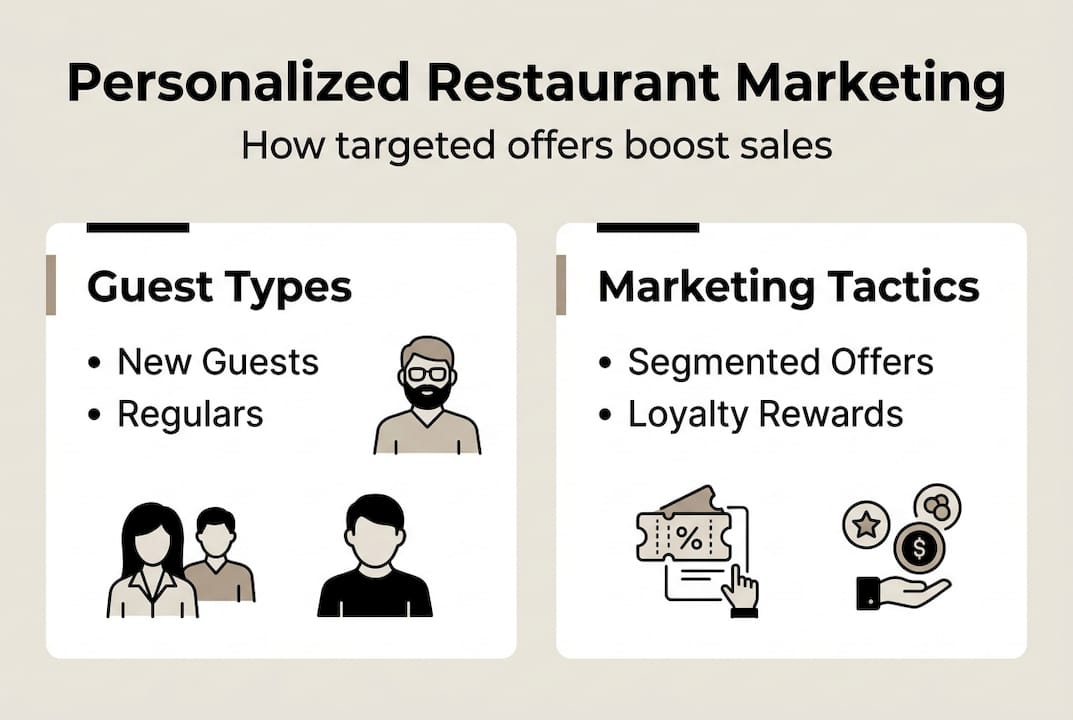
Think about it this way. A guest who orders your spicy tacos every Thursday is not the same as someone who only comes in for your Sunday brunch special. Sending both guests an identical promotion is a missed opportunity. Sending the taco lover an exclusive Thursday loyalty reward and the brunch guest an invitation to your new bottomless mimosa event? That’s personalized marketing doing its job.
Here’s what personalized marketing actually looks like in a restaurant context:
- 🎯 Tailored offers based on order history, visit frequency, or average check size
- 📧 Segmented email and text campaigns that speak to specific guest groups rather than everyone at once
- 🏆 Loyalty rewards customized to each guest’s actual preferences, not generic points for points’ sake
- 🛎️ On-premise experience customization like recognizing VIP guests, accommodating dietary needs automatically, or sending birthday surprises
- 📱 Dynamic social ads targeting different audiences with content matched to their behavior and interests
Here’s where restaurants trip up most. There’s a significant perception gap in personalization efforts: brands believe they’re delivering personalized experiences 61% of the time, while only 43% of customers actually feel that way. That gap matters because it means your marketing budget may be working much harder than your results suggest. Data silos, fragmented systems, and over-customization can all dilute your focus and erode guest trust when the messages don’t feel relevant.
Personalized marketing fits into every stage of the customer journey, from attracting new restaurant customers through first-visit conversion, to driving repeat visits and eventually building loyalty that money can’t easily replace. It’s also a major part of how restaurant marketing is evolving in 2026, where guests expect relevance and will tune out anything that feels generic or impersonal.
The good news is that you don’t need a massive tech budget to start. You need a clear picture of who your guests are and what they actually want from you. That’s always step one.
How personalized marketing drives sales and loyalty
With a clear understanding of what personalization means, let’s examine why it consistently outperforms generic marketing and boosts the bottom line.
The numbers are hard to argue with. AI-enabled loyalty programs achieve 20 to 50% increases in guest lifetime value for restaurants that implement them well. That means guests spend more per visit, come back more often, and are more likely to recommend your restaurant to others. That’s compounding growth, not just a one-time bump.
💡 Stat to remember: Restaurants using AI-powered loyalty and personalization tools are seeing guest lifetime value jump by up to 50%. That’s not incremental. That’s transformational.
Here’s a practical breakdown of how personalization moves the needle on your sales:
| Tactic | Impact on Sales | Guest Trust Level |
|---|---|---|
| Segmented email offers | Higher redemption rates | High (if relevant) |
| Personalized loyalty rewards | Increased repeat visits | Very High |
| Dynamic retargeting ads | Better conversion rates | Medium |
| Birthday/anniversary messages | Strong emotional connection | Very High |
| Generic mass email blasts | Low engagement | Low |
Personalized offers consistently see higher redemption rates than generic promotions. When a guest receives a 20% discount on the exact dish they ordered last time, they feel seen. That feeling drives action. It also raises your average check because a relevant upsell at the right moment is far more effective than a blanket “add dessert for $5” message.
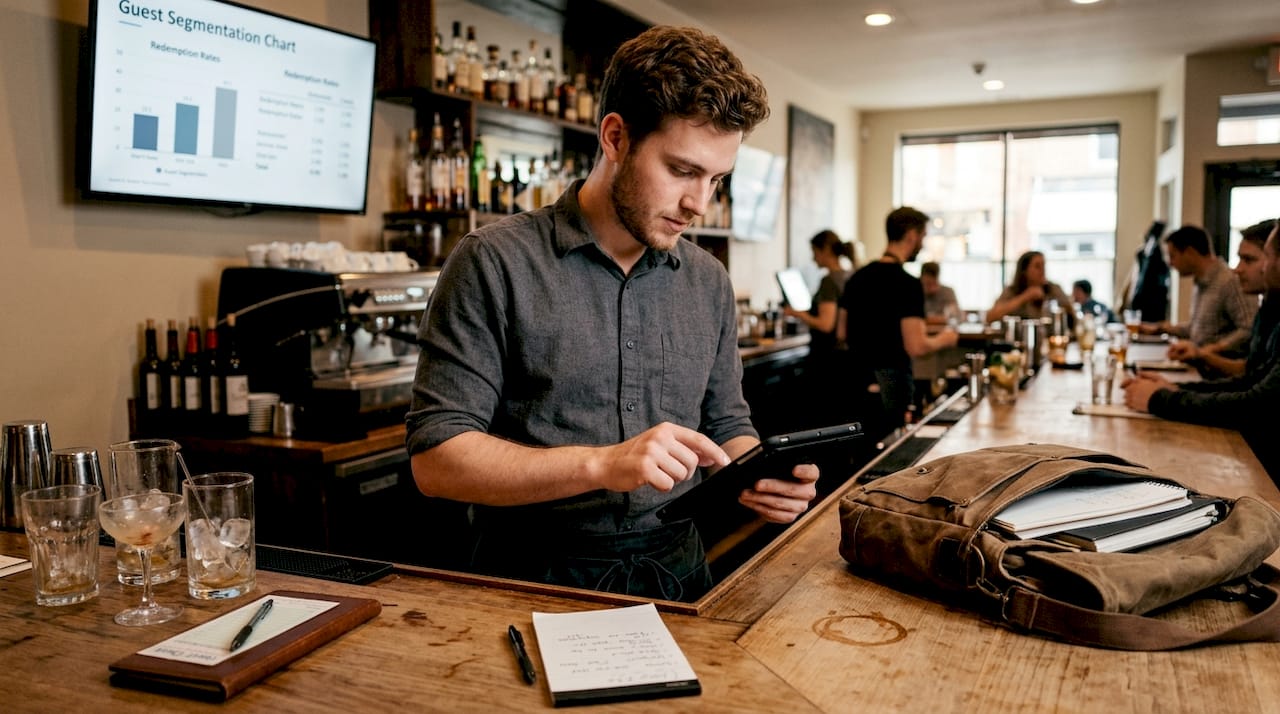
You also need to think about trust. Guests are increasingly savvy about data and privacy. Personalization that feels invasive, overly targeted, or “creepy” will do more damage than a generic campaign. The goal is relevance without surveillance. Reach out because you have something genuinely useful to offer, not just to prove you’ve been tracking their every move.
Pro Tip: Start segmenting your guest list into just three buckets: new guests (first visit in the last 30 days), regulars (three or more visits in 90 days), and lapsed guests (no visit in 60-plus days). Create one specific message for each group. This alone will dramatically improve your marketing KPIs for engagement without requiring advanced tech or a big budget.
Each segment needs a different conversation. New guests need encouragement to come back. Regulars need to feel rewarded and valued. Lapsed guests need a compelling reason to give you another shot. Three messages. Three purposes. Dramatically better results than one message for everyone.
Pitfalls to avoid: When personalized marketing backfires
Understanding the advantages, it’s just as important to recognize the risks so you can avoid the missteps that undermine personalized marketing efforts.
Personalized marketing done wrong doesn’t just waste money. It actively pushes guests away. And because the damage happens quietly, many restaurant owners don’t connect the dots until they’re already watching their loyalty numbers drop.
The most common mistakes we see:
-
Bad or fragmented data. If your POS, loyalty platform, and email tool don’t talk to each other, you’re working blind. You might send a “we miss you” message to a guest who visited yesterday. That instantly destroys credibility and signals that you’re not paying attention.
-
Content fatigue. Sending too many messages, even relevant ones, is a problem. Guests have inboxes and notification screens full of noise. If you’re reaching out three times a week, you’re training them to ignore you or unsubscribe entirely.
-
Over-customization that misses the point. When restaurants obsess over hyper-targeting every micro-segment, they sometimes lose clarity on what makes their brand special. If a guest who usually orders healthy items suddenly gets flooded with fried food promotions because an algorithm flagged one different order, that’s a trust problem.
-
Irrelevant offers. Sending a “bring a friend” offer to a guest who always dines alone is tone-deaf. Promoting a meat-heavy special to someone who exclusively orders plant-based dishes is even worse. These mistakes signal that you’re not actually paying attention, just running automated campaigns on autopilot.
-
Skipping incrementality testing. This is a big one. Many restaurants launch personalization campaigns and assume the sales boost is because of the campaign. But some of those guests would have come back anyway. Without testing whether your personalization actually added visits or spending above the baseline, you’re measuring activity instead of real impact.
“Data silos and fragmentation undermine personalization efforts, and the perception gap between brands and customers is real. Brands believe they’re personalizing 61% of the time. Customers feel it only 43% of the time.”
To sanity-check your campaigns, run simple A/B tests. Send one segment a personalized offer and hold back a control group. Measure the actual difference in visit rates and revenue. If the personalized group outperforms the control group meaningfully, you’re on the right track. If not, your segmentation or message needs work before you scale.
The fastest path to improving guest engagement metrics is also the simplest: start with clean data, test before you scale, and always ask yourself if the message you’re sending would make a guest feel genuinely valued or mildly annoyed.
From theory to action: Tactics for restaurant personalization
By sidestepping the most common pitfalls, restaurant owners can now move forward with clear, tested tactics that drive results.
Here’s where strategy becomes execution. The following tactics work whether you’re running a single neighborhood spot or managing multiple locations.
Practical tactics to implement now:
-
📧 Segmented email campaigns: Use your POS or reservation system data to group guests by visit frequency, spend level, or menu preferences. Write separate messages for each group. Even basic segmentation will lift your open rates and offer redemptions significantly.
-
🤖 AI-powered loyalty programs: Platforms that use AI to customize reward thresholds, offers, and timing based on individual guest behavior are now accessible at most budget levels. They remove the manual work and create a genuinely tailored experience at scale.
-
📲 Dynamic social ads: Platforms like Facebook and Instagram allow you to serve different ad creatives to different audience segments. A returning customer sees a loyalty reward ad. A cold audience sees your best food content designed to capture attention. This is niche marketing personalization working at its most effective.
-
🎂 Birthday and anniversary automations: These are the highest-converting personalized messages in the restaurant industry. A simple “Happy Birthday, here’s a free dessert” message sent the week before a guest’s birthday drives visits consistently. Set it up once and let it run.
-
🎟️ Private event targeting: Use past event attendee data to promote upcoming private dining or catering packages to guests who’ve shown interest before. This is one of the highest-revenue personalizations you can run.
| Tactic | Resource Investment | Expected Impact |
|---|---|---|
| Segmented email campaigns | Low | Medium to High |
| AI loyalty programs | Medium | Very High |
| Dynamic social ads | Medium | High |
| Birthday automations | Low | High |
| Private event retargeting | Low to Medium | Very High |
The most important lesson here is that success demands customer-centric metrics over activity metrics. It doesn’t matter how many emails you send. What matters is whether guests are coming back more often and spending more when they do.
Pro Tip: Don’t try to launch every tactic at once. Pick the one that fits your current tech stack and guest data quality, run it for 60 days, measure the results honestly, and then add the next layer. Consistent, measured execution beats chaotic over-launching every time.
For scroll-stopping content that supports your personalization efforts, Instagram marketing strategies designed specifically for restaurants can amplify your reach and bring new guest data into your funnel to fuel future personalization.
Why most restaurants miss the mark with personalization
Here’s the uncomfortable truth we’ve seen play out across hundreds of restaurant marketing campaigns: most restaurants mistake activity for impact. They celebrate the number of emails sent, the campaigns launched, or the loyalty points issued. But none of that is the goal. The goal is guests who come back, spend more, and bring others with them.
The trap is chasing what the big chains do. You see a national brand launch a sophisticated loyalty app with gamification and tiered rewards, and you try to replicate it with a fraction of the resources. The result is a watered-down version of someone else’s strategy that doesn’t fit your guest base at all.
Your guests aren’t looking for the same experience they get at a fast-casual chain. They chose your restaurant for a reason. Personalization should amplify what makes you distinct, not genericize your brand to fit a corporate template.
Customer-centric measurement is the shift that changes everything. Stop tracking emails sent. Start tracking whether each campaign actually brought a guest back who wouldn’t have come otherwise. Track the restaurant marketing KPIs that reflect real loyalty, repeat visit rate, average spend per loyal guest, and referral rate.
The restaurants winning at personalization right now are the ones asking their guests directly what they value, acting on that feedback, and measuring whether their efforts move those specific needles. Simple. Local. Authentic. That’s what works.
Take the next step with expert restaurant marketing support
Personalized marketing isn’t a one-time campaign. It’s an ongoing strategy that compounds over time, building a guest base that chooses you over every other option in town. But building and running these systems while managing a restaurant is genuinely hard.
That’s where the right partner makes all the difference. At ION Hospitality, we specialize in social media advertising for restaurants that drives real traffic, repeat visits, and private event bookings with zero commissions. Explore our proven restaurant social media campaigns to see what results actually look like, and learn how advertising drives restaurant growth when the strategy is built around your specific guests and goals. Let’s build something that works.
Frequently asked questions
What is an example of successful personalized marketing in restaurants?
A restaurant using AI-enabled loyalty programs can see guest lifetime value increase by 20 to 50% through tailored offers and reward experiences matched to individual guest preferences and visit history.
What mistakes should I avoid when personalizing my restaurant marketing?
Avoid irrelevant, repetitive, or overly intrusive offers, and always test whether your campaigns actually increase sales rather than just measuring how many messages you sent. Irrelevant offers erode trust and the perception gap between what brands think they’re delivering and what guests actually feel is a real problem worth auditing regularly.
How do I know if my personalized marketing works?
Measure guest retention, repeat visit rates, and the actual revenue impact of personalized campaigns rather than activity metrics like open rates or messages sent. Customer-centric metrics are the only reliable signal of whether your personalization is building real loyalty.
Can small restaurants implement personalized marketing?
Absolutely. Even small restaurants can start with segmented emails, custom birthday offers, and entry-level loyalty platforms to create meaningful, personalized guest experiences without a large budget or complex tech stack.
What role does customer trust play in restaurant personalization?
Customer trust is the foundation of every successful personalization strategy. Offers must feel relevant, respectful of privacy, and genuinely based on guest preferences, because irrelevant or intrusive messaging damages trust faster than any generic campaign ever could.
Recommended
- Unlock high-impact restaurant niche marketing for more bookings
- Smart strategies to attract new restaurant customers in 2026
- The Free Retargeting Ads Playbook – ION Hospitality – Restaurant Marketing & Advertising Agency, New York, NY
- Build a powerful restaurant online presence to attract more customers

Add a Comment