

TL;DR:
- Niche marketing builds customer loyalty and increases repeat business.
- Focusing on a specific audience allows personalized, data-driven marketing strategies.
- Promoting private events effectively can significantly boost restaurant revenue margins.
Most restaurant owners believe the path to profit is casting the widest net possible. Compete on price, appeal to everyone, and hope the volume adds up. But that strategy is quietly killing margins and making it nearly impossible to build real loyalty. Niche marketing flips that script entirely. When you own a specific audience, serve a specific need, and speak a specific language, customers don’t just visit once. They come back, they bring friends, and they book your private dining room for every celebration. This guide breaks down exactly how to identify your niche, use data to personalize your marketing, and turn private events into a high-margin revenue engine.
Table of Contents
- What is restaurant niche marketing?
- Identifying and defining your restaurant’s niche
- Personalization and data-driven marketing for restaurants
- Marketing private events and driving high-margin bookings
- Why most restaurants settle for bland marketing — and what actually works
- Let’s grow your restaurant’s loyal audience
- Frequently asked questions
Key Takeaways
| Point | Details |
|---|---|
| Targeted niche wins | Focusing on a specific restaurant niche drives loyalty and higher spending. |
| Personalization pays off | Data-driven marketing boosts repeat orders and reduces customer churn significantly. |
| Event marketing boosts revenue | Year-round private event marketing can grow revenue by 30-40% with strong profit margins. |
| Consistent, authentic campaigns | Showcasing your unique brand voice on social media sets your restaurant apart and drives engagement. |
What is restaurant niche marketing?
Niche marketing means focusing your brand, menu, and messaging on a specific type of customer rather than trying to attract everyone. Instead of being “a great place to eat,” you become the go-to spot for a clearly defined audience. That could be plant-based diners, whiskey enthusiasts, families celebrating milestones, or corporate clients booking private events.
The contrast with broad-based marketing is sharp. Generic tactics like “best burgers in town” ads or discount promotions attract deal-seekers with no loyalty. Niche marketing attracts people who genuinely connect with what you stand for. They spend more, return more often, and tell others.
Common restaurant niches include:
- 🌱 Vegan and plant-based concepts
- 🌾 Farm-to-table and hyper-local sourcing
- 🍷 Wine bars and craft cocktail lounges
- 🎉 Event-driven and private dining venues
- 🥜 Allergy-friendly and dietary-specific menus
- 🌍 Themed or regional cuisine specialists
- ♻️ Eco-conscious and zero-waste operations
The numbers back this up. Data-driven personalization reduced churn by 38%, boosted repeat orders by 45%, and raised average order value by 12%. That’s not a small edge. That’s a business transformation.
🚀 Slutty Vegan, a vegan-only concept, hit $4 million in revenue within 6 months using bold branding, a simple menu, and zero big-budget advertising. Their niche wasn’t a limitation. It was their superpower.
Here’s a quick look at how niche and broad marketing compare across key performance areas:
| Metric | Niche marketing | Broad marketing |
|---|---|---|
| Customer churn rate | Lower by up to 38% | Higher, less loyalty |
| Repeat order rate | Up 45% | Flat or inconsistent |
| Average order value | Up 12% | Lower, price-driven |
| Word-of-mouth referrals | Strong and targeted | Diluted and random |
| Private event bookings | Higher conversion | Low without focus |
Building a strong brand identity for restaurants is the foundation of niche marketing. When your visual identity, menu language, and social presence all speak to the same audience, trust builds fast.
Now that you know why niche marketing matters, let’s break down how to shape your own approach.
Identifying and defining your restaurant’s niche
Choosing a niche isn’t about limiting yourself. It’s about becoming undeniable to the right people. The process starts with honest research and a clear-eyed look at your market.
Follow these steps to pinpoint your niche:
- Study your local competition. What are nearby restaurants doing? Where are the gaps? If no one in your area serves a dedicated allergy-friendly menu or offers a curated wine experience, that’s an opening.
- Audit your own strengths. What does your kitchen do exceptionally well? What does your space feel like? Your niche should feel natural, not forced.
- Define your ideal customer. Age, lifestyle, values, spending habits. The more specific you get, the sharper your marketing becomes.
- Identify your core values. Are you community-focused? Sustainability-driven? Celebration-centered? Your values attract like-minded guests who become regulars.
- Test before you commit. Run a themed menu night, host a niche-specific event, or promote a limited special. Watch the response before going all-in.
Some of the fastest-growing niches in the U.S. right now include:
- Allergy-friendly and gluten-free concepts
- Plant-based and vegan dining
- Community-focused neighborhood spots
- Eco-conscious, zero-waste restaurants
- Private event and celebration-focused venues
The case study on data-driven growth behind Slutty Vegan’s rise proves that going narrow works. They didn’t try to win over meat-eaters. They owned the vegan space with bold personality and a simple menu, and the audience came to them.
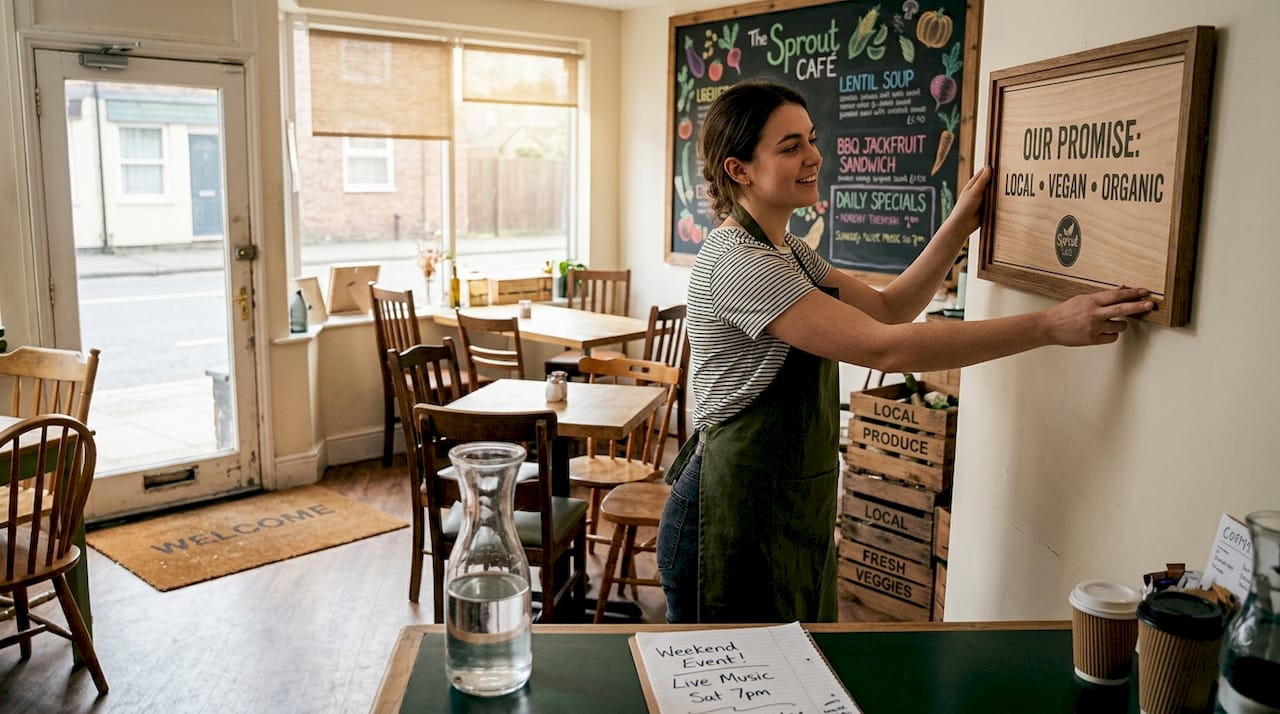
Your restaurant branding strategy needs to reflect your niche clearly. Every touchpoint, from your logo to your Instagram captions, should signal who you are and who you’re for. Once that alignment is in place, you can boost brand awareness much more efficiently because your message actually resonates.
Pro Tip: Don’t be afraid to go narrow. The more specific your niche, the stronger the loyalty and word of mouth you’ll generate. Depth beats breadth every time.
With your niche defined, you can craft marketing campaigns that speak directly to your most valuable customers.
Personalization and data-driven marketing for restaurants
Knowing your niche is step one. Using data to speak directly to each customer within that niche is where the real revenue growth happens.
Restaurants collect more useful data than most owners realize. Every online order, reservation, loyalty program sign-up, and email open is a signal. Here’s what you can track and use:
- 📋 Order history: What dishes does each customer reorder? Promote those items or suggest similar ones.
- 🎂 Birthdays and anniversaries: Trigger personalized offers that feel thoughtful, not automated.
- 📍 Visit frequency: Identify your top 20% of spenders and treat them differently.
- 📱 Engagement data: Which emails get opened? Which social posts drive clicks to your online ordering page?
Once you have that data, segment your audience. Don’t send the same email to a first-time visitor and a loyal monthly regular. The loyal customer wants to feel recognized. The new visitor needs a reason to come back.
| Marketing approach | Repeat order rate | Customer churn | Average order value |
|---|---|---|---|
| Generic campaigns | Low | High | Baseline |
| Personalized, data-driven | Up 45% | Down 38% | Up 12% |
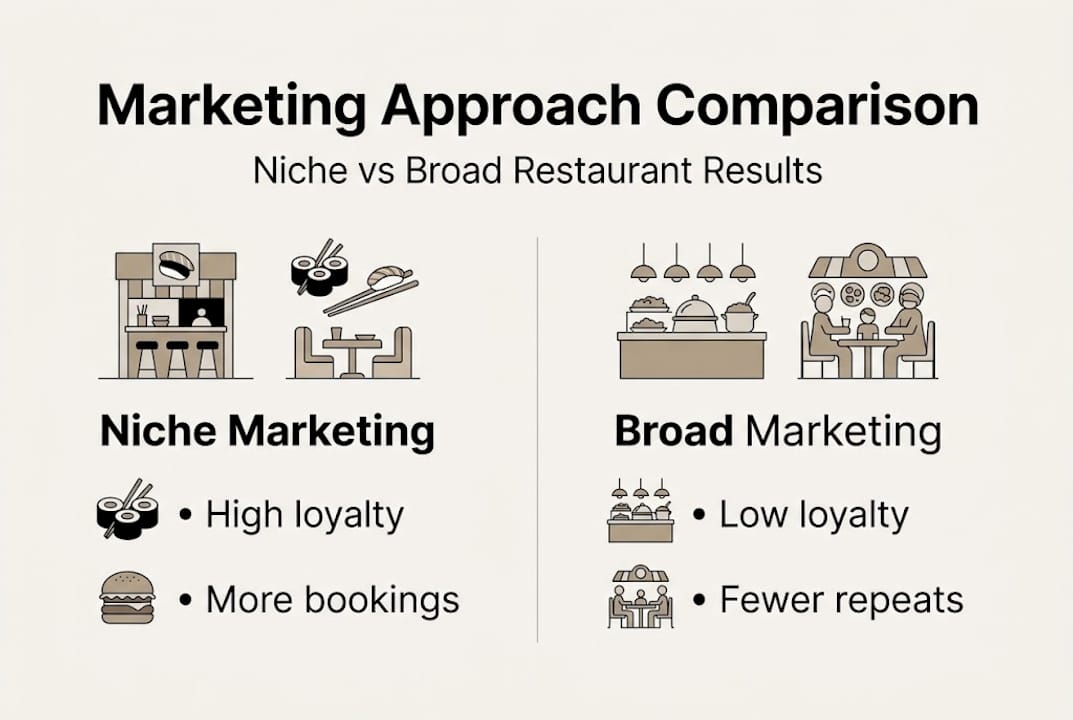
Those numbers aren’t theoretical. They reflect what happens when you stop broadcasting and start connecting.
You don’t need a massive budget to get started. Affordable tools like loyalty apps, email automation platforms, and online ordering systems all capture data you can act on. Start small. Set up a birthday email sequence. Create a VIP list for your top spenders. Promote a menu item based on past orders.
Pro Tip: Pick one data point, like order frequency, and build one personalized campaign around it. Measure the results for 30 days before expanding. Small wins build momentum.
Paired with retargeting ads for restaurants, personalization becomes even more powerful. You can reach customers who browsed your menu but didn’t order, or re-engage guests who haven’t visited in 60 days. And when you create engaging restaurant content that speaks to your niche audience, every piece of content works harder.
The true power of niche marketing emerges when you tailor campaigns based on your ideal customer’s data.
Marketing private events and driving high-margin bookings
Private events are one of the highest-margin revenue streams available to restaurants. But most owners market them as an afterthought. A line in the footer. A flyer by the host stand. That’s leaving serious money on the table.
Here’s how to market private events the right way:
- ✅ Build a dedicated landing page. It should include real photos of your event setups, sample menus, pricing tiers, and a simple inquiry form. No digging through your main site.
- ✅ Respond to inquiries within 2 hours. Speed signals professionalism. Slow responses lose bookings to competitors.
- ✅ Segment your email list. Your high-spend and loyalty customers are your best prospects for private events. Send them targeted invitations, not mass blasts.
- ✅ Use social proof. Post real event photos, guest testimonials, and behind-the-scenes setup content. People book what they can visualize.
- ✅ Promote year-round, not just in Q4. Birthdays, corporate dinners, team celebrations, and baby showers happen every month.
📊 Targeted event marketing for private dining can boost restaurant revenue by 30 to 40% while delivering margins around 20%. That’s a significant lift from a single revenue channel.
Personal follow-up matters too. After an inquiry, a quick phone call or personalized email dramatically increases conversion. People booking private events want to feel taken care of, not processed.
Pro Tip: Post a short video or photo of a daily event setup on your social media, even for small gatherings. It creates FOMO, shows your space in action, and keeps private event bookings top of mind year-round.
For deeper strategy, explore event marketing for restaurants and proven restaurant social campaigns to see how other operators are filling their calendars.
To bring it all together, let’s look at what separates restaurants that win with niche marketing from those that stay stuck.
Why most restaurants settle for bland marketing — and what actually works
Here’s the uncomfortable truth: most restaurants default to generic marketing because it feels safer. A broad message offends no one. But it also excites no one.
After working with restaurants across the country, we’ve seen the same pattern repeat. Owners chase one-off promotions, run discount ads, and post random content hoping something sticks. The results are flat. Engagement is low. Loyalty is weak. And private event inquiries are sporadic at best.
The restaurants that consistently win do something different. They pick a lane and own it. They build signature experiences that can’t be replicated down the street. They use data to recognize and reward their best customers. And they show personality everywhere, from their menu copy to their Instagram stories.
Most owners underestimate how powerful exclusivity and personality are. When guests feel like your restaurant was made for them, they don’t comparison shop. They become advocates.
The best returns come from consistent, targeted effort over time, not a single viral moment. Start with one specific audience segment. Plan a full month of personalized content and campaigns aimed at that group. Track every response. Then build from there. Explore more on attracting new restaurant customers to keep that momentum going.
Let’s grow your restaurant’s loyal audience
You now have a clear roadmap: define your niche, use data to personalize your outreach, and market private events like the high-value revenue stream they are. The next step is execution.
At ION Hospitality, we specialize in helping restaurants do exactly this, with zero commissions and a full-service approach that covers social media advertising for restaurants, content strategy, and restaurant website development. Whether you need a sharper brand presence or a proven system for booking more private events, our brand awareness guide is a great place to start. Let’s build something that fills your dining room and your event calendar.
Frequently asked questions
What are the highest-impact restaurant niches in 2026?
The fastest-growing niches include allergy-friendly concepts, plant-based and vegan dining, hyper-local sourcing, themed cuisine, and event-driven venues. Vegan concepts like Slutty Vegan have proven that bold niche branding drives explosive early revenue.
How do I start marketing my restaurant’s private events?
Start by building a dedicated web page with real photos and sample menus, then target your top-spend or loyalty customers with segmented emails. Responding to inquiries fast and posting event setups on social media consistently will drive year-round bookings.
Does niche marketing work for takeout and online orders?
Absolutely. Personalization based on order history and targeting your niche customer group can boost repeat orders by 45% and increase average order value by 12%.
What’s the biggest mistake in restaurant niche marketing?
Trying to appeal to everyone instead of committing to a clear, passionate audience dilutes your brand and weakens your marketing ROI. Specificity is what creates loyalty.

Add a Comment