
TL;DR:
- Event marketing can boost restaurant revenue by 30-40% across venues of all sizes.
- Building a dedicated events page, using segmented email, and fast inquiry responses are key strategies.
- Upselling services like AV, decor, and premium menus significantly increase event profitability.
Most US restaurant owners think event marketing is only for large banquet halls with dedicated event staff. That belief is costing you real money. Even the smallest venues can unlock 30-40% greater revenues by strategically marketing private events and catering packages. This guide breaks down exactly how to do it: the proven strategies, the operational mechanics, and the real-world results you can expect. Whether you run a 40-seat neighborhood spot or a 200-seat dining room, event marketing belongs in your growth plan.
Table of Contents
- Why event marketing matters for US restaurants
- Key event marketing strategies: From inquiry to booking
- Revenue mechanics: Upsells, operational efficiency, and customer engagement
- Pitfalls and edge cases: Balancing dine-in, catering, and logistics
- Our take: How event marketing transforms restaurant business models
- Level up your restaurant events: Expert marketing solutions
- Frequently asked questions
Key Takeaways
| Point | Details |
|---|---|
| Revenue boost potential | Event marketing can raise restaurant revenue by 30-40% through private events and catering. |
| Strategic marketing channels | Segmented email and social media deliver the highest ROI for event promotion. |
| Higher-margin sales | Upselling AV, décor, and premium menus increases per-event profitability. |
| Operational focus | Efficient inquiry responses and partnerships with planners streamline event conversion. |
| Balanced risk management | Successful event marketing requires careful planning to prevent staff turnover, service disruption, and logistical challenges. |
Why event marketing matters for US restaurants
Event marketing is not just about throwing a party and hoping people show up. It is a deliberate strategy to fill your space with high-margin bookings, build customer loyalty, and generate word-of-mouth that keeps working long after the event ends.
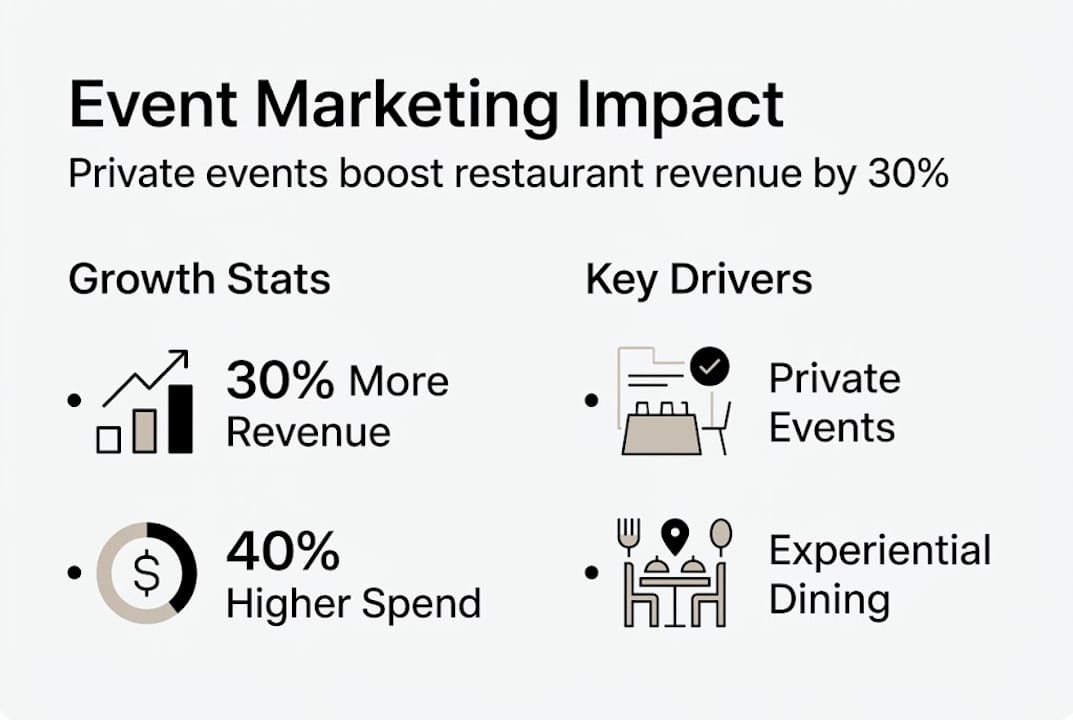
Let’s talk numbers first. Private events and catering increase restaurant revenue by 30-40%, and experiential dining is up 27% across the industry. That is not a small trend. That is a structural shift in how Americans want to spend money on food.
📊 Industry snapshot
| Metric | Figure |
|---|---|
| US catering industry revenue (2023) | $12.5 billion |
| US catering industry revenue (2025) | $13.9 billion |
| Average catering profit margin | 8-12% |
| Average revenue per guest | $45 |
| Revenue lift from event marketing | 30-40% |
The US catering industry hit $13.9 billion in 2025, up from $12.5 billion in 2023. That growth is not slowing down. Restaurants that position themselves to capture even a small slice of that demand are adding serious revenue without proportionally increasing overhead.
Here is why the margins are so attractive:
- Guaranteed headcount means you can prep precisely and reduce food waste
- Pre-set menus allow for better cost control and higher ticket averages
- Upsell opportunities like premium bar packages and custom decor add revenue without extra labor
- Referral loops kick in naturally because guests at private events become future customers
Event marketing also strengthens your brand awareness strategies in ways regular advertising cannot. A guest who attends a birthday dinner at your restaurant and has an exceptional experience does not just come back. They tell people. That word-of-mouth is worth more than any paid ad.
“The restaurants winning at private events are not the biggest ones. They are the ones that market consistently and respond fast.”
For restaurants focused on attracting new customers, private events are one of the most efficient channels available. You get a room full of people who have never visited before, all experiencing your food and hospitality at its best.
With the importance established, let’s break down exactly how event marketing delivers tangible results.
Key event marketing strategies: From inquiry to booking
Now that you see the value, here is how to structure your event marketing efforts for maximum impact. The difference between restaurants that consistently book private events and those that do not usually comes down to a few operational choices.
1. Build a dedicated events page on your website
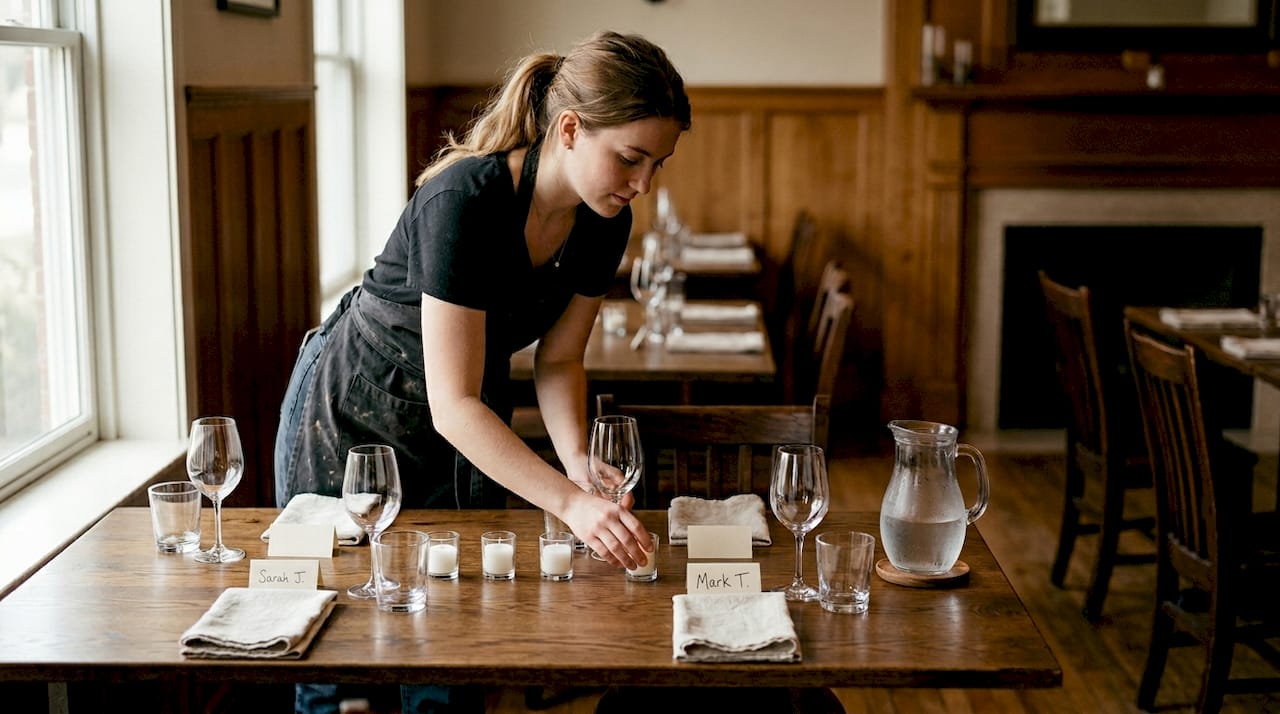
This is non-negotiable. Your events page needs high-quality photos of your space set up for private dining, sample menus with pricing tiers, and a clear inquiry form. Vague pages lose bookings. Specific pages with real photos and real numbers convert.
2. Use segmented email marketing
Not every guest on your list is a private event prospect. Segment your list by visit frequency and average spend. Your high-spend, repeat guests are your best targets for event outreach. A well-timed email to the right segment outperforms a blast to everyone every time.
3. Showcase events on social media year-round
Do not just post when you have an event coming up. Post behind-the-scenes setup content, guest reactions, and styled table shots consistently. Your content creation strategies should include a dedicated stream for events so your audience always knows you do private bookings.
4. Respond to inquiries within 48 hours
Speed matters more than most owners realize. Dedicated events page, email segmentation, and fast response are among the top conversion drivers for private event bookings. Platforms like Tripleseat can automate follow-ups and keep your pipeline organized.
5. Build partnerships with local planners and vendors
Wedding planners, corporate event coordinators, and local florists all need reliable restaurant partners. A referral relationship with even two or three local planners can fill your calendar with bookings you never had to chase.
| Strategy | Best for | Effort level |
|---|---|---|
| Dedicated events page | All restaurants | Low (one-time setup) |
| Segmented email campaigns | Established guest lists | Medium |
| Social media showcases | Visual venues | Ongoing |
| Fast inquiry response | All restaurants | Low |
| Planner partnerships | High-volume targets | Medium |
Pro Tip: Use your viral event ideas to create shareable moments at every private event. When guests post your space on their own social media, you get organic reach that no ad budget can replicate.
Revenue mechanics: Upsells, operational efficiency, and customer engagement
With the strategies defined, let’s explore how to turn those bookings into higher-profit events by leveraging upsells and operational know-how.
Every private event booking moves through a sales funnel. Inquiry comes in, you schedule a site visit, you collect a deposit. That process sounds simple, but each stage is an opportunity to increase the value of the booking. The inquiry-to-deposit funnel combined with strategic upsells can increase event revenue by 30%.
Where upsell revenue comes from:
- 🎤 AV and tech (microphones, projectors, screens for presentations)
- 🌸 Florals and decor (centerpieces, custom lighting, balloon installations)
- 🍷 Premium menus (chef’s tasting courses, wine pairings, signature cocktails)
- 🎂 Add-on experiences (live music, photo booths, custom cake service)
Each of these feels like a luxury to the guest but is relatively low-cost for you to coordinate. The margin on a $300 AV rental markup or a $150 floral package is significant.
| Upsell item | Typical markup | Guest perception |
|---|---|---|
| AV package | 25-40% | High value |
| Floral decor | 30-50% | Premium feel |
| Premium menu tier | 20-35% | Exclusive experience |
| Photo booth add-on | 40-60% | Fun and memorable |
On the operational side, efficient labor scheduling is where you protect your margins. Events with confirmed headcounts let you schedule precisely. No guessing. No overstaffing a slow Tuesday. That efficiency directly improves your bottom line.
Technology like Tripleseat also helps you monitor restaurant growth by centralizing event data, tracking booking trends, and flagging your most profitable event types.
Pro Tip: After every private event, send a follow-up email to the host with a special offer for their next booking. Repeat event clients are your most profitable segment and the easiest to convert.
Engagement does not stop when the event ends. Guests who attend private events at your restaurant are significantly more likely to return for regular dining. That is a restaurant brand boost that compounds over time.
Pitfalls and edge cases: Balancing dine-in, catering, and logistics
Even well-executed event marketing comes with unique challenges. Here is how US restaurants can navigate these edge cases before they become expensive problems.
The biggest operational risks you need to plan for:
- 🚨 Disrupting dine-in service when a private event runs long or demands more staff than planned
- 🥜 Allergen management at scale becomes exponentially more complex with large groups and pre-set menus
- 👥 Staff turnover in the US restaurant industry sits at 73%, which means your trained event staff may not be there next quarter
- 🌧️ Weather-related cancellations affect roughly 8% of events, particularly outdoor and catering-off-site bookings
- 🚚 Transportation and logistics for off-site catering add complexity that can erode margins if not priced correctly
These are not reasons to avoid event marketing. They are reasons to build systems before you scale.
For allergen management, create a standardized pre-event questionnaire that captures dietary restrictions at booking. Build that into your inquiry process, not as an afterthought the week of the event.
For staff turnover, invest in cross-training. Your best servers should know how to run an event setup, not just a regular service. That flexibility protects you when someone calls out.
Pro Tip: Build a cancellation and rescheduling policy into every contract. A clear policy that covers weather, illness, and force majeure protects your revenue and sets professional expectations from the start.
For dine-in balance, consider designating specific days or time blocks as event-only. Some restaurants block Friday and Saturday evenings for private events during peak season. Others reserve a private dining room that operates independently from the main floor. Either approach reduces the friction between your two revenue streams.
Exploring hospitality marketing evolution can also help you find smarter ways to promote events without cannibalizing your regular service audience.
Our take: How event marketing transforms restaurant business models
After exploring the practical strategies and potential pitfalls, here is our perspective drawn from working with restaurants across the country.
Most owners we talk to treat private events as side income. Something nice when it happens, but not something they actively build. That mindset is the single biggest missed opportunity in the restaurant industry right now.
The restaurants that win at events treat it like a second business running inside their first one. They have dedicated marketing, dedicated systems, and a year-round calendar. They are not waiting for inquiries. They are generating them. Many treat events as side income and miss the compounding effect of consistent event marketing on both revenue and brand.
The shift from traditional outreach (flyers, local ads) to digital platform marketing has made this more accessible than ever. Social media, email, and booking platforms let even a small team run a professional event operation. You do not need a dedicated sales manager. You need the right tools and a consistent process.
We have seen restaurants double their private event revenue in under a year simply by prioritizing crowd marketing insights and committing to a year-round promotional calendar. The results are not magic. They are the product of consistency.
Level up your restaurant events: Expert marketing solutions
Ready to take action? Event marketing works best when your social media, advertising, and content are all pulling in the same direction. That is exactly what we build for restaurants at ION Hospitality.
We handle your social media advertising with zero commissions, create scroll-stopping content that fills your private event calendar, and build proven campaigns for growth that generate real bookings, not just likes. If you want a roadmap to get started, our brand awareness guide is a great first step. Let’s build a system that makes your restaurant the go-to event venue in your market.
Frequently asked questions
How much revenue can event marketing add to a US restaurant?
Event marketing can increase restaurant revenue by 30-40% for venues focused on private events and catering, primarily through higher-margin sales and upsell opportunities.
What are the biggest operational risks when running events alongside regular service?
The main risks include staff turnover at 73%, allergen management at scale, weather-related cancellations affecting about 8% of events, and balancing demand between dine-in and catering operations.
What marketing channels offer the best ROI for event promotion?
Segmented email campaigns deliver an ROI of 42:1 and social media showcases are the most effective channels for driving private event bookings in US restaurants.
Can small restaurants benefit from event marketing?
Absolutely. Even small venues can increase high-margin sales and customer engagement through strategic event marketing, a dedicated events page, and local planner partnerships, without needing a large team or big budget.
What are the most effective upsells for restaurant events?
AV packages, florals, and premium menu tiers are the top upsell options, often increasing total event revenue by 30% per booking.

Add a Comment